


Project Badges Show LLM Contribution Preferences

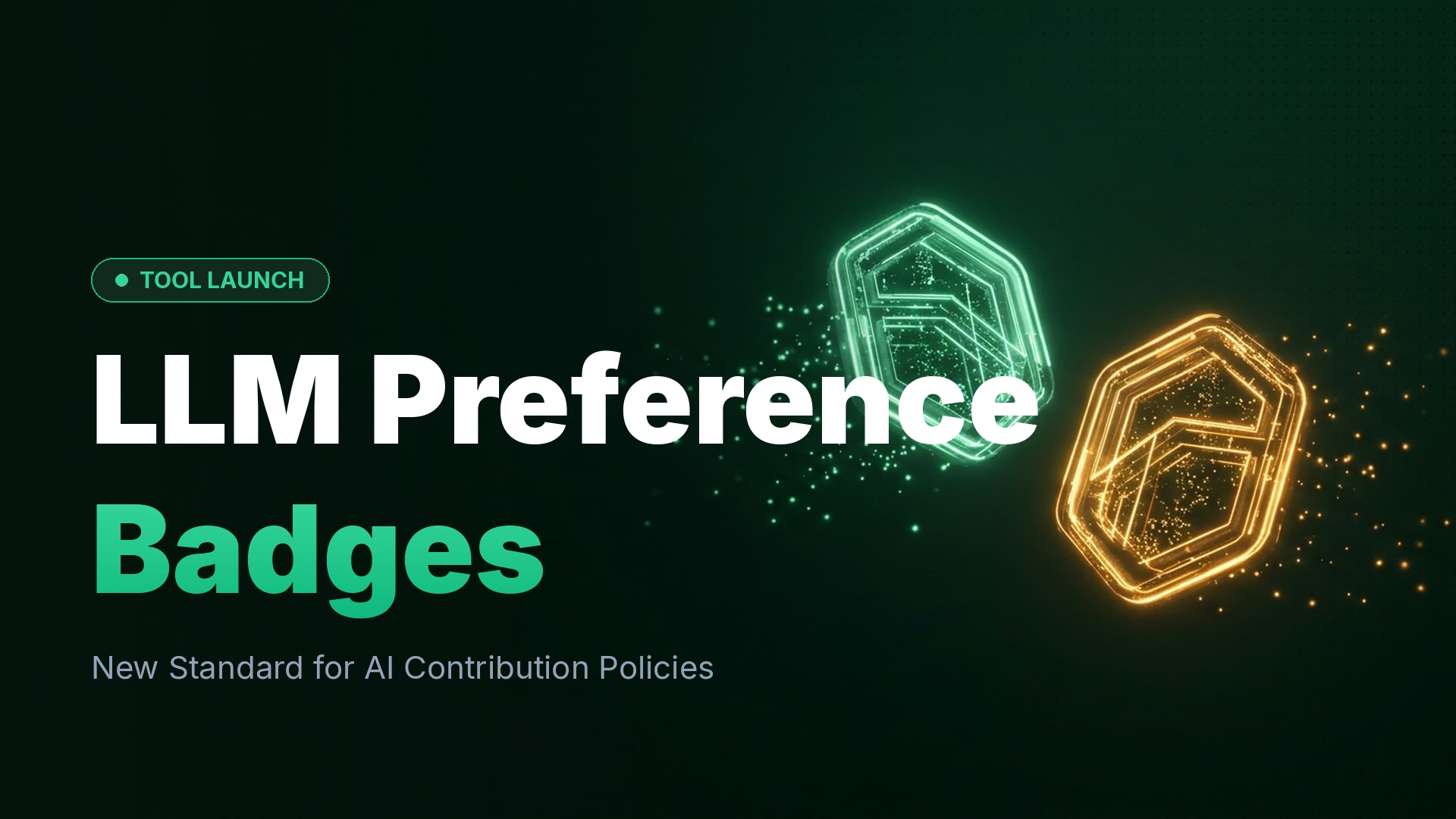
A new badge system launched today allows developers to clearly communicate their preferences around LLM-generated contributions to open-source projects. The tool addresses a growing tension in the developer community as AI coding assistants become ubiquitous, with some maintainers welcoming AI-assisted contributions while others prefer human-only code.
The badge system provides visual indicators that developers can embed in project README files, documentation, or contribution guidelines. Each badge comes with accompanying explainer documentation that outlines the specific policies and reasoning behind the project's stance on AI-generated code.
Two Badge Types for Clear Signaling
The system offers two primary badge variants. Projects that welcome LLM contributions can display a badge indicating openness to AI-assisted code, acknowledging that many developers now use tools like GitHub Copilot, ChatGPT, and Claude as standard parts of their workflow. The explainer for this badge typically emphasizes code quality and testing standards rather than the origin of the code.
Conversely, projects that prefer human-only contributions can display a badge making this preference explicit. The accompanying documentation often explains concerns about code provenance, licensing implications, or the maintainer's desire to preserve certain development practices. This badge gives maintainers a polite, standardized way to communicate boundaries without repeatedly addressing the issue in pull request discussions.
Release Date and Availability
The badge system officially launched on November 18, 2026, and is immediately available through the project website at agentsp.lease. Developers can copy badge markdown or HTML directly into their project documentation. The system is open-source, allowing the community to propose new badge variants or modify explainer text to fit different project philosophies.
The launch post on Hacker News today generated initial discussion about the need for such standards as AI coding tools continue to evolve. Early adopters are already implementing the badges across various repositories.
Addressing a Growing Need
The timing of this tool reflects broader conversations in the development community about attribution, code quality, and the changing nature of software contributions. As LLM coding assistants improve in capability, the distinction between human-written and AI-assisted code becomes increasingly nuanced. Some maintainers view AI tools as productivity enhancers similar to IDEs or linters, while others see them as fundamentally altering the contribution dynamic.
The badge system doesn't take sides in this debate. Instead, it provides infrastructure for projects to self-organize around their chosen policies. This reduces friction in the contribution process by setting clear expectations upfront, potentially saving both contributors and maintainers significant time.
Implementation Details
Key features of the badge system include:
- Standard markdown and HTML formats compatible with major repository platforms
- Customizable explainer templates that projects can adapt to their specific needs
- Visual design that integrates naturally with existing project badges and documentation
- Open-source licensing allowing community modifications and extensions
The badges are designed to be non-judgmental in tone, recognizing that different projects have legitimate reasons for their chosen policies. The explainer documentation emphasizes clarity and professionalism rather than advocacy for any particular approach.
What This Means
This badge system represents an emerging category of developer tooling focused on AI governance and policy communication. As LLM capabilities expand across software development workflows, clear standards for contribution policies become infrastructure rather than nice-to-have features. The launch demonstrates how the open-source community is proactively building norms around AI-assisted development rather than waiting for platforms or companies to impose solutions. Projects implementing these badges can reduce ambiguity, streamline contribution processes, and maintain consistent policies as the AI tooling landscape continues to evolve rapidly through 2026 and beyond.


on Emergent today


