


Project Suncatcher Satellite Sends First Response Signal

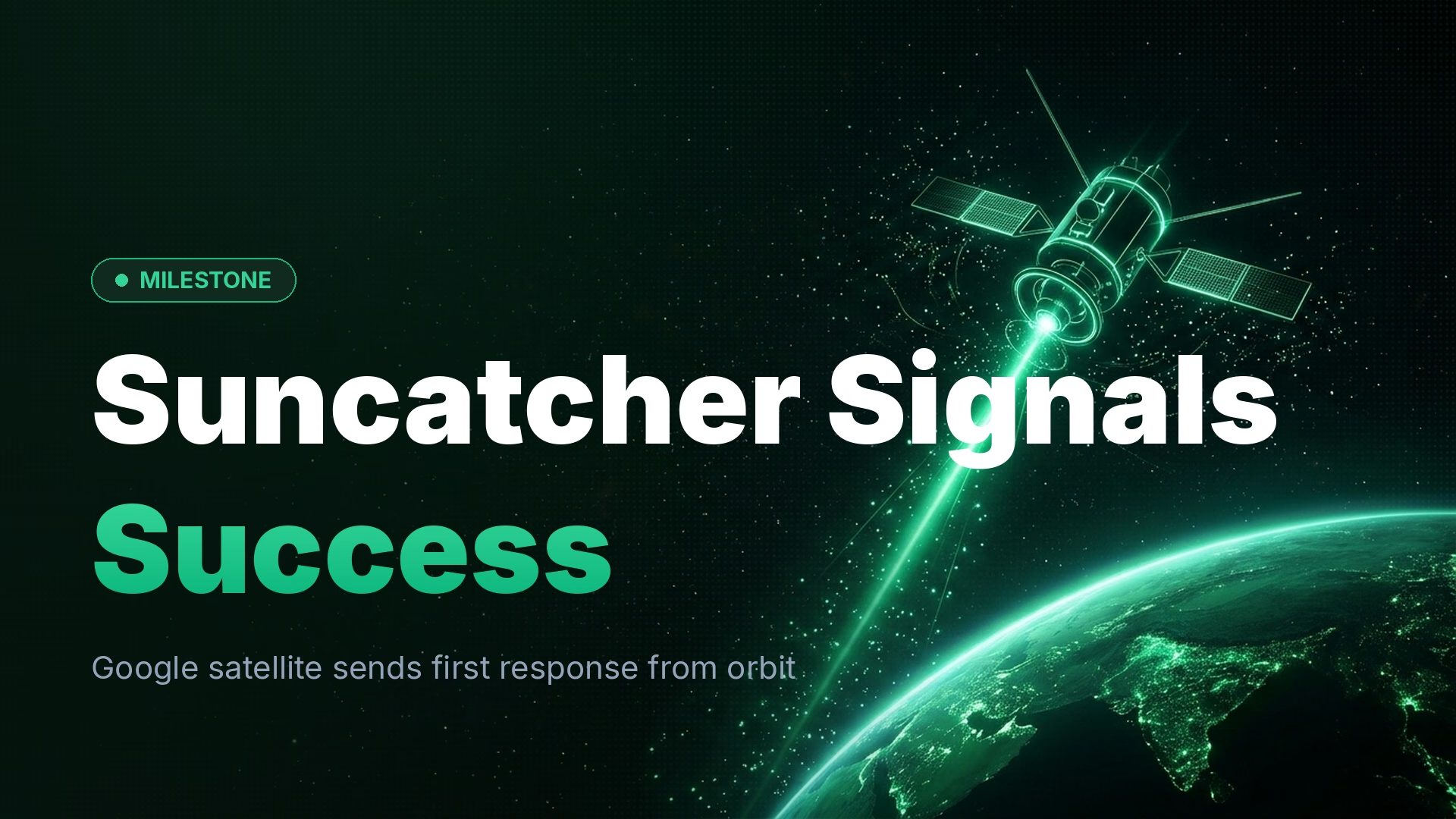
Google has confirmed receipt of the first response signal from its Project Suncatcher prototype satellite, marking a critical milestone for the experimental space-based platform. The transmission, received on October 30, 2026, validates the satellite's core communication systems and establishes two-way contact with ground stations following its deployment to low Earth orbit.
First Signal Confirms Operational Status
The initial response from Project Suncatcher represents the first successful handshake between the satellite's onboard systems and Google's terrestrial infrastructure. According to the company's announcement, the signal transmission confirms that power generation, thermal management, and communication subsystems are functioning as designed. This early operational milestone is essential for validating the satellite's readiness to begin its experimental mission profile.
Engineers at Google's Advanced Technology and Projects division received telemetry data alongside the response signal, providing initial health diagnostics for the spacecraft. The data indicates stable orbital parameters and nominal system performance across primary subsystems.
Project Suncatcher's Mission Profile
Project Suncatcher is designed to explore the feasibility of space-based infrastructure for distributed AI processing and global connectivity applications. The prototype satellite carries experimental payloads intended to test edge computing capabilities in the challenging orbital environment, where radiation, thermal extremes, and power constraints pose unique engineering challenges.
While Google has not disclosed the full technical specifications of the satellite, the project is understood to focus on validating hardware and software architectures that could support future constellations. The satellite serves as a testbed for evaluating latency characteristics, processing reliability, and communication protocols in space-based deployment scenarios.
Release Date and Deployment Timeline
The Project Suncatcher prototype was officially launched on October 12, 2026, aboard a commercial rideshare mission. Following a two-week checkout period in orbit, the satellite transmitted its first response signal on October 30, 2026, confirming successful activation and initial operations. This timeline aligns with standard satellite commissioning procedures, which typically include phased system bring-up and verification testing.
Implications for Space-Based AI Infrastructure
The successful first contact with Project Suncatcher advances Google's exploration of space as a platform for next-generation computing infrastructure. Space-based systems offer potential advantages including reduced latency for global services, coverage of underserved regions, and resilience against terrestrial infrastructure disruptions.
Industry observers note that several technology companies are investigating satellite-based approaches to AI and connectivity challenges. Project Suncatcher's operational confirmation positions Google to gather empirical data on the technical and economic viability of these architectures, informing decisions about potential commercial deployments.
What This Means
The first response from Project Suncatcher validates Google's ability to deploy and operate experimental space-based hardware, establishing a foundation for the satellite's planned research mission. As the prototype begins its evaluation phase, data gathered from orbital operations will inform the development of future space-based AI and connectivity systems. This milestone demonstrates the growing convergence of space technology and artificial intelligence infrastructure, with major technology companies increasingly exploring orbital platforms as components of distributed computing architectures.



on Emergent today


