


Publishers Say AI Training Opt-Outs Force an Impossible Choice

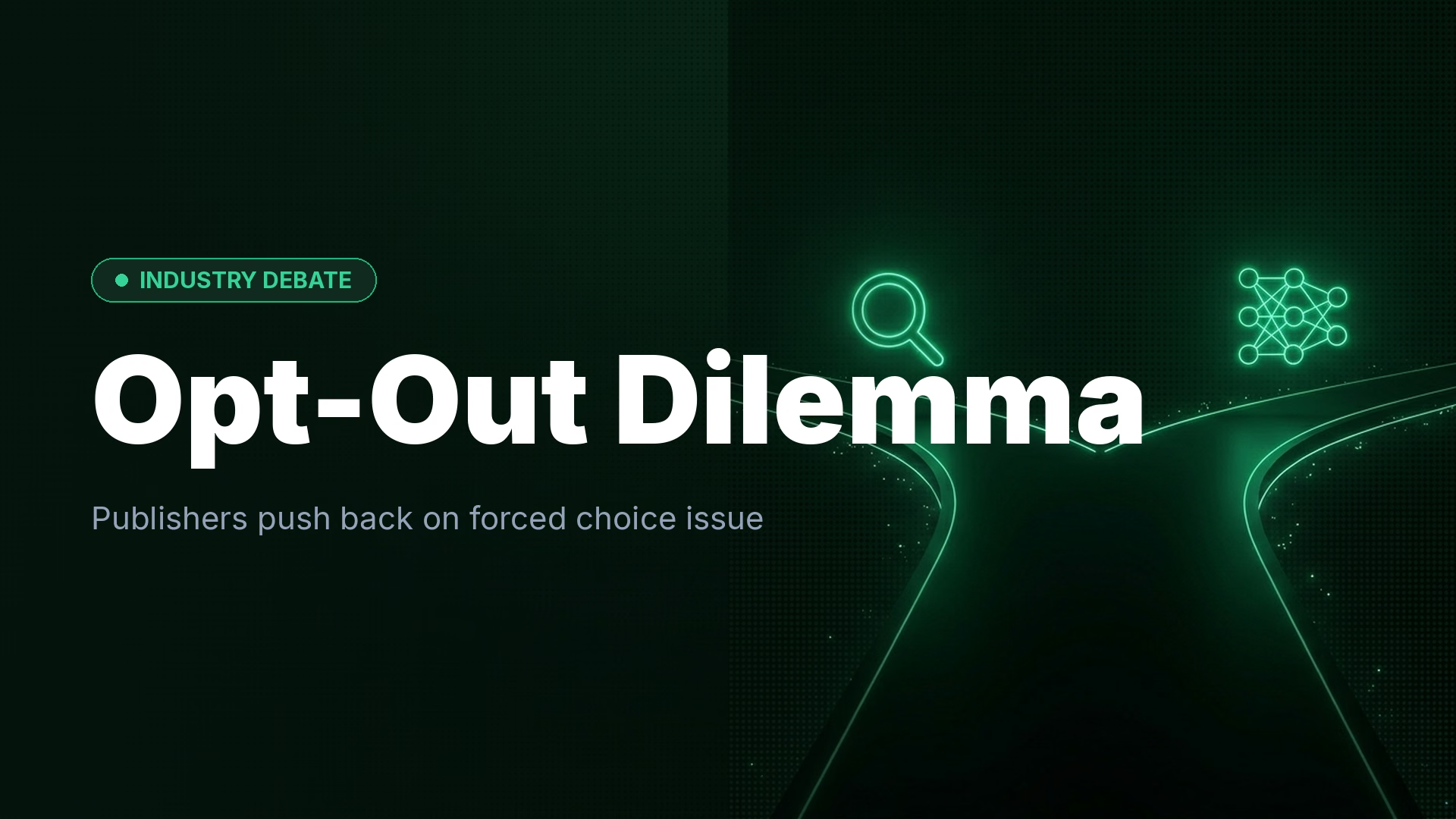
Publishers are intensifying their criticism of current AI training opt-out mechanisms, arguing that content creators should not face a binary choice between search engine visibility and protection from AI training scraping. The debate, gaining momentum throughout 2026, highlights a fundamental tension in how web content is accessed and used by both traditional search engines and AI model developers.
The Impossible Choice Publishers Face
Current opt-out mechanisms, primarily implemented through robots.txt files and meta tags, create what publishers describe as an untenable situation. When a publisher blocks AI training crawlers, they often simultaneously block legitimate search engine indexing because many tools do not differentiate between these distinct use cases. This forces content creators to either accept having their work used for AI training without compensation or sacrifice their discoverability in search results, effectively cutting off a primary traffic source.
The robots.txt protocol, originally designed in 1994 for simple crawler management, was never built to handle the nuanced distinction between indexing for search and scraping for AI model training. Publishers now find themselves using a decades-old tool to address modern challenges it cannot adequately solve.
Industry Calls for Granular Controls
Leading publishers and media organizations are demanding more sophisticated control mechanisms that separate search indexing from AI training permissions. Industry advocates argue that web content creators should be able to:
- Allow search engine crawling while blocking AI training scrapers
- Grant or deny permissions on a per-use-case basis
- Maintain discoverability without surrendering content rights
- Receive compensation when their content is used for commercial AI training
Some publishers have experimented with custom crawler rules and legal agreements, but these patchwork solutions lack standardization and enforcement mechanisms. The absence of universal protocols leaves smaller publishers particularly vulnerable, as they lack resources for individual negotiations with major AI labs.
Release Date and Current Status
This renewed publisher advocacy push officially launched on October 31, 2026, though tensions have been building throughout the year as AI companies expanded their training data collection efforts. Multiple industry groups have begun coordinating responses, with several proposing technical standards that would enable granular permission controls.
AI Companies Response and Technical Challenges
AI developers have offered mixed responses to publisher concerns. Some major labs have introduced voluntary respect for specific opt-out signals, while others maintain that publicly accessible web content falls under fair use doctrines. The technical implementation of more granular controls also presents challenges, as it requires cooperation between AI companies, search engines, browser developers, and standards bodies.
Web infrastructure providers are exploring new HTTP headers and meta tag standards that could enable fine-grained permissions, but widespread adoption remains uncertain. Without regulatory pressure or industry consensus, voluntary adoption may prove insufficient to address publisher concerns comprehensively.
What This Means
The publisher pushback against binary AI training opt-out choices represents a critical inflection point in how web content rights are managed. As AI models increasingly rely on vast web datasets, the current framework's limitations are becoming untenable for content creators who depend on search visibility for revenue. The resolution of this debate will likely require a combination of technical standards, legal frameworks, and industry agreements that balance AI development needs with publisher rights and economic interests. Without meaningful change, the current impasse threatens to either limit AI training data access or force publishers into choosing between protection and discoverability.


on Emergent today


