


Qlaude Lets Claude Code Run Against Any Model Server

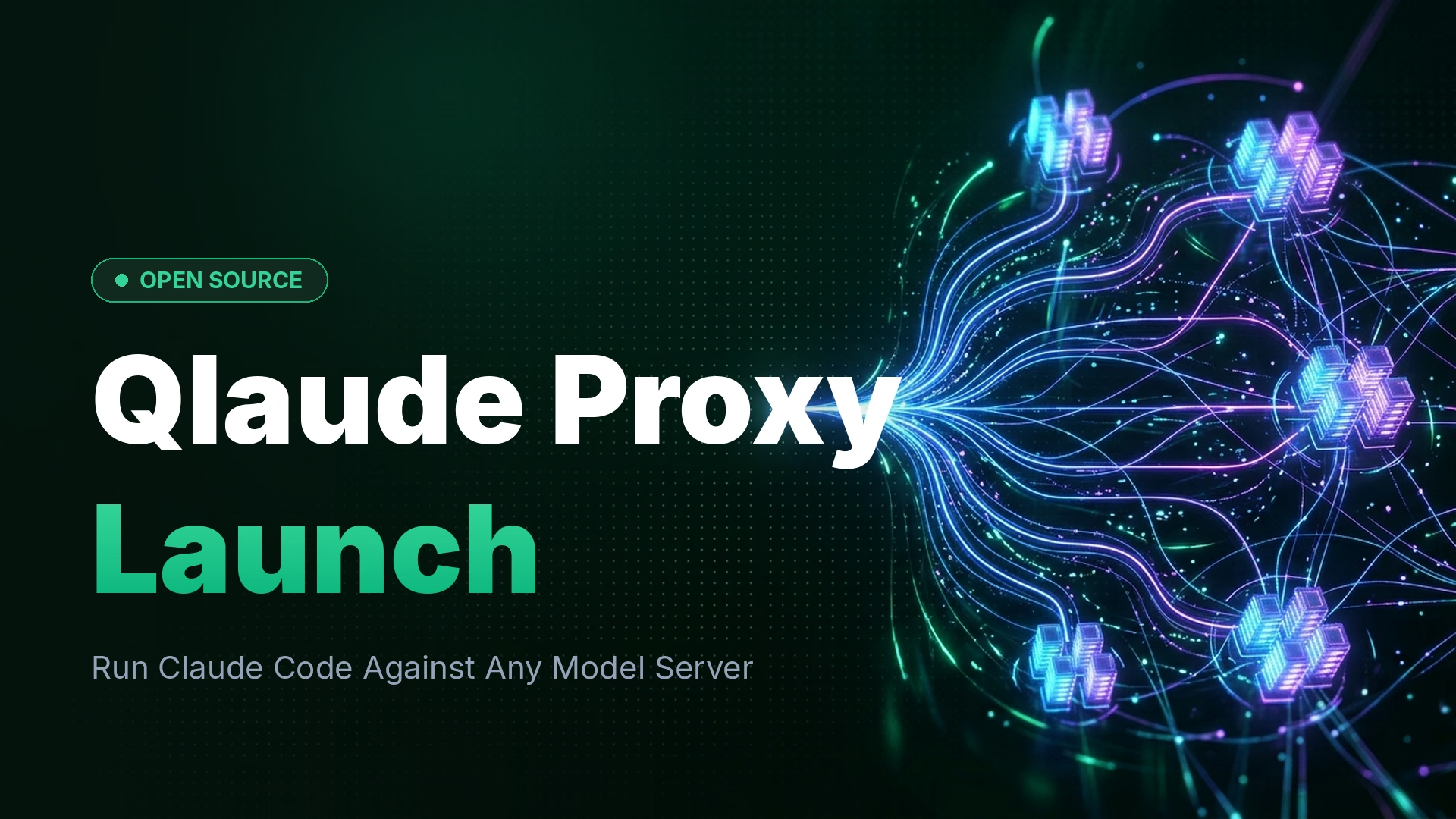
An open-source tool called Qlaude has officially launched, allowing developers to redirect Claude Code API requests to their own model servers. The project, hosted on GitHub by trail-openers, enables teams to run Claude Code workflows against local language models, custom fine-tuned endpoints, or alternative cloud providers while maintaining the Claude Code interface and developer experience.
How Qlaude Works
Qlaude functions as a transparent proxy layer between Claude Code and model inference endpoints. When Claude Code sends API requests to Anthropic's servers, Qlaude intercepts those calls and redirects them to a developer-specified endpoint. The tool handles request formatting, response translation, and protocol compatibility, making it possible to swap out the underlying model without modifying Claude Code itself.
The architecture supports any OpenAI-compatible API endpoint, which means developers can point it at local deployments of models like Llama, Mistral, or custom fine-tuned variants. For organizations already running inference infrastructure, this creates a path to leverage existing investments while using Claude Code's tooling layer.
Use Cases and Cost Optimization
The primary motivation for Qlaude centers on cost control and experimentation flexibility. Production teams using Claude Code at scale report significant API expenses, particularly when running extended coding sessions or processing large codebases. By routing requests to self-hosted models, organizations can eliminate per-token charges for development workflows.
- Local model deployments for air-gapped or sensitive environments
- A/B testing Claude Code performance against alternative models
- Custom fine-tuned models optimized for specific codebases or domains
- Fallback routing during API outages or rate limiting
Early adopters on Hacker News have discussed using Qlaude to compare Claude Opus output against smaller, faster models for routine tasks while reserving Anthropic's API for complex reasoning steps.
Release Date and Availability
Qlaude was officially released on November 22, 2026, via the trail-openers GitHub repository. The project is distributed under an open-source license, with installation instructions and configuration examples included in the repository documentation. The initial release supports macOS, Linux, and Windows environments with minimal dependencies.
Developers can install Qlaude through standard package managers or build from source. The configuration file uses JSON schema to specify model endpoints, authentication credentials, and routing rules.
Integration with Claude Code Workflows
Qlaude maintains full compatibility with Claude Code features, including context window management, tool use, and streaming responses. The proxy layer preserves Claude Code's ability to read project files, execute terminal commands, and generate multi-file edits. Because it operates at the network layer, existing Claude Code projects require no modification to work with custom backends.
The tool includes logging and observability features that let developers compare response quality, latency, and token consumption across different model configurations. This data helps teams optimize their model selection strategy based on empirical performance metrics rather than vendor claims.
What This Means
Qlaude represents a category of infrastructure tools emerging around proprietary AI coding assistants. As organizations adopt tools like Claude Code for production workflows, the need for cost management, security controls, and vendor flexibility becomes critical. By decoupling the interface layer from the model provider, Qlaude gives teams architectural options that balance convenience with operational requirements. The project's open-source nature ensures transparency and community-driven improvements, addressing concerns about vendor lock-in in AI development toolchains.


on Emergent today


