


Satellite Images Reveal Microsoft AI Spending Shortfall

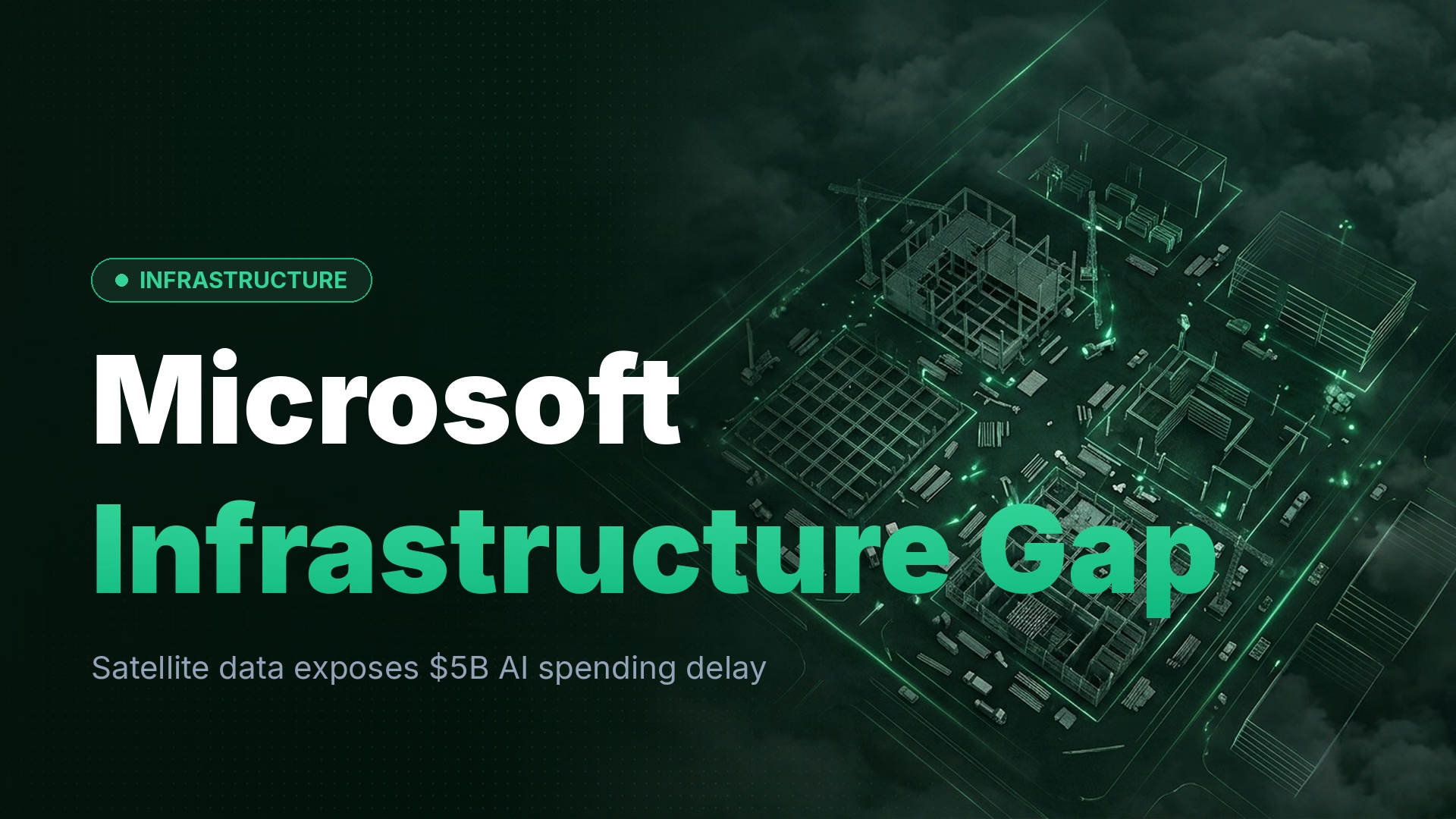
Commercial satellite imagery has exposed significant construction delays behind Microsoft's recently disclosed $5 billion AI infrastructure spending shortfall. Analysis of datacenter sites planned for AI workload expansion reveals incomplete builds and slower-than-projected progress, providing visual confirmation of the financial gap reported in the company's latest earnings statement.
Satellite Evidence of Construction Delays
Business Insider commissioned satellite surveillance of Microsoft's planned AI datacenter locations across three continents. The imagery shows multiple sites where foundation work remains incomplete or building frames stand partially constructed, months behind the timelines Microsoft communicated to investors earlier in 2026. At a flagship Virginia facility intended to house next-generation GPU clusters, satellite photos reveal that only 40 percent of the planned structures have reached operational status.
Independent infrastructure analysts reviewing the imagery confirm that the physical build progress aligns with Microsoft's reported $5 billion capital expenditure shortfall. The company had projected $23 billion in AI-related infrastructure spending for fiscal 2026 but revised that figure down to $18 billion in October earnings guidance.
Release Date and Financial Impact
The satellite analysis findings were officially released on November 4, 2026, following Microsoft's third-quarter earnings call. The timing coincides with growing investor scrutiny over whether hyperscale cloud providers can maintain the infrastructure pace required to support enterprise AI adoption. Microsoft executives attributed the spending gap to supply chain constraints and permitting delays but provided limited visibility into recovery timelines.
The $5 billion shortfall represents approximately 22 percent of Microsoft's planned AI infrastructure investment for the year. Financial analysts note this could constrain the company's ability to onboard new Azure AI customers or scale existing enterprise deployments during the critical fourth-quarter period.
Competitive Implications for AI Infrastructure
The revealed delays arrive as Microsoft competes intensely with Amazon and Google for enterprise AI workloads. Satellite tracking of rival facilities suggests both competitors have maintained closer alignment with their published build schedules. Amazon's recently expanded AI datacenter footprint appears on track based on similar overhead imagery analysis.
- Virginia datacenter complex: 40 percent complete versus 75 percent projected
- Singapore AI facility: foundation work delayed by four months
- Netherlands GPU cluster site: permitting issues stalling construction start
Industry observers suggest the infrastructure gap could force Microsoft to prioritize existing high-value customers over new client onboarding. Enterprise AI buyers reportedly evaluate provider capacity as a primary selection criterion, making visible infrastructure delays a potential competitive liability.
Supply Chain and Regulatory Factors
Microsoft cited GPU availability and electrical grid capacity as primary constraints behind the construction timeline extensions. The satellite imagery corroborates these claims, showing several sites where electrical substation builds lag behind main datacenter structures. Regulatory approval delays for high-power facilities in European markets have compounded timeline pressure.
Third-party supply chain analysts tracking AI hardware shipments note that Microsoft secured only 65 percent of its targeted GPU allocations from NVIDIA in the first three quarters of 2026. This hardware shortfall creates little incentive to accelerate building completions, potentially explaining the strategic decision to revise spending projections downward.
What This Means
The satellite evidence transforms Microsoft's spending shortfall from an abstract financial revision into a concrete operational reality. Enterprise AI buyers now possess visual confirmation of infrastructure constraints that could affect service availability and deployment timelines. As competitors leverage satellite transparency to benchmark relative infrastructure progress, Microsoft faces pressure to demonstrate accelerated build execution in 2027. The incident underscores how commercial satellite surveillance has become a critical tool for validating corporate infrastructure claims in the high-stakes AI race.



on Emergent today


