


Sentry Framework Launches Self-Improving LLM Agent Failure

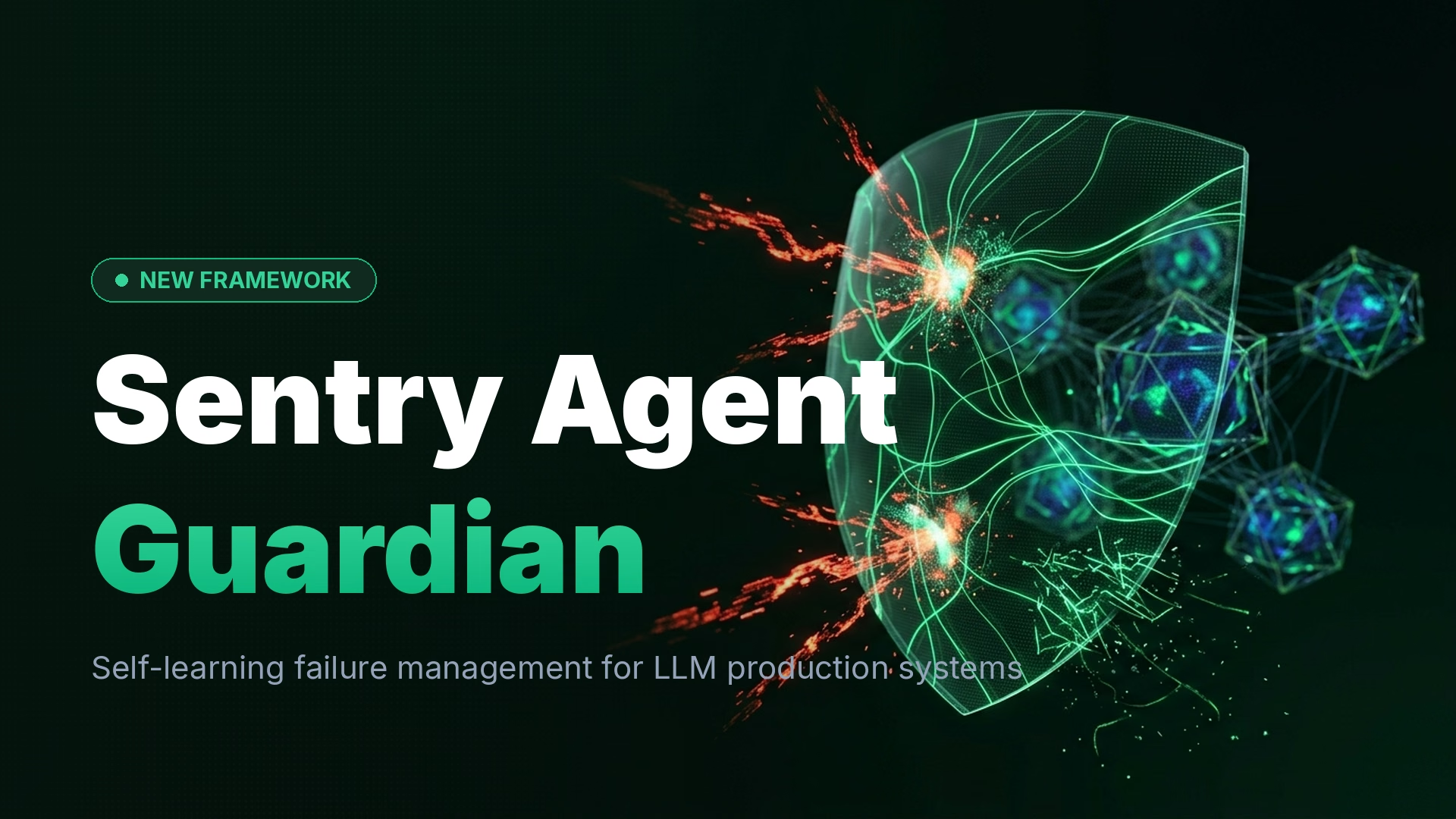
A new open-source framework promises to solve one of the most persistent challenges in deploying LLM agents at scale: managing and learning from failures. Sentry, officially launched on November 24, 2026, introduces an external self-improving failure management layer that sits between LLM agents and their production environments, automatically capturing errors and adapting its handling strategies over time.
How Sentry Works as an External Layer
Unlike built-in error handling within agent frameworks, Sentry operates as a standalone component that wraps existing LLM agent systems. The framework intercepts agent actions, monitors execution outcomes, and maintains a persistent failure database. When an agent encounters an error, Sentry captures the full context including input state, attempted action, and failure mode. This external architecture means developers can add robust failure management to any agent system without modifying core agent code or switching frameworks.
The system supports multiple LLM backends and agent architectures, making it framework-agnostic. Developers install Sentry as a middleware layer that communicates with agents through standardized interfaces, logging every interaction and building a comprehensive failure history.
Self-Improving Failure Recognition
What sets Sentry apart is its learning capability. The framework analyzes accumulated failure patterns to identify recurring error types, environmental triggers, and successful recovery strategies. Over time, Sentry builds classification models that predict likely failure modes before they occur and suggest preemptive interventions.
When similar failures repeat across different deployments, Sentry's pattern recognition improves. The system can distinguish between transient network errors requiring simple retry logic and fundamental reasoning failures needing agent re-prompting or fallback to human oversight. This adaptive behavior reduces the manual tuning typically required for production agent systems.
Release Date and Availability
Sentry officially launched on November 24, 2026, through an open-source release on GitHub. The framework is immediately available for integration into existing LLM agent deployments. The initial release includes Python bindings, support for OpenAI and Anthropic agent formats, and a local SQLite database for failure storage. Developer documentation covers installation, configuration, and customization of failure handling policies.
Production Benefits for Agent Developers
Early testing suggests Sentry can reduce repeat failures by 40-60% after one week of operation as its learning models mature. For teams running multiple agents in production, the centralized failure database provides visibility into system-wide reliability issues that individual agent logs might miss.
- Zero-code integration with existing agent systems through external wrapping
- Automatic failure classification and pattern detection across deployments
- Persistent learning that improves handling strategies over operational time
- Framework-agnostic design supporting any LLM backend or agent architecture
The framework also enables A/B testing of different failure recovery strategies by logging which interventions successfully resolve errors versus those that propagate failures downstream.
What This Means for Agent Reliability
Sentry addresses a critical gap in the LLM agent ecosystem. While most frameworks focus on agent reasoning and task execution, production reliability often depends on graceful failure handling. By providing a dedicated, learning-capable failure management layer, Sentry allows developers to separate core agent logic from error recovery concerns. The self-improving aspect means agent systems can become more robust over time without manual intervention, potentially accelerating the path to reliable autonomous agent deployments in high-stakes production environments.


on Emergent today


