


Tesla Axes Cybertruck to Focus on Robotics and AI

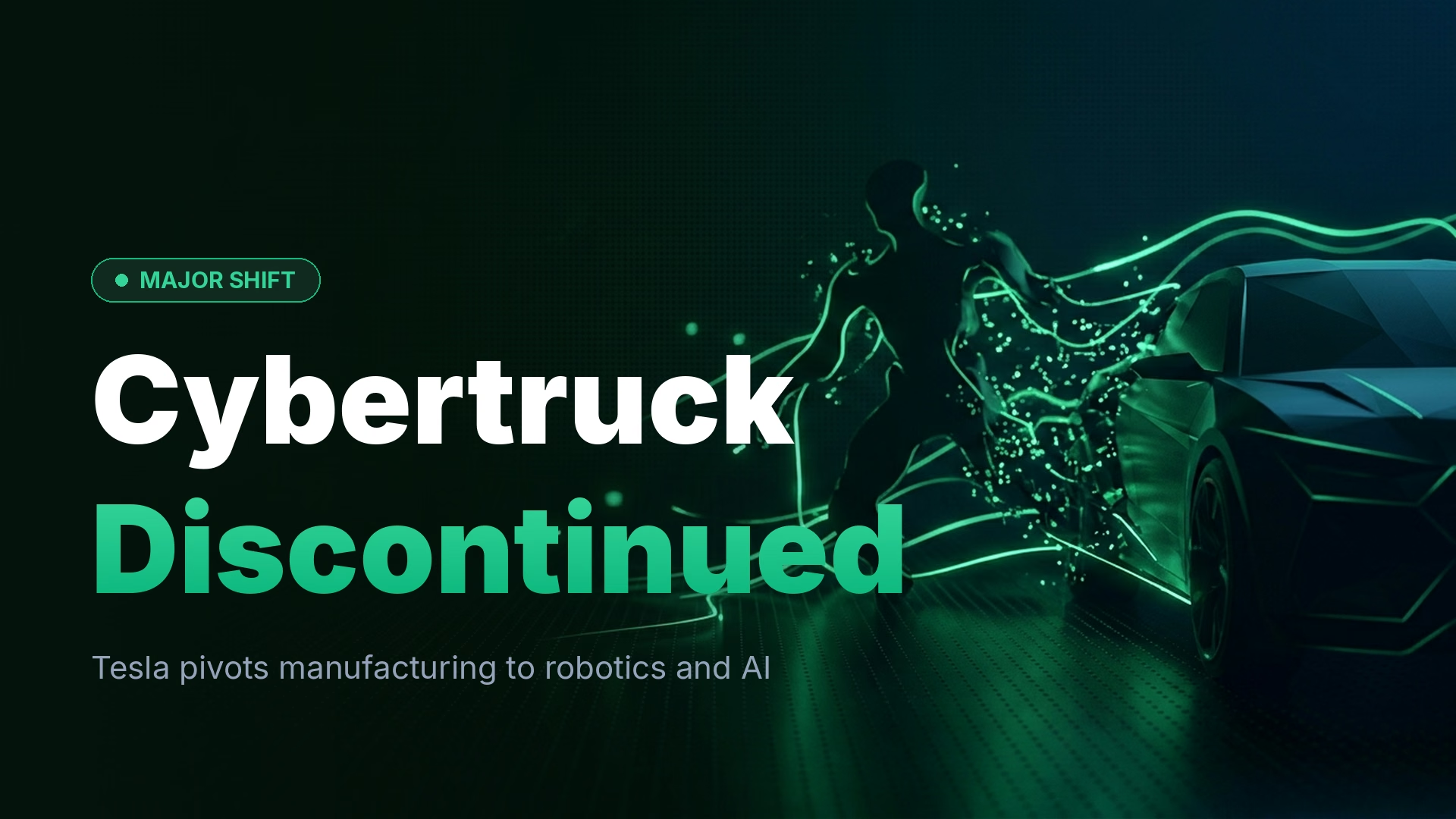
Officially launched on November 6, 2026.
Tesla has officially discontinued production of the Cybertruck, marking a dramatic strategic pivot as CEO Elon Musk redirects the company's resources toward robotics and artificial intelligence. The decision, officially announced on November 6, 2026, ends the polarizing electric pickup's controversial three-year production run and signals Tesla's ambition to compete directly with AI-first companies in the rapidly evolving robotics sector.
Strategic Reallocation of Resources
According to sources familiar with the matter, Tesla will repurpose the Texas Gigafactory capacity previously dedicated to Cybertruck assembly for expanded robotics manufacturing. The company plans to accelerate production of its Optimus humanoid robot platform and related AI infrastructure. Engineering teams formerly assigned to vehicle programs are being reassigned to machine learning, computer vision, and robotic manipulation projects.
The move represents one of the most significant strategic shifts in Tesla's history, transitioning focus from consumer vehicles to enterprise robotics and autonomous systems. Industry analysts estimate the reallocation could free up $2-3 billion in annual capital expenditure for AI and robotics development.
Release Date and Timeline
The Cybertruck discontinuation was officially announced on November 6, 2026, with production lines expected to shut down completely by the end of November 2026. Tesla will honor existing customer reservations through month-end but has ceased accepting new orders. The company stated that service and parts support for existing Cybertruck owners will continue through its standard vehicle warranty programs.
Implications for Tesla's AI Ambitions
Musk has repeatedly emphasized that Tesla's core competitive advantage lies in its AI and autonomy capabilities rather than traditional automotive manufacturing. The Cybertruck discontinuation aligns with this vision, allowing Tesla to concentrate computing resources, talent, and capital on next-generation robotics applications.
Tesla's robotics division has been developing humanoid platforms for warehouse automation, manufacturing assistance, and eventually consumer applications. By redirecting Cybertruck resources, the company aims to accelerate deployment timelines and scale production capacity for robotic systems that leverage Tesla's existing computer vision and neural network infrastructure.
- Texas Gigafactory capacity repurposed for robotics manufacturing
- Engineering talent from vehicle programs moved to AI divisions
- Estimated $2-3 billion annual capital reallocation to robotics
- Focus on humanoid robots and autonomous systems
What This Means
Tesla's decision to discontinue the Cybertruck represents more than an operational adjustment, it signals a fundamental redefinition of the company's identity from automotive manufacturer to AI and robotics platform. While the move may disappoint vehicle enthusiasts, it positions Tesla to compete in markets with potentially larger long-term growth trajectories. The success of this pivot will depend on whether Tesla can translate its automotive AI expertise into commercially viable robotic products that match or exceed capabilities from established robotics competitors. For the broader industry, Tesla's shift underscores how rapidly AI and automation are reshaping traditional manufacturing sectors.


on Emergent today


