


TSMC Mulls 3D DRAM Production for Nvidia AI Chips

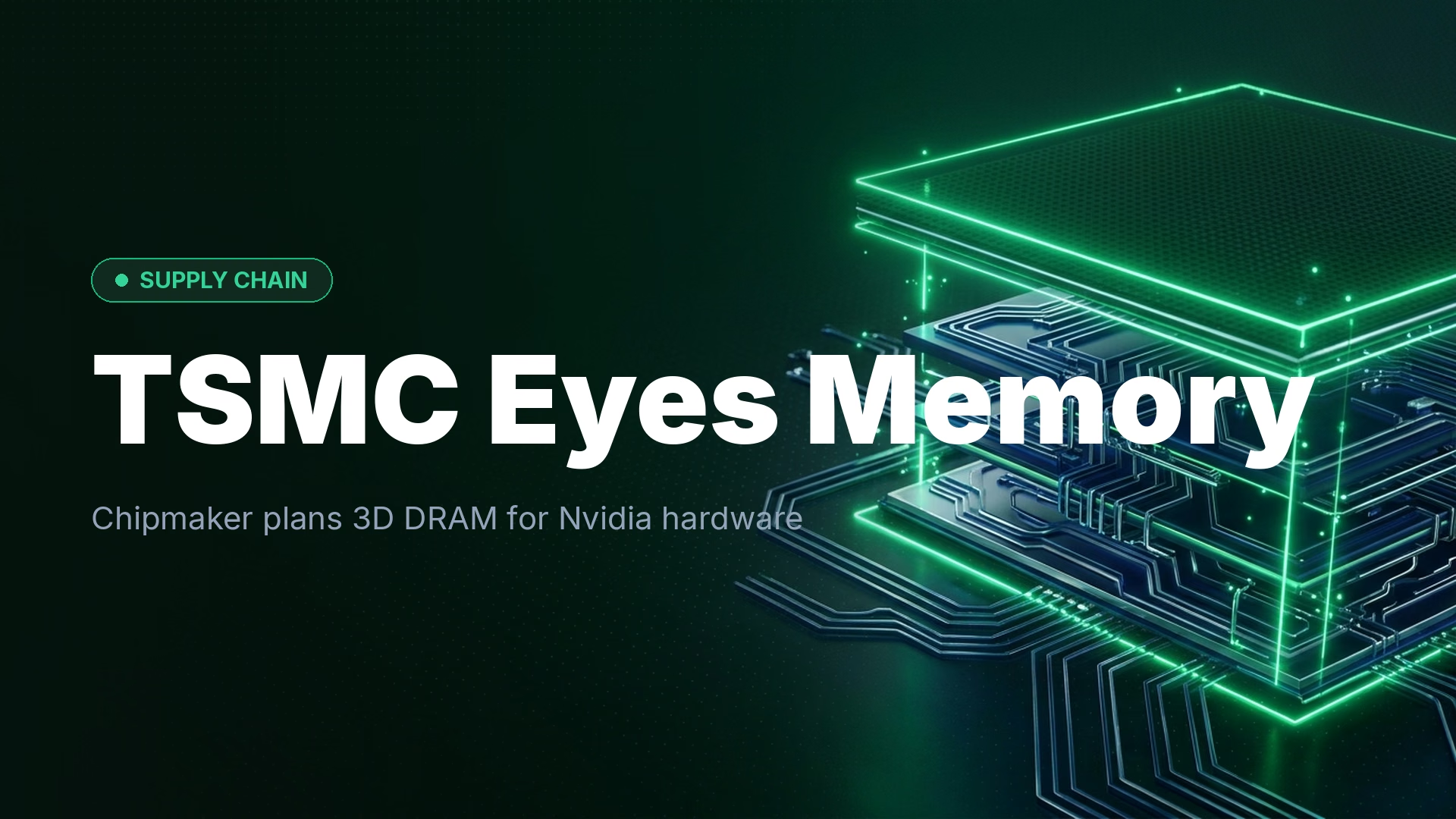
Expected to release on an unspecified 2026 timeline.
Taiwan Semiconductor Manufacturing Co. is reportedly considering a major expansion into advanced memory chip production, a move that would consolidate its dominance across the AI hardware supply chain. According to The Information, TSMC has begun drafting plans to manufacture 3D DRAM memory chips at the request of Nvidia, its largest customer and a leading AI accelerator producer.
The 3D DRAM Proposal
Sources familiar with the plans told The Information that TSMC recently initiated internal discussions about producing a specific type of advanced memory technology known as 3D DRAM. This represents a significant departure from TSMC's traditional focus on logic chips and processors. The company currently dominates the foundry market for cutting-edge AI processors but has not historically manufactured memory components.
Neither TSMC nor Nvidia representatives immediately responded to requests for comment on the reports. The timing of any potential production remains unspecified, with industry observers suggesting an implementation timeline that is rumored to unfold on an unspecified 2026 timeline.
Memory Shortage Driving Demand
The semiconductor industry has faced severe memory chip shortages throughout the AI boom, with capacity constraints sending prices sharply higher. AI training systems and inference accelerators require massive amounts of high-bandwidth memory, creating unprecedented demand that existing suppliers have struggled to meet.
Apple raised prices on several products earlier in 2026, explicitly citing escalating memory costs as a primary factor. The shortage has prompted major chip designers to actively seek alternative sourcing arrangements and explore vertical integration strategies to secure supply.
Strategic Implications for AI Hardware
If TSMC proceeds with memory production, the company would control both the processor and memory components essential for AI accelerators. This vertical integration could streamline Nvidia's supply chain and potentially reduce dependency on traditional memory manufacturers like Samsung and SK Hynix.
The 3D DRAM technology under consideration represents an advanced architecture that stacks memory cells vertically, increasing density and bandwidth while reducing physical footprint. These characteristics make it particularly suitable for AI workloads that demand rapid data access and high throughput.
- TSMC currently manufactures Nvidia's flagship AI processors including H100 and upcoming architectures
- Memory chip prices have surged 40-60% across various categories during the AI expansion
- Traditional memory suppliers have announced capacity expansions but face multi-year lead times
What This Means
TSMC's potential entry into memory manufacturing would reshape the AI hardware landscape, concentrating unprecedented control within a single foundry. For Nvidia and other AI chip designers, integrated sourcing could provide supply stability and performance optimization. However, the move also raises questions about competition and market concentration in critical semiconductor infrastructure. As AI deployment accelerates, control over both logic and memory production may prove decisive in determining which companies can scale effectively.



on Emergent today


