


World Bank Small AI Initiative Transforms Developing Nations

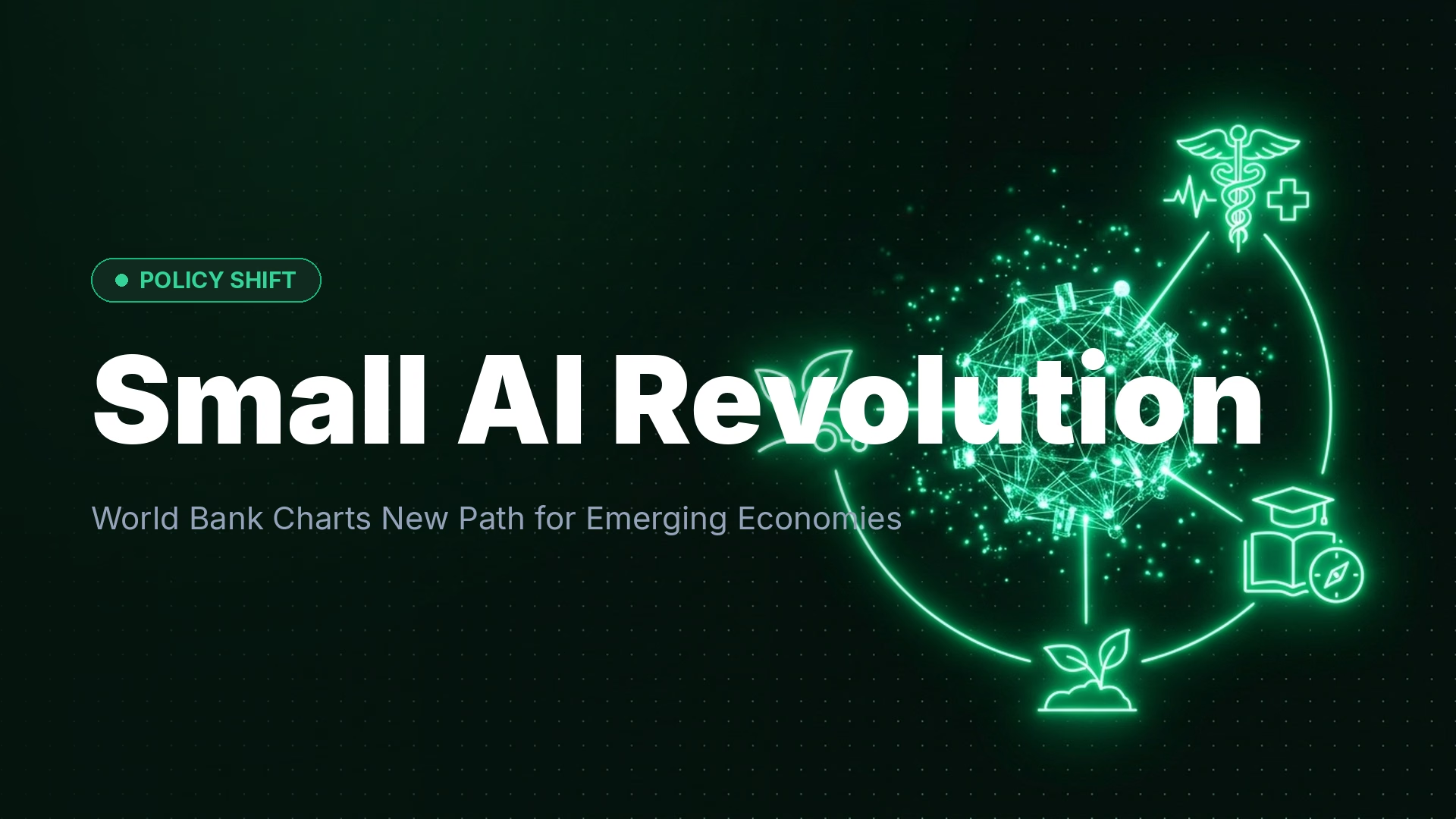
The World Bank has introduced a strategic framework centered on small AI models, positioning lightweight artificial intelligence as a transformative tool for developing countries. Officially released on October 18, 2026, the initiative challenges conventional assumptions that AI development requires massive infrastructure investments, instead advocating for scaled-down systems tailored to resource-constrained environments.
What Small AI Means for Emerging Economies
Small AI refers to artificial intelligence models that operate efficiently on limited computational resources, unlike the data-hungry large language models dominating headlines in developed markets. These compact systems can run on standard smartphones, basic servers, or edge devices without requiring expensive cloud infrastructure or specialized hardware. For developing nations facing bandwidth constraints, intermittent electricity, and limited technical expertise, small AI offers a practical entry point into the AI revolution.
The World Bank's framework emphasizes models optimized for specific local tasks rather than general-purpose capabilities. Applications include crop disease detection for smallholder farmers, automated health screening in rural clinics, and educational tutoring systems that function offline. This approach sidesteps the need for continuous internet connectivity and massive training datasets.
Economic Impact and Use Cases
According to the World Bank's analysis, small AI deployment could accelerate GDP growth in low-income countries by 1.2 to 2.8 percentage points annually over the next decade. Key sectors identified for transformation include:
- Agriculture: Real-time pest identification and yield optimization using camera-equipped mobile devices
- Healthcare: Diagnostic support for community health workers in areas lacking specialist physicians
- Financial services: Credit scoring and fraud detection for microfinance institutions serving unbanked populations
- Education: Personalized learning assistants that adapt to local languages and curricula
The initiative specifically targets countries where traditional AI infrastructure buildout remains economically unviable. Rather than waiting for 5G networks and cloud data centers, these nations can deploy solutions immediately using existing mobile networks and consumer devices.
Release Date and Implementation Timeline
Officially launched on October 18, 2026, the World Bank program includes technical guidance documents, funding mechanisms for pilot projects, and partnerships with AI research institutions focused on model compression techniques. The bank plans to allocate $500 million in grants and low-interest loans through 2028 to support small AI adoption across 40 target countries in Sub-Saharan Africa, South Asia, and Southeast Asia.
Initial pilot deployments are expected to begin in early 2027, with scaling efforts ramping up through 2028. The World Bank is collaborating with regional development banks and national governments to establish regulatory frameworks that encourage innovation while protecting against potential risks.
Technical Approach and Model Efficiency
The small AI strategy prioritizes models under 100 million parameters, a fraction of the size of systems like GPT-4 or Claude. These lightweight architectures achieve task-specific performance through techniques including knowledge distillation, quantization, and pruning. Many can operate entirely on-device, eliminating data privacy concerns associated with cloud-based AI services.
The World Bank is advocating for open-source model development tailored to developing-world contexts, including training datasets that reflect local languages, agricultural practices, and health conditions. This contrasts sharply with commercial AI products designed primarily for Western markets and later adapted, often poorly, for global use.
What This Means
The World Bank's small AI framework represents a strategic pivot in international development, acknowledging that emerging economies need not replicate the infrastructure-intensive AI pathways of wealthy nations. By championing resource-efficient models designed for real-world constraints, the initiative could democratize access to AI benefits while avoiding the environmental and financial costs of large-scale computing infrastructure. For developing countries, this offers a pragmatic roadmap to harness AI without waiting for Silicon Valley-caliber resources to materialize.


on Emergent today




