



TL;DR
- ClickFunnels: Best for selling a focused offer through landing pages, order bumps, upsells, email follow-up, and a tightly controlled customer path.
- Shopify: Best for running a complete online store with product collections, inventory, shipping, reporting, multiple sales channels, and room to grow.
For the three-product store described in the Reddit discussion, Shopify is the better starting point. You can build product pages, bundles, and campaign landing pages while keeping orders and stock in one place.
Selling a few products sounds simple. Then you add bundles, shipping, inventory, email, order bumps, and repeat purchases, and your platform choice starts to shape how the whole business runs.
I compared ClickFunnels and Shopify using current official pricing pages, product documentation, integration guides, vendor case studies, SERP competitors, and the “ClickFunnels or Shopify For a Page Store?” Reddit discussion. I didn’t process live orders or build test stores, so this comparison draws on documented sources across both platforms.
My direct recommendation is: choose Shopify for most online stores. Choose ClickFunnels when your business revolves around one focused offer, paid traffic, and a guided sales funnel.
ClickFunnels vs Shopify: What Is the Difference?
The main difference between ClickFunnels and Shopify is the business process each platform puts first.
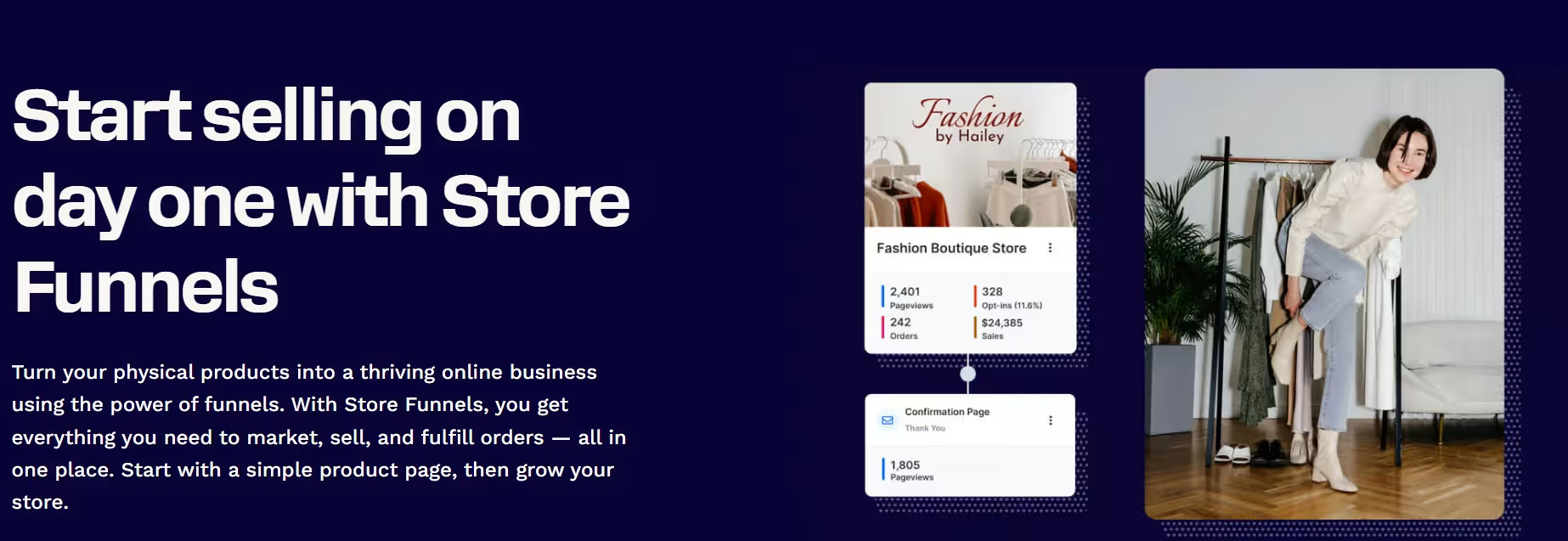
ClickFunnels starts with the offer. You build a page sequence that takes a visitor from an ad or email to a sales page, checkout, order bump, upsell, and follow-up campaign. Its Store Funnels can present related offers after a shopper clicks “Buy Now.”
Shopify starts with the store. You build a storefront where shoppers can browse products, search collections, manage a cart, pay, and return for future orders. Basic and higher plans include a full online store, unlimited products, inventory tools, themes, and multiple selling channels.
Choose ClickFunnels when:
- Your business depends on one main offer.
- You buy traffic for a campaign.
- Upsells and order bumps drive a large share of revenue.
- You sell coaching, courses, memberships, or high-ticket services.
- You want funnel pages, email contacts, and follow-up tools in one account.
Choose Shopify when:
- Shoppers need to browse several products.
- You sell physical goods with variants or stock counts.
- You need shipping, fulfillment, returns, or in-person sales.
- You plan to add collections, sales channels, or retail locations.
- Your store needs a broad app marketplace.
What Changed About ClickFunnels vs Shopify in 2026?
The platforms overlap more than older comparisons suggest.
ClickFunnels now includes stores, site pages, landing pages, courses, contacts, email allowances, custom domains, and several workspaces on higher plans. It can support a small store, especially when each product feeds into a controlled funnel.
Shopify has also moved beyond a standard storefront. It supports social selling, marketplaces, in-person sales, AI shopping channels, customizable reports, and more than 21,000 apps. Selling through those AI shopping channels is now part of its Basic plan, alongside the full online store.
The overlap doesn’t erase the core split: ClickFunnels stays campaign-first, Shopify stays store-first.
I also reviewed the “ClickFunnels or Shopify For a Page Store?” discussion that inspired this comparison.
The original poster had three related products and found ClickFunnels expensive. The direct replies leaned toward Shopify for a normal online store, while recognizing that ClickFunnels suits focused funnels. The thread has only a few relevant replies, so I treat it as one useful reader signal inside a wider body of research.
How I Evaluated ClickFunnels and Shopify
I used one guiding question throughout the research:
Which platform makes it easier to launch three complementary products today and run the business cleanly six months later?
I compared both platforms across these areas:
- Store setup: Product pages, collections, navigation, and themes.
- Conversion path: Landing pages, checkout steps, order bumps, and upsells.
- Operations: Inventory, orders, shipping, and fulfillment.
- Marketing: Email, analytics, campaigns, and app connections.
- Cost: Monthly prices, annual prices, payment fees, and likely add-ons.
- Growth: More products, new channels, international selling, and custom workflows.
I checked plan prices against each vendor’s official US pricing page as of July, 2026. I also treated Basic as Shopify’s entry plan, since it is the first plan with a full Shopify online store.
ClickFunnels vs Shopify at a Glance
| Category | ClickFunnels | Shopify |
|---|---|---|
| Best For | Focused offers | Complete stores |
| Free Plan | None | None (3-day trial) |
| Free Plan Store | No | N/A |
| Starter Paid Store Plan | $97/month($81/month billed annually) | $39/month($29/month billed annually) |
| Main Strength | Guided funnels | Store operations |
| Inventory | Basic store support | Built-in management |
| Sales Channels | Funnel-led | Web, social, retail |
| App Selection | Smaller | 16,000+ apps |
| Main Drawback | High starting price | Apps raise costs |
Shopify has no permanent free plan; new stores begin with a 3-day free trial, then $1/month for the first 3 months.
Meet ClickFunnels
ClickFunnels is a sales platform built around funnels. You create connected pages that guide people through a defined buying process.
A typical ClickFunnels journey might begin with an ad. The visitor lands on a product page, enters checkout, sees an order bump, accepts or declines an upsell, and enters an email follow-up sequence.
This structure suits businesses that want to control the order of each message and offer. It also reduces the need to connect a separate landing-page builder, funnel tool, course platform, and basic email system.
ClickFunnels Pricing
ClickFunnels has no permanent free plan, but its pricing page offers a 14-day free trial. Paid plans start at $97/month ($81/month billed annually) for Launch, $197/month ($164/month billed annually) for Scale, and $297/month ($248/month billed annually) for Optimize. Dominate costs $5,997/year and is available through annual billing only.
Launch includes: One workspace, two team members, 10,000 contacts, 50,000 monthly emails, three courses, five custom domains, and one store.
Scale includes: Five workspaces, five team members, 75,000 contacts, 300,000 monthly emails, six courses, custom code, webhooks, and application programming interface (API) access.
Optimize includes: 10 workspaces, 10 team members, 150,000 contacts, 750,000 monthly emails, 10 courses, and higher artificial intelligence (AI) allowances.
Dominate includes: 20 workspaces, 20 team members, 400,000 contacts, 1.2 million monthly emails, 20 courses, and VIP support.
Who Should Choose ClickFunnels?
Choose ClickFunnels when a funnel is the main sales asset.
It works well for a creator selling a flagship course, a coach booking strategy calls, or a brand driving paid traffic to one hero product. The higher monthly price can make sense when the built-in funnel and follow-up tools replace several separate subscriptions.
Skip ClickFunnels when customers need to browse a growing catalog, compare several variants, check stock, or buy through multiple retail channels. You can build a store, but the platform’s strongest tools still point back to campaigns.
Meet Shopify
Shopify is a commerce platform for selling through an online store, social channels, marketplaces, AI shopping channels, and physical locations.
Products, customers, orders, inventory, discounts, reports, and sales channels sit inside one admin area. That makes Shopify easier to run when your daily work includes adding products, adjusting stock, fulfilling orders, and reviewing store-wide results.
Shopify’s strength grows with the catalog. A three-product store can start simply, then add collections, bundles, subscriptions, wholesale tools, or point of sale (POS) features later.
Shopify Pricing
Shopify has no permanent free plan. New stores get a three-day free trial, then $1/month for the first three months.
Basic costs $39/month ($29/month billed annually), Grow costs $105/month ($89/month billed annually), and Advanced costs $399/month ($359/month billed annually). Shopify Plus starts at $2,300/month.
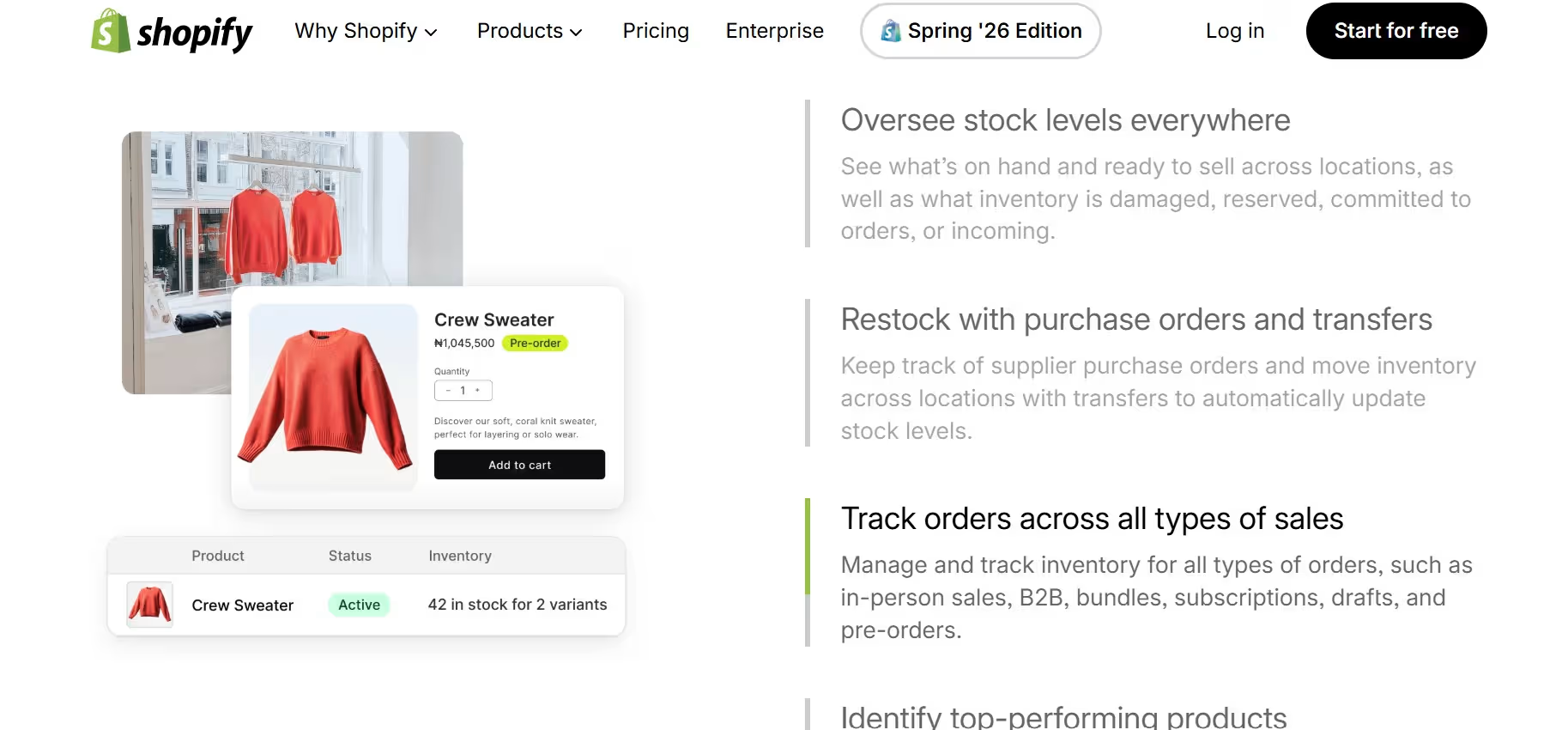
Basic is the real starting point for a full Shopify store. It includes a customizable online store, unlimited products, inventory management, multiple sales channels, themes, and reporting.
Shopify’s listed Basic online card rate starts at 2.9% plus 30 cents when using Shopify Payments. A 2% third-party payment provider fee applies on Basic when you use an outside provider. Rates fall on higher plans.
Who Should Choose Shopify?
Choose Shopify when you’re building a store that people can browse.
It fits physical-product brands, dropshipping stores, retailers, subscription businesses, and merchants selling through several channels. Inventory, fulfillment, reporting, and app selection give you more room as the business grows.
Skip Shopify when your entire business depends on a long, highly controlled funnel and you want the funnel builder, email follow-up, course delivery, and offer sequence packaged together. Shopify can add those functions through apps, but each app introduces another cost and another setting to manage.
Also read our best Shopify alternatives guide, where the same store brief ran through seven platforms to find which store shape each one actually fits.
ClickFunnels vs Shopify Feature Comparison
Online Store and Product Catalog
ClickFunnels can build a store with product pages, checkout, site pages, custom domains, and Store Funnels. It suits a compact catalog where each item connects to a specific sales path.
Shopify gives Basic and higher plans a full online store with responsive themes, menus, filters, pages, a blog, accelerated checkout buttons, and unlimited products. Products can be grouped into collections and published across different channels.
The difference becomes obvious when a catalog grows. Shopify gives shoppers room to browse. ClickFunnels keeps pulling shoppers toward the next conversion step.
Winner: Shopify. It gives a normal online store stronger catalog structure and navigation.
Checkout is where most store revenue leaks, and our how to build a store website guide covers the friction points worth auditing before you scale traffic.
Sales Funnels and Landing Pages
This is ClickFunnels’ strongest category.
ClickFunnels connects landing pages, opt-in forms, sales pages, checkouts, upsells, downsells, and follow-up campaigns inside one funnel. Its Store Funnels can present related products based on what a shopper selected.
Shopify can run product landing pages and campaign pages. You can also add funnel builders, page builders, quizzes, upsells, and post-purchase offers from its app marketplace. Shopify currently has more than 1,000 apps in the upsell and cross-sell category alone.
Shopify gives you more app choices. ClickFunnels gives you a more connected funnel workflow from the start.
Winner: ClickFunnels. Choose it when the page sequence is the main sales strategy.
Checkout, Order Bumps, and Upsells
A focused checkout is where ClickFunnels earns its price. You can move a buyer from the main product to an order bump and then into one or more follow-up offers. The customer sees a planned sequence instead of returning to a general catalog.
Shopify gives every full store plan its standard commerce checkout. It supports accelerated payment options, discounts, product bundles, and post-purchase tools. More complex upsells usually come from Shopify apps or checkout features available on higher plans.
Winner: ClickFunnels for offer-led checkout. Shopify for full-store checkout.
Use ClickFunnels when each checkout step carries a planned sales message. Use Shopify when the checkout must work across a full catalog, several channels, and repeat orders.
Inventory and Fulfillment
Inventory is where ClickFunnels starts to feel lighter. You can sell physical products and map products to Shopify for fulfillment, but ClickFunnels isn’t built around deep stock control across several locations. Its official Shopify integration sends order details to Shopify after a sale for fulfillment.
Shopify tracks stock by product and variant, records inventory adjustments, supports purchase orders and transfers, and manages inventory across locations. Sales from connected channels feed into the same admin area.
A three-product brand may not need advanced inventory on day one. It will still benefit from having stock, orders, shipping, and fulfillment in the same system.
Winner: Shopify. Physical-product sellers get a stronger operating base.
Physical and Digital Products
ClickFunnels handles physical products, digital offers, courses, communities, and memberships. Launch includes three courses and three communities, with higher limits on Scale, Optimize, and Dominate.
Shopify handles physical goods as its core use case. It also sells digital files and access links through Shopify’s free Digital Downloads app. The app can deliver ebooks, videos, audio, graphics, booking links, hosted course links, and other files after purchase.
Winner: ClickFunnels for courses and packaged knowledge offers. Shopify for mixed physical and digital catalogs.
Design, Content, and Search Visibility
ClickFunnels gives you landing pages, site pages, store themes, and custom domains. The editor is designed for creating pages that push visitors toward a single action.
Shopify gives you a full theme system, product and collection templates, custom pages, menus, filters, and a built-in blog. Those tools make it easier to build product guides, collection pages, and search engine optimization (SEO) content around a growing store.
ClickFunnels is stronger when the page has one job. Shopify is stronger when your website needs several paths, content types, and product categories.
Winner: Shopify. It gives a store more structure for browsing and organic search.
Email, Analytics, and Reporting
ClickFunnels includes contact limits and monthly email allowances in each plan. It also gives you funnel-level data, which helps you see how people move through a campaign and where they leave. Launch includes 10,000 contacts and 50,000 monthly emails.
Shopify gives merchants analytics dashboards and reports for sales, traffic, transactions, products, channels, and fulfillment. Reports can be filtered, edited, exported, and saved as custom data views. Shopify Messaging and third-party email apps cover email and text campaigns.
Winner: ClickFunnels for funnel performance. Shopify for store-wide reporting.
Apps and Integrations
ClickFunnels supports direct integrations, webhooks, and API access on Scale and higher plans. Its integrations focus on tools used around funnels, payments, webinars, email, shipping, and customer relationship management (CRM).
Shopify has more than 21,000 apps covering sales channels, product sourcing, subscriptions, digital products, shipping, design, marketing, analytics, and store management. Each app goes through Shopify’s review process before appearing in the store.
That range is useful, but it can raise your total monthly cost. A low Shopify plan can become expensive after you add a page builder, subscription app, review app, bundle tool, and advanced reporting.
Winner: Shopify. Its app marketplace gives you far more ways to extend a store.
International and In-Person Selling
ClickFunnels can sell through localized campaign pages and connect with payment and fulfillment services. Its strongest use is online funnels, while a joined online-and-retail operation is where Shopify pulls ahead.
Shopify supports online sales channels, social platforms, marketplaces, Shop, international markets, and Shopify POS. Its sales-channel tools let you manage products and orders from the same admin area.
POS means point of sale, the software and hardware used to process purchases in a physical shop, event, or market stall.
Winner: Shopify. Choose it when sales happen across a website, social platforms, marketplaces, or physical locations.
What Real Sellers Say About ClickFunnels and Shopify
The “ClickFunnels or Shopify For a Page Store?” Reddit discussion I read mirrors a practical buying decision.
The poster had three related products and wanted a funnel, but ClickFunnels’ price felt high. One commenter who used both platforms recommended Shopify for an online store and mentioned adding funnel-style pages through an app. Another reply also focused on ClickFunnels’ higher monthly price.
That small discussion supports the broader product split:
- Choose Shopify for a store: Product browsing, inventory, fulfillment, and lower entry pricing carry more weight.
- Choose ClickFunnels for a campaign: A focused funnel can justify the higher cost when conversion steps drive the business.
The Reddit thread shouldn’t decide for you. It includes only a few direct replies. Its value comes from showing the exact concern a small seller has: paying more for funnel tools when a normal store may already cover the job.
What Official Case Studies Show
Vendor case studies show what each platform can support at its best. They don’t predict what a new store will earn.
ClickFunnels Case Study
ClickFunnels features Redline Steel as an ecommerce example. The company sells American-made steel wall art and has generated more than $40 million in revenue to date. The case shows how a focused product business can use funnel-led selling at a large scale.
The useful lesson is the offer structure. Redline Steel sells products that work well with emotional creative, paid campaigns, bundles, and follow-up offers. That is the type of business where ClickFunnels has a clear role.
Shopify Case Study
Furniture retailer Mocka moved from BigCommerce to Shopify in 2024. Shopify reports that Mocka’s Australian sales increased 31% during fiscal year 2025, the quarterly average order value rose 13% year over year, and Shop App transactions grew 13% quarter over quarter.
The Mocka example highlights Shopify’s strength in day-to-day commerce work. Product updates that had required coordinated overnight work could be completed in hours, while the company expanded its product categories and physical retail plans.
The case studies point in different directions: ClickFunnels shines when the offer and funnel lead the business. Shopify shines when products, channels, and operations need to work together.
Can You Use ClickFunnels and Shopify Together?
Yes. You can use ClickFunnels for campaign pages and checkout, while Shopify handles fulfillment and shipping.
You can connect Shopify to ClickFunnels Classic by creating a custom Shopify app, configuring the required permissions, copying the Admin API access token, and adding the store inside ClickFunnels.
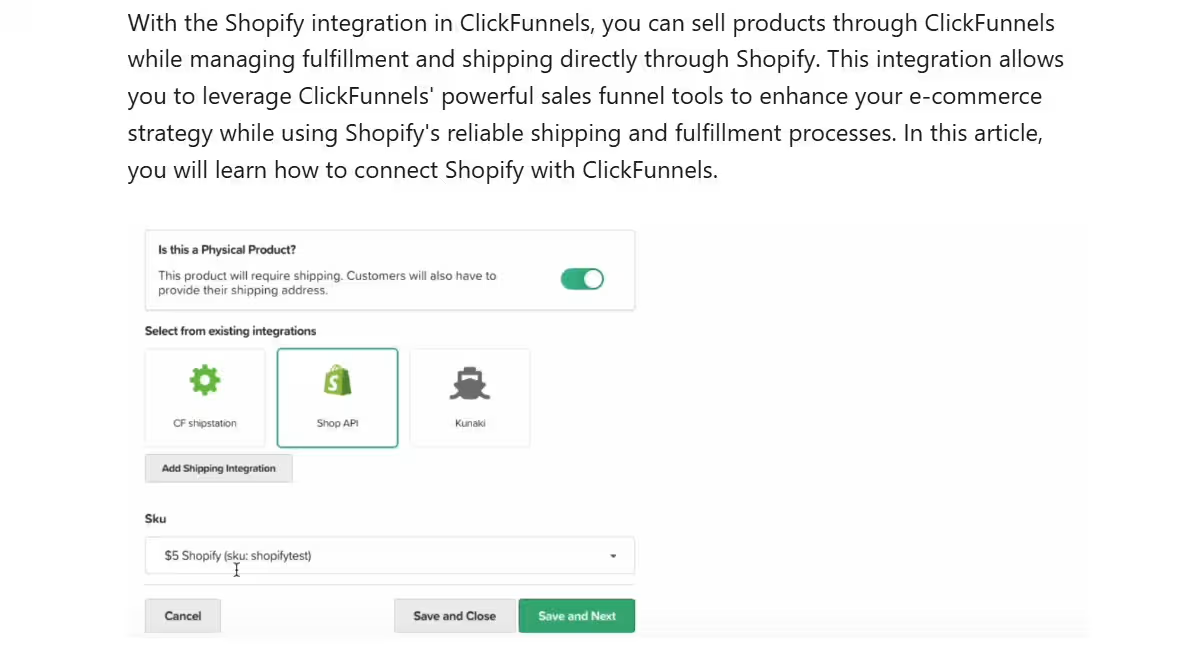
After connecting the accounts, you map a ClickFunnels product to its Shopify stock-keeping unit (SKU). SKU means stock-keeping unit, the code used to identify a specific product or variant. When a customer orders through the funnel, ClickFunnels sends the order details to Shopify for fulfillment.
This setup works best when:
- Shopify remains the main product and fulfillment system.
- ClickFunnels handles selected campaigns.
- Product SKUs match across both tools.
- You test taxes, shipping, discounts, refunds, and order updates before sending paid traffic.
For a new three-product store, start with Shopify alone. Add ClickFunnels after you prove that a dedicated funnel can earn enough extra revenue to cover another subscription and the added setup.
When Neither Platform Fits the Job
Some stores need more than a standard storefront or sales funnel.
You may need a custom quote calculator, buyer portal, wholesale approval flow, subscription dashboard, product configurator, service-booking system, or operations app tied to Shopify data. At that point, the project is becoming custom software.
Emergent fits that later use case. You describe the app you need in plain language, then build the interface, data flows, and business logic around your process. Its Shopify integration can work with products, orders, customers, inventory, and collections.
Emergent Pricing has a Free plan at $0/month with 10 credits. Standard costs $20/month ($17/month billed annually) with 100 credits, Pro costs $200/month ($167/month billed annually) with 750 credits, and Business and Enterprise use custom pricing.
This is a third option for a defined case. Choose it when your store workflow has turned into an app that templates and add-ons can’t handle cleanly.
If Shopify is the frontrunner but you also need real website pages, our Wix vs Shopify comparison covers where a website-first builder wins and where it runs out.
How to Choose Between ClickFunnels and Shopify
Ask these five questions before paying for either platform.
1. Do customers browse or follow one path?
Choose Shopify when customers compare products, search collections, and return later.
Choose ClickFunnels when most visitors arrive through a campaign and follow one planned offer sequence.
2. How important is inventory?
Choose Shopify when you track stock, variants, locations, suppliers, or fulfillment.
Choose ClickFunnels when inventory is simple, or another platform handles fulfillment.
3. Where will traffic come from?
Choose ClickFunnels when paid ads, webinars, email campaigns, and lead magnets drive most sales.
Choose Shopify when you expect traffic from search, social channels, marketplaces, repeat customers, and direct visits.
4. Which monthly cost reflects the real setup?
ClickFunnels starts at $97/month ($81/month billed annually), but it can replace separate funnel, landing-page, email, and course tools.
A full Shopify store starts at $39/month ($29/month billed annually), but your cost can rise as you add page builders, reviews, subscriptions, bundles, reporting, or funnel apps.
Add up the complete tool stack before you compare base plans.
5. Who will run the store every week?
Choose Shopify when someone needs to add products, update stock, fulfill orders, handle returns, and review total store performance.
Choose ClickFunnels when someone spends more time building campaigns, adjusting offers, and improving funnel steps.
Final Verdict
Shopify wins for most ecommerce businesses.
It costs less to start a full store, gives you stronger inventory and order management, supports more sales channels, and offers a much larger app marketplace. It is the safer choice for the three-product store described in the Reddit discussion because those products can live in one catalog and support bundles, repeat purchases, and future additions.
ClickFunnels wins for campaign-led selling.
Choose it when you have one flagship offer, rely on paid traffic, and need landing pages, order bumps, upsells, email follow-up, courses, and a guided checkout path in one account.
The clean decision is this:
- Choose Shopify to build the store.
- Choose ClickFunnels to build the funnel.
- Use both after the funnel has a proven job.
- Use Emergent when the store process becomes custom software.
Most AI app builders stop at prototypes. Emergent creates production-ready apps you can actually launch.
- Production-ready apps
- Web & mobile apps
- Deploy in minutes







