



Wix Vs Shopify: TL;DR
- Shopify wins for serious e-commerce. It has the stronger e-commerce system, with a higher-converting checkout, reliable infrastructure for high-traffic stores, and one of the largest app ecosystems in commerce.
- Wix wins for website-first businesses. Pick Wix if your site needs strong pages, brand content, bookings, services, or a small store built around a broader business.
Wix vs Shopify comes down to one question: is your website the business, or is your store the business? Use Wix if you need a polished business website with e-commerce attached. Use Shopify if selling products is the main event.
I reviewed official pricing pages, product pages, payment fee pages, app stores, and help resources. By the end, you’ll know which platform fits your store, where the hidden tradeoffs show up, and when a custom app builder like Emergent makes more sense than either.
How I Reviewed Wix And Shopify For This Comparison
I reviewed Wix and Shopify through the lens of a business owner choosing where to build an online store in 2026. I weighted pricing, setup, e-commerce depth, payments, apps, fulfillment, point of sale, scalability, and how much custom work you’ll need after launch.
I also treated official vendor pages as the pricing source of truth. Shopify shows monthly and annual pricing on its official pricing page.
Wix Vs Shopify: What’s The Difference?
Wix is a website builder with e-commerce tools. It’s strongest when you need a full business website first, then add products, payments, bookings, subscriptions, or marketplace sales on top.
Shopify is a commerce platform built around selling. It’s strongest when your core job is managing products, payments, checkout, shipping, sales channels, apps, point of sale, and growth from day one.
Choose Wix if: your online store is one part of a broader site for a service business, creator brand, restaurant, consultant, local business, or small product catalog.
Choose Shopify if: your store is the business, and you care more about checkout, inventory, fulfillment, apps, sales channels, and scaling than freeform site editing.
Meet Wix: Features And Highlights
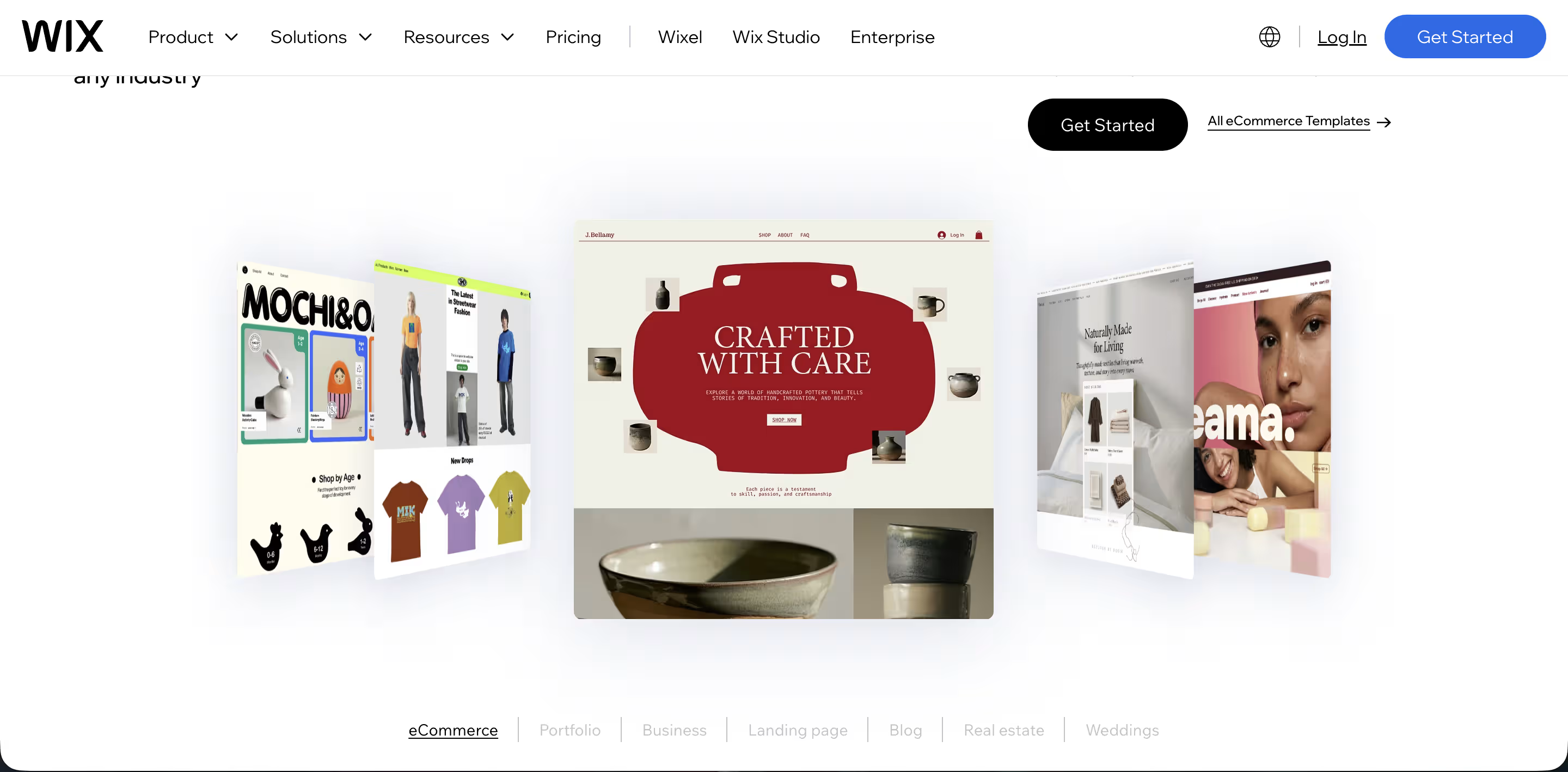
Wix gives you a fast path from idea to business website. You can start with a free site, use AI creation tools, pick from 2,000+ templates, and upgrade when you need a custom domain, payments, e-commerce, or more storage.
Wix store tools cover the range most small sellers need: physical and digital products, subscriptions, dropshipping, and print-on-demand, with payments through Wix Payments or 80+ gateways. It also works well when selling is only one part of the site, alongside bookings, content, lead capture, or service pages.
Wix is the better choice when your site needs more than product pages. A real estate agent selling digital guides, a consultant selling paid templates, or a local studio selling classes and merch will get more value from Wix’s site builder, content tools, and business website flexibility.
Pricing
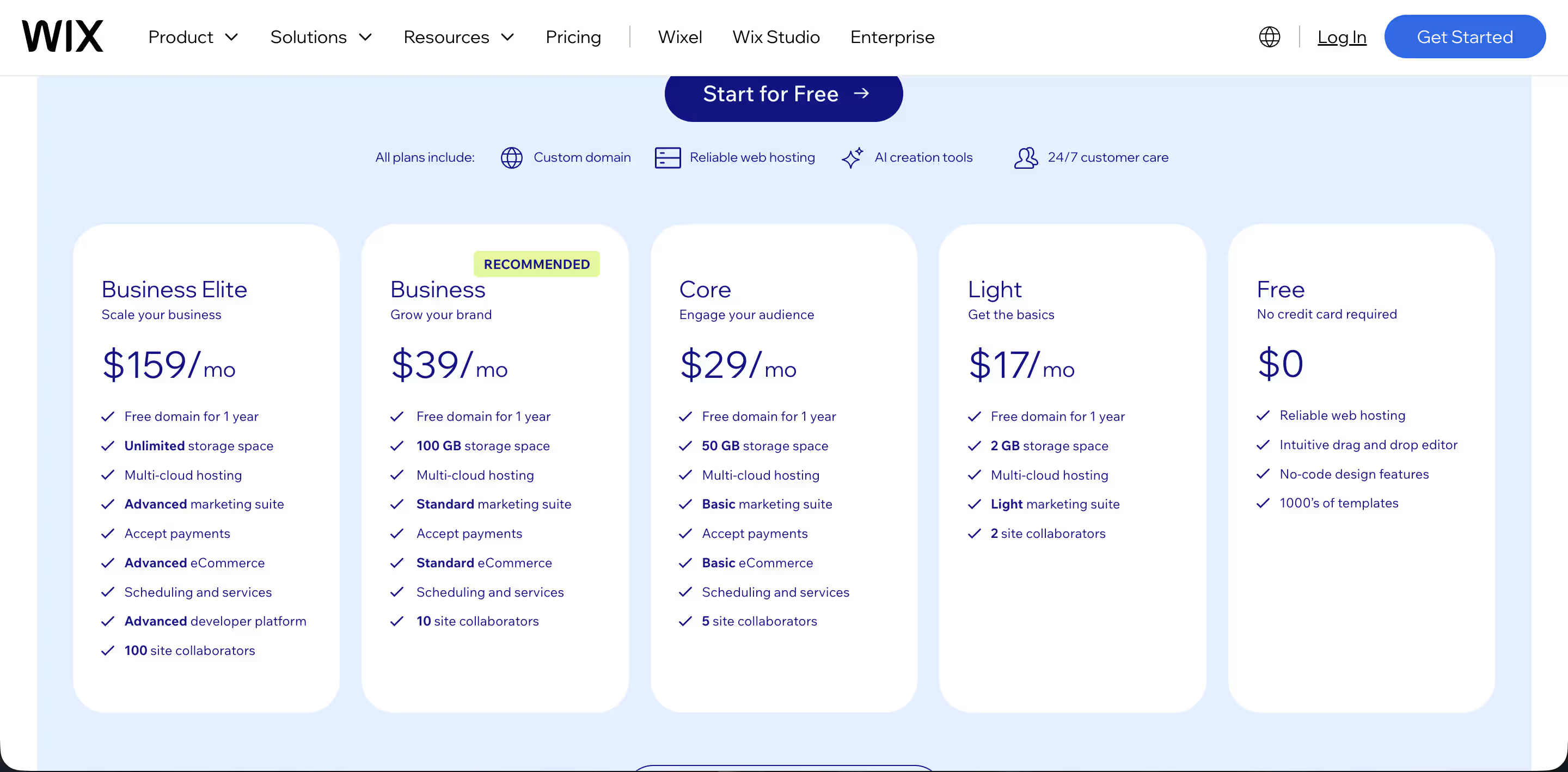
Wix has a Free plan; Light: $17/month billed annually; Core: $29/month billed annually; Business: $39/month billed annually; Business Elite: $159/month billed annually; and Enterprise: custom pricing.
Meet Shopify: Features And Highlights
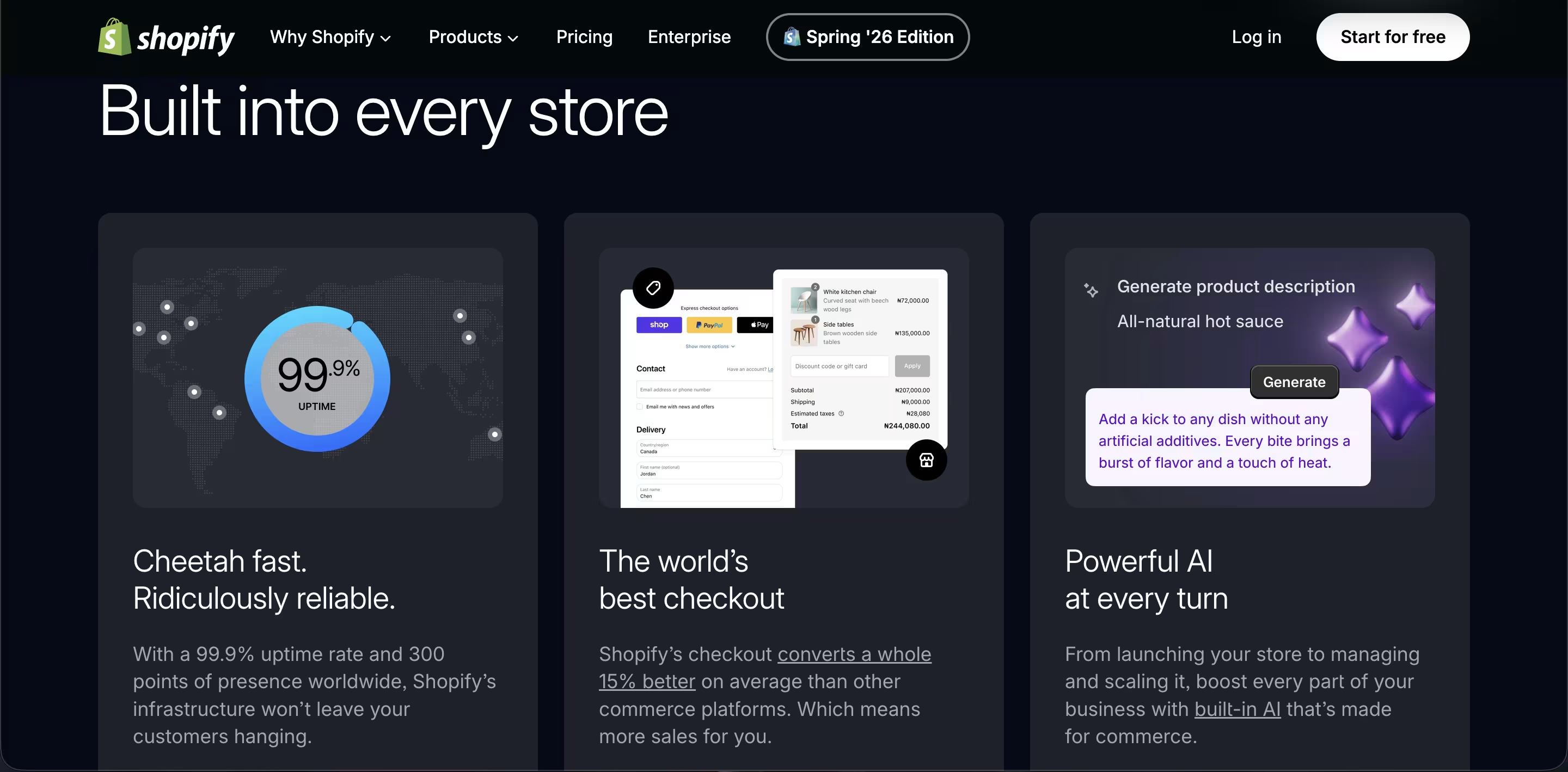
Shopify is built for stores that need a serious commerce engine. It gives you the store builder, checkout, inventory, shipping, sales channels, point of sale options, and app ecosystem you need when products drive the business.
The strongest Shopify advantage is the commerce stack around the website: checkout, payments, shipping, inventory, sales channels, and a large vetted app ecosystem.
Shopify is the right pick if you’re building a brand where products, orders, fulfillment, and repeat buying drive the business. A clothing brand, supplement store, home goods store, dropshipping operation, or retail business with online and in-person sales should start with Shopify.
Pricing
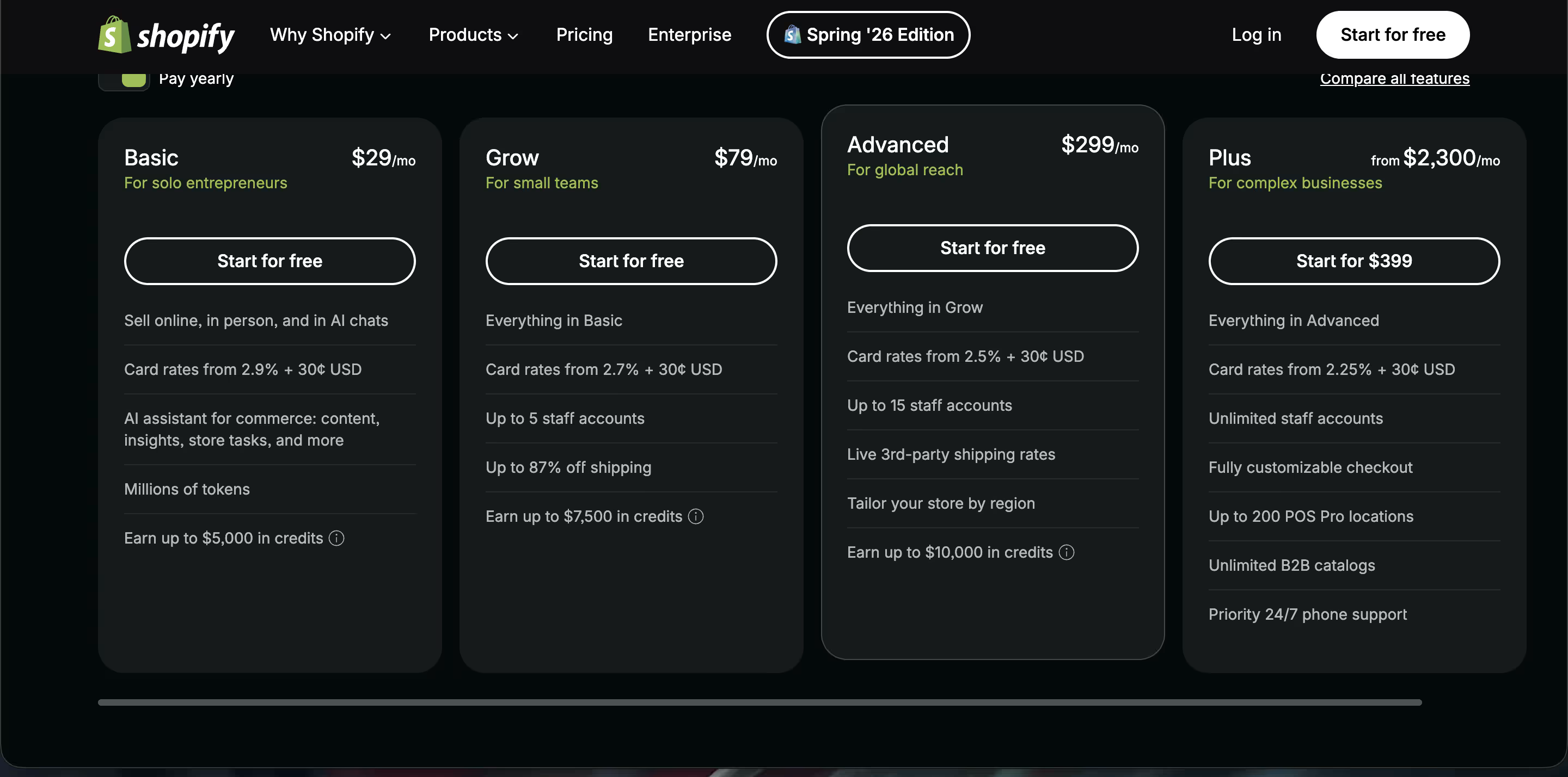
Shopify has Basic: $39/month ($29/month billed annually); Grow: $105/month ($79/month billed annually); Advanced: $399/month ($299/month billed annually); and Plus: from $2,300/month.
Wix Vs Shopify: At A Glance
| Category | Wix | Shopify |
|---|---|---|
| Best For | Website-first businesses that also sell | e-commerce-first stores |
| Free Plan Or Trial | Free plan | 3-day free trial, then $1/month for 3 months promo |
| Starter Paid Plan | Core: $29/month billed annually | Basic: $29/month billed annually |
| Main Strength | Flexible website building | Serious e-commerce operations |
| Main Weakness | Less depth for complex stores | Costs rise as apps and add-ons stack up |
| Apps | Wix App Market with business, e-commerce, marketing, and shipping apps | 16,000+ apps with 100-checkpoint review |
| Payments | Wix Payments plus 80+ gateways | Shopify Payments plus third-party payment options |
| Best Recommendation | Use Wix when the store supports the website | Use Shopify when the store is the business |
Wix Vs Shopify: Feature-By-Feature Comparison
Store Setup And Design
Wix wins for freeform website design. You can build a site with AI, start from a template, drag sections into place, and shape the site around content, services, bookings, events, and products. Wix also gives you 2,000+ templates, which makes it easier to find a layout close to your business type.
Shopify’s design system is better for e-commerce layouts. You get 800+ themes, AI-assisted store design, mobile-ready storefronts, custom blocks, Liquid customization, headless options, and application programming interfaces (APIs), which let different software connect and share data.
Winner: Wix for business websites. Shopify for e-commerce storefronts.
E-commerce Features
Shopify is built around product management, checkout, payments, shipping, inventory, point of sale, and apps from day one. That matters once you move beyond a few products and start caring about conversion, fulfillment, promotions, returns, and customer lifetime value.
Wix covers the e-commerce basics well. You can sell physical products, digital products, subscriptions, dropshipping products, and print-on-demand goods. Wix also supports up to 1,000 variants per physical product, which is enough for many small and mid-sized stores.
Shopify also handles unlimited products, while Wix caps online stores at 50,000 products. That Wix limit is still more than most small and mid-sized stores will ever need, but Shopify gives you more room if you’re building a large catalog from day one.
The difference shows up when e-commerce gets messy. Shopify gives you more room to grow without rebuilding your store around another platform.
Winner: Shopify.
If your project is a storefront rather than an app, the Shopify vs Etsy comparison is the more useful starting point.
Payments And Transaction Fees
Wix has a simple payment setup for many small businesses. In the U.S., Wix Payments charges 2.9% + $0.30 for standard credit and debit card payments, 3.7% + $0.30 for American Express, and different rates for PayPal, point of sale, Tap to Pay, and buy now, pay later options. Wix also supports 80+ payment gateways globally.
Shopify rewards you as you move up plans and use Shopify Payments. Basic starts at 2.9% + $0.30 for standard online card payments, Grow starts at 2.7% + $0.30, and Advanced starts at 2.5% + $0.30. Third-party payment provider fees are 2% on Basic, 1% on Grow, 0.6% on Advanced, and 0.2% on Plus.
Winner: Shopify if you use Shopify Payments and expect sales volume. Wix if you want simpler gateway flexibility for a smaller store.
Apps And Extensions
Shopify’s App Store gives you more room to extend the store after launch. Its App Store has 16,000+ apps, and each app goes through a 100-checkpoint review before launch.
Wix’s App Market covers the main business categories: marketing, selling online, orders and shipping, subscriptions, dropshipping, services and events, forms, analytics, and communication tools. Wix also has its own business apps, including Wix Stores, Wix Bookings, Wix Blog, and other native tools.
Winner: Shopify.
Sales Channels, POS, And Fulfillment
Shopify wins for retail-heavy businesses. Shopify includes online and in-person selling across its core plans, and POS Pro is available as an add-on at +$89/month per location. Shopify Plus includes deeper point of sale support for larger businesses.
Wix still covers a lot for smaller stores. You can sell through your website, in person, and through marketplaces like Google, eBay, Etsy, Amazon, Facebook, Instagram, TikTok, and Wish, with sales synced to one dashboard. Wix also supports discounted shipping labels, inventory automation, abandoned cart automation, and fulfillment tools.
Winner: Shopify for growing retail. Wix for smaller multichannel stores with lighter operations.
Both platforms assume you're holding and shipping stock yourself. If you're not, read about the best dropshipping website builders instead.
Scaling And Reliability
Shopify is the stronger long-term platform for high-growth e-commerce. Its online stores run with 99.9% uptime and 300 points of presence, and Shopify gives developers more options through Liquid, headless commerce, and APIs.
Wix is stronger than many people assume. Wix supports up to 750 simultaneous transactions per second and is Payment Card Industry Data Security Standard (PCI DSS) Level 1 compliant, which is the payment security standard used for businesses that process card payments.
Winner: Shopify for high-growth stores. Wix is strong enough for many small and mid-sized e-commerce sites.
Website Content, Bookings, And Service Businesses
Wix is great when your site needs to sell trust before it sells products. A consultant, studio, real estate agent, local service business, course creator, or event business usually needs pages, forms, scheduling, service descriptions, content, and proof before a cart.
Shopify can handle content, but its best work starts when products enter the picture. If the website has to explain your business, book calls, publish guides, capture leads, and sell a few products, Wix gives you a smoother path.
For search engine optimization (SEO), Wix is easier if you want built-in sitewide guidance, page settings, and content tools in one place. Shopify is stronger when SEO depends on product feeds, multilingual selling, structured commerce data, and a larger app ecosystem.
Winner: Wix.
If neither one fits cleanly, read about the best online store website builders for growing brands.
Where Emergent Fits If Wix And Shopify Both Feel Too Rigid
Emergent fits when you need custom software built around your business: a portal, dashboard, or workflow a store builder can't give you. You describe what you want, and Emergent’s multi-agent system handles the app build across user interface, data, deployment, and product logic.
Use Emergent when the store is only one piece of the workflow. Examples include:
- A wholesale quote portal for Shopify customers
- A repair-tracking dashboard for a local service business
- A custom booking and invoice system for a consultant
- A real estate lead qualification app
- A customer portal that connects orders, documents, and support requests
- A custom customer relationship management (CRM) system for post-purchase follow-up
Wix and Shopify are better for hosted websites and stores. Emergent is better when you need to build the business system around them.
Curious what that actually looks like in practice? Read about building your own CRM system with AI.
How To Make Your Choice
Pick Shopify if you’re building an e-commerce business. Pick Wix if you’re building a business website that happens to sell. Pick Emergent if your revenue depends on custom workflows that Wix and Shopify templates can’t handle.
Choose Wix If:
- You need a full business website first
- Your store has a small or moderate product catalog
- You sell services, bookings, digital products, or a mix of content and products
- You want a free plan while building
- You care more about site design flexibility than advanced commerce operations
Choose Shopify If:
- Products drive the business
- You need strong checkout, inventory, fulfillment, and shipping
- You plan to sell across social, marketplaces, retail, or international channels
- You want the larger app ecosystem
- You expect your store to grow and need room for more complex operations
Choose Emergent If:
- You need a custom app, dashboard, portal, or workflow
- Your business process doesn’t fit a standard store builder
- You want to build software by describing what you need
- You need web or mobile app output around your e-commerce operation
My Verdict
Shopify is the better choice for most people searching “wix vs shopify” with serious e-commerce intent. It gives you the stronger commerce foundation, deeper app ecosystem, better scaling path, and more retail-ready operations.
Wix is the better choice when e-commerce is part of a broader website. If you’re a service business, creator, consultant, local business, or small brand that needs pages, content, bookings, and a clean site before deep store operations, Wix is the right pick.
Emergent is the third route when the real problem is custom software. Don’t force a store builder to act like a custom business app when you need a portal, dashboard, CRM, or internal workflow.
Read about whether ChatGPT can build an app, tested across six ideas, if you're weighing the AI route.
Conclusion
Wix vs Shopify has a clear winner by use case. Choose Shopify for e-commerce-first stores. Choose Wix for website-first businesses that also sell. Choose Emergent when your business needs custom software around the store.

Most AI app builders stop at prototypes. Emergent creates production-ready apps you can actually launch.
- Production-ready apps
- Web & mobile apps
- Deploy in minutes







