


Data Centers Rejected by Voters in 2026 Ballot Measures

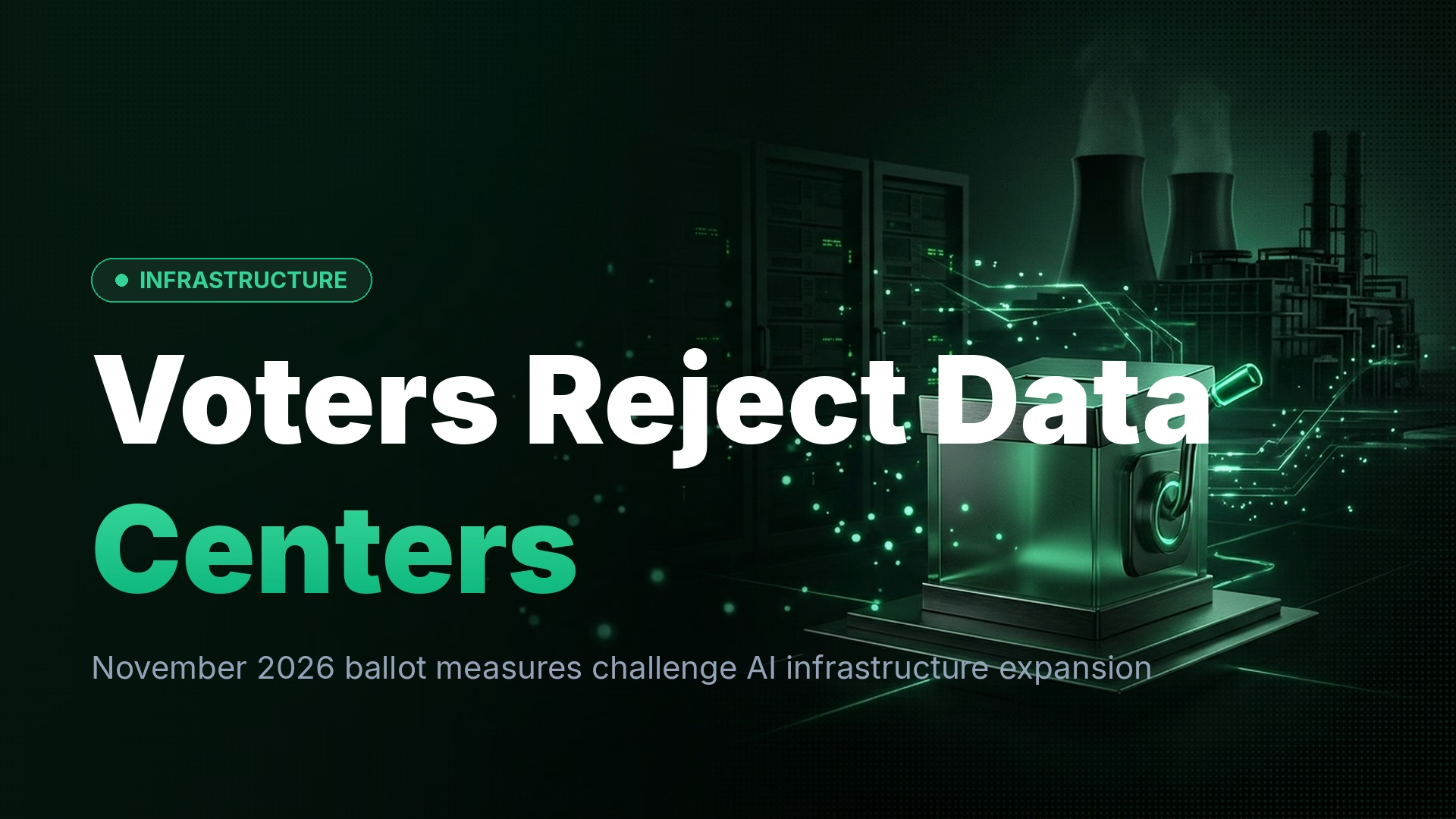
Voters across the United States delivered a clear message in November 2026 elections, rejecting multiple data center projects proposed to support the artificial intelligence industry's explosive growth. The ballot defeats mark a significant challenge to AI infrastructure expansion, as communities push back against environmental and grid impacts associated with large-scale computing facilities. Officially launched on November 4, 2026, these referendum results signal a new phase of grassroots resistance to the data center buildout that has accelerated alongside generative AI adoption.
Ballot Measures Rejected Across Multiple States
Communities in several states voted down data center proposals during the November 2026 election cycle, according to NBC News reporting. The rejections spanned diverse geographic regions, indicating widespread concern rather than isolated local opposition. Voters cited concerns about electricity consumption, water usage, and infrastructure strain as primary motivations for their decisions. The defeated measures would have allowed developers to fast-track construction permits and access tax incentives typically granted to industrial facilities.
Local organizers reported that environmental advocacy groups mobilized voters by highlighting the resource intensity of AI training and inference workloads. Campaign materials emphasized that a single large-scale data center can consume as much electricity as a small city while requiring millions of gallons of water annually for cooling systems.
Environmental and Infrastructure Concerns
The voter rejections reflect mounting public awareness of data center environmental impacts. AI workloads require significantly more computing power than traditional enterprise applications, translating to higher electricity demand and cooling requirements. Communities near proposed facilities raised alarms about strain on local power grids, particularly in regions where renewable energy infrastructure has not kept pace with demand growth.
- Water consumption for cooling systems threatens local supplies in drought-prone areas
- Electricity demand from AI workloads can overwhelm regional grid capacity
- Carbon emissions from data centers complicate state and local climate goals
Residents also expressed frustration that data center construction often promises few permanent jobs relative to the infrastructure burden imposed on communities. Unlike manufacturing facilities, modern data centers operate with minimal on-site staff after construction completion.
Implications for AI Industry Growth
The ballot defeats pose a strategic challenge for AI companies racing to expand compute capacity. Major labs including OpenAI, Anthropic, and Google DeepMind have all announced plans requiring massive increases in training infrastructure. Industry analysts estimate that meeting projected AI demand would require doubling current US data center capacity by 2028, a timeline now complicated by community opposition.
Developers may need to pivot toward retrofitting existing industrial sites rather than greenfield construction in residential or agricultural areas. Some companies are exploring partnerships with utilities to co-locate facilities near renewable energy generation, potentially addressing grid concerns while securing community support. The rejection wave also accelerates interest in more efficient AI architectures that reduce compute requirements per inference operation.
What This Means
The November 2026 ballot rejections represent a watershed moment for AI infrastructure development. While the technology sector has largely operated on the assumption that communities would welcome data centers as economic development opportunities, voter decisions demonstrate that environmental and quality-of-life concerns now outweigh tax revenue promises in many jurisdictions. Companies dependent on expanding compute capacity face longer timelines, higher costs, and the need for more transparent community engagement. The results may ultimately drive beneficial innovation in energy efficiency and sustainable infrastructure design, but they also underscore that the AI boom cannot proceed without addressing legitimate public concerns about resource consumption and environmental impact.



on Emergent today


