


Former GitHub CEO Launches AI-Native Coding Platform

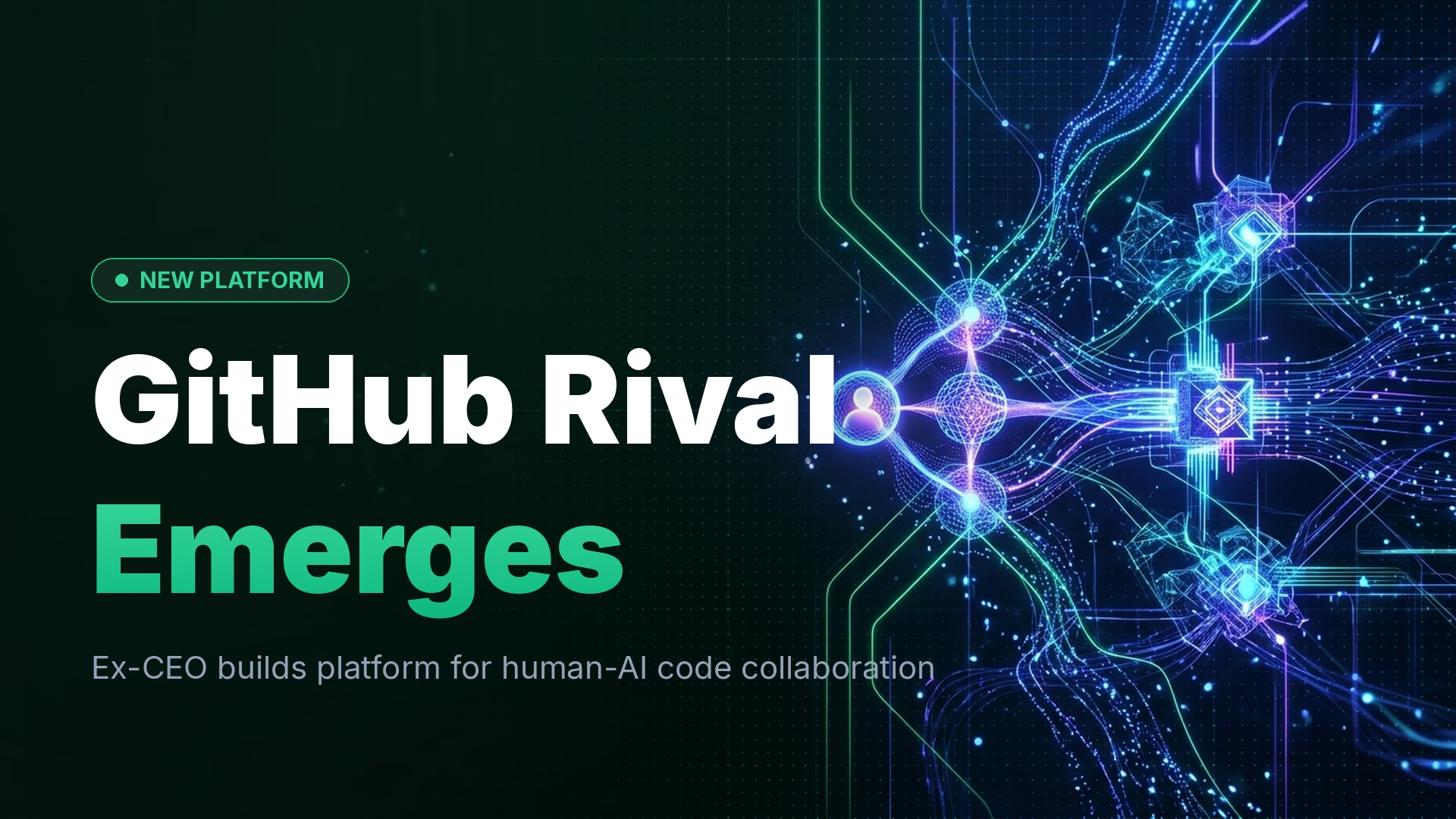
Former GitHub CEO Thomas Dohmke has unveiled a new developer platform explicitly designed to accommodate both human programmers and autonomous AI coding agents. Officially launched on October 26, 2026, the platform represents a direct challenge to GitHub's dominance in the version control and collaborative coding space, with Dohmke arguing that legacy platforms struggle to adapt their infrastructure for the AI-native development workflows emerging across the industry.
Platform Architecture and Core Features
The new platform introduces what Dohmke describes as an "agent-first" architecture, where AI coding agents operate as full collaborators rather than supplementary assistants. Unlike traditional integrated development environments that bolt AI features onto existing workflows, this system treats autonomous agents as peer contributors with dedicated workspace allocation, persistent memory, and access to the same version control primitives available to human developers.
Key technical features include multi-modal code review processes that accommodate both human feedback and agent-generated analysis, real-time conflict resolution algorithms optimized for high-frequency AI commits, and a permission model that allows organizations to define granular access controls for different classes of AI agents. The platform supports standard Git protocols while extending the command set to handle agent-specific operations like bulk refactoring and automated dependency updates.
Dohmke's Strategic Vision
In announcing the launch, Dohmke emphasized that GitHub's infrastructure, built primarily for human collaboration, faces fundamental constraints when scaling to scenarios where AI agents contribute 50 percent or more of codebase changes. He cited research indicating that development teams using autonomous coding agents experience a tenfold increase in commit volume, creating bottlenecks in code review, merge conflict resolution, and testing pipelines not designed for such throughput.
The former CEO led GitHub from 2021 through early 2026, overseeing the integration of GitHub Copilot and the expansion of AI-assisted features. His departure earlier this year was framed as amicable, though industry observers noted tensions around the pace of AI feature development and architectural decisions required to support agent-native workflows.
Competitive Landscape and Market Positioning
The platform enters a market where GitHub maintains overwhelming dominance with over 100 million developers, but where emerging tools like Cursor, Replit, and various AI-native IDEs have demonstrated demand for development environments purpose-built around AI collaboration. Dohmke's venture reportedly secured Series A funding earlier in 2026, though specific investor details and valuation have not been disclosed.
Early access partnerships include several enterprise customers in fintech and cloud infrastructure sectors, where automated code generation already accounts for significant portions of new code. The platform will offer both cloud-hosted and self-hosted deployment options, addressing security and compliance requirements for organizations hesitant to expose proprietary codebases to third-party infrastructure.
Release Date and Availability
Officially released on October 26, 2026, the platform is entering limited availability with a waitlist for individual developers and direct enterprise onboarding for qualified organizations. General availability is scheduled for early 2027, with pricing tiers expected to differentiate based on agent usage volume rather than traditional per-seat licensing models.
What This Means
Dohmke's platform launch signals a fundamental shift in how the developer tools market conceptualizes collaboration, moving from human-centric workflows with AI augmentation to genuinely hybrid environments where autonomous agents are first-class participants. Whether this architecture proves necessary or represents over-engineering for current AI capabilities will depend heavily on how quickly coding agents advance and how effectively GitHub adapts its own infrastructure. For enterprises already scaling AI-assisted development, the new platform offers a test case for whether purpose-built solutions can displace entrenched incumbents in a market where switching costs have historically been prohibitive.

on Emergent today




