


Google Adds Textbook Search to Gemini Notebook in US, India

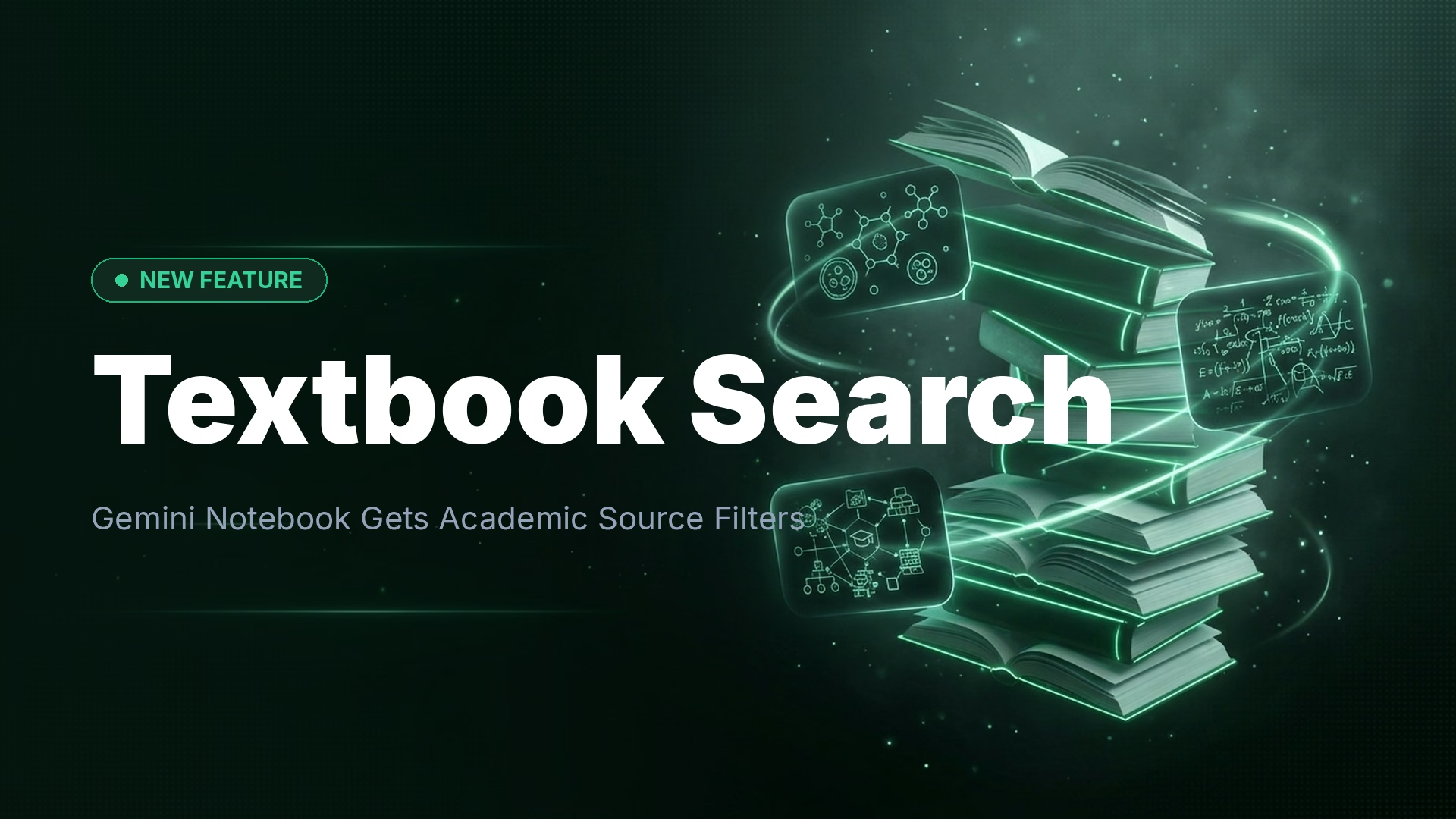
Google has officially launched textbook search capabilities inside Gemini Notebook, bringing structured academic content to users in the United States and India. The feature allows students and researchers to filter textbooks by subject area and education level before adding them as research sources within their Notebook workspace. Officially released on October 30, 2026, the update marks a significant step in positioning Gemini as a tool for formal education and academic research.
How Textbook Filtering Works
Users can now browse curated textbook collections directly within the Gemini Notebook interface. Filters let you narrow results by topic (mathematics, biology, history, literature) and education level (high school, undergraduate, graduate). Once you select a textbook, it becomes a persistent source in your Notebook, allowing Gemini to reference specific chapters, definitions, and examples when generating responses or synthesizing research notes.
Android Authority first reported the rollout, confirming that the feature is live in both markets as of today. The textbook library includes licensed academic content, though Google has not disclosed publisher partnerships or the total number of titles available at launch.
Why This Matters for Students and Researchers
Traditional AI chatbots often struggle with citations and authoritative sourcing. By integrating textbooks as first-class sources, Gemini Notebook offers a middle ground between open-ended web search and closed academic databases. Students can ask questions and receive answers grounded in specific course materials, reducing the risk of hallucinated facts or unsourced claims.
- Reduces time spent switching between library databases and AI tools
- Enables citation-ready summaries tied to specific textbook pages
- Supports multilevel education from secondary school through graduate research
The feature also complements Google's broader push into education markets, where competitors like Microsoft Copilot and Anthropic's Claude have introduced similar academic tooling.
Geographic Rollout and Future Expansion
The launch is limited to the United States and India, two of Google's largest education markets. India, in particular, has seen rapid adoption of AI-powered study tools among its 250 million students. Google has not announced expansion timelines for other regions, but internal reports suggest Europe and Latin America may follow in Q1 2027.
The textbook search function builds on Google Gemini's existing Notebook mode, which already supports web page ingestion and document uploads. By adding structured academic content, Google addresses one of the most common requests from education-focused users: access to vetted, curriculum-aligned reference materials.
What This Means
Google's textbook search update transforms Gemini Notebook from a general-purpose research assistant into a specialized education tool. For students preparing for exams, writing essays, or conducting literature reviews, the ability to filter and cite textbooks directly within an AI workspace removes friction from the research process. As AI adoption in education accelerates, features like this will likely become table stakes for any assistant targeting academic users. The question now is how quickly competitors respond and whether Google can secure enough publisher partnerships to differentiate its textbook library from open-access alternatives.

on Emergent today


