


Meta Muse Spaces Launch: Collaborate With AI Agents

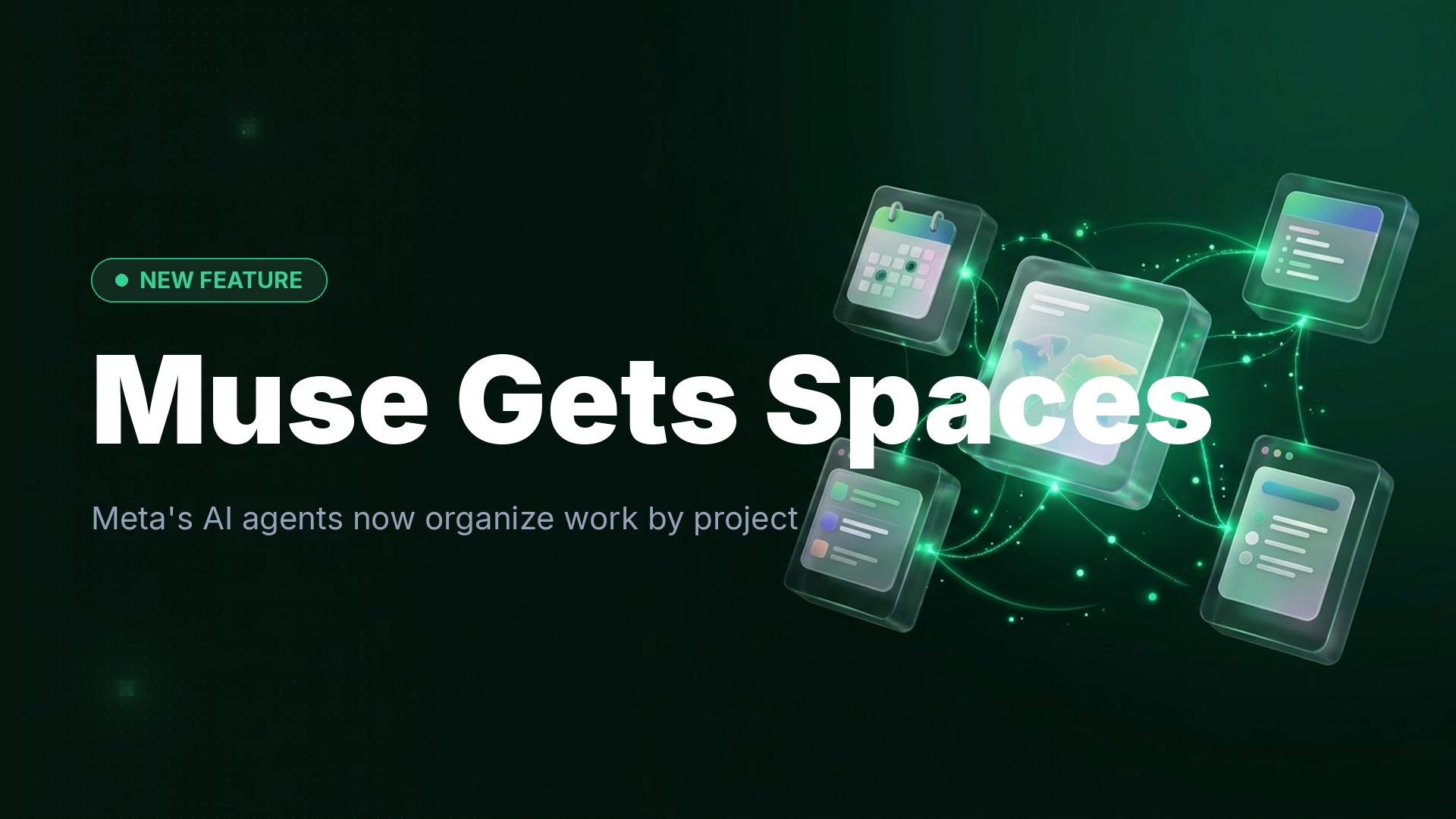
Meta has expanded its Muse agent platform with Spaces, a feature that organizes AI collaboration into project-specific tabs. Officially launched on November 6, 2026, Spaces allows users to create dedicated conversation environments for distinct goals, from vacation planning to DIY project management, marking the second major Muse update in less than a week.
What Are Meta Muse Spaces
Spaces function as breakout conversations within the Muse interface, though Meta describes them as "custom experiences." Each Space lives in the sidebar and focuses on a particular project or topic. Users describe an idea in chat, and Muse automatically builds the appropriate Space, whether that's a tracker, planner, or project board.
The feature supports diverse use cases. A vacation planning Space keeps flight options and hotel comparisons organized separately from a recipe collection Space for an upcoming family event. Other examples include holiday gift trackers, wedding planners, and home improvement project boards. Mark Zuckerberg demonstrated the flexibility on X, sharing that he'd built "a BBQ game, an event tracker, and a home control dashboard" using the feature.
Third-Party Integration and Automation
Spaces integrate with external apps and data sources, automatically updating in the background without user prompts. According to Meta, "new concert dates, price changes, or savings progress show up without you having to ask." This passive synchronization reduces the manual effort required to keep project information current.
The automation extends across multiple workflows simultaneously. A user managing both a gift tracker and a home renovation Space won't need to switch contexts or manually refresh data, as each Space maintains its own connection to relevant third-party services.
Release Date and Market Context
Meta officially released Spaces on November 6, 2026. The launch follows the November 4, 2026 debut of Muse Voice, which enabled video chat and verbal command interaction with Muse agents. Together, these releases represent a rapid iteration cycle as Meta competes in the emerging market for consumer AI agents.
Muse agents reached 10 million users in the U.S. and Canada within two months of their initial debut, according to Zuckerberg's October 2026 earnings call. The platform competes with other agent offerings including OpenAI's dots and SpaceXAI's Grokbot, all of which employ friendly, cartoonish visual personas to encourage user engagement.
User Experience Architecture
The sidebar-based design keeps Spaces accessible without cluttering the main conversation view. Users click to open a specific tab when they want to work on that particular goal with Muse. This structure differs from traditional chatbot interfaces that mix all conversations into a single thread.
Key architectural benefits include:
- Persistent project context that survives across sessions
- Parallel workflow management without conversation bleed-over
- Visual organization that mirrors human project segmentation patterns
- Background processing that keeps data fresh across all active Spaces
What This Means
Spaces transforms Muse from a conversational assistant into a multi-project collaboration platform. By containerizing conversations around discrete goals and automating information updates, Meta addresses a core limitation of single-thread chat interfaces. The rapid feature velocity (two major launches in three days) signals aggressive competition for mindshare in the consumer AI agent category. For users managing multiple simultaneous projects, Spaces provides the organizational structure that general-purpose chatbots typically lack, potentially increasing daily engagement and retention as workflows expand beyond simple question-and-answer patterns.

on Emergent today


