


Vercel Labs Releases agent-desktop for Agent Computer Use

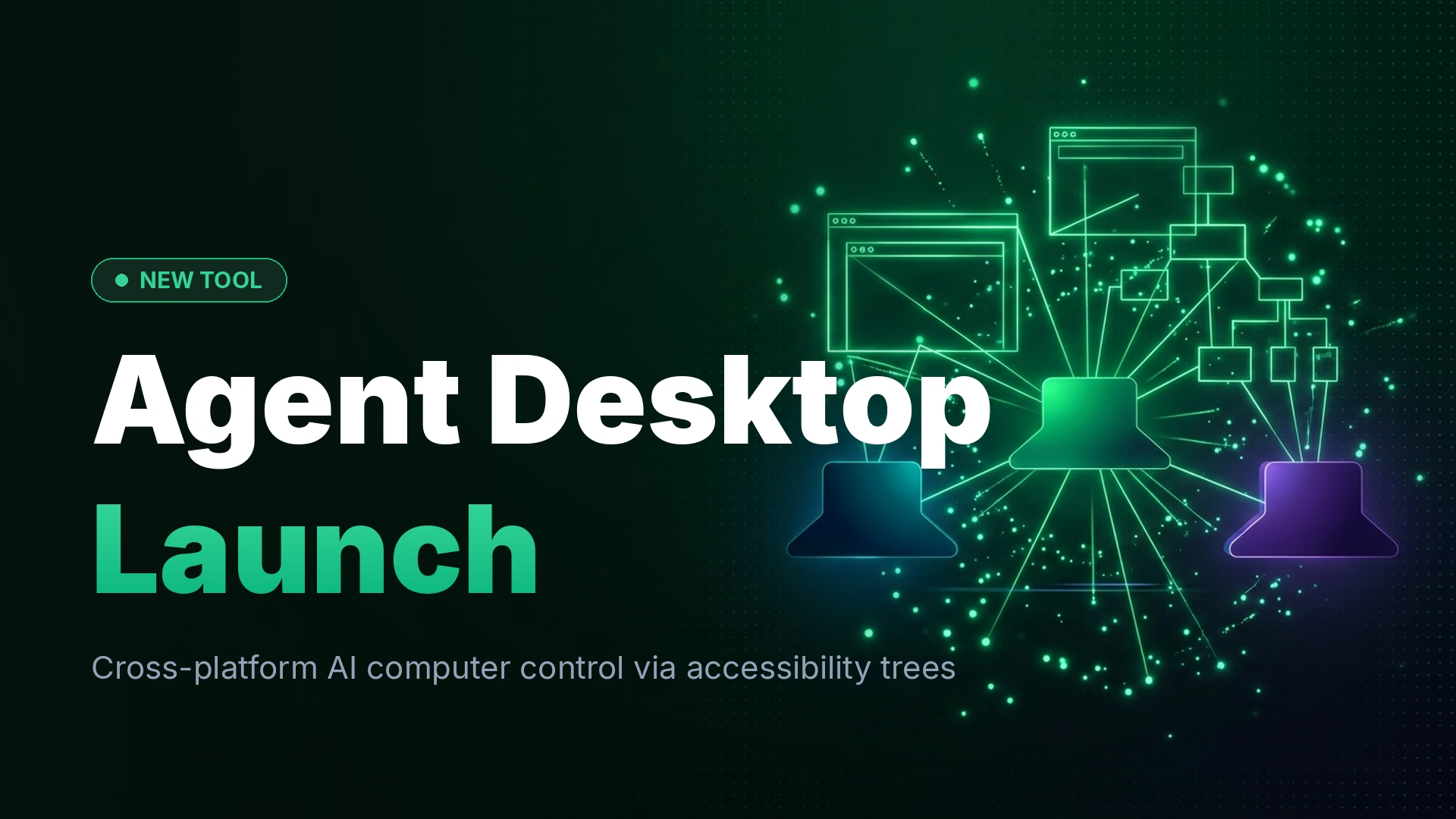
Vercel Labs has officially launched agent-desktop, an open-source command-line tool that gives AI agents the ability to control desktop computers across macOS, Windows, and Linux. Released under the Apache-2.0 license, the Rust-based CLI represents a fundamental shift in how agents interact with operating systems, moving away from pixel-based vision approaches to native accessibility APIs.
Release Date and Availability
Officially released on October 31, 2026, agent-desktop is immediately available for developers to integrate into their agent workflows. The tool ships as a lightweight Rust CLI binary compatible with all three major desktop platforms, eliminating the need for platform-specific implementations when building cross-platform agent systems.
How agent-desktop Works
Unlike traditional computer use agents that rely on screenshot analysis and pixel coordinates, agent-desktop reads operating system accessibility trees. These trees expose the hierarchical structure of UI elements with stable identifiers, allowing agents to target buttons, text fields, and menus through reliable references rather than fragile visual coordinates. This architecture means agents can:
- Interact with applications regardless of screen resolution or window position
- Function reliably even when UI elements move or change appearance
- Operate without requiring GPU-intensive computer vision models
- Access semantic information about interface elements directly from the OS
The accessibility-first approach also reduces latency and resource consumption compared to vision-based systems that must process screenshots on every action.
Cross-Platform Agent Infrastructure
By abstracting platform differences behind a unified CLI interface, agent-desktop enables developers to write agent logic once and deploy it across operating systems. The tool handles the complexity of interfacing with macOS Accessibility API, Windows UI Automation, and Linux AT-SPI, exposing a consistent command set regardless of the underlying platform. This significantly lowers the barrier to building production-grade computer use agents that need to support diverse user environments.
Open Source and Apache-2.0 License
Vercel Labs released agent-desktop under the permissive Apache-2.0 license, allowing commercial use, modification, and redistribution without royalties. The Rust implementation prioritizes performance and memory safety, critical considerations for agent infrastructure that may run continuously on user machines. The open-source release includes documentation, example integrations, and a growing library of common desktop automation patterns.
What This Means
agent-desktop addresses one of the core challenges in building reliable autonomous agents: stable, semantic interaction with desktop software. By leveraging accessibility APIs instead of vision models, Vercel Labs has created infrastructure that is both more robust and more resource-efficient. For developers building AI agent use cases that require desktop automation, this tool provides a production-ready foundation that works consistently across platforms. The open-source release ensures the agent ecosystem can standardize on a common interaction layer, accelerating the development of sophisticated desktop automation capabilities.
on Emergent today


