



SITELINE was built by a general contracting business in the US with no in-house development team. The firm runs several projects at once, where a schedule can slip because a single trade never called back, and filling that trade had always meant working down a contact list by phone. Nothing about that process left a record of who had been asked or what they said. The subcontractors on the other end of those calls had the opposite problem, with no way to see which scopes were open in the first place.
Using Emergent's construction job app builder, the team built SITELINE, a two-sided portal where general contractors post job scopes and subcontractors apply to them. The general contractor reviews who applied and assigns the work. The entire product went from concept to a live, deployed application in a few hours.
Challenges
General contractors still source subcontractors over the phone
Filling a trade on a live job usually starts with a contact list and a series of calls. A project manager works down the list, leaves voicemails, sends a few texts describing the scope, and waits. Some subcontractors answer, some call back two days later, and some never respond at all.
Nothing about that process leaves a record, so the same manager cannot say with confidence who was contacted on Tuesday, who asked for more detail, or which of the four plumbers quoted the tightest number. When a scope needs to be re-let because a subcontractor drops off, the whole sequence starts over from nothing. The cost is not just administrative time, it is schedule risk on work that has a fixed deadline.
Interest from subcontractors arrives with no structure and no way to compare
Even when subcontractors do respond, the responses land in different places. One replies by text, one leaves a voicemail, one emails a rough number, and one mentions it in person on another site. There is no single view that puts every interested subcontractor next to the same scope with their trade, their company, and what they said about the job. Comparing three candidates means scrolling back through a phone, checking an inbox, and reconstructing a conversation from memory. General contractors end up awarding work to whoever was easiest to reach rather than whoever fit the scope best. The information needed to make a good decision exists, but it is spread across four channels and none of it is attached to the job it belongs to.
Subcontractors have no reliable view of the work that is actually open
The problem runs in both directions. An electrical subcontractor with two weeks of open capacity has no way to see which general contractors in their area have electrical scopes waiting to be filled. Work reaches them through relationships, and relationships are uneven, so a capable subcontractor can sit idle while a general contractor across town cannot fill the same trade.
When a lead does arrive, it often arrives without the details that determine whether it is worth pursuing, which means the budget range, the location, and the deadline all have to be established over a call before the subcontractor can decide anything. Subcontractors also lose track of what they have already put their name against, which leads to duplicate follow-ups and awkward conversations about jobs that were awarded a week earlier.
Construction software built for this is scoped and priced for large firms
Procurement and subcontractor management modules exist, but they ship as part of enterprise construction platforms designed for firms with a dedicated operations team to administer them. A general contracting business running a handful of concurrent projects does not need a full ERP implementation to solve the problem of getting a scope in front of ten qualified trades.
They also do not have developers on staff or a budget for a custom build, and the tools they can afford, shared spreadsheets and group texts, do not enforce any structure at all. What they need is a working portal with two role-scoped views, a posting form, an interest pipeline, and an assignment action, hosted somewhere subcontractors can reach it.
Solution
Two logins, one for general contractors and one for subcontractors
Each role enters at its own URL, the general contractor view at /admin and the subcontractor view at /sub.

A general contractor identity carries a company name; a subcontractor identity carries a trade and a company.

Neither role sees the other's controls, so a subcontractor never gets an assign action and a general contractor never gets an interest form. The screenshots below are from the version with demo access enabled, which puts both roles on adjacent tabs with mock identities behind each.
General contractors post and track scopes from one dashboard
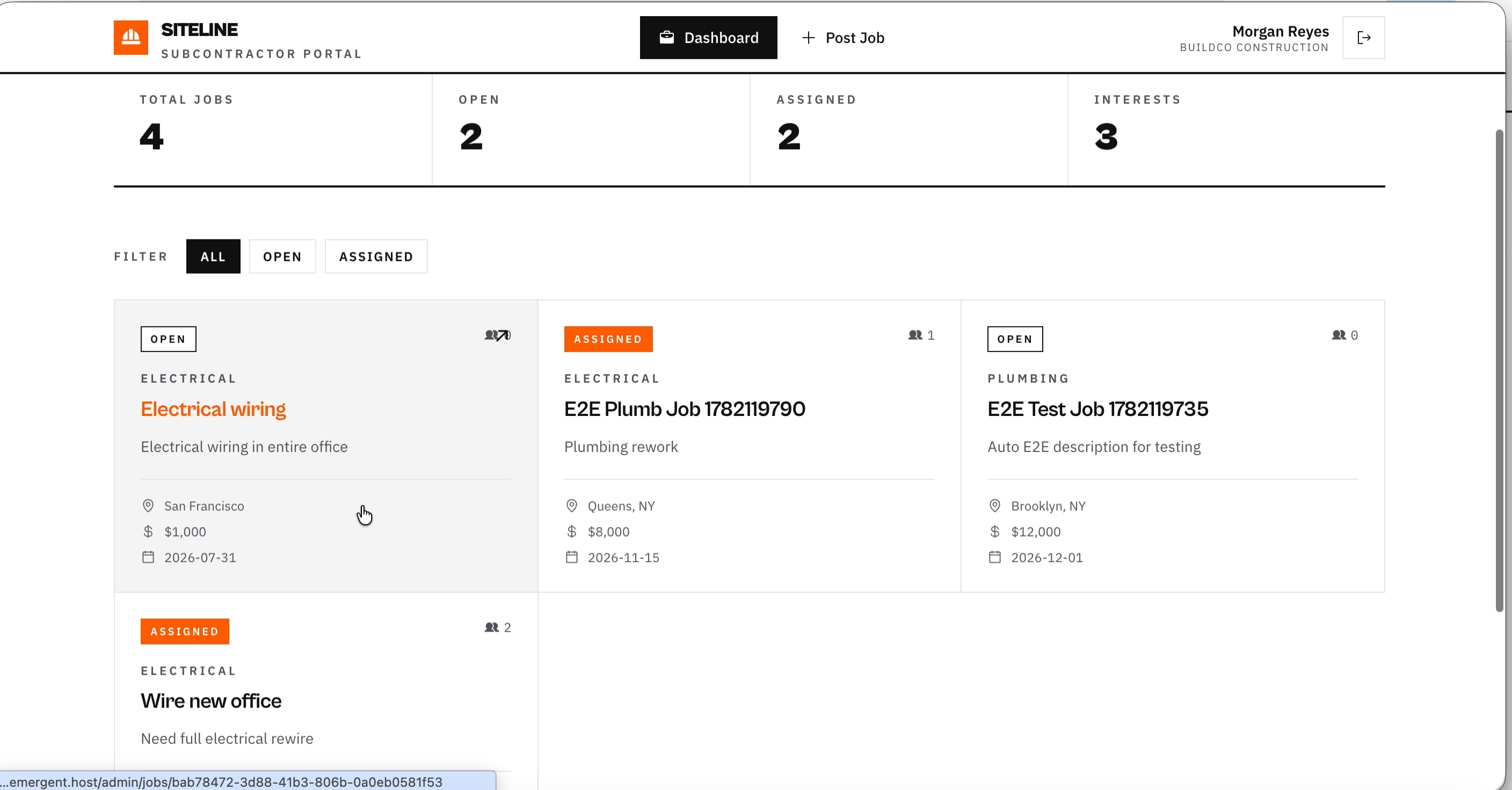
A general contractor sees every scope they have posted on one dashboard, filters it to open or assigned work, and reads the applicant count on each card.

Counters across the top track total jobs, open jobs, assigned jobs, and interest received.
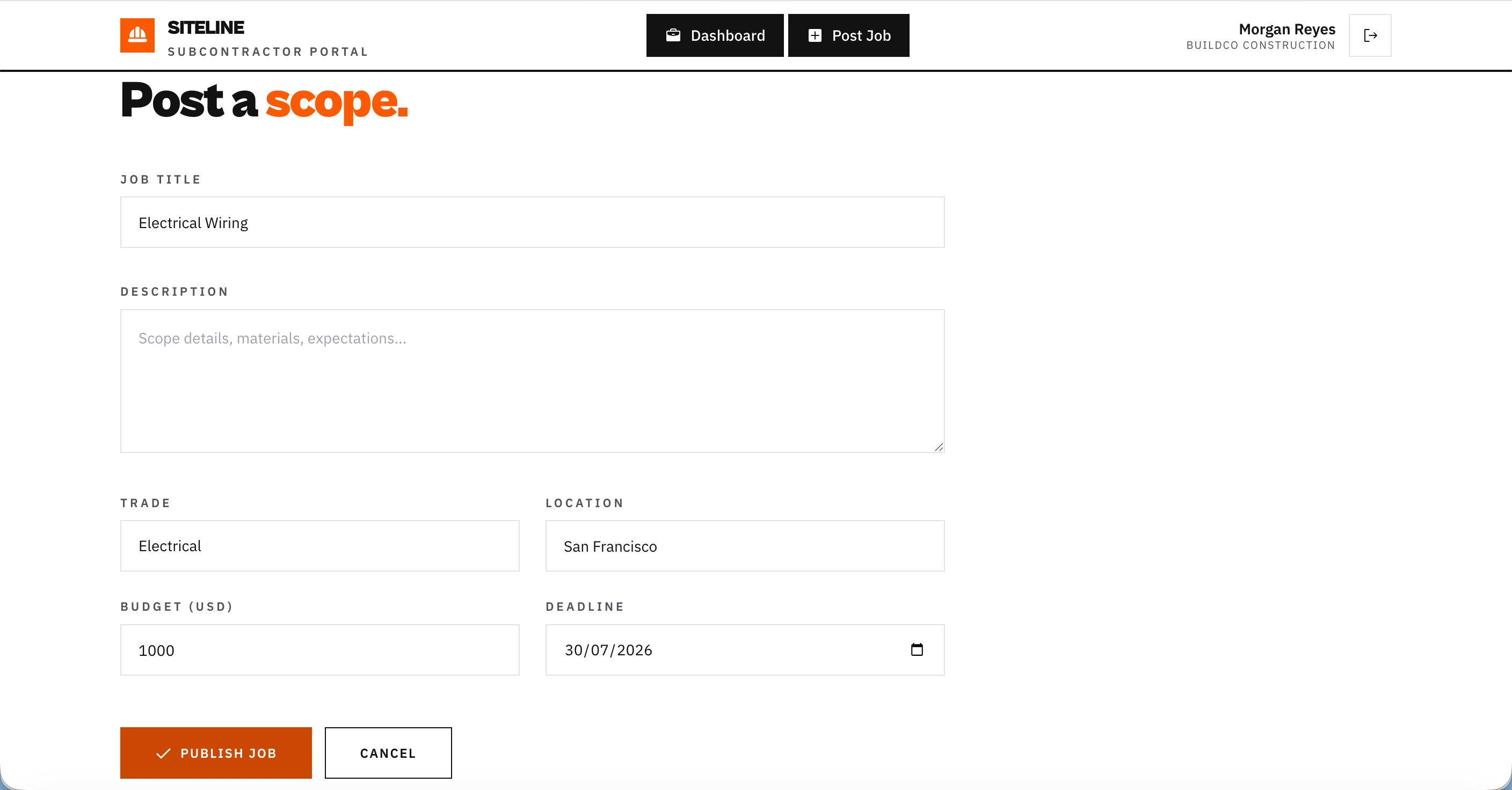
Posting takes one form: job title, description, trade, location, budget in USD, and deadline. Trade comes from a dropdown of ten categories, and the deadline can be typed or picked from a calendar.
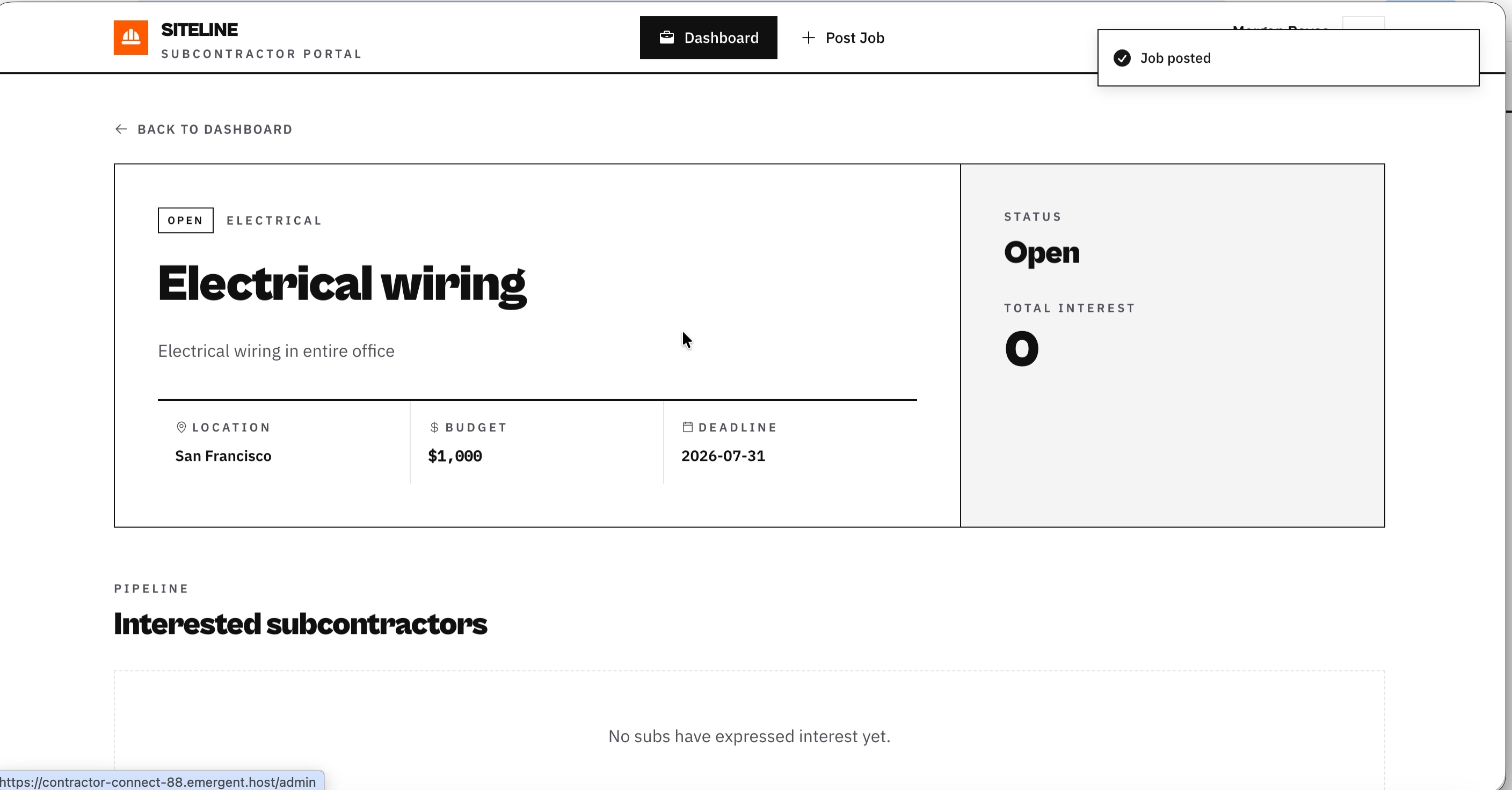
Publishing makes the scope visible to every subcontractor straight away, with no approval step.
Subcontractors browse open scopes and send an interest message
A subcontractor browses every open scope with its location, budget, and deadline on the card.
Applying takes an optional message and one action, with no price to submit.

Once sent, the scope carries an interest sent badge and the panel confirms they are in the running, where the message can be updated rather than resent.
General contractors review interests and assign the job
Every subcontractor who applies appears in a pipeline on the job, listed with their name, trade, company, and the message they sent. The interest count on the job header tracks the total.
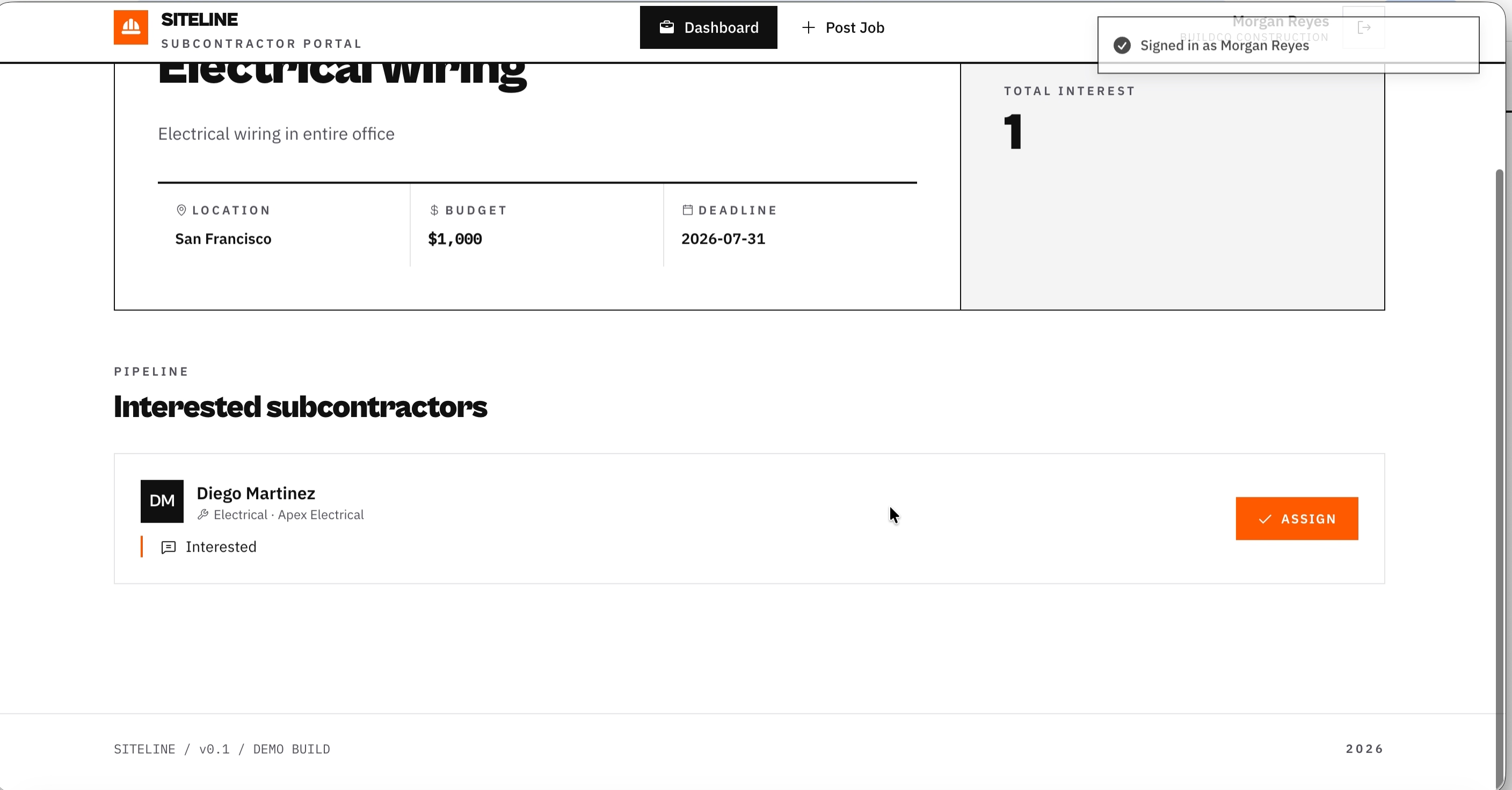
Assigning takes one click from that pipeline. It flips the scope from open to assigned, records the awarded subcontractor on the job, updates the dashboard counters, and closes the scope to further applications.
Subcontractors track applications and awards in My Interests
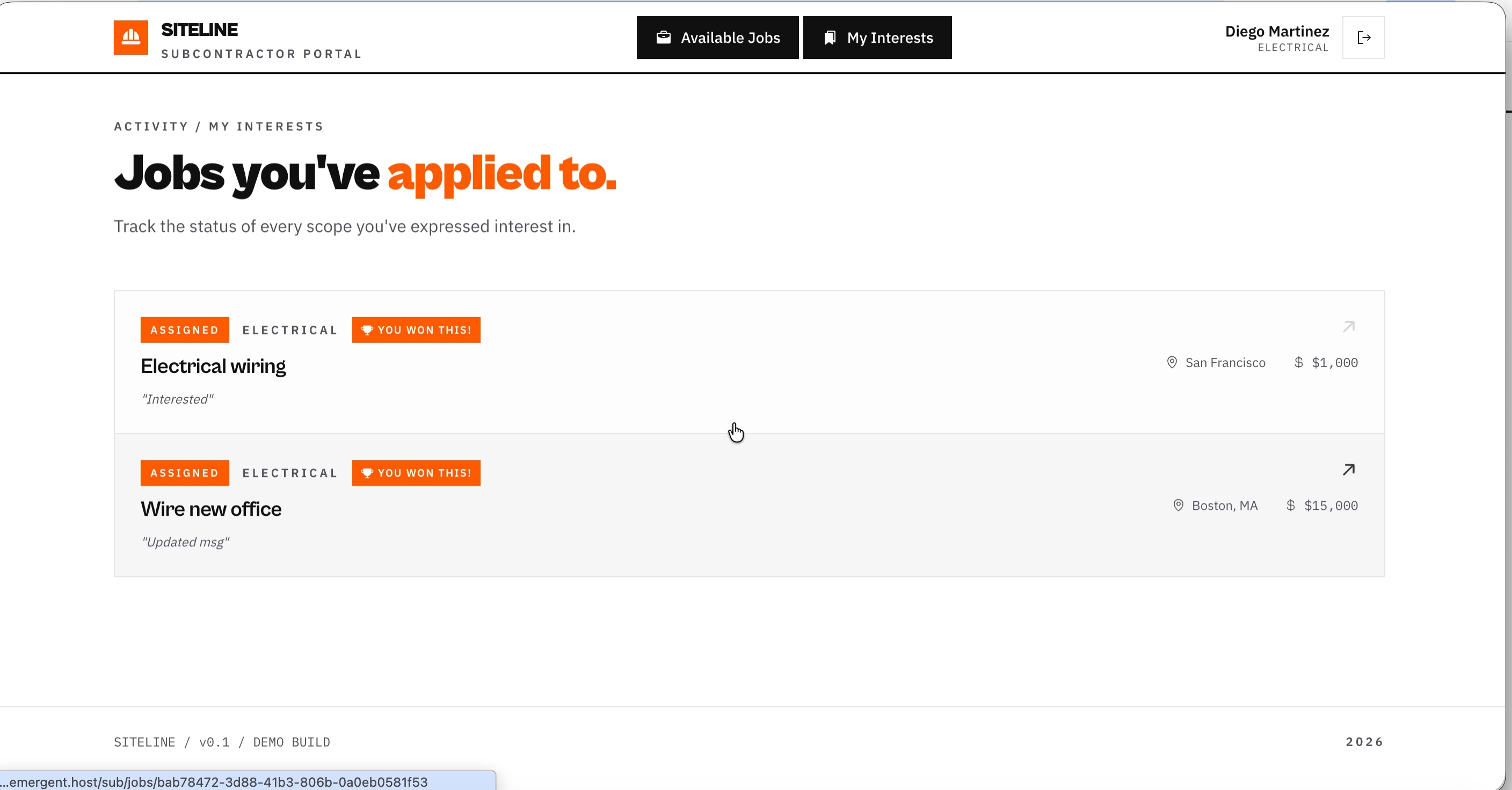
A second tab lists every scope the subcontractor has applied to with its location, budget, status, and the message they sent, flagging anything they won with a "You won this!" badge. It is the one place to check what is still live and what came through.
Opening a scope that went to someone else shows an assigned badge and a "Job closed" panel stating that new applications are no longer accepted.
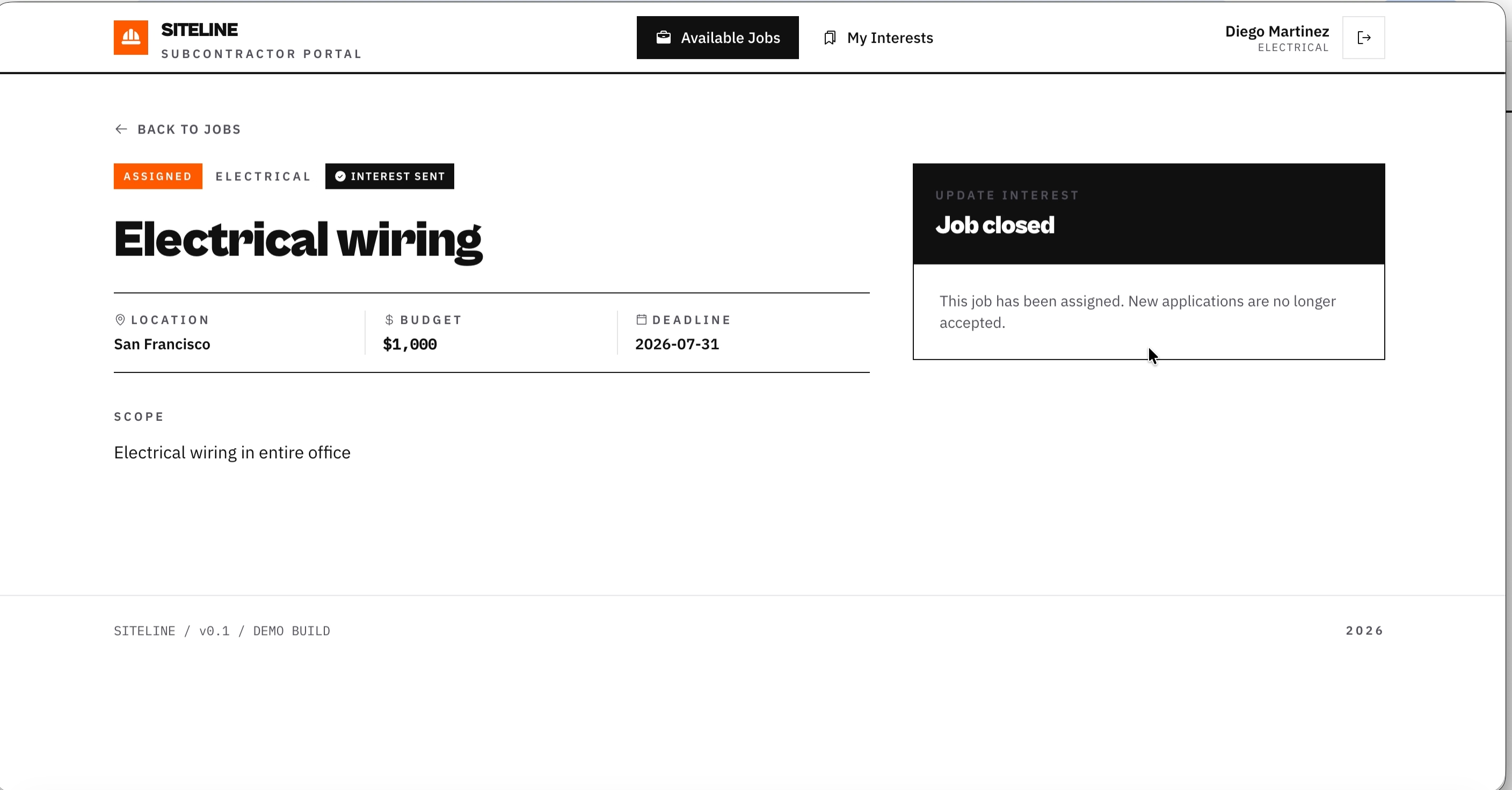
Status reaches the list and the scope alike, so nothing needs confirming by phone.
Outcomes
Time to fill a trade dropped from days to hours
Filling one trade typically ran to eight or ten outreach attempts, counting the subcontractors who needed a second call. Publishing now puts a scope in front of the full subcontractor list at once, with no per-firm outreach and no callbacks to wait on. Because the posting carries its own trade, location, budget, and deadline, subcontractors qualify the job themselves and apply the same day, and a filter for each of the ten trades means anyone with open capacity finds work in their own line instead of waiting to be called.
Comparing candidates takes minutes
Every application lands in the pipeline on the job it belongs to, carrying the subcontractor's name, trade, company, and written message. Comparing candidates means reading one screen, with no cross-referencing and nothing to piece together after the fact.
Ends the status-chasing calls on every awarded scope
Assignment propagates to both sides in one action. An awarded scope tells subcontractors so itself, with a closed notice on the job and a won badge in their interests list, so nobody calls the office to ask whether a job is still open.
Delivered for 5 percent of a custom development agency's quote
Before building, the firm priced the same portal with a custom development agency. They built it themselves for a fraction of that quote, with no developer on staff and no enterprise procurement module to administer.
Conclusion
SITELINE shows what happens when the business that lives with a problem gets direct access to software creation. A general contractor who knows why a trade goes unfilled, what information a subcontractor needs before returning a call, and how a scope actually gets awarded is the right person to design a sourcing portal.
The team vibe coded it, describing what they wanted in plain English on Emergent's construction job app builder, and the finished product, role-based access with separate general contractor and subcontractor portals, a structured posting form with a ten-trade taxonomy and date picker, an interest pipeline with per-application messages, one-click assignment with status propagation, trade filtering, empty and closed states, live dashboard counters and all, went from prompt to a live, publicly accessible application in a few hours.
If you are a general contractor or construction operator sitting on a product idea that solves a clear problem in your industry, Emergent can take you from description to deployment in the same session. Start building on Emergent.

Emergent turns your idea into a full-stack web or mobile app, no coding required.
 No coding required
- Web & mobile apps
- Deploys instantly

on Emergent today




