



Brickline was built by a general contracting business in the Bay Area with no in-house development team. In remodeling, most jobs start with a quote request, and the businesses that reply first tend to win the work. But for most contractors those requests land in a shared inbox and stall there, mixed in with invoices and scheduling mail, with no shared way to see which leads have been called, which have been quoted, and which have gone cold. The fix is a site to capture leads and a private place to track them. But that is exactly the kind of tool a small crew has no developer or budget to build.
Using Emergent's construction job app builder, the team built Brickline, a general contractor site that captures quote requests through a structured form and feeds every submission into a private lead tracker where each lead moves through clear stages from new to won or lost. The public site turns interested visitors into structured leads, and the admin console gives the team a single place to see where each one stands and move it forward. The whole product, public quote page and private console together, was built on Emergent in a single session, and it has already cut the response times and lost leads that used to come with an inbox.
Challenges
A shared inbox is where quote requests get buried
A remodeling business runs on inbound quote requests, but most contractor websites do little with them. A homeowner fills out a generic contact form, and the message lands as one more email in a shared inbox. Nothing about it is organized. The team cannot see when the request came in or whether anyone has replied yet. That same inbox is already full of supplier invoices, scheduling threads, and spam, so real leads slip down the list and get missed. The business does not lose the job because the work was wrong. It loses it because nobody called back in time.
There is no shared view of where a lead stands
Once a quote request comes in, turning it into a booked job takes phone calls, site visits, and follow-ups that can stretch over weeks. Without a system, that progress lives in one person's head or in scattered notes. A project lead cannot glance at a list and see that five inquiries are waiting on a callback, two are quoted and pending, and one just closed. When a homeowner calls back to ask about their estimate, whoever answers has no quick way to pull up the history. The absence of a shared pipeline turns every status question into a search through email and memory.
Building this in-house would mean stitching four tools into one
Brickline needed two things working together: a public quote page anyone could reach, and a private lead pipeline only the team could open. Built the usual way, that takes four separate pieces:
- A form service to catch submissions
- A database to store each lead and its status
- A login to keep the pipeline private
- Hosting to put it all online
A general contracting business has no one on staff to wire those together or keep them running. Hiring it out means a custom build and a bill to match, for a crew whose work is on job sites, not in a codebase. What the business wanted was the finished result, the quote page and the pipeline behind one login, without owning the plumbing underneath.
Solution
A structured quote form that captures scope before the first call
The public site presents six service lines, from kitchen and bathroom remodels to home additions, decks, custom carpentry, and repairs, and routes every visitor to a single quote form. The form is the part that does the work, turning an interested visitor into a structured lead.
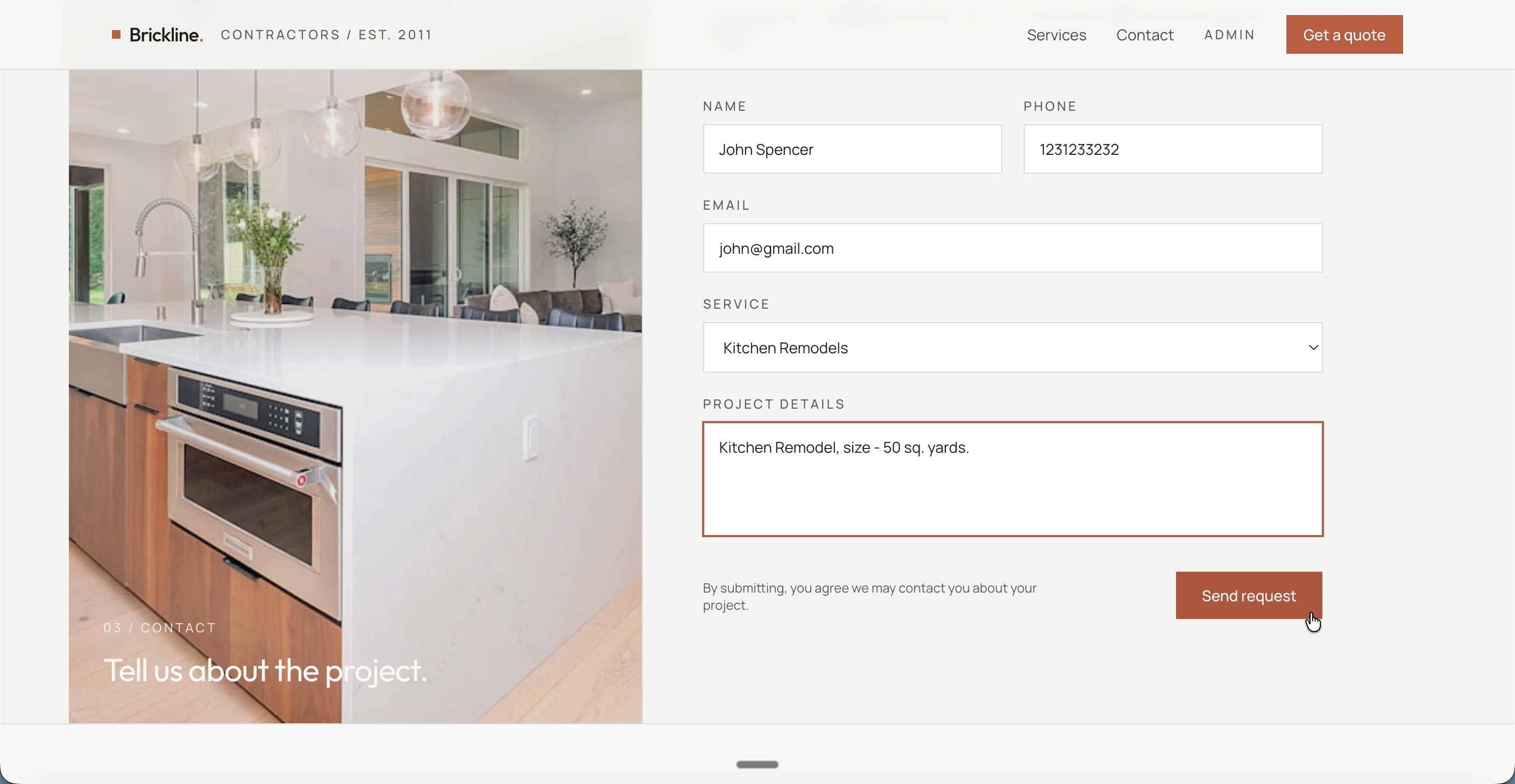
The quote form collects a name, phone number, email, a service selected from a dropdown that mirrors the six service lines, and a free-text project details field prompting for square footage, scope, timeline, and budget range. On submission, the visitor sees a confirmation message promising a reply within one business day, and the form clears. Every field is captured as structured data, so each lead arrives with its service type and scope already attached, rather than as a loose paragraph someone has to read and sort.
A lead tracker that turns every submission into a record you can work
Behind a restricted login sits the admin console, where every quote request becomes a row in a Leads pipeline. Each lead shows its submission date and time, the homeowner's name, email and phone, the requested service, and a status. A count at the top reflects the total in view, and filter tabs across the top break leads down by stage, so the team can see at a glance how many are new, contacted, quoted, won, or lost.
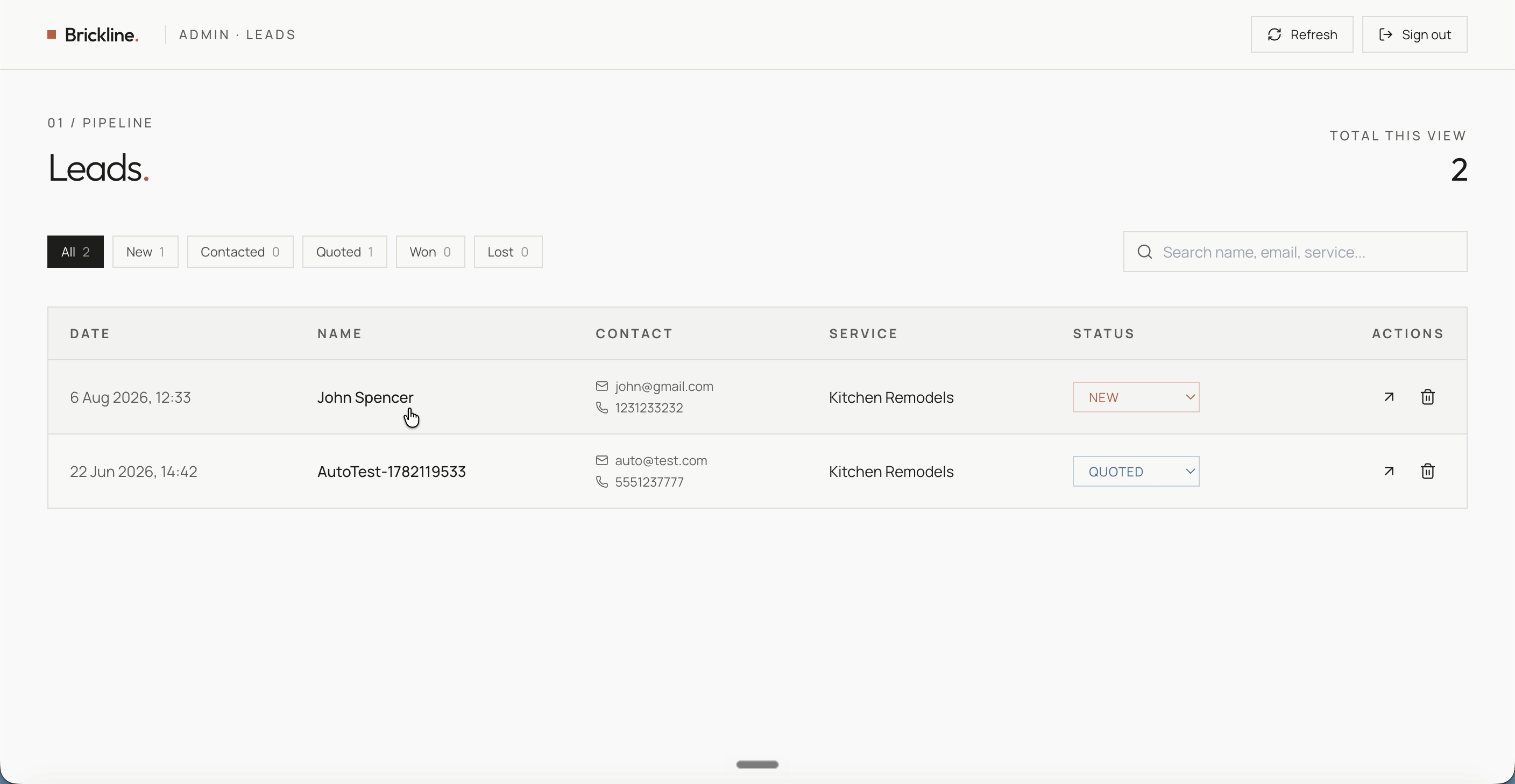
Opening a lead slides out a detail panel with the full record: email, phone, requested service, status, and the message the homeowner wrote at intake, so whoever picks up the follow-up has the whole context in one place. A search box filters leads by name, email, or service. The pipeline is the piece that a shared inbox never provided: a single, shared view of where every inquiry stands.
Status tracking that moves a lead through the pipeline
Each lead carries a status dropdown that moves it through the pipeline stages, from new to contacted, quoted, and won or lost.
Change the status and the lead updates right away, with no extra form to fill in. The counts on each tab go up or down to match, and a short confirmation pops up so the person knows the change saved.
Outcomes
First responses now go out in hours, not days
Before Brickline, a quote request could sit unseen in a shared inbox while the team was out on site, and a reply might take days. Now every submission lands in the pipeline the moment it comes in, marked new and waiting. The team sees it, calls back, and response times have dropped from days to hours.
Missed follow-ups fell by about 90 percent
The old inbox let leads slip: some were read and forgotten, others buried under invoices and scheduling mail before anyone acted. With every request tracked by stage and a clear count of what is still new or waiting, leads stopped falling through. Follow-ups that used to get missed dropped by about 90 percent.
The team reclaimed four to five hours a week
Chasing down which leads had been contacted, which were quoted, and which had gone cold used to mean digging through email and notes. The pipeline answers those questions at a glance, and a single dropdown keeps each lead current. The hours that used to disappear into sorting and chasing now go back into the work on site.
Conclusion
Most contractors never get to build the tool that would fix their biggest leak, because the fix sits on the far side of a developer, a budget, and a timeline. Brickline closed that gap. The same business that watched quote requests get lost in an inbox described the site and the lead tracker it wanted, in plain English, and had both, the public quote page and the private admin console behind it, running as one live application by the end of a single session. The tool works because it was shaped by the person who feels the problem every week, not translated secondhand through a spec handed to someone else.
If you are a contractor or operator sitting on a product idea that solves a clear problem in your industry, Emergent can take you from description to deployment in the same session.
Emergent turns your idea into a full-stack web or mobile app, no coding required.
 No coding required
- Web & mobile apps
- Deploys instantly



on Emergent today




