



The business is a small, family-run removalist operation in Melbourne, with no in-house development team and no software budget. Removalists in a busy metro market compete on trust and speed of response, but most win work over the phone and never take a booking or a payment online. A customer has to call, wait for a callback, and arrange a deposit by bank transfer, which is slow for the customer and easy to lose to a faster competitor.
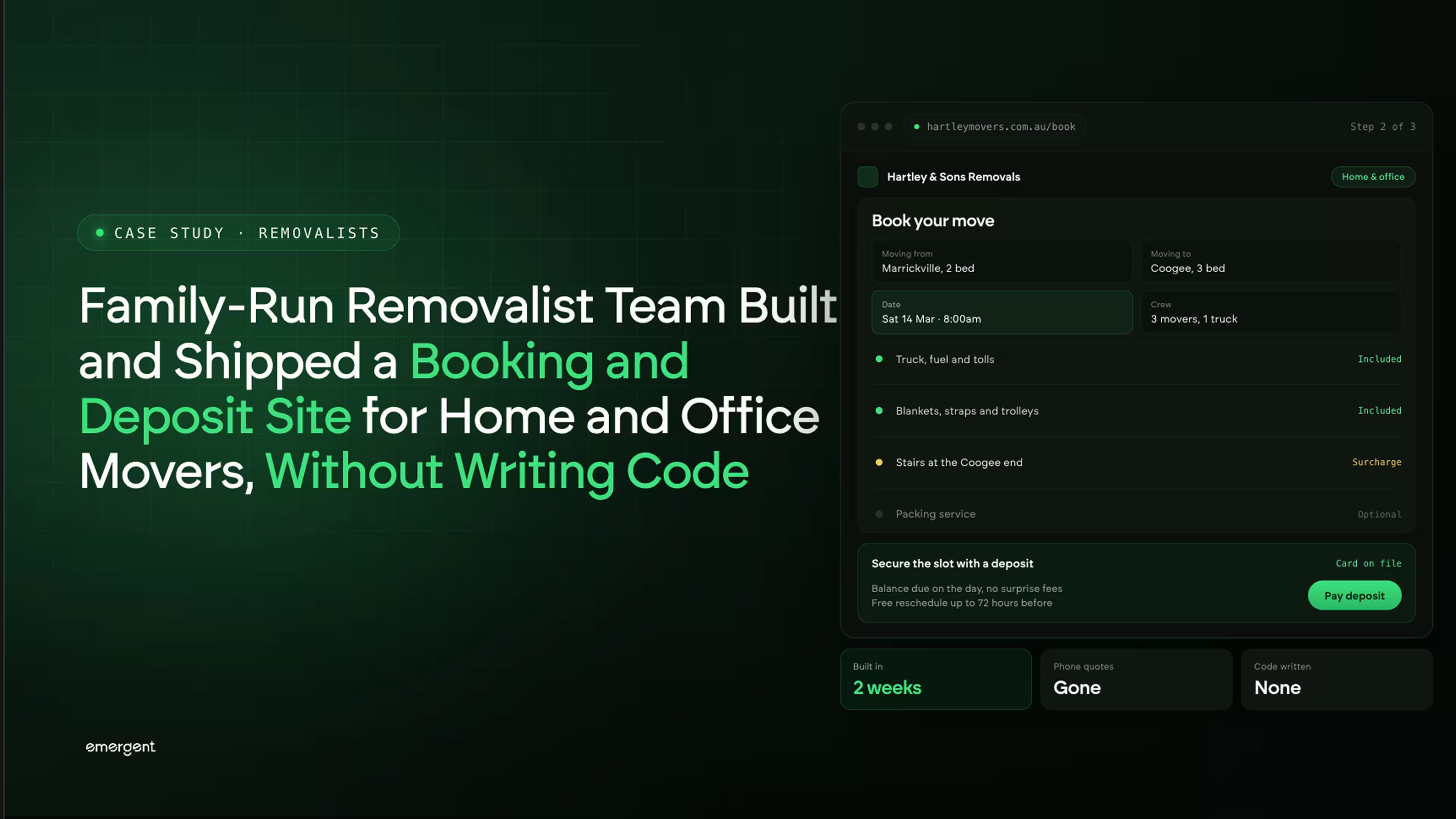
Using Emergent's booking website builder, the team built a public site that shows their rates up front, captures quote requests, and takes a secured card deposit through Stripe to lock in a moving date. The finished site is live on its own branded domain.
Challenges
Removalists win work on the phone and lose it to whoever answers first
In a busy Melbourne removals market, most jobs are booked by phone. A customer finds three or four movers, calls each one, and books whoever picks up, sounds trustworthy, and can confirm a date. For a small family-run team, that means every inquiry hangs on being available to answer, quote, and reassure in the moment. A missed call is often a lost job, because the customer has already moved on to the next result. There was no way for an interested customer to see pricing, request a quote, or hold a date outside of a live phone conversation.
Customers want a price before they commit, but removalist sites rarely show one
People moving house or office want to know roughly what a move will cost before they hand over their details or pick up the phone. Most removalist websites are brochures that list services and a contact number, with no pricing at all. That forces every price-curious visitor into a phone call, and many never make it. The team needed to show their hourly rate, minimum booking, and call-out fee openly, so a customer could self-qualify before reaching out, rather than treating price as something to be negotiated only after contact.
Taking a deposit online is exactly the part a small operator cannot build
Confirming a booking with a paid deposit protects a mover from no-shows and last-minute cancellations that leave a truck and two staff idle. But collecting card payments online normally means a developer, a payment integration, and a checkout page that handles the money correctly. A family-run removals business runs trucks, not software. Hiring an agency to build a booking-and-payment site is expensive and slow, and off-the-shelf booking tools rarely fit how a removalist actually charges, by the hour with a minimum and a call-out fee. So deposits stayed manual, by phone and bank transfer, with all the friction and dropped bookings that come with it.
Solution
Rates shown up front, with two clear paths from the same page
The site leads with the team's actual pricing: an hourly rate for two movers and a truck, a minimum booking, billing increments, and a call-out fee, all stated plainly with a note that final cost depends on access, distance, and job complexity. From the top of the page a visitor gets two distinct calls to action side by side: request a free quote, or book now and pay a deposit. This lets a price-curious visitor and a ready-to-book customer both act from the same page, instead of being funnelled into a single phone number.
The design decision that matters here is putting real numbers on the page. A customer can see whether the team is in their range before spending any effort, which filters out mismatched enquiries and gives serious ones the confidence to continue.
For a similar build in a different industry, read how a legal firm built a client portal on the same approach.
A guided quote request that captures what a mover actually needs to price a job
The quote flow starts by asking what the customer is moving, with apartment, house, and office as the three options, each with a short descriptor. It then collects the details a removalist needs to give a real quote:
- Name and phone, with an optional email
- The suburb they are moving from and to
- The move date
- Property size
- An open field for special requirements like heavy items, stairs, or difficult access
The form promises a response within 30 minutes during business hours.
Rather than a generic "contact us" box, the flow is shaped around the job. By the time the inquiry lands, the team already has the move type, route, date, and size in hand, so the callback is about confirming and closing, not gathering basics.
A checkout that takes a secured card deposit through Stripe
The book-now path leads to a dedicated checkout. It restates the rates, shows a payment summary with the chosen moving date, and presents a fixed deposit amount to pay now, with the remaining balance due on moving day. The customer enters their name and email, selects a date from a calendar, and pays the deposit, with payment handled securely through Stripe. A "what happens next" panel sets expectations: pay the deposit, receive a confirmation email, get a call to confirm details, and pay the balance on the day.
This is the capability a small operator normally cannot build alone. The site takes real card payments, confirms the booking automatically, and holds the date, without the team writing a line of payment code or hiring anyone to do it.
Deposits and memberships solve the same problem differently. Read how a dance studio built class bookings and memberships.
Conclusion
An operator who runs the trucks understands exactly where a removals business leaks work: the missed call, the price-curious visitor who never rings, the no-show that idles a crew, the deposit that is too awkward to collect online. That operator is the right person to design the fix. The team described the site they wanted in plain English on Emergent, and the finished product, transparent pricing, a job-shaped quote form, a calendar-driven checkout, a real Stripe deposit, automated confirmation, and a live branded domain, came together without a developer, an agency, or a payment engineer.
If you are an operator running a service business on phone calls and manual deposits, Emergent can take you from description to a live site that quotes and gets paid, in the same session.
Emergent turns your idea into a full-stack web or mobile app, no coding required.
 No coding required
- Web & mobile apps
- Deploys instantly



on Emergent today




