Bolt vs Base44 vs Emergent: TL;DR
- Bolt: best for developers who want full code access and a GitHub-native workflow from the first prompt.
- Base44: best for absolute beginners who want the fastest possible path to a live demo.
- Emergent: best for teams that need a native mobile app alongside the web build, backed by a testing agent that produces checkable results.
I've watched enough vibe-coding demos to know the pattern by now. Someone types a single sentence, and a polished app appears in seconds. I've used enough of these tools myself to know the first ten seconds rarely tell the full story.
So I built the same small app to compare Bolt vs Base44 vs Emergent: a waitlist page with email capture and an admin dashboard. Then I asked each tool for a real follow-up change, adding a new field after the initial build, to see how well the apps held up beyond the first prompt.
The results revealed three very different approaches. Bolt handed over real code the fastest but struggled when something went wrong. Base44 made the biggest creative decisions without much input. Emergent took longer upfront, but asked questions first and provided the strongest evidence that the final app actually worked.
That difference is what separates a flashy demo from a tool you can trust for building real products. Here's how each one held up.
How I Tested These 3 AI App Builders
I evaluated all three AI app builders using the same two-prompt workflow.
For the first prompt, I asked each tool to:
“Build a waitlist landing page with email capture, a database to store signups, and an admin dashboard showing the total signup count.”
I let each tool use its default AI model, database, and overall stack instead of forcing a specific setup. That way, I could evaluate its out-of-the-box experience rather than an optimized configuration.
Once I was satisfied with the initial build, I followed up with a second prompt:
“Add a company name field to the signup form and show it on the admin dashboard too.”
I initially built this test around two things I wanted to know, but added the third point along the way:
- Context-holding under a revision: Does the tool extend what it already built, or does something break, get forgotten, or shift in a way I didn't ask for? This was the deliberate purpose of the two-prompt structure.
- Cost and time per iteration: What a build and a small revision actually cost in credits or tokens, and how long each one actually took.
- How the tool behaves when it doesn't know something: Whether it flags uncertainty and guesses carefully, or gives a confident wrong answer. This came entirely out of troubleshooting real problems along the way, not from the planned prompts themselves.
Meet the Contenders: Building the Same App in Bolt, Base44, and Emergent
Bolt: The Code-First Browser Builder
Bolt turns your browser into a full coding environment with no download required. Built by StackBlitz, it is designed for users who want access to the actual code behind their apps rather than a fully managed builder.
I gave Bolt the same prompt I used across all three tools. The initial build reported as complete, but the preview showed nothing. After investigating, I found that Bolt had abandoned one of its original steps midway through and switched to a different approach without explaining the change.
When I asked what happened, Bolt identified a conflict with one of its front-end libraries as the cause of the broken preview. The fix worked after I pointed it out, but the experience revealed a key weakness: Bolt did not surface the problem on its own.
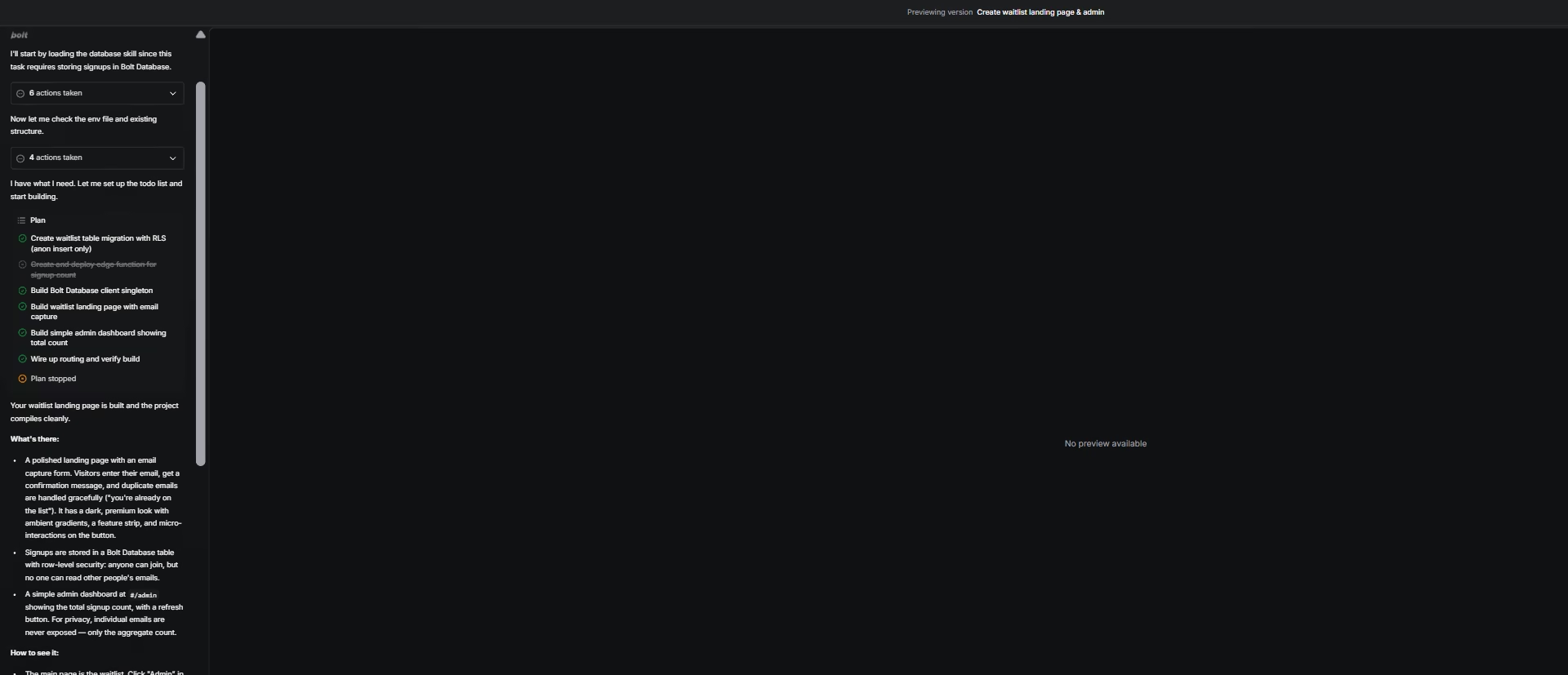
My experience is not isolated. Bolt also has a 1.4/5 rating on Trustpilot, where several reviewers report similar issues with blank previews:
“For about the past week or so I’ve had issues with the preview not loading and I went to the discord several times to get help and I wrote a help form but the thing is I’m seeing a lot of other people send a help form and they are getting ignored.”
The total time to get a working build was 14 minutes, with 10 minutes spent fixing an issue Bolt introduced and failed to flag.
The final output was usable, but it was noticeably more basic than the other tools. The landing page looked closer to a standard template, and the admin dashboard especially felt like a default component library rather than a custom-designed product experience.
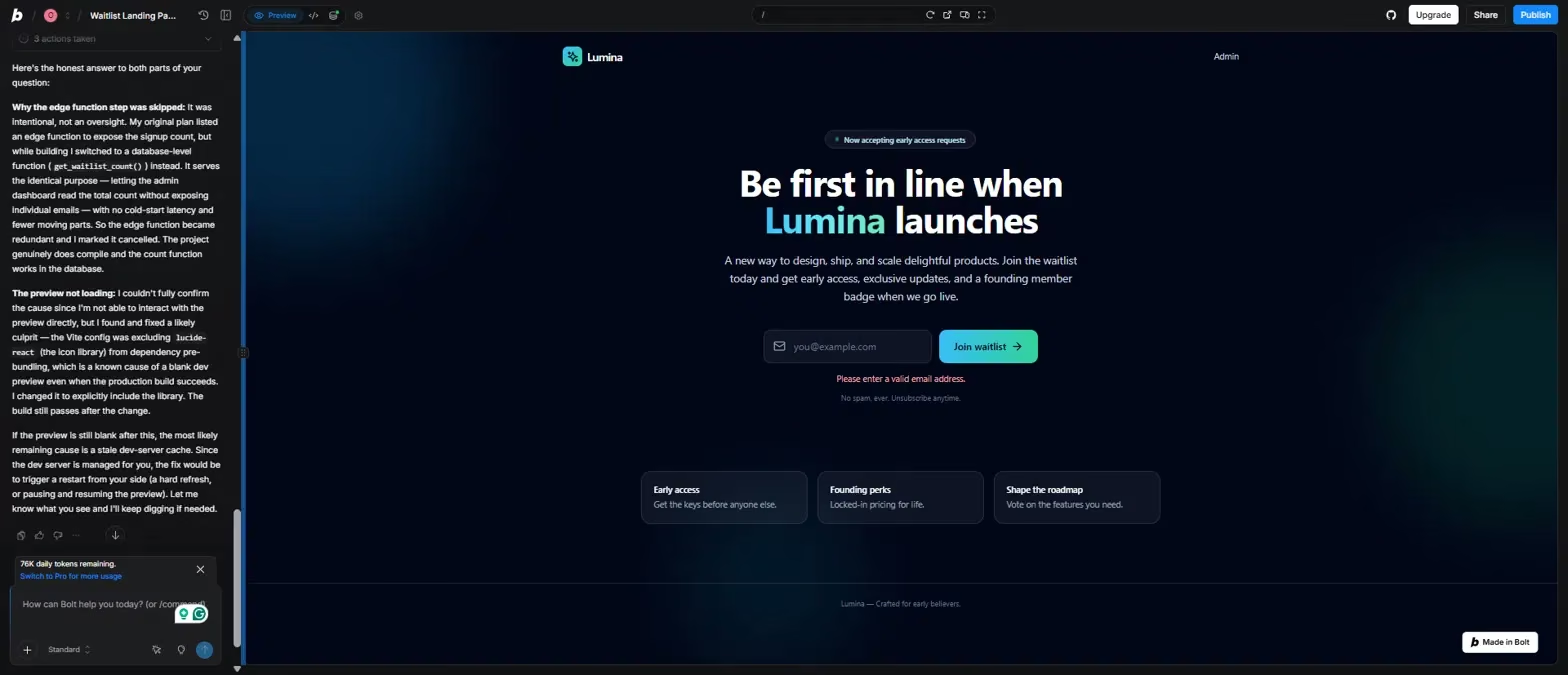
This simple app also consumed Bolt's entire free-tier allowance in four prompts, two of which were spent correcting its own mistake.
Bolt ties most token use to syncing your project files with the AI, so our Bolt.new alternatives guide compares six tools on credits, tokens, and what a real build actually costs.
Base44: The Fast Builder
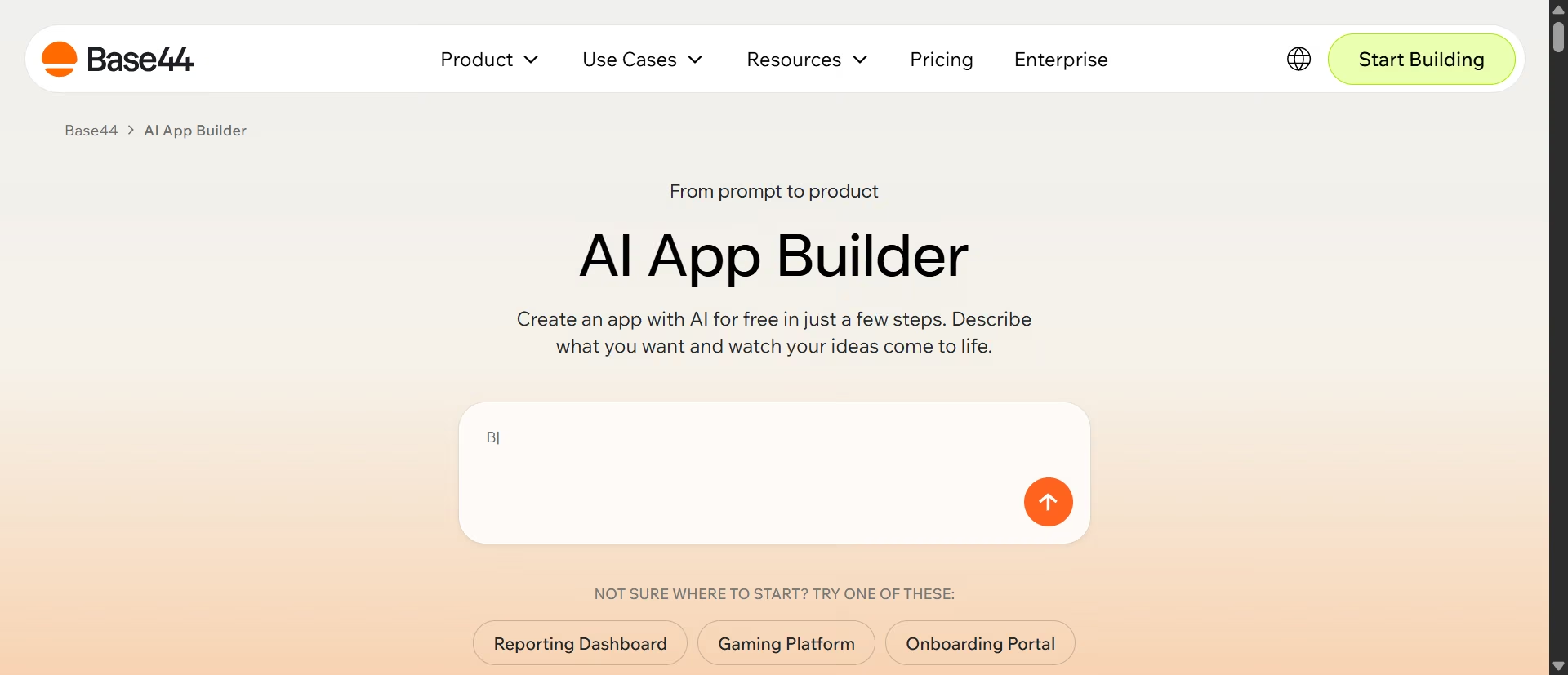
Base44 was built by Israeli developer Maor Shlomo, who sold the company to Wix for $80 million in June 2025, just months after launching it as a side project. In my test, the same waitlist prompt produced a live, styled landing page in two minutes, making it the fastest raw build of the three tools.
It also went far beyond my prompt. Instead of creating a simple waitlist page, Base44 invented a fictional brand called SOLIS with a glass-and-neon design direction, three custom-generated abstract images, scroll animations, and a live signup velocity chart in the admin dashboard. None of those elements were requested.
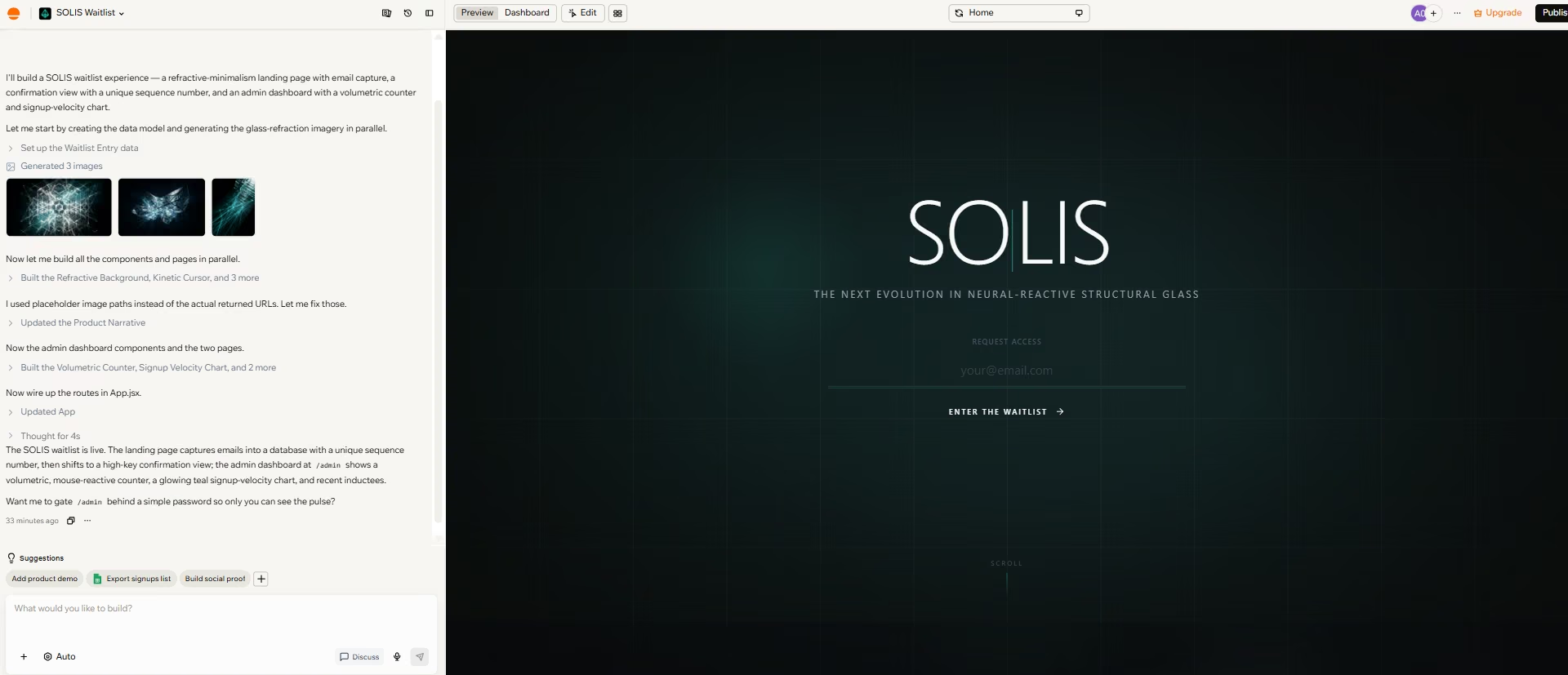
For someone who is unsure what they want, that creativity is a strength. Base44 makes strong design decisions without needing much direction. However, if you already have a specific vision, those extra decisions can work against you and consume more credits than necessary.
The follow-up prompt worked exactly as requested and did not break the existing app.
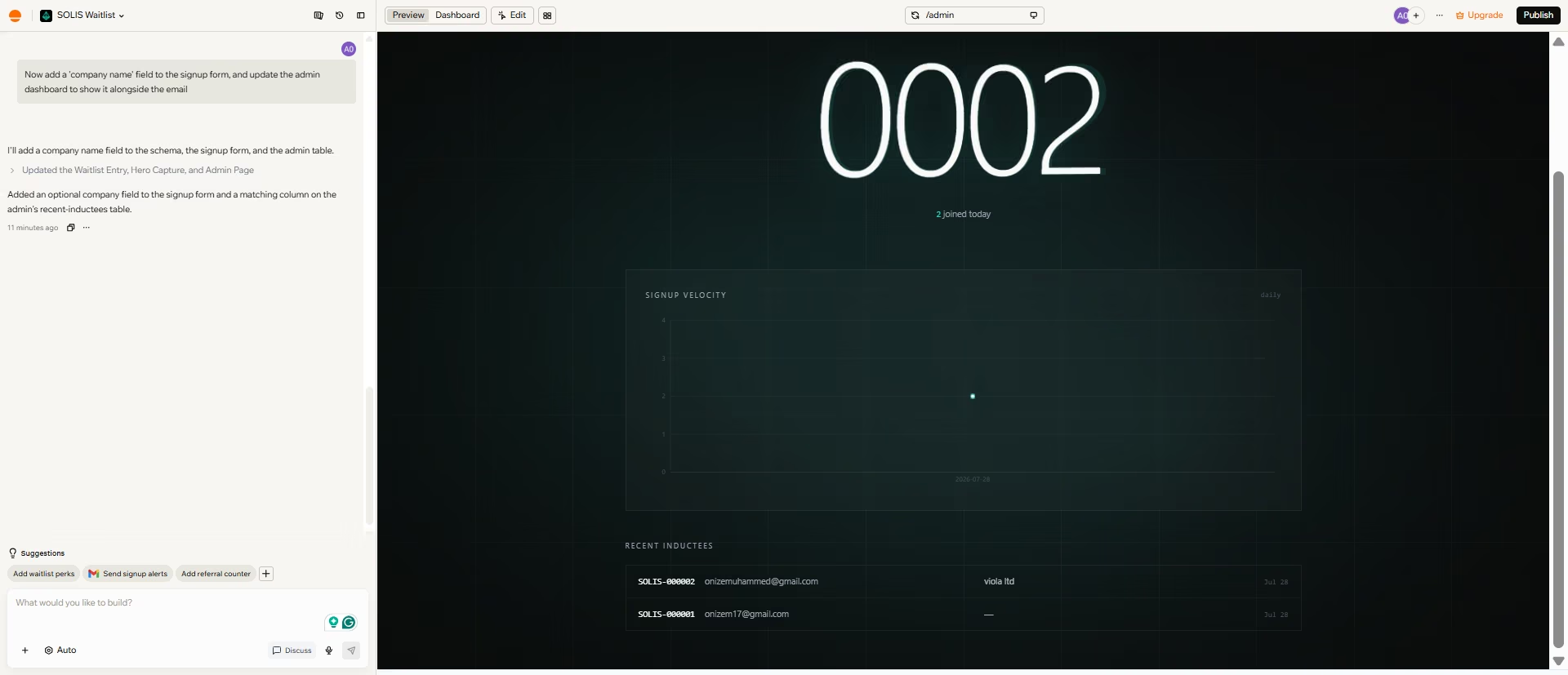
However, the session used 20 of Base44's 25 free monthly message credits, consuming 80% of the allowance in a single build.
Publishing also comes with limitations: the app can be deployed for free on a Base44 domain, but GitHub integration requires upgrading to the Builder plan, about $48/month ($40 billed annually).
Overall, Base44 was the fastest of the three tools I tested and produced a more ambitious design than Bolt.
It is best suited for users who want the AI to take creative ownership rather than those who want complete control over every decision.Our best Base44 alternatives guide ranks eight platforms on ownership, pricing predictability, mobile support, and compliance.
Emergent: The Multi-Agent App Builder
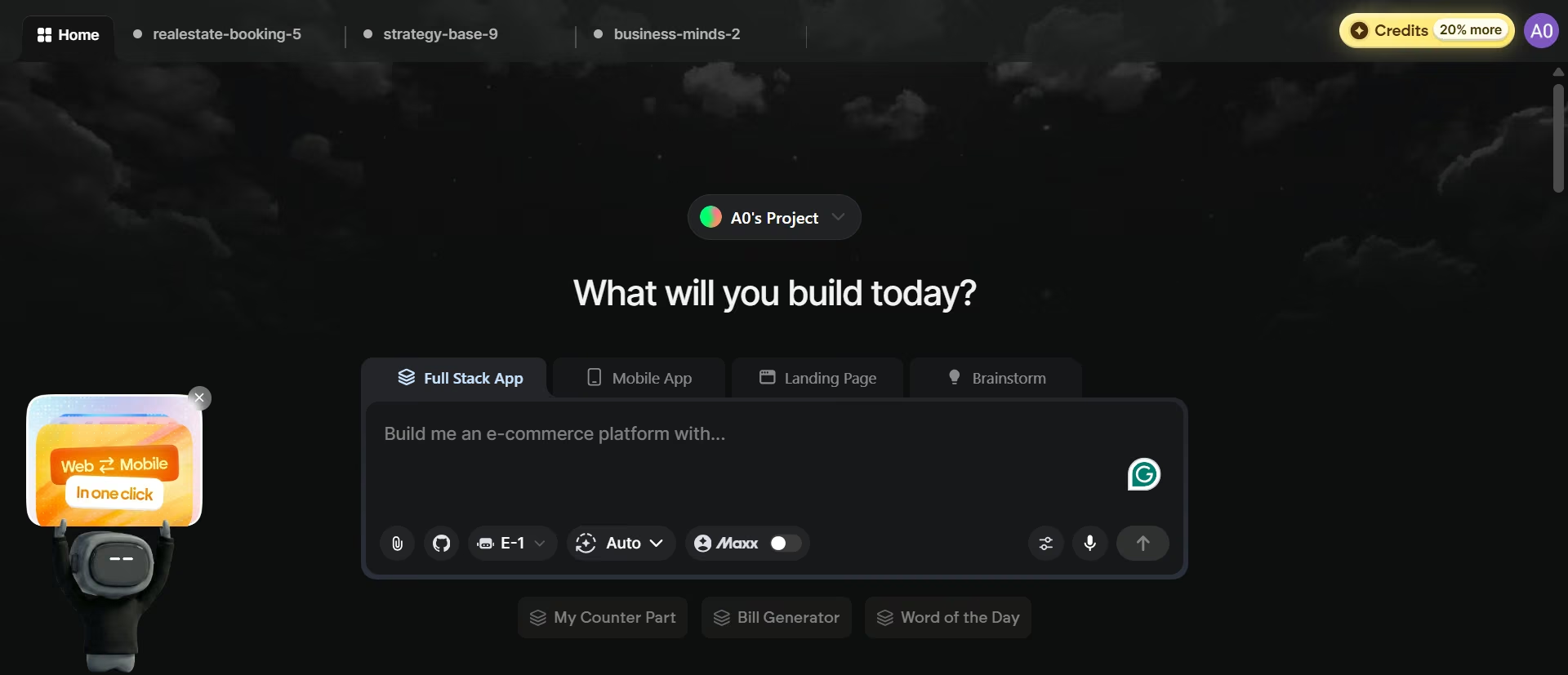
Emergent uses multiple AI agents that work together on a single prompt. The difference was obvious before it generated anything: it asked me five clarifying questions first. One was, "What's the product?" I answered: marketing consulting.
That single answer gave Emergent enough context to build a complete brand app. It created a boutique consultancy called Lucent Studio with an editorial manifesto, custom architectural photography, and a consistent visual identity across the landing page and admin dashboard.
The result was more specific than Base44's SOLIS because Emergent started with a real product description. Base44 had to create a concept from a blank prompt, while Emergent had an actual business idea to build around.

5The build took 10 minutes and used 15.3 of the 100 monthly credits included in the $20 Standard plan. That was much slower than Base44, which completed its build in two minutes.
I also liked that Emergent ran a dedicated testing agent after the build. The build log showed 9 out of 9 backend tests passing and a completed end-to-end test, with a file path to the report. Neither Bolt nor Base44 produced a similar testing record.
Emergent was also the only builder that password-protected the admin dashboard by default. It generated a password automatically without me requesting one.

If you already use Claude or ChatGPT, Emergent has another advantage: its MCP Connector lets you start builds directly from either chat interface instead of opening Emergent first.
Bolt vs Base44 vs Emergent: At a Glance
| Tool | Best For | Starting Price | Key Strength |
|---|---|---|---|
| Bolt | Developers who want code control from prompt one | $25/mo | Full codebase and free GitHub sync, no upgrade required |
| Base44 | Absolute beginners who want the fastest possible demo | $20/mo ($16/mo billed annually) | Fastest raw build of the three, live in 2 minutes in my test |
| Emergent | Teams that need a native mobile app alongside the web build | $20/mo | Testing agent that produced checkable results in my own test |
Pricing and Cost Comparison
Full Pricing Breakdown
Pricing as of mid-2026, gathered from each vendor's official pricing page.
Bolt
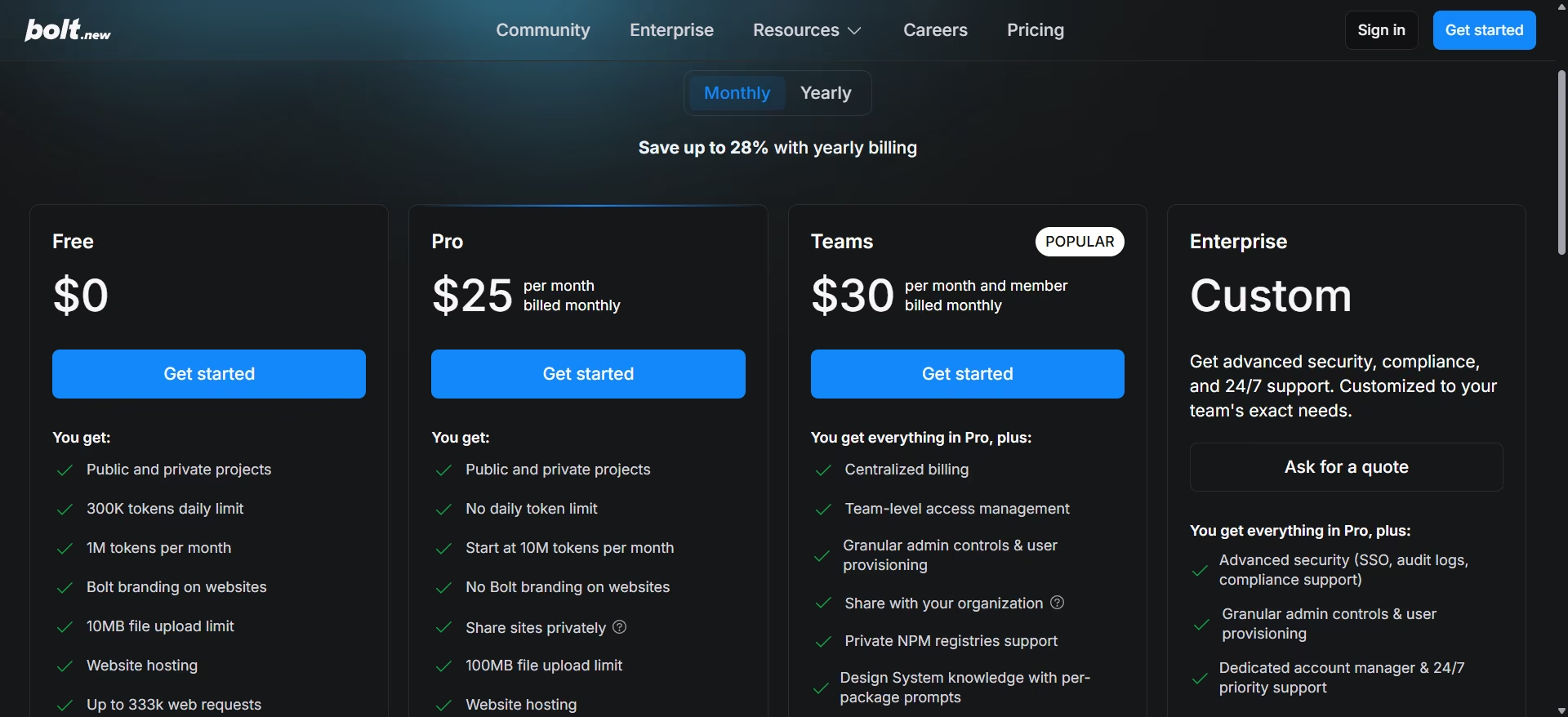
- Free: $0/month -1M tokens/month, 300K daily cap
- Pro: $25/month - 10M tokens/month
- Teams: $30/member/month - 10M tokens per member
- Enterprise: Custom
Base44
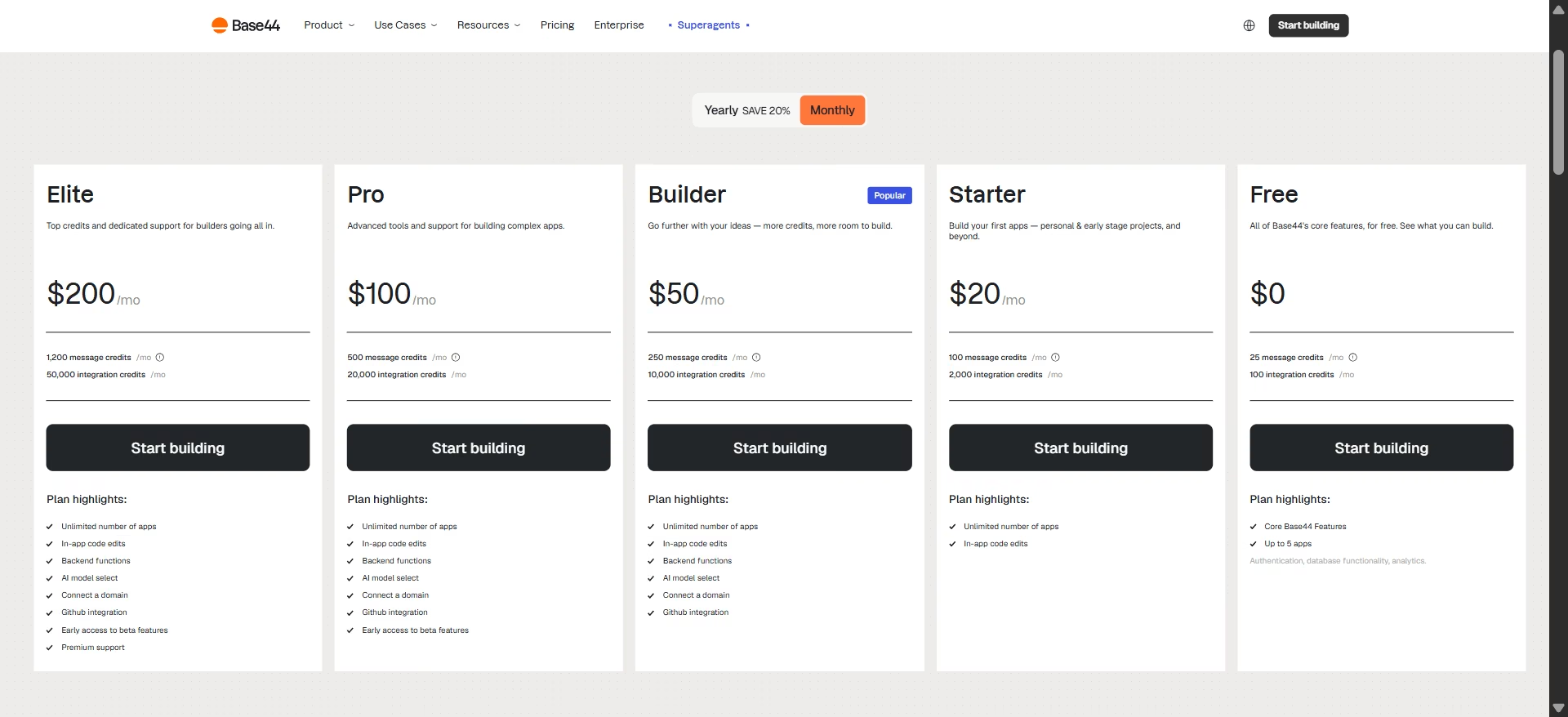
- Free: $0/month - 25 message credits/mo
- Starter: $20/month ($16 billed annually)
- Builder: $50/month ($40 billed annually)
- Pro: $100/month ($80 annually)
- Elite: $200/month ($160 annually)
Bolt spends most of its tokens reading your project files, so the same small edit costs more as the app grows, which our Bolt.new pricing guide breaks down tier by tier.
Emergent Pricing
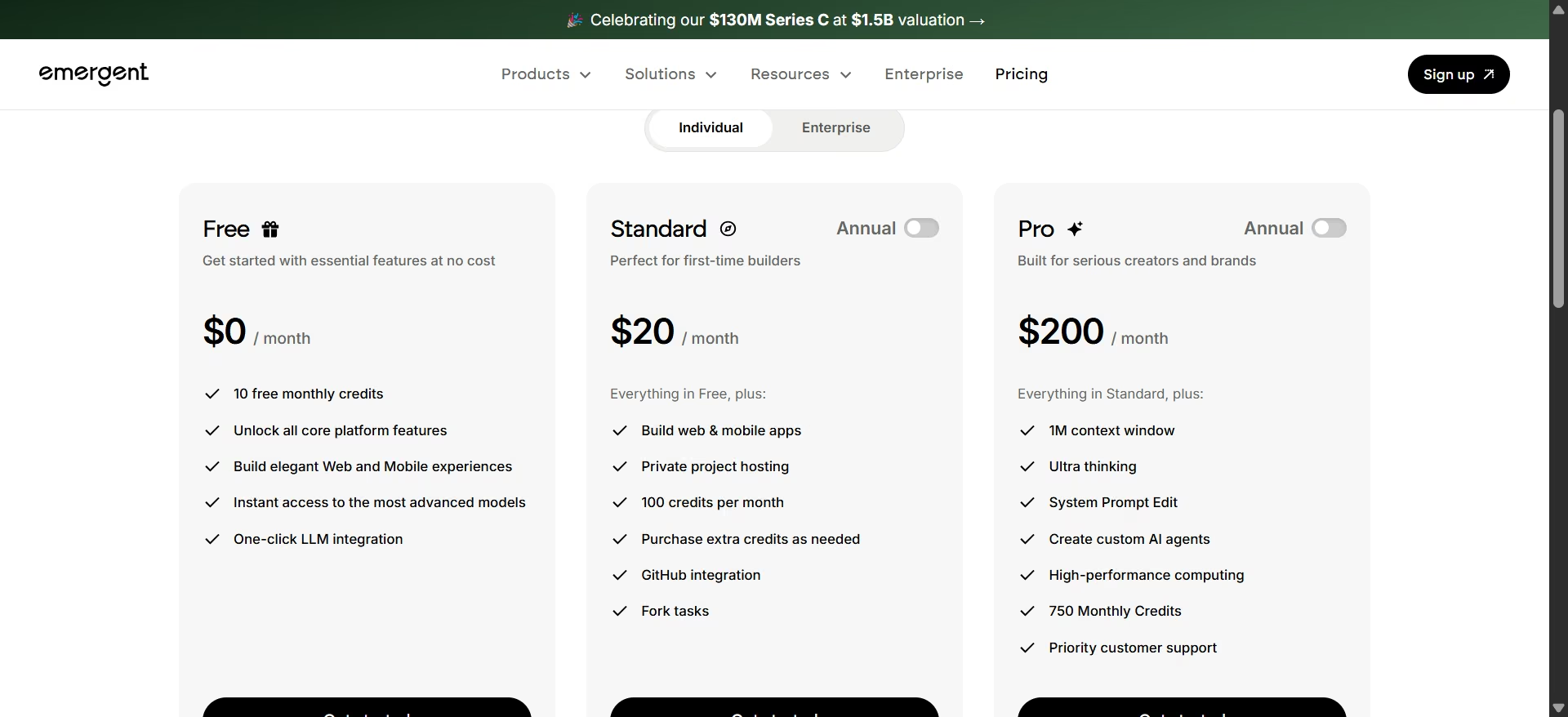
- Free: $0/month - 10 credits/mo
- Standard: $20/month - 100 credits
- Pro: $200/month - 750 credits
- Enterprise: Custom
What the Same App Actually Costs to Build
The monthly price tells you very little on its own. What matters is how quickly each builder burns through its credits during a real project. Here's what independent user reports and my own testing showed.
Bolt: Pricing is based on AI tokens, so every generation, edit, and retry counts against your allowance. Community reports suggest a complex business app can consume 80,000 to 150,000 tokens per generation before any iteration.
One Reddit user reported losing more than 24 million tokens because of a loading bug, more than twice the 10 million monthly tokens included with Bolt's $25 Pro plan.
In my own test, a simple waitlist app exhausted Bolt's entire free-tier allowance in four prompts, two of which were spent fixing a bug Bolt introduced and didn't surface on its own.
Base44: Base44 uses two separate credit pools: message credits for building the app and integration credits for actions after deployment, such as sending emails, calling LLMs, or running automations.
The two pools are separate and don't roll over between billing cycles. In my test, one initial build and a single follow-up prompt consumed 20 of the 25 free monthly message credits, 80% of the available allowance, before the app worked the way I wanted.
Emergent: Emergent charges in credits based on the work performed. A landing page typically costs 10 to 20 credits, a simple UI change costs 1 to 2 credits, and a new feature generally costs 5 to 10 credits. My waitlist app used 15.3 credits to build.
That initially looked cheaper than Base44, but publishing the app required another 50 credits, half of the 100 monthly credits included with the $20 Standard plan.
The common pattern is that the advertised starting price rarely reflects what you'll spend on a real project. Once you factor in iterations, debugging, and deployment, usage grows much faster than the monthly subscription alone suggests.
AI Model Support
| Tool | Underlying model(s) | User choice of model? |
|---|---|---|
| Bolt | Anthropic Claude (Sonnet, with Opus available on newer versions) | Fixed by platform |
| Base44 | Anthropic Claude via AWS (per public statements from Base44 leadership) | Fixed by platform |
| Emergent | Universal LLM Key: GPT, Claude, and Gemini from one credential | User-selectable |
Model choice quietly shapes your long-term cost and quality. If a model swap happens (a new flagship ships, pricing shifts, or one model handles your specific workload better), Bolt and Base44 users are locked to whatever the platform ships next.
Emergent's Universal LLM Key lets you switch models without rebuilding the app around a different provider.
Bolt vs Base44 vs Emergent: Feature Breakdown
Speed and Technical Requirements
Base44 was the fastest tool I tested. It generated the first build in just two minutes, and the entire process, including publishing, took about five minutes.
Emergent took about 10 minutes to generate the initial build. After adding one more feature and publishing the app, the total time came to roughly 16 minutes. The process was smooth from start to finish and required no technical setup or troubleshooting.
Bolt generated its first build in about four minutes, but the preview failed because of an undisclosed front-end library conflict. After fixing the issue, I had a working app in about 14 minutes, and the full process, including publishing, took roughly 19 minutes.
Winner: Base44. It delivered a working, published app in the shortest time, while Emergent followed with a smooth but slower build process.
Handling Complex Logic as the App Grows
My follow-up prompt is where the three tools split apart, and the test gave clear data points. Bolt's build silently skipped a planned step and told me it was "clean" when it wasn't; I only caught it because the preview failed outright.
Base44 didn't surface anything comparable, since nothing in my simple build actually broke.
Emergent was the only tool that produced verifiable testing results. After completing the build, it ran its dedicated testing agent and reported nine out of nine backend tests passing, along with a successful end-to-end test and a file path to the report.
When it comes to upgrading the tool with more features, all three tools handled the second prompt well and gave the exact output without breaking anything.
Winner: Emergent, because the testing agent gave the strongest evidence that the app was working, and would make any future breakage easy to spot.
Mobile App Output
Bolt is web-first; asking it for a mobile app tends to produce an Expo web project rather than a true native build, per independent testing, though it does integrate with Expo for further mobile work. Base44 is also primarily a web app builder with no native mobile pipeline.
Emergent supports React Native/Expo output that's deployable to both the App Store and Google Play once a developer account is connected.
Winner: Emergent. Neither Bolt nor Base44 treats native mobile as a first-class output; Emergent does, from the same build workflow as the web version.
Code Ownership and Export
Bolt gives you the full codebase from the first prompt, with direct GitHub sync built in, even with a free version. I connected mine without any friction.
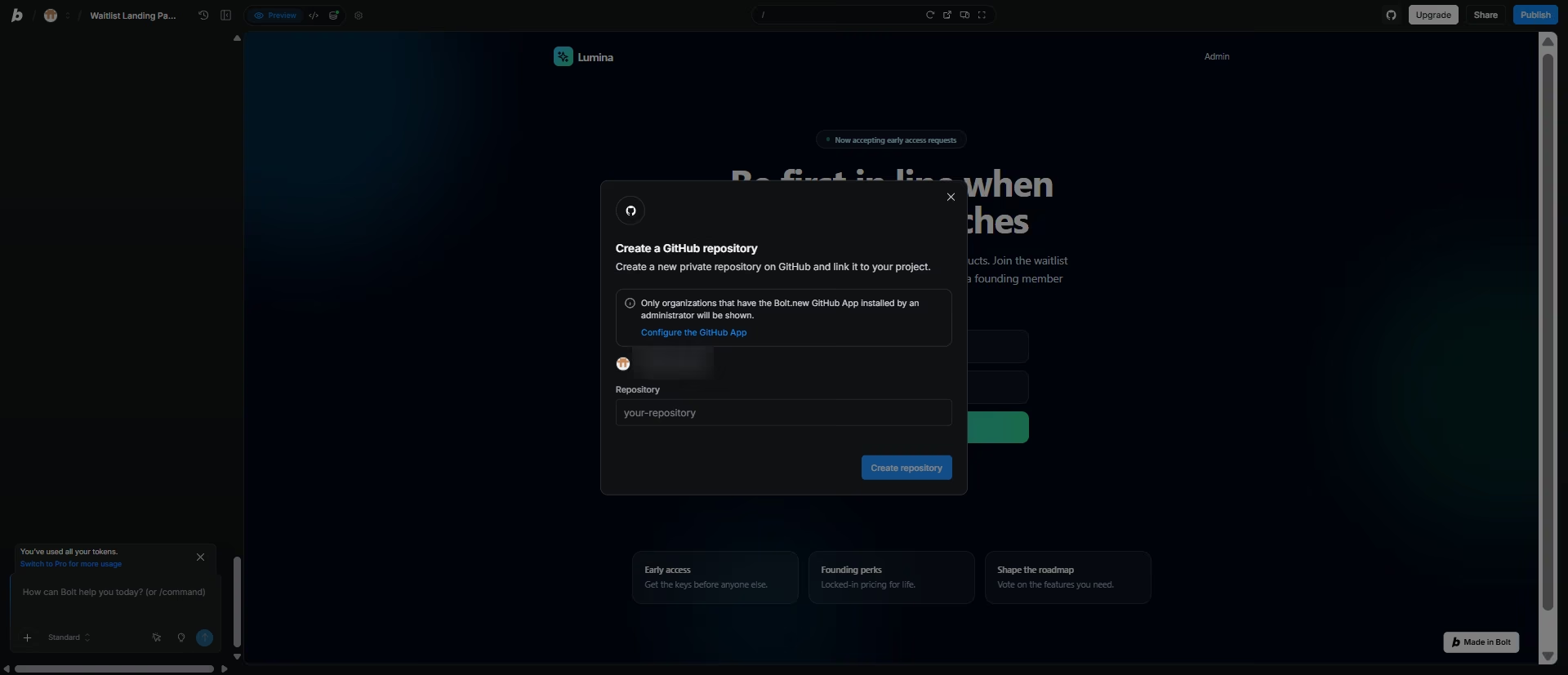
Base44 publishes free to its own domain, but GitHub sync is gated behind the $40 to $50/month Builder plan; I couldn't connect it on the free tier I tested. Similarly, Emergent let me publish on the free plan, but GitHub connection wasn't available until I upgraded.
Winner: Bolt, if code ownership from minute one with zero paywall is your priority.
Deployment, Monitoring, and Production Readiness
Bolt deploys to Bolt.host or your own domain, with GitHub sync preventing lock-in, and Bolt Cloud (launched August 2025) added built-in databases, auth, file storage, and edge functions to reduce the need for third-party wiring.
Base44 deploys automatically but offers limited visibility into what's happening behind the chat interface once the app is live.
Emergent's deployment includes analytics, health checks, error alerts, and resource monitoring as part of the same workflow, though the ~50-credit deployment cost (noted above) is a friction point worth budgeting for.
Winner: Emergent, specifically for what happens after launch, with the caveat that its deployment cost needs to be planned for in advance.
Company Scale, Funding, and Momentum
Worth knowing before you build something you plan to depend on for years: which of these companies is stable, and which is still figuring out its business model.
| Bolt (StackBlitz) | Base44 | Emergent | |
|---|---|---|---|
| Total funding | $135M total ($105.5M Series B, Jan 2025) | $80M acquisition by Wix (June 2025) | $130M Series C |
| Valuation | ~$700M (Jan 2025) | N/A (subsidiary of Wix) | ~$1.5B |
| Ownership | Independent (StackBlitz) | Wix subsidiary, kept separate | Independent |
| Users/scale claim | 2M+ registered users; claims 75% of Fortune 500 use the platform | 250,000 users within 6 months | Not independently disclosed at time of writing |
Base44's position is the most structurally uncertain of the three: it remains a separate product under Wix rather than merging in, and Wix hasn't fully clarified how much it will invest in Base44's roadmap versus its own AI ambitions long-term.
Winner: No clear winner, but Base44 carries the most ownership uncertainty given its acquired, subsidiary status.
Is Your Data Safe?
Security is the part most AI app builder comparisons overlook, but it matters once your app starts handling real user data.
In July 2025, Wiz Research disclosed a critical authentication bypass affecting Base44. The vulnerability allowed attackers to create verified accounts on private apps using only a publicly visible app_id, bypassing authentication controls, including SSO, on affected applications.
The issue affected enterprise use cases such as internal chatbots, knowledge bases, PII, and HR operations. Wix confirmed that it fixed the vulnerability within 24 hours of disclosure and found no evidence of exploitation before the patch.
The incident shows a broader challenge with AI app builders: users are increasingly deploying business applications that handle sensitive data, making platform security controls and transparency more important.
Bolt and Emergent have not had a similarly public security incident. Emergent states that it holds SOC 2 Type I and ISO 27001 certifications.
| Bolt | Base44 | Emergent | |
|---|---|---|---|
| Public security incident | None reported | July 2025, patched in 24 hours | None reported |
| Compliance certification | None publicly listed | Standard Wix infrastructure practices | SOC 2 Type I + ISO 27001 |
What Real Users Say
Bolt
- Pros: Reviewers consistently praise how interactive the build process feels, saying they don't have to type all the code themselves and that the initial setup is really easy.
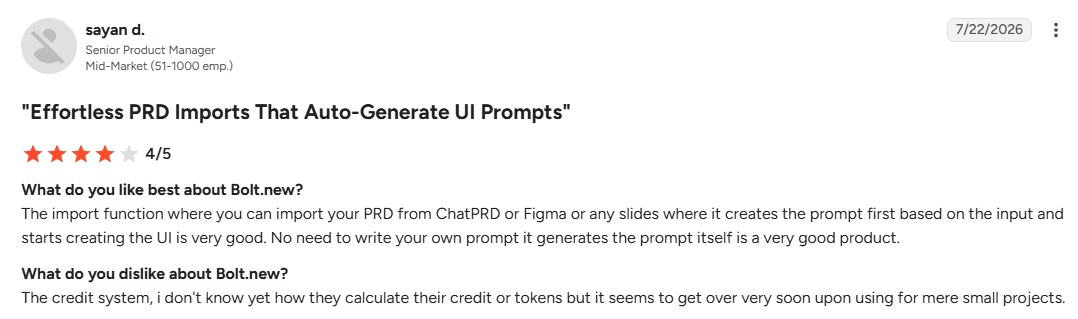
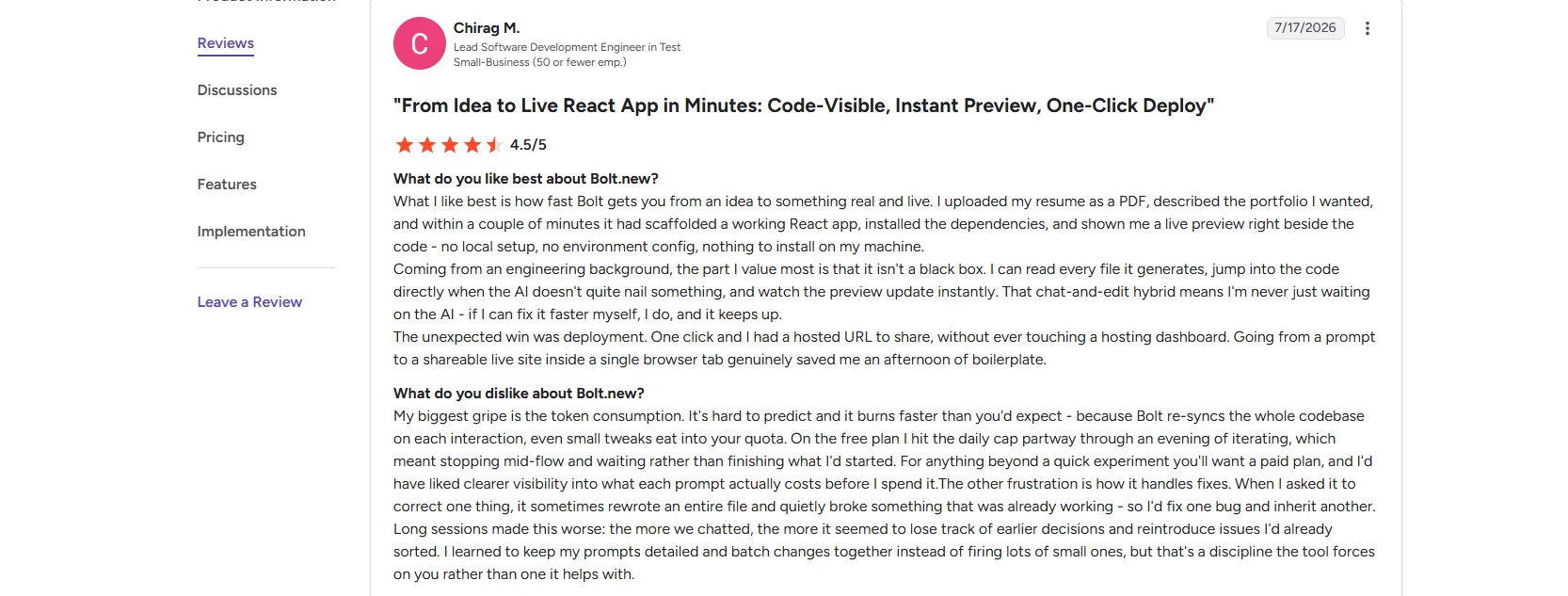
- Cons: One reviewer described token consumption as hard to predict and faster than expected, since Bolt re-syncs the whole codebase on every interaction, even small tweaks. He hit the daily free-tier cap mid-session more than once. Bolt also sits at 1.4/5 on Trustpilot, with multiple reviewers separately reporting the exact "preview fails to load" issue I hit myself.
Base44
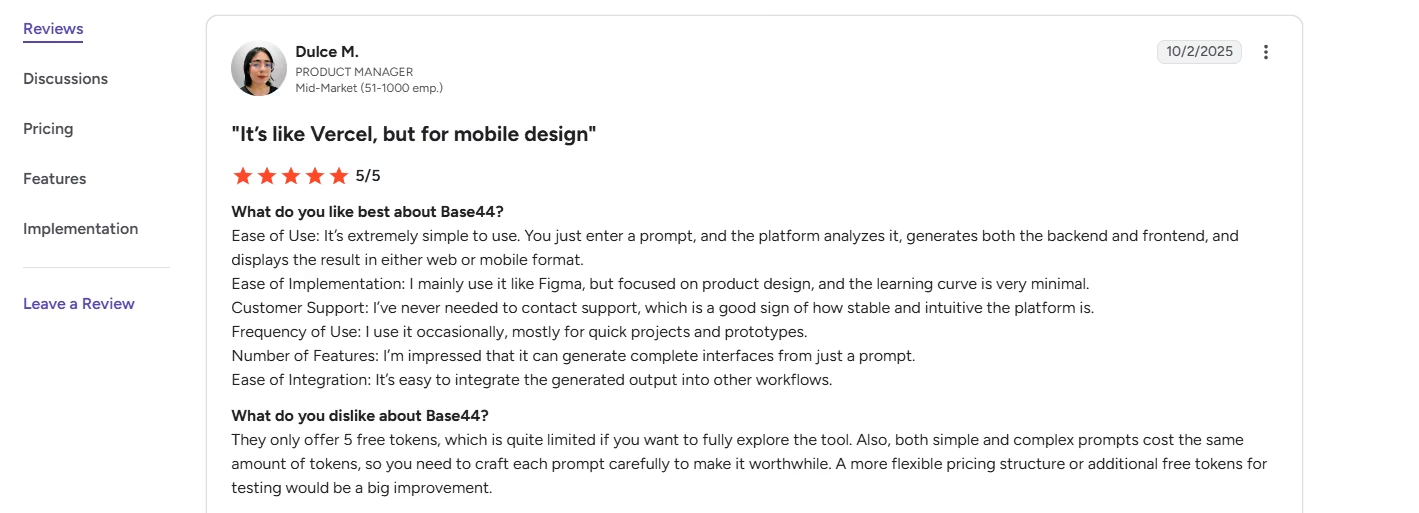
- Pros: Reviewers praise how simple it is to go from a single prompt to a generated backend and frontend together, with one calling the learning curve minimal even for design-focused, non-technical use.
- Cons: One reviewer described the tool as capable of genuinely strong work in short bursts before it loses the thread, rebuilds things that already existed, and charges you for it, comparing the experience to working with a powerful tool that has the digital equivalent of a cognitive disorder.
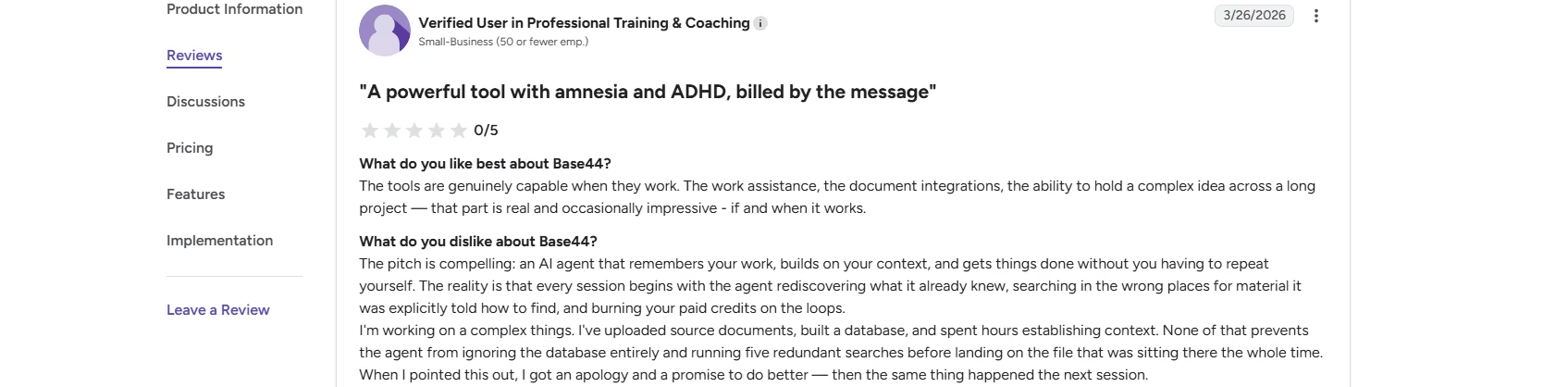
Our Base44 reviews roundup pulls user feedback from four platforms alongside a hands-on build of a task-management MVP.
Emergent
- Pros: Emergent makes app development accessible to non-developers. One Trustpilot reviewer said they had spent more than five years unable to build their idea because they lacked the coding skills and budget to hire developers. With Emergent, they finally turned that idea into a working product within weeks.
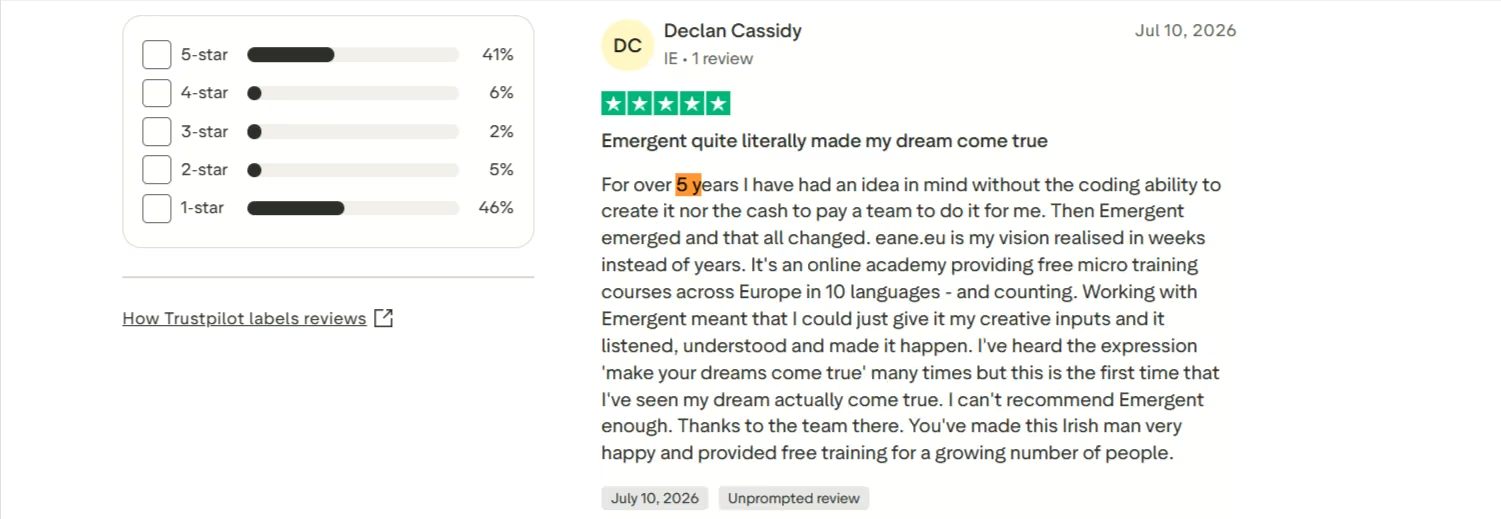
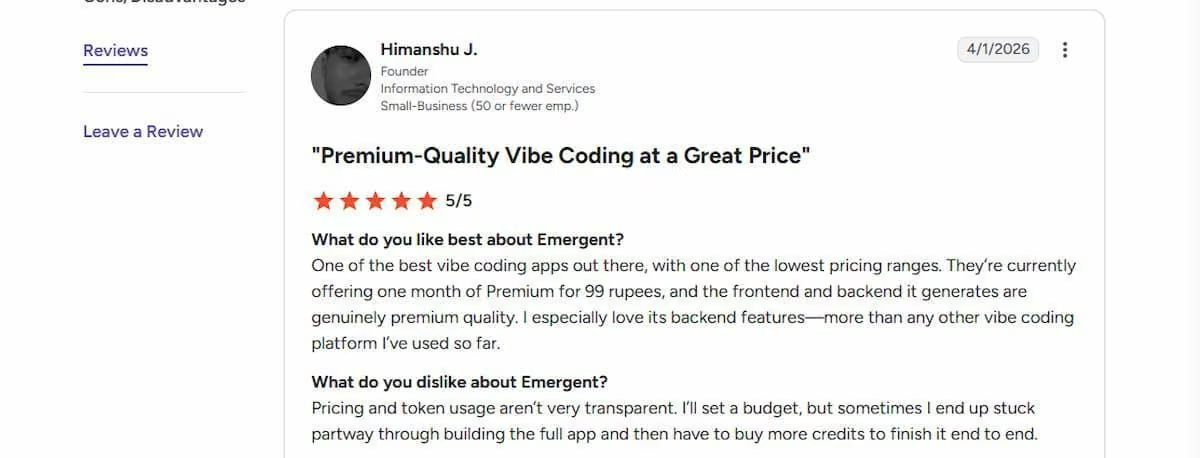
- Cons: The most common complaint is the credit system. Reviewers on both G2 and Trustpilot say credits are easy to exhaust, and usage isn't transparent.
Which Tool Should You Choose?
Start with Bolt if:
- You're technical and want code ownership from prompt one. Full codebase, GitHub-native from day one, no export step ever needed.
Start with Base44 if:
- You're a total beginner validating an idea in an afternoon. Fastest time-to-demo of the three, minimal setup friction.
Start with Emergent if:
- You need a production app that holds up as it grows. Its testing agent produced verifiable results, and deployment monitoring is included.
- You need native iOS/Android output, not just a web app. It's the only one of the three with a first-class mobile build pipeline.
My Final Verdict
Bolt earns credit for honesty when things go wrong, it told me straight what failed and why. That honesty cost me my entire free-tier token budget in four prompts, and independent reviews suggest heavy token burn is the norm on Bolt, not a one-off.
Base44 is genuinely the fastest to a demo with great visual design.
Emergent is still where I'd start for a real production app, particularly because of the clarifying questions, MCP, and a testing agent that showed it works.
If you want to try Emergent yourself, sign up for free today.
Most AI app builders stop at prototypes. Emergent creates production-ready apps you can actually launch.
- Production-ready apps
- Web & mobile apps
- Deploy in minutes