
TL;DR
- Freelancer: $20,000 to $50,000. Cheapest of the hired routes, but you manage the project yourself.
- Agency: $75,000 to $150,000. A full team, at a full team's price.
- In-house hire: About $100,625 to $148,200, recruiting included, plus the time it takes to hire someone before anyone writes code.
- Emergent: About $15.76 to go live. Built and tested in 22 minutes.
You want to build a simple booking app or a client portal, and the quotes coming back don't agree with each other. You ask a freelancer, and they say $8,000; an agency charges you $45,000, while someone in a founder group swears they built something similar for $500.
None of those numbers are wrong; they're only answering different questions. So how much does it cost to build an MVP? It depends on who builds it as much as what you're building.
I priced one specific app, a client booking and deposit tool called BookSpot, with a working Stripe payment, an admin dashboard, and instant email confirmation. I got quotes for a freelancer, an agency, and an in-house hire, then built and tested the same app myself with Emergent.
By the end, you'll know exactly what each route costs for this build, and which one fits your situation.
What This MVP Needed to Do
"Build an MVP" means nothing without a scope, so here's exactly what my sample app, BookSpot, needed to do. A client visits a public page, selects a service, chooses an available time slot, enters their name and contact details, and pays a deposit via Stripe to confirm the booking. They get an instant email confirmation.
The provider gets a login-protected dashboard to see bookings, mark them complete or canceled, block off unavailable time, and edit their service list and pricing.
That's a login, a payment that actually charges a card, and a dashboard that remembers every booking, a fair stand-in for what most solo providers and small businesses need before they can take their first customer.
How I Priced This
The freelancer and agency numbers below both come from GoodFirms' survey of 267 mobile app development companies. BookSpot is a web app, but the quoting patterns for a build of this scope carry across.
The in-house route uses separate government and industry data.
The Emergent number is based on the credits used during the build, converted at the Pro plan's rate. It's the one figure here I measured instead of sourced, and the math is shown at each step below.
According to GoodFirms, a basic app tier covers a login, a profile, and static pages. A Mid-Level tier adds a payment gateway, real-time updates, push notification segmentation, and analytics on top of that.
BookSpot has the login and payment gateway that push it past Basic, but lacks the real-time updates, segmentation, or analytics that a full Mid-Level build offers. That places it at the entry point of the Mid-Level tier.
On timeline, the same logic applies. GoodFirms puts Mid-Level apps at 6 to 9 months. Clutch's own published research puts a typical mobile app build at 20 to 40 weeks across six phases, which is roughly 4.6 to 9 months, so both sources land in a similar place independently.
Full MVP Development Cost Comparison
This table compares the same booking app across all four routes. It shows what each one costs to build, what it costs to host every month after that, and how long each takes to a working version.
The same app, priced four ways:
| Method | Cost to Get Live | Cost to Host Monthly | Time to Working App |
|---|---|---|---|
| Freelancer | $20,000 to $50,000 | $25 to $35* | 6 to 9 months |
| Agency | $75,000 to $150,000 | $25 to $35* | 6 to 9 months |
| In-house | $100,625 to $148,200, recruiting included | $25 to $35* | 6 to 9 months, after hiring finishes |
| Emergent | About $15.76 to go live | About $13.35** | 22 minutes |
*This is one example stack, not the only option. Vercel Pro costs $20 a month per user. Railway's Hobby tier costs $5 a month. Together, that's $25 a month in plan fees to host a small app's frontend and backend. Both plans include a matching amount of usage credit and bill resource use above it, so a modestly busy app lands nearer $35.
*Emergent uses the same credit balance for building and hosting. Keeping one deployed app live uses 50 credits per month, which works out to about $13.35 a month at the Pro plan’s credit rate.
What the Traditional MVP Building Routes Cost
There's a fair case for hiring someone to build an MVP, and the right person for the job depends mostly on how much of the project management you want to do yourself.
Method 1: Hiring a Freelancer
Hiring a freelancer means finding one person, usually through a platform like Upwork, to own the whole build from start to finish. That's the login flow, the Stripe integration, and the admin dashboard.
Once you've reviewed proposals and picked someone, most of the relationship happens asynchronously. You get updates, review a staging link, and ask for changes, while one person carries every phase of the work alone.
GoodFirms breaks a typical build into six phases:
- Conceptualization and planning
- UX/UI design
- Frontend development
- Backend development
- QA and testing
- Deployment and launch
The table below applies the same division to the $20,000 to $50,000 freelance range.
| Phase | Share of Budget | Dollar Range |
|---|---|---|
| Conceptualization and planning | 5 to 10% | $1,000 to $5,000 |
| UX/UI design | 10 to 20% | $2,000 to $10,000 |
| Frontend development | 25 to 35% | $5,000 to $17,500 |
| Backend development | 25 to 35% | $5,000 to $17,500 |
| QA and testing | 10 to 15% | $2,000 to $7,500 |
| Deployment and launch | 5 to 10% | $1,000 to $5,000 |
Where you land in that $20,000 to $50,000 range depends on two things. Scope pushes it up, an extra user role or a second payment method moves the number higher.
Location pushes it around too, Upwork's rate spread runs $18 to $39 an hour, which already reflects freelancers at very different experience levels and in different countries.
Best for: Founders who are comfortable acting as their own project manager and want the lowest entry cost among the three hired routes.
The tradeoff: A solo freelancer gives you one main point of contact, but you take on a bigger share of the scoping, feedback, and testing that an agency's team would otherwise help carry. If the freelancer becomes unavailable partway through, picking up where they left off takes longer than it would with a team behind the work.
Method 2: Hiring an Agency
Hiring an agency means hiring a company instead of one person, a small team that includes a developer, a project manager who runs check-ins, and often someone dedicated to QA. That adds coordination overhead compared to a freelancer, but also a second set of eyes on the work.
Agency budget, by phase:
| Phase | Share of Budget | Dollar Range |
|---|---|---|
| Conceptualization and planning | 5 to 10% | $3,750 to $15,000 |
| UX/UI design | 10 to 20% | $7,500 to $30,000 |
| Frontend development | 25 to 35% | $18,750 to $52,500 |
| Backend development | 25 to 35% | $18,750 to $52,500 |
| QA and testing | 10 to 15% | $7,500 to $22,500 |
| Deployment and launch | 5 to 10% | $3,750 to $15,000 |
Location does most of the work inside that $75,000 to $150,000 range. Offshore shops run $25 to $49 an hour, per Clutch's review data, putting a build near the floor. US-based agencies run $75 to $120 an hour, putting the same scope near the ceiling.
Best for: Founders who want a team behind the build rather than a single point of failure, and who have the budget to match.
The tradeoff: You're paying for the coordination layer whether the build needs it or not. On a two-screen app like BookSpot, the project manager and the dedicated QA seat show up in the quote before a line of code exists, which is most of the gap between the $50,000 freelancer ceiling and the $75,000 agency floor.
Method 3: Building In-House
Going in-house means adding a developer to the payroll as a permanent employee. The MVP becomes their first assignment. But the relationship doesn't end when it ships; the salary keeps running whether or not there's a new feature to build.
Salary alone doesn't capture the full yearly cost of this route.
Other costs add to it:
- Base salary: The median annual wage for US software developers was $133,080 as of May 2024, from BLS's occupation wage survey, which measures salary only.
- Benefits on top: BLS's employer cost survey, a separate survey from the one above, shows wages make up 69.9 percent of total private-industry compensation. Benefits, like health insurance and retirement contributions, make up the remaining 30.1 percent.
- $100 ÷ 0.699 = $143
- So fully-loaded cost runs about 1.43 times base salary.
- $133,080 x 1.43 = about $190,300 in fully-loaded annual cost.
- Prorated to the build window: The same 6 to 9 months used for the freelancer and agency routes.
- $190,300 x (6/12) = $95,150 low.
- $190,300 x (9/12) = $142,725 high.
- Plus recruiting: SHRM's 2025 Benchmarking Report puts the average cost per hire at $5,475 for non-executive roles, though specialized technical roles often run higher. Adding the prorated dev cost to the recruiting cost gives the total. So the range is:
- $95,150 + $5,475 = $100,625 low.
- $142,725 + $5,475 = $148,200 high
Now, here’s the cost breakdown for each phase of building in-house.
| Phase | Share of Budget | Range |
|---|---|---|
| Conceptualization and planning | 5 to 10% | $5,031 to $14,820 |
| UX/UI design | 10 to 20% | $10,062 to $29,640 |
| Frontend development | 25 to 35% | $25,156 to $51,870 |
| Backend development | 25 to 35% | $25,156 to $51,870 |
| QA and testing | 10 to 15% | $10,062 to $22,230 |
| Deployment and launch | 5 to 10% | $5,031 to $14,820 |
This figure uses a national median salary. A developer in a high-cost city, or a more senior hire, comes in above it. A lower-cost region or a junior hire comes in below it.
Best for: Founders who know this app is the first of several, where the developer's next six months are already spoken for by the roadmap. At that point the salary buys ongoing capacity, and the per-project math starts beating agency rates.
The tradeoff: For a founder without a developer already on the team, weeks or months of interviews and offer negotiations pass before any code gets written at all. That delay is usually what costs the most in this route.
All three of these routes share the same shape; someone else does the building, on a timeline measured in months, at a price that starts in five figures. That's a reasonable call when the app needs custom architecture, a compliance review, or ongoing engineering attention from day one.
A five-figure, six-month build is a bigger commitment than a founder needs to make before finding out whether this MVP is even the right idea. When you just want to know if the idea holds up, an AI app builder like Emergent is the faster, cheaper way to find out.
What It Costs to Build on Emergent
Every number you've seen so far comes from someone else's survey or someone else's salary data. This one comes from an actual build, a working booking app called BookSpot, built on Emergent to show you what the process and the cost look like firsthand.
This is the prompt I used:
"I want to build an app called BookSpot, it's a booking and payments tool for solo service providers like personal trainers, consultants, and salon owners. Clients should be able to visit a page, pick a service, see open time slots, fill in their name, email, phone, and pay a deposit through Stripe to confirm the booking. They should get an email confirmation right after. I also need a simple login-protected dashboard where I can see upcoming bookings, mark them complete or cancelled, block off times I'm not available, and add or edit the services I offer with their price and deposit amount. Keep it to one provider account, no need for multiple staff or calendar syncing. For the look, I want something clean and modern with calming colors, like soft teal or sage green, friendly and trustworthy, not corporate. Can you also design a simple logo for BookSpot?"
Emergent asked five clarifying questions before building: how the provider should log in, which payment provider to use, whether to use its built-in email service, whether a paid deposit should confirm a booking immediately or wait for manual approval, and which color direction to run with.
I picked email and password, Stripe, the built-in email service, and immediate confirmation, then left the exact color blend up to the build.
The build took 22 minutes in total and worked on the first pass.
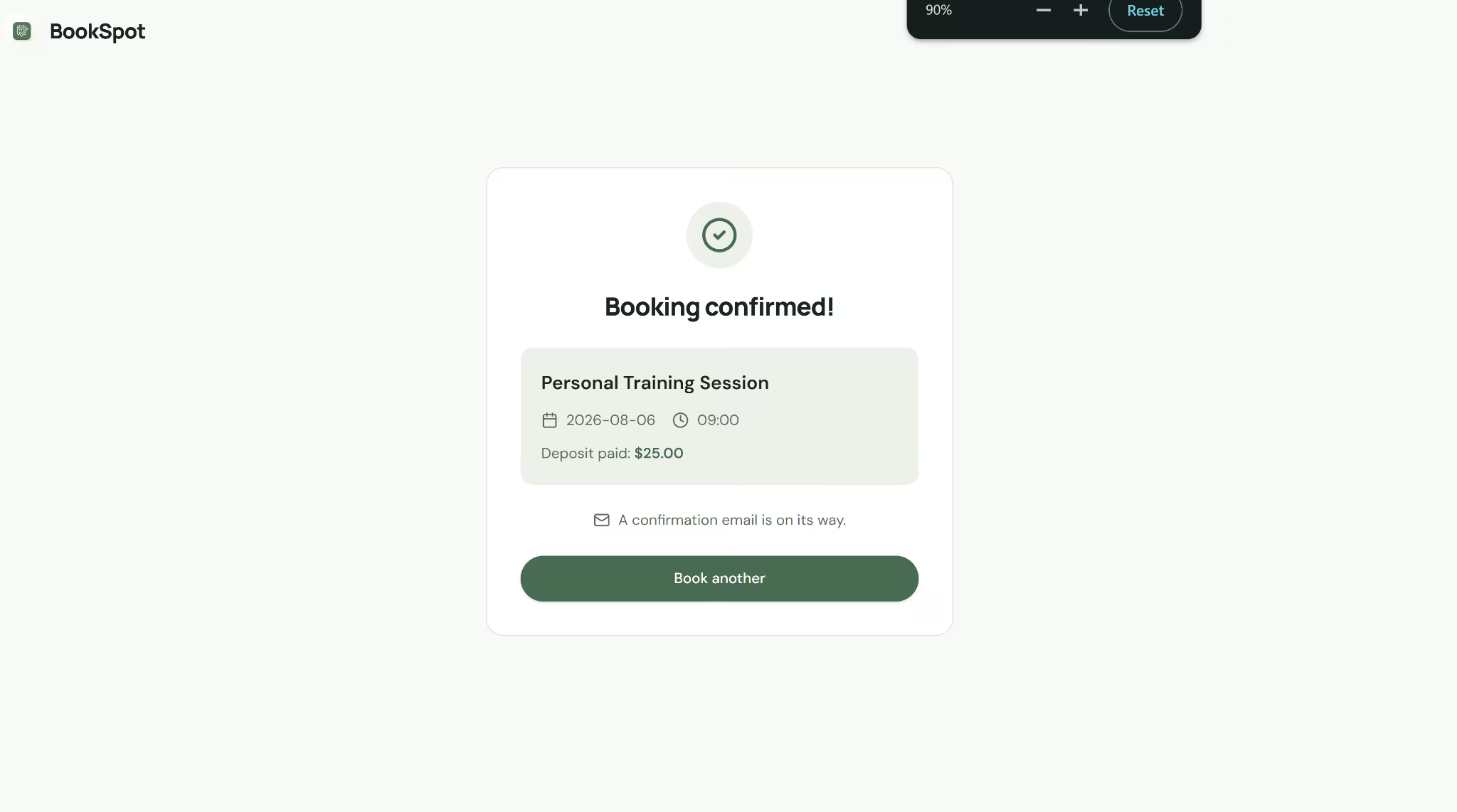
I walked through the booking flow end-to-end, the way a paying client would, picking a service, choosing a time slot, entering contact details, and paying a Stripe test deposit.
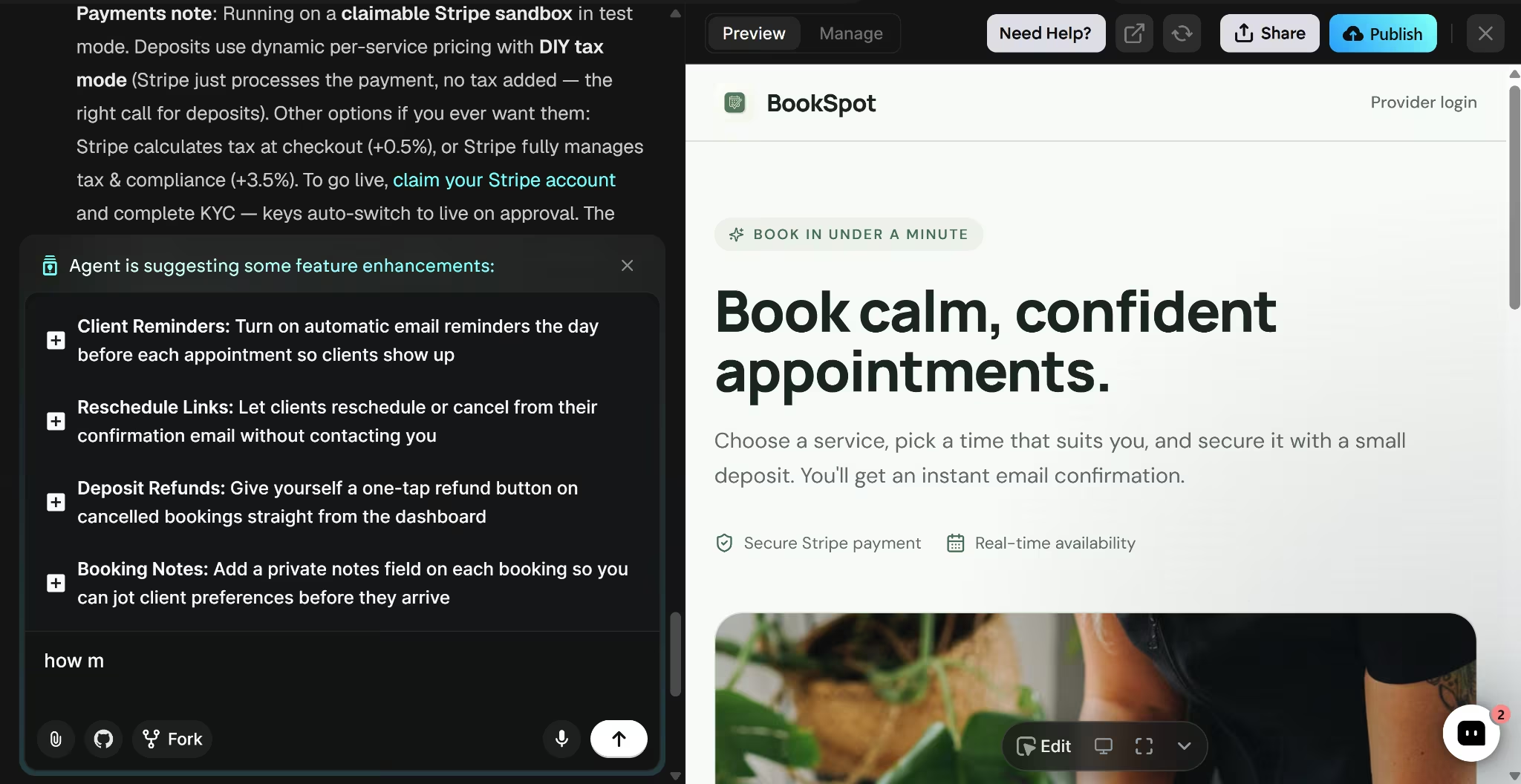
The payment step is usually where AI-generated builds fall apart, since a working checkout button and a checkout button that confirms a booking on successful payment are two different things. In this build’s case, payments worked. The test deposit went through, and the booking was confirmed.
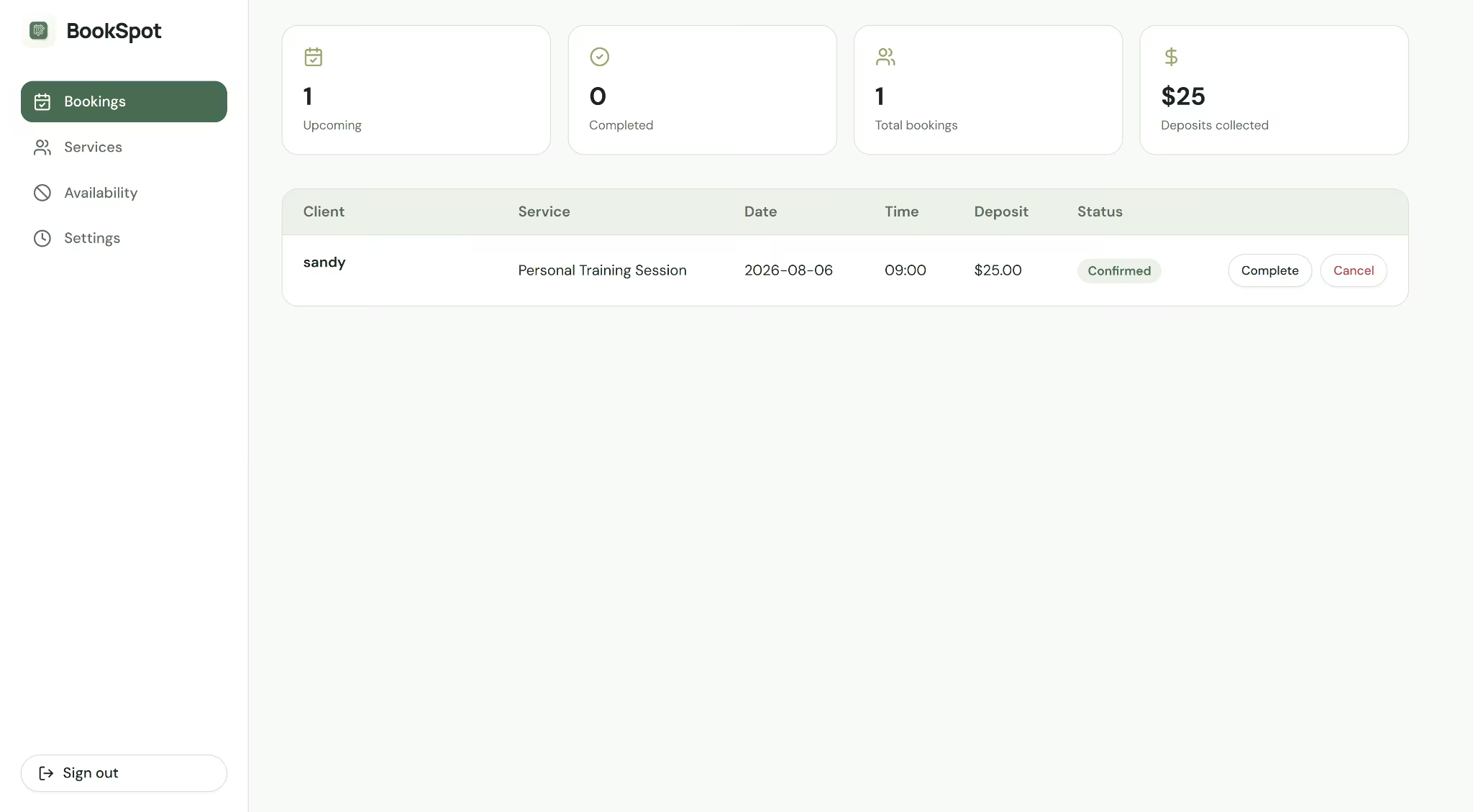
Once that test payment went through, the booking needed to appear correctly on the provider's side, with the correct status and the correct deposit amount logged against it. It did:
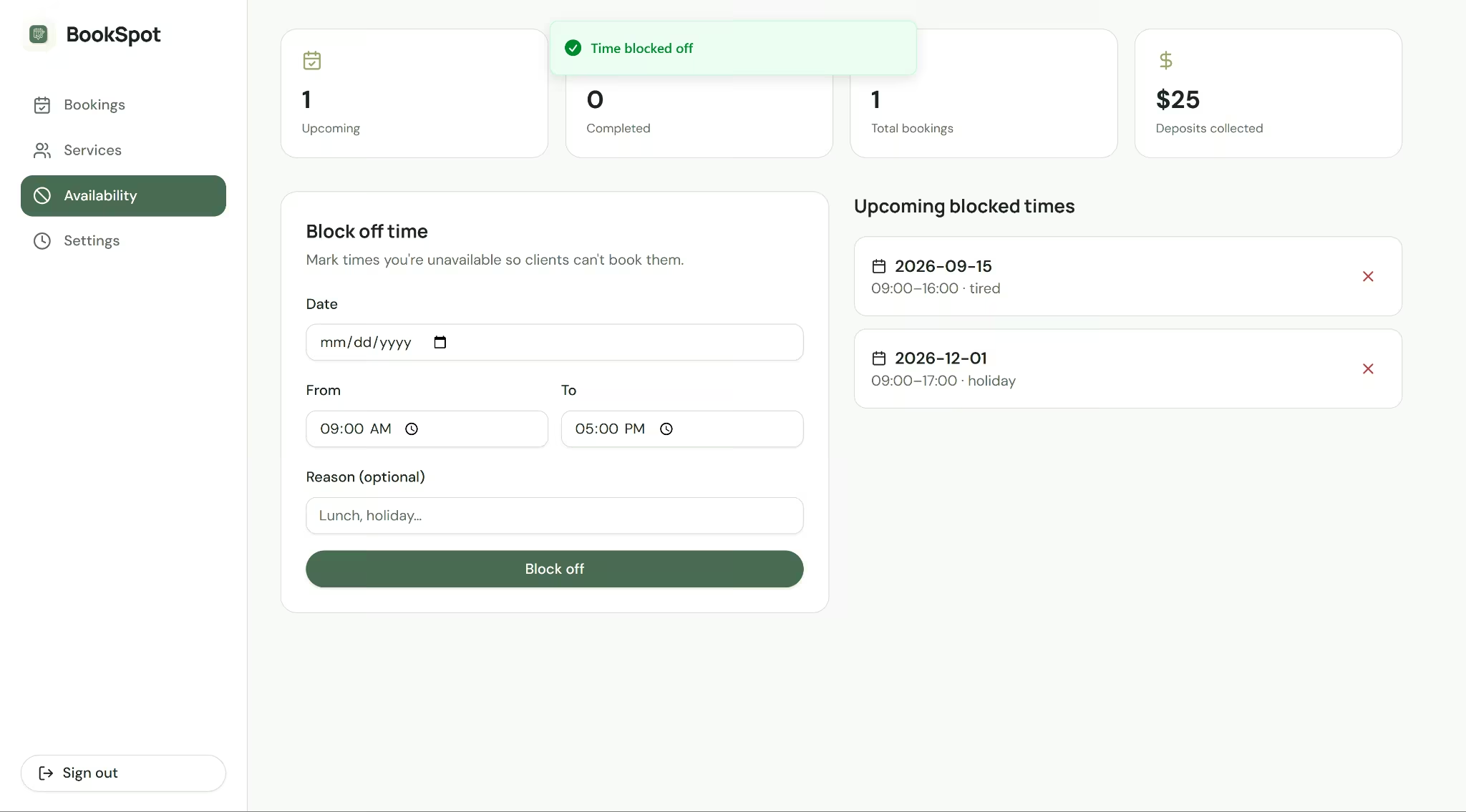
The harder test was availability blocking, since a demo can look like it respects a blocked-off day while still letting someone book it anyway. I manually blocked a day in the availability settings, then tried to book over it from the public page. The system refused the slot correctly.
Editing a service's price and adding a new one both worked cleanly and appeared instantly on the public page without a refresh or redeploy. Every part of the flow I tested held up, from the first click on the public page to the booking landing in the dashboard with the right deposit against it.
The build used 9.03 credits.
On the Pro plan, $200 a month buys 750 credits, about $0.267 per credit.
9.03 x $0.267 = ~ $2.41.
The $2.41 build cost isn't the whole bill. More costs show up after the app is live.
Here's what to budget for:
- Deployment: Going live costs another 50 credits.
- Ongoing hosting: Emergent uses the same credit balance for building and hosting. Keeping one deployed app live uses 50 credits per month, which works out to about $13.35 a month at the Pro plan’s credit rate.
- Payment processing: Stripe takes 2.9% plus 30 cents per successful transaction on domestic cards, with an extra 1.5% on international cards, regardless of build method.
- Email: Confirmation emails stay free up to 3,000 a month on Resend's free plan, capped at 100 a day
Best for: Founders who want a working version in front of actual users this week, and who'd rather learn from live bookings than from a spec document.
The tradeoff: For anything handling sensitive data, health records or financial accounts, a quick engineering review before taking on customers is good practice, no matter which route builds the app.
Which Method Should You Choose
- Choose a freelancer if your ceiling is $50,000 and you can give the project several hours a week of your own time for scoping, review, and testing.
- Choose an agency if you can clear $75,000 and would rather pay for project management than handle it yourself.
- Choose in-house if you can name at least two more builds after this one, the point where $190,300 a year fully loaded starts beating per-project agency rates.
- Choose Emergent if you want the idea in front of actual users this week for about $15.76.
Best Practices for Budgeting an MVP
Most of the numbers in this piece assume nothing goes wrong. In practice, something usually does, and the founders who come out ahead planned for it before the quote came in.
Scope Before You Quote
Every number in this piece is only accurate for BookSpot's exact feature list. Even a small addition can move a build from the bottom of a cost tier to the top of it. An extra user role or a second payment method can each do it alone. Get the scope nailed down before anyone gives you a number.
And if you’re going the freelancer or agency route, get that scope into a fixed-price quote in writing before work starts.
When you need to trim scope for your budget, consider cutting visual polish first. Features like payment and login are tough to add back later since the rest of the app relies on them being set up right from the start.
Separate Hosting From the Build
Hosting runs $25 a month on the self-hosted stack in the comparison table, or about $13.35 on Emergent. It looks small next to the build cost, but it starts the day the app goes live and never stops, no matter which route built it.
Plan for a Second Round of Fixes
The first version of an app rarely survives contact with actual users unchanged. On the freelancer route, that means budgeting past the $50,000 ceiling. On Emergent, a second round of prompts adds a small credit cost, without any pricing conversation at all.
Emergent Makes Building an MVP Easier
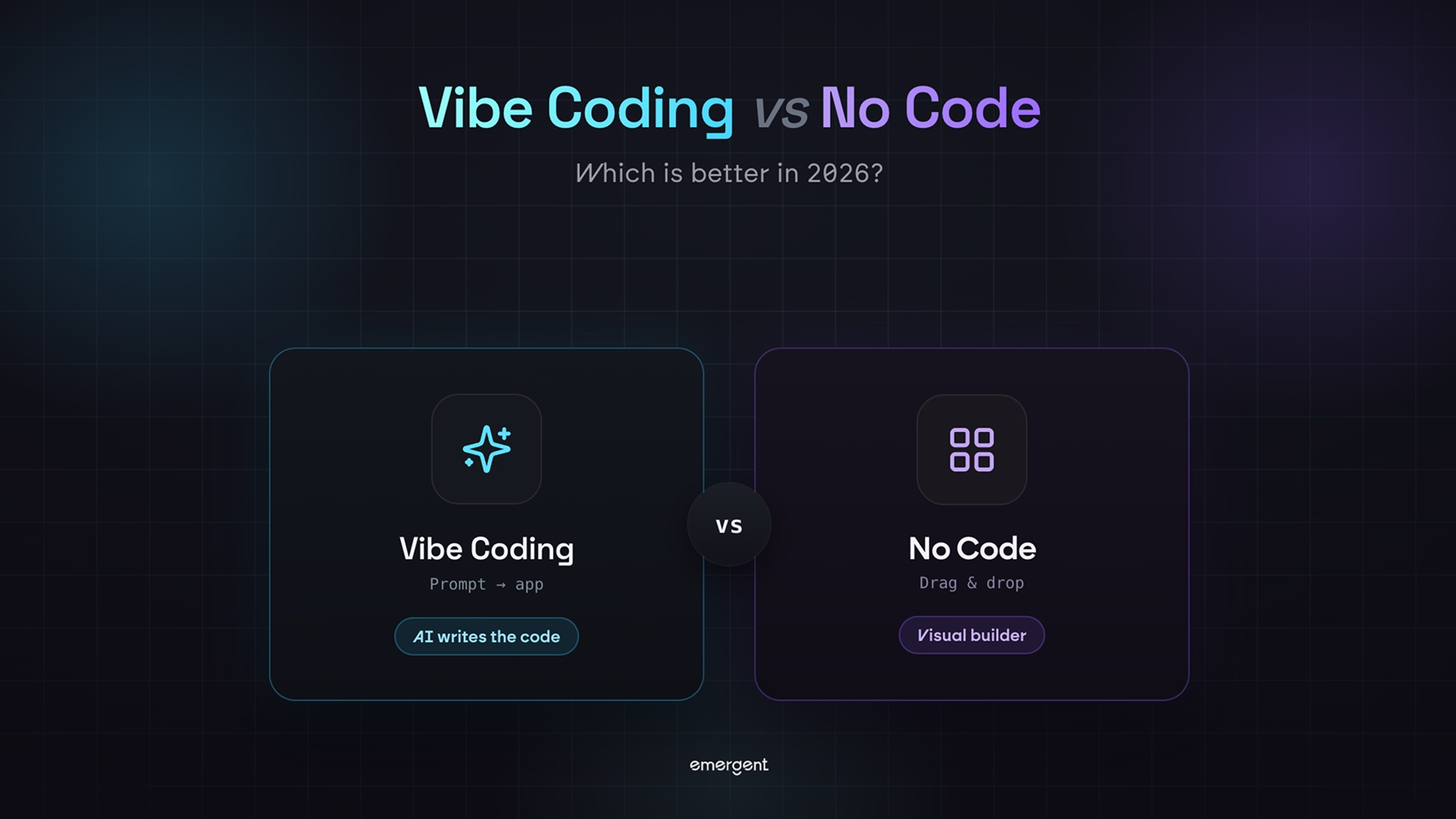
Compared with visual drag-and-drop no-code builders, Emergent is an AI app builder you describe your app to, and it builds it.
If you already know what your MVP needs to do, vibe coding it yourself skips the parts of the process that cost the most time and money elsewhere. This includes the hiring search, the back-and-forth over a written spec, and the wait while a freelancer or agency works through their queue.
BookSpot only needed a Stripe integration to prove the point, but Emergent covers more ground than that for a small business. What else it covers:
- Mobile app deployment: Emergent includes mobile apps out of the box alongside the web version, so a provider who later wants a companion app for their clients can build it through the same platform, via a separate Mobile Agent build, rather than hiring a new team from scratch.
- Existing tools: Emergent connects to Gmail, Google Calendar, Google Sheets, Google Drive, and Dropbox, among others, without a separate integration project or requiring a developer to write custom code for each one.
- Security: Emergent holds ISO 27001 and SOC 2 Type I certification, which matters once a provider grows into a multi-location business and needs an audit trail.
- Access control: Single sign-on, role-based access, and audit logging are built into the platform, so you can control who sees what as staff numbers grow.
- Exportable code: GitHub integration is included starting with the Standard plan, so the project can be exported and handed to a developer later without having to start over.
Build an MVP You Can Afford to Improve
Hiring a freelancer, working with an agency, building in-house, and using Emergent each require a different level of money, time, and involvement.
A freelancer or agency can take the build off your hands, but you spend more before you know how users will respond. An in-house developer makes sense once software is a standing line item in the business, justified by more than just this one app.
BookSpot showed what changes with Emergent. You can put a usable version in front of people, learn from it, and improve it before committing to a much larger build.
The right route is the one that helps you test the idea without spending more time or money than it has earned.
Build your app with Emergent before committing to a five-figure development budget.
Most builders stop at a prototype. Emergent ships real web and mobile apps, with accounts, databases, and payments included.
- Production-ready apps
- Web & mobile apps
- Deploy in minutes