



Quick Verdict (TL;DR)
Stacker ditched its old template-and-configure model. It's now an AI-native, agentic builder. You describe what you want for a portal, and it writes React/TypeScript code behind the scenes.
That's a win if you want a branded portal fast and don't want to touch code.
But you may not be too excited if you prefer the old drag-a-template workflow. And pricing runs on shared credits instead of flat tiers. Heavy use shoots up your bill quickly.
Want AI to build and run your portal with minimal setup? Stacker delivers. If you need a builder that goes past a single portal, newer AI app builders do that better.
Is Stacker still the best platform for building client and employee portals in 2026?
Stacker pivoted to an AI-first, agentic builder. You describe your portal, and it writes real code, no visual editor required.
I tested the current version, dug through Stacker's docs and pricing, and checked G2 and Capterra feedback to see how it stacks up against newer AI app builders.
The result is this hands-on Stacker review. I'll cover where Stacker excels, where it falls short, what real users think, and whether it's the right choice for your business.
What Is Stacker?
Stacker builds client portals, internal tools, and business apps without traditional development. Describe what you need in plain language: “Build me a client portal for my renovation company so homeowners can track project progress and approve materials.” Stacker's AI generates a working portal in minutes.
Skip the spreadsheet emails. Describe a portal where customers track projects and sign documents themselves. Or describe an internal tool for onboarding, and let Stacker's agents handle the day-to-day work after launch.
Stacker's biggest strength is that there's nothing to configure. There's no visual editor, no drag-and-drop designer. You refine everything through conversation. Since every portal is real React/TypeScript code, a developer can edit it directly if chat hits a wall.
It's best suited to businesses that want a branded portal up and running fast, and don't mind guiding an AI through conversation.
Features
The chat-only workflow means quick clicks now take a conversation. Here are the main features.
Conversational, AI-first build: Describe your portal in a few sentences. Stacker's AI generates the pages and data structure on its own.
Branded client portals: Clients get your logo, colors, and a custom domain out of the box, customized by talking to the AI
Real React/TypeScript code: Every portal ships as real, editable code in a standard format you can take with you. A developer can extend it further if you ever need to.
Round-the-clock AI agents: Agents update records, run automations, generate reports, and act across your tools on a schedule, functioning as an ongoing AI operations layer.
2,000+ integrations: Stacker connects to Slack, email, and the tools you already use.
Unlimited portals and agents, no per-seat fees: Build as many portals and run as many agents as you want, with no per-user charge.
Stacker Reviews: What Real Users Are Saying
Stacker's AI-first pivot is recent. Most G2 and Capterra reviews describe the older, configurable version. So take these with a grain of salt.
Pros
Strong permissions, even in old reviews: Reviewers praise letting people interact with connected data, like Airtable, without direct database access. That strength carries into the new AI-built portals.
Fast to launch: MakerStack's review confirms you can stand up a Stacker portal with no developer.
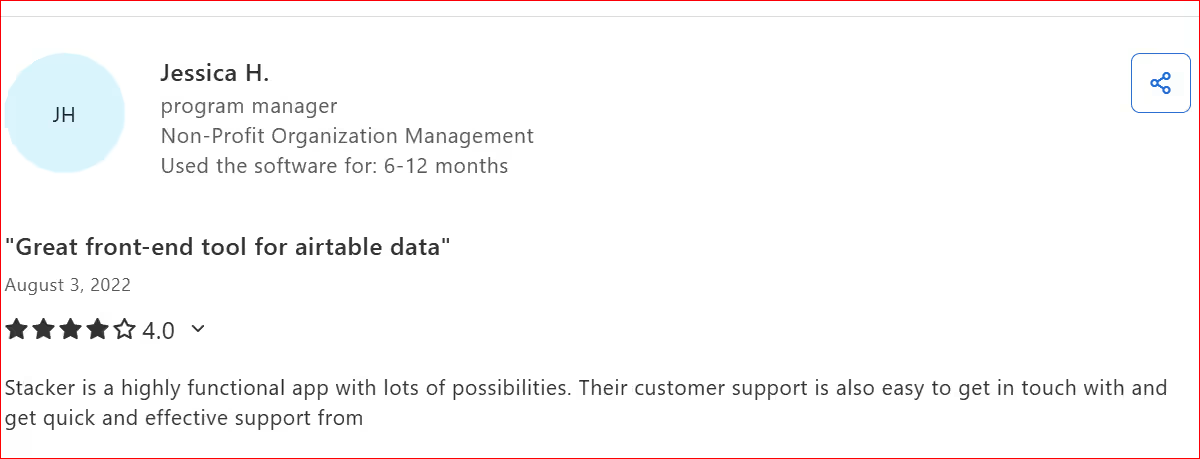
Impressive customer support, even in old reviews: Stacker holds a 9.5/10 Quality of Support score on G2, and Capterra reviewer Jessica H., wrote that “their customer support is also easy to get in touch with and get quick and effective support from.”
Cons
Heavy Airtable dependency: Some reviewers call the platform “too dependent on Airtable.” This predates the AI pivot, but it's worth watching since Stacker still leans on integrations.
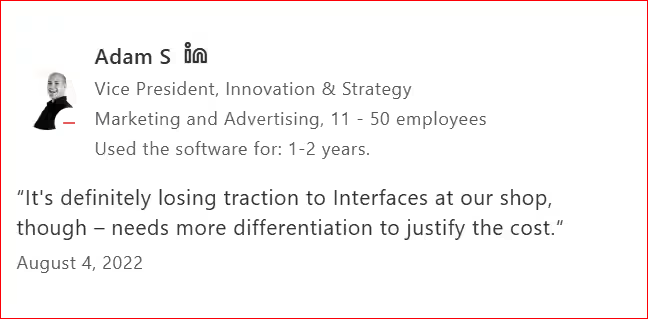
Losing ground to Airtable's own tools: One Capterra reviewer (Adam S.) noted Stacker is "losing traction" at their company to Airtable's built-in Interfaces feature, and needs more differentiation to justify the cost.
Stacker Pricing
Stacker runs on one self-serve Standard plan that starts at $50/month for 250 shared credits and scales up by credit volume, up to $2,000/month for 10,000 credits, all with unlimited portals, unlimited agents, and no per-seat fees.
A free trial gives you $100 in credits, no credit card required. Very large or custom needs (SSO, data agreements) move to Enterprise.
For a sense of how another usage-priced builder compares, read our Bubble review, built over two weeks on a real project.
My Personal Take on Stacker
Stacker built its reputation on non-technical operators who like clicking around and seeing changes happen. Ripping out the visual editor for chat-only felt risky for that exact audience.
So I tested it myself. I built a portal for an agency, skeptical all the way.
I fed it a website name and it asked what kind of portal I wanted.
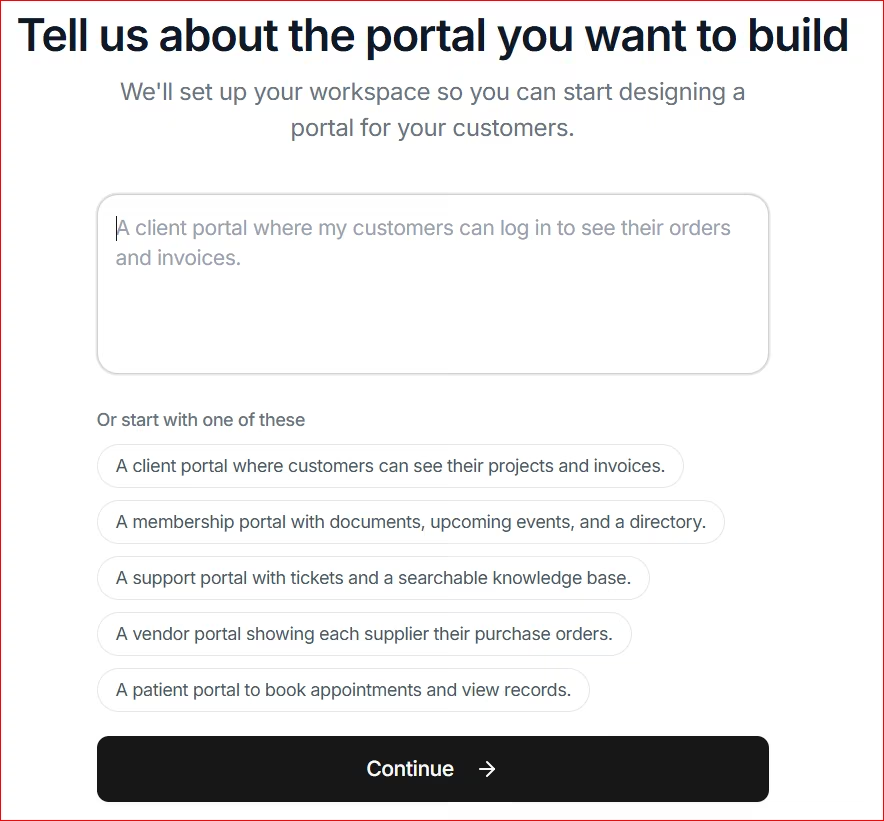
I started from scratch (no previous data), and ten minutes later, the portal was live.
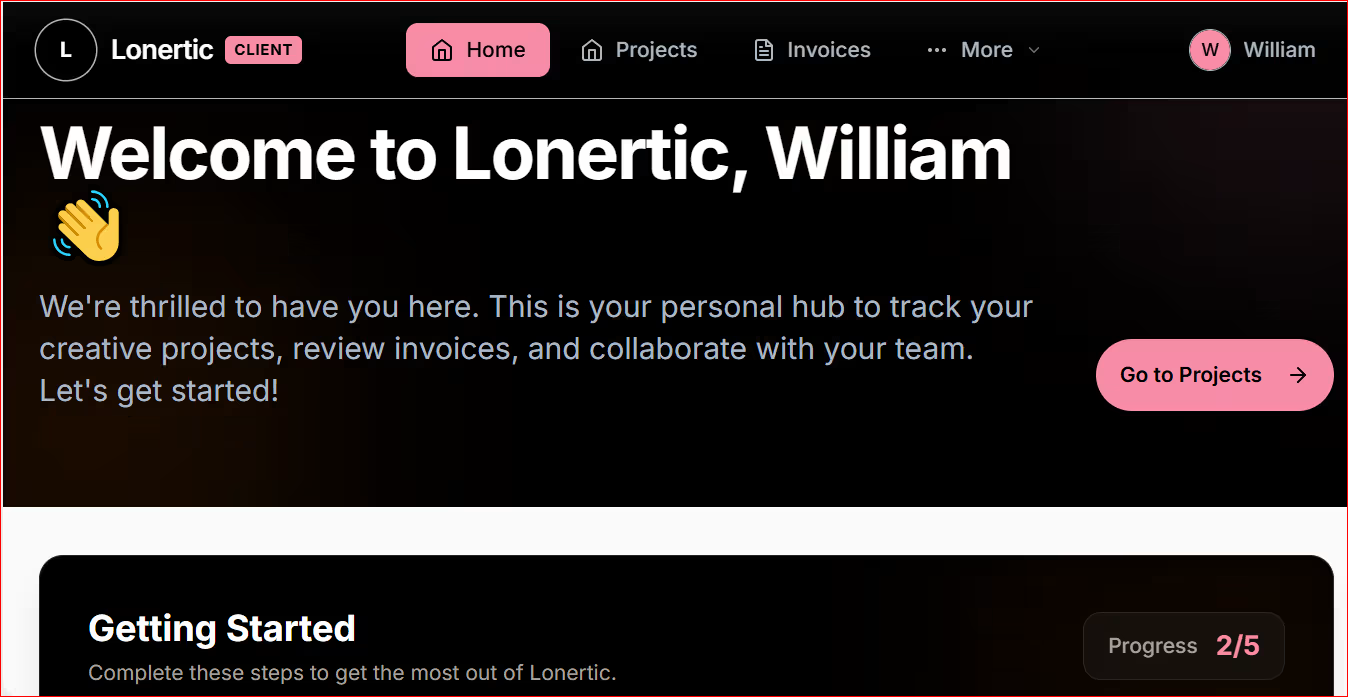
No doubt, Stacker is a strong fit if a portal is all you need.
Watching a portal appear as real, working code beats the old template-and-configure grind. No more losing an evening wiring up permissions before you see anything real.
The real challenge is getting the AI to understand you. Miss the mark, and you'll spend your afternoon (or night) rephrasing the same request while your credits drain. Or you pay a developer to finish the job.
“Unlimited” portals and agents sound generous, until you remember it's one shared credit pool. So watch your usage. A shared pool is much harder to predict than a flat fee.
You're also still locked into Stacker's world. The build process depends entirely on how its AI interprets your requests, even though the resulting code is technically portable.
A testing agent runs the app end to end before you see it, which is why our how to build an AI app guide got a working version on the first attempt.
Is Stacker Right for You?
Stacker fits the right business, but the chat-only, credit-based pivot isn't the right starting point for everyone.
It's one of the strongest options if you want a branded portal built fast and don't mind steering an AI through conversation.
If you need your bill pinned to the dollar every month, know that any credit-based tool, Stacker included, will move with your usage, so budget for the busy months.
Who Will Love It
- Businesses that want a portal live in minutes: Describe it clearly, and Stacker's AI builds a working, branded portal almost immediately.
- Teams that want AI working around the clock: Agents update records, run automations, and act across 2,000+ tools on a schedule.
- Companies replacing spreadsheets and email: Give clients a branded, self-serve portal without hiring a developer.
Who Should Avoid It
- Businesses that want a visual editor: Chat-only, with no drag-and-drop fallback, isn't for everyone.
- Teams that need flat, predictable costs: Heavy agent use burns credits fast, and shared pools are harder to forecast than flat tiers.
- Founders who want a broader app builder: Stacker's strength is still mostly portals, even if its platform description now claims more.
The Best Stacker Alternative: Emergent
Do you want a portal specialist, or a system of agents that builds the whole product, web, mobile, and everything behind it?
Both platforms give you real, editable code. The difference is what you can build, and where it goes next.
Why choose Emergent?
Build more than a portal, from the same prompt: Stacker builds one shape of product, a branded portal on your data. Emergent's agents plan, design, code, and test a full app. The same plain-language description can produce a client portal, a full web app, or a native iOS and Android app in Emergent.
Full code ownership, portable from day one: Push and pull code through GitHub, edit it in Emergent's built-in VS Code environment, and host it anywhere, your infrastructure or Emergent's.
Built-in monetization: Stripe comes integrated if your app charges for anything. Stacker's portal focus skips this.
Grows past the portal use case: Emergent generates a complete application (interface, logic, storage, connections). Your product isn't capped at “portal.” Expand into a fuller tool later without switching platforms.
If the review has you weighing a move, our Stacker alternatives guide tested seven replacements by building the same client portal in each.
Final Verdict
Stacker turns a plain-language description into a live, branded client portal, powered by AI agents.
It's a good fit if a portal is all you need and you're fine working entirely through chat.
But if you want a full web app, a native mobile app, or something that outgrows a single portal, with code you can move anywhere, Emergent is the better long-term bet.
Use the free tier to test out your idea before you commit.
Most AI app builders stop at prototypes. Emergent creates production-ready apps you can actually launch.
- Production-ready apps
- Web & mobile apps
- Deploy in minutes







