



Nevin runs a company in Ottawa, Canada, that started as a traditional marketing agency. Over time, the business pivoted toward SaaS development while keeping its marketing services running. Today it operates as an umbrella of five divisions: custom software builds, industry-specific products, business consultation, marketing, and IT support covering networking, cybersecurity, and server backups.
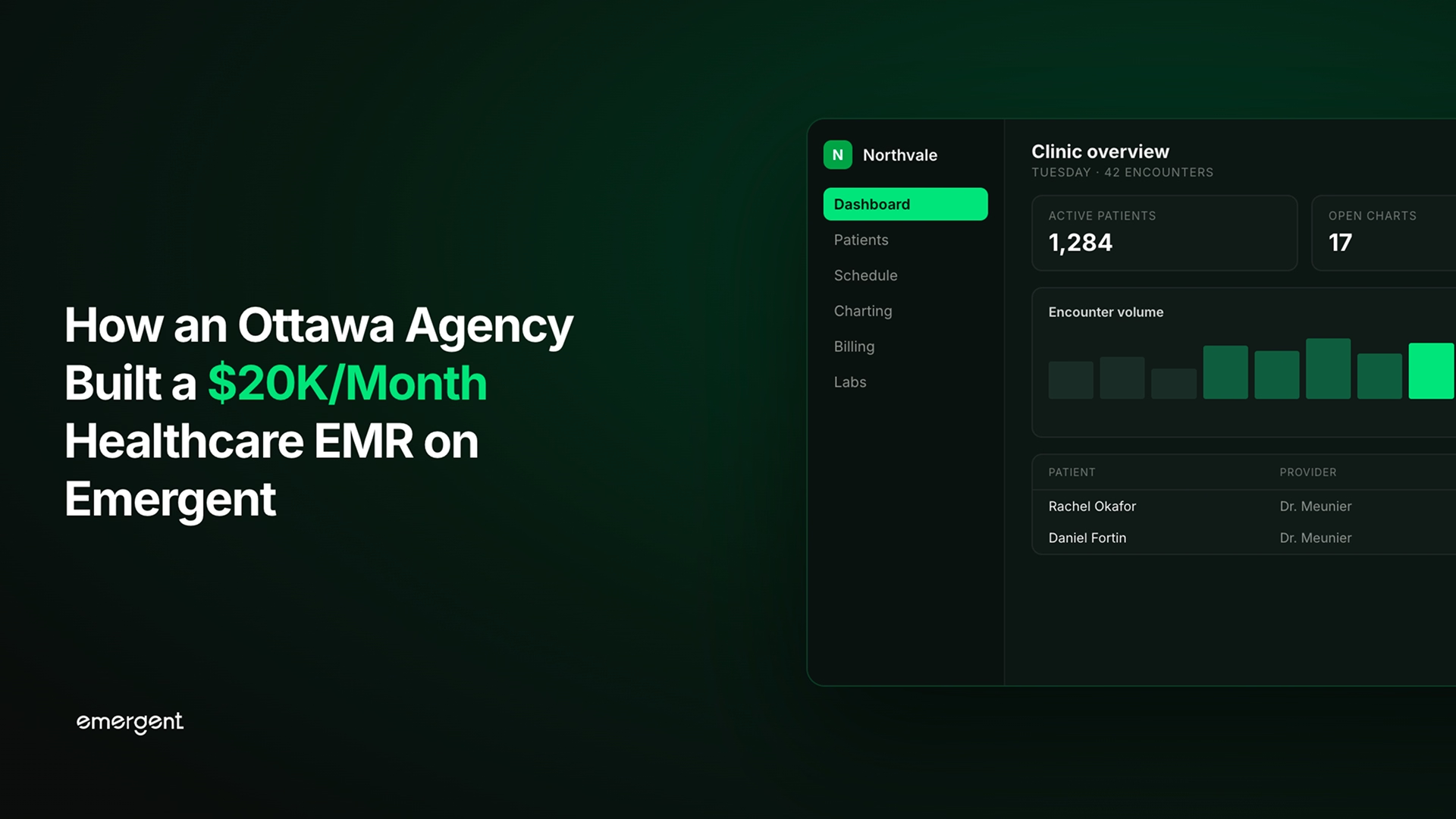
The pivot ran on Emergent. His team has shipped roughly a dozen products on the platform, and his flagship build is a healthcare EMR (electronic medical records) that started as a small marketing engagement and grew into a franchise-scale platform. This is the story of how a nine-person agency shipped production healthcare software without a traditional development cycle, and what that speed did for the business.
Challenges
A four-step development cycle that took weeks to turn around
For four years, Nevin built software with a development team in India. It worked. But every change moved through the same long loop: take the request, create the documents, hand it to the team, run QA, go back to the client, gather changes, and go again. Weeks passed before a change reached the client.
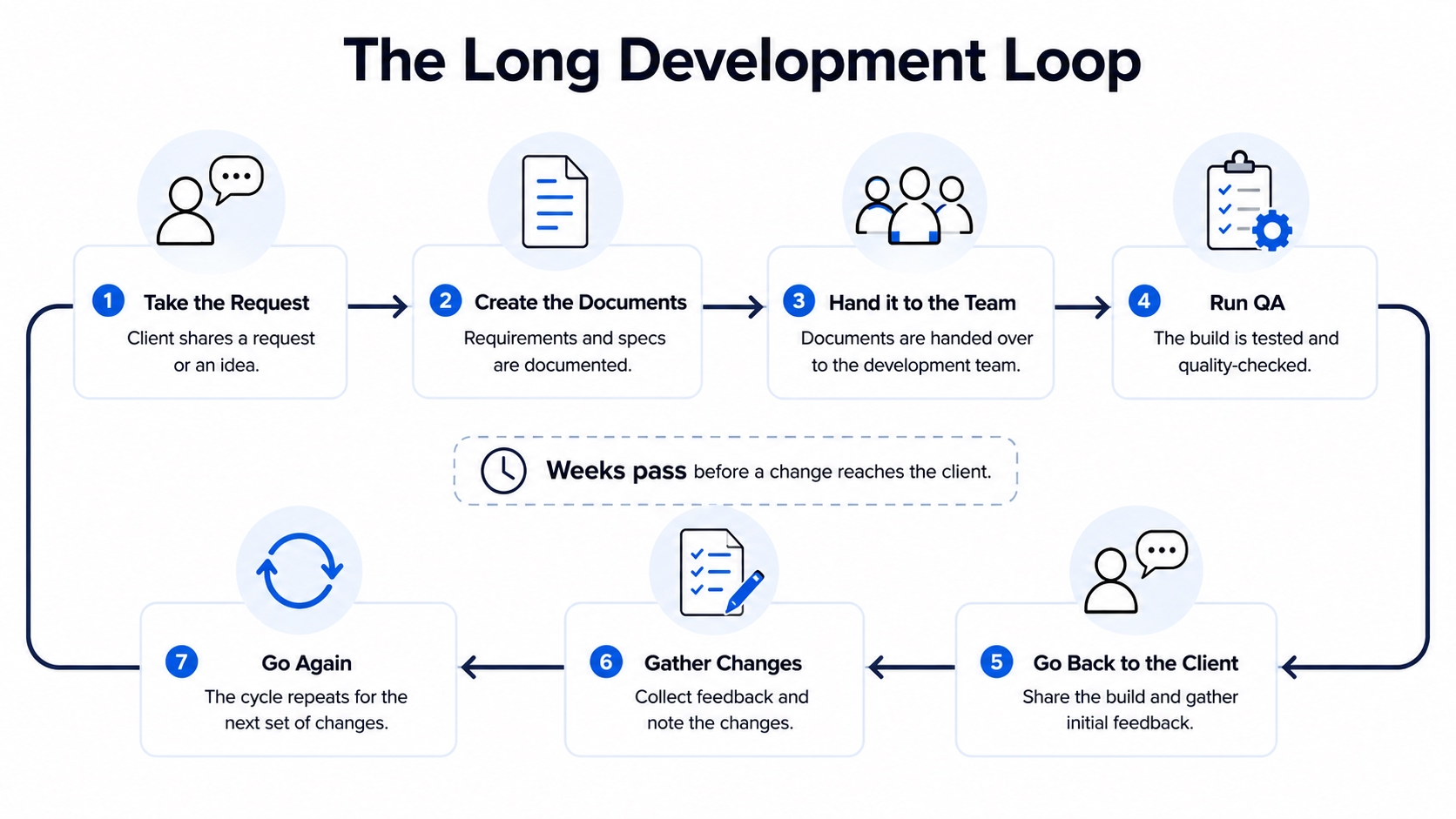
For a business selling smaller custom solutions to clients who wanted them fast, that loop set the ceiling on how quickly anything could ship. Then Nevin came across Emergent. Building by prompting, instead of running every change through the full cycle, was a way past the bottleneck, and he started digging in.
Disconnected tools, and no single system to run a clinic
The clinics Nevin worked with ran on a patchwork of software. They used traditional CRMs like HubSpot and GoHighLevel, along with other tools that each handled one job. Lead nurturing sat in one place, call tracking in another, booking in a third. No single system tied a clinic's operations together, and that gap was what Nevin set out to fill.
Solution
Prompting instead of a development pipeline, with data he controls
Nevin evaluated four or five AI building platforms before committing. He would write the same prompt across different tools and compare the output. Emergent came closest to what he expected every time. As he put it, the delivery "was the closest match to my expectations."
Two things sealed it. The first was speed. Building by prompting collapsed the old request-develop-QA-feedback loop, and Nevin estimates it cut his development cycle by 90 percent. The second was control over security and data, which matters when you're serving healthcare clients. Emergent let him see where the data center sits, scale resources when needed, and pull the codebase from GitHub to self-host on his own server. That transparency, he said, is "just the friendly way of knowing everything."
From marketing client to a healthcare operating system
Nevin took a hybrid path. He already worked with these clinics on marketing, so he understood their operations before he wrote a single prompt. Rather than build another CRM, he built what he calls an operating system for the clinic: one platform that manages the full patient lifecycle instead of stitching together separate tools.
He tested it with one client, then pitched it to a franchise. It worked, and adoption followed. The platform now runs on a multi-tenant architecture, so each clinic operates in its own space on shared infrastructure. Since launch, Nevin has kept the product growing, adding two to three modules or improvements each month.
The EMR covers the patient journey end to end:
- Lead nurturing: Tracks and follows up with prospective patients from first contact.
- Call classification: Logs and sorts every call received and placed by the clinics.
- Booking management: Handles appointments and tracks how many new assessments are booked.
- Business intelligence: An AI-driven bot surfaces metrics and insights for clinic owners.
Outcomes
$20,000 CAD in monthly recurring revenue within a month of launch
Development started in January. The first rollout came in March, the first franchise pitch in April, and clients began signing in May. Within a month of launch, the EMR crossed $20,000 CAD in monthly recurring revenue.
17 clinics and more than 100,000 patients on the platform
The EMR is live and in active use. It serves 17 clinics and manages more than 100,000 patients, having scaled from a single test client into a franchise-wide deployment.
A 90% shorter development cycle
By replacing the traditional request-to-QA-to-feedback pipeline with prompt-based building, Nevin cut his development cycle by roughly 90 percent. Where releases once took weeks and a full team, adjustments now ship with one or two people, and the team pushes updates monthly.
Conclusion
Nevin's agency didn't abandon marketing. It added a software engine on top of it, and that engine changed what the business could sell and how fast it could deliver. The healthcare EMR is the clearest proof: a build that started as a favor for a marketing client now runs 17 clinics, holds over 100,000 patient records, and brings in $20,000 CAD every month. It isn't the only thing he's shipped, either. Nevin has delivered roughly 14 products on Emergent, including a point-of-sale system for salons with scheduling, inventory, invoicing, and payment reconciliation. His two most recent products were both built on Emergent, and he credits the platform with moving his business three times faster than he expected.
If you run an agency or a services business and you're watching clients ask for software you can't build fast enough, this is the path worth studying. Nevin didn't hire a bigger dev team or raise money to fund a long build. He described the problem in plain language, prompted his way to a working product, and kept the code and data under his own control the whole time. Other healthcare operators have taken the same route. You don't need a technical background to do the same, and you don't need to wait months to find out if an idea works.
Emergent turns your idea into a full-stack web or mobile app, no coding required.
 No coding required
- Web & mobile apps
- Deploys instantly

on Emergent today




