TL;DR
- AiSDR proves an excellent choice for automating outbound prospecting, personalized outreach, and follow-ups.
- 11x offers AI-driven sales development and prospect research automation for B2B sales organizations.
- HubSpot Breeze Prospecting Agent is suitable for those who need AI-driven prospecting on top of their HubSpot CRM system.
- Apollo.io, Salesloft, and Salesforce Agentforce cater to varied sales requirements, including prospect identification and engagement through agent workflow within the CRM.
- Emergent provides businesses with the flexibility to build custom AI sales agents tailored to their unique workflows based on natural language inputs with lead qualification, personalization, and CRM integration options.
AI sales agents help teams automate prospect research, personalize outreach, qualify leads, and manage follow-ups, allowing sales representatives to focus on building relationships and closing deals. However, not all platforms offer the same capabilities. Some automate predefined sales sequences, while others use AI to make decisions and execute tasks within defined limits.
This guide compares seven AI sales agent platforms based on their features, AI agent cost, integrations, automation capabilities, and user feedback. Whether you need outbound prospecting, CRM-based automation, or AI-powered sales engagement, this comparison will help you evaluate available options and choose a platform that aligns with your sales goals, workflow, and budget.
What is an AI sales agent?
It's a software tool that executes sales development processes autonomously: engaging the buyer, answering all kinds of product and pricing questions, qualifying leads against your ICP, scheduling meetings, and updating the CRM. Unlike a chatbot, it uses reasoning. While a chatbot follows a decision tree and stops at the first unanticipated question, an AI sales agent such as Salesforce Agentforce for Sales engages in dialogue, responds to shifts in the buyer's direction, and acts accordingly.
Some tools work inbound by engaging buyers at the moment of intent; others work outbound by researching and prospecting target accounts. Copilot-like sales agents help human sales reps prepare their pitch.
Criteria We Used To Evaluate These Tools
The following six criteria can help differentiate effective AI sales agents from fancy email sequences:
Conversational capabilities: Does the agent have the ability to conduct context-aware, multi-turn conversations or is it restricted to script-based sequences that break the moment there is an unexpected question from the buyer?
Qualification capability: Does the agent qualify prospects using conversational techniques and qualify based on the ICP criteria?
Action capability: Does the agent have the ability to book meetings, enrich the data, update records and route leads automatically?
CRM integration: Two-way synchronization with Salesforce, HubSpot or any other CRM.
Channel capability: Integration with email, chat, phone and social channels.
Pricing: The pricing model, hidden costs and total cost of ownership.
Best AI Sales Agent: Quick Comparison
| Tool | Best for | Motion | Pricing |
|---|---|---|---|
| AiSDR | Automated outbound prospecting | Researches prospects, personalizes outreach, and runs campaigns | Starts at $250/month; verify current pricing |
| 11x | AI-powered sales development | Automates prospect research and personalised outreach | Custom pricing |
| HubSpot Breeze Prospecting Agent | HubSpot-based sales teams | Researches prospects and recommends leads for outreach | Announced at $1 per recommended lead; verify current terms |
| Apollo.io | Prospecting and outreach in one platform | Finds contacts, manages sequences, and supports sales workflows | Free and paid plans; varies by tier |
| Salesforce Agentforce | Salesforce-centric organizations | Builds agents for configured CRM and sales workflows | Usage-based and license options |
| HubSpot Sales Hub | CRM-led sales management | Manages deals, follow-ups, and AI-assisted sales activities | Free CRM and paid plans |
| Salesloft | AI-powered sales engagement | Supports account research, personalised outreach, and deal prioritization | Quote-based; some features may require add-ons |
The Best AI Sales Agents in 2026
Choosing an AI sales agent software involves selecting a product that earns top marks from verified customers time and again. The below-mentioned list has been compiled by G2. G2 rates tools based on user ratings, available features, and overall customer satisfaction.
1. Salesloft

Best for: B2B sales teams that want AI-driven prospect research, personalised outreach, and deal prioritization.
Salesloft combines sales engagement tools with AI agents that help representatives identify potential buyers, research accounts, personalize emails, and prioritize sales activities. Its agents can also surface deal risks and provide insights to help teams determine the next best action.
Key features
- AI-powered account and contact research.
- Buyer identification and prospect prioritization.
- Personalised email generation and sales cadences.
- Deal summaries, risk insights, and workflow recommendations.
- CRM integrations and sales performance analytics.
Pros
- Combines AI agents with established sales engagement workflows.
- Helps reduce manual research and repetitive sales tasks.
- Supports prospecting, deal management, and sales coaching.
Cons
- Pricing is quote-based for many offerings.
- Some AI agents require additional packages or add-ons.
- Teams need to configure workflows and evaluate AI-generated recommendations.
Pricing: Salesloft offers packages called Advanced and Elite, with prices available through the sales department. Some features, like account research agents, are optional extras. For more information, visit the Salesloft website.

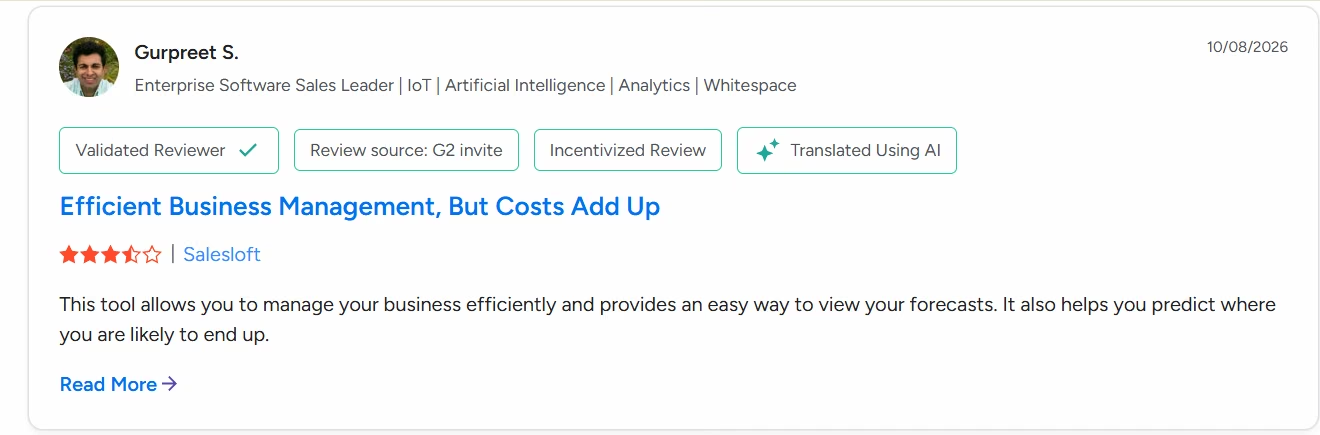
What do users say? With more than 9,000 reviews and a 4.5 rating on G2, Salesloft's platform is designed to improve sales productivity through cadences, prioritization, and AI-assisted workflows. You can understand whether it's a fit using a trial or demonstration focused on your team's existing sales process.
Bottom line: Salesloft is ideal for companies that want to integrate AI agents with prospecting, sales engagement, and pipeline management. This is especially important when the team needs more than email automation.
2. AiSDR

Best for: Teams that want to automate research-led email and LinkedIn outreach.
AiSDR mainly focuses on outbound sales development. AiSDR uses its AI agent, Ami, to enable prospecting and campaigning. AiSDR provides CRM system integrations with HubSpot and Salesforce, among others.
AiSDR is a good option for businesses with a defined ideal customer profile that need help running consistent prospecting and follow-ups at scale.
Key features
- AI-assisted prospect research and contact discovery.
- Personalised email and LinkedIn outreach.
- Multi-step outbound campaigns.
- CRM synchronization and campaign monitoring.
- Different contact volumes and account capabilities across plans.
Pros
- Published pricing makes initial budgeting easier.
- Combines prospecting and outreach in one workflow.
- Offers a lower-cost entry point than many enterprise-focused alternatives.
Cons
- Monthly contact limits may restrict larger campaigns.
- Outbound performance still depends on targeting, data quality, and message relevance.
- Higher-volume plans cost substantially more than the entry tier.
Pricing: AiSDR's published plans start at $250/month for Solo. With the higher tiers being listed at $900/month and $2,500/month. The plans differ in contact volume, accounts, integrations, and support. Check the official AiSDR pricing page for current terms.
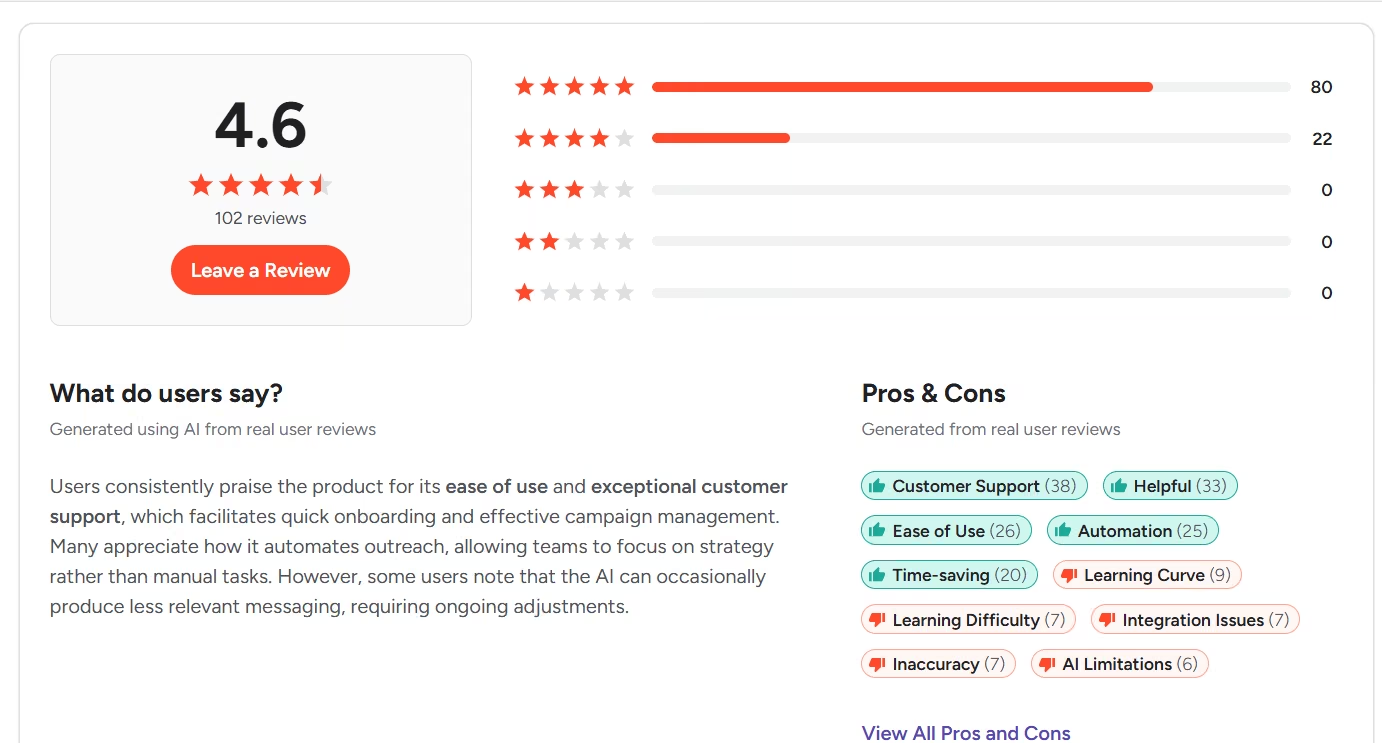
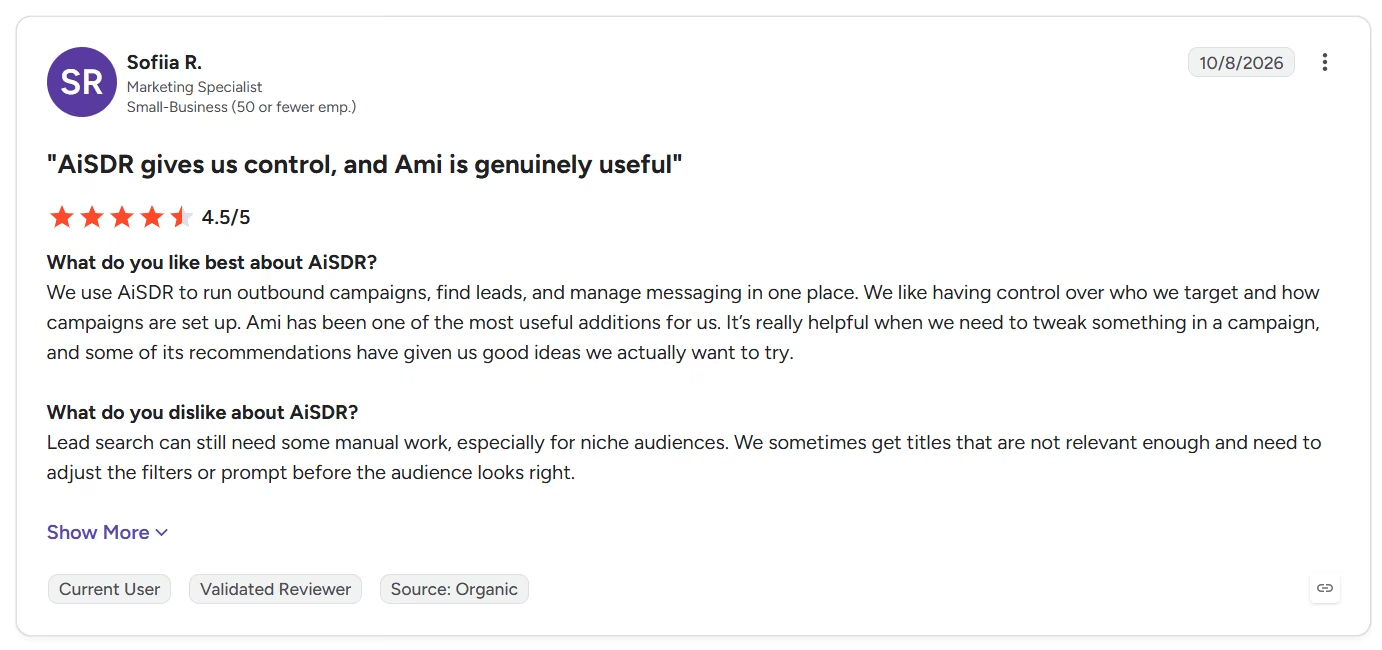
What do users say? AiSDR has a public G2 review profile with a 4.6 rating from 106 reviews. Reviewers highlight campaign automation, personalization, and support. Feedback should be considered alongside the practical limits of contact credits and the need to validate lead quality.
Bottom line: AiSDR could be evaluated if outbound prospecting is a significant issue. Make an estimate of how many contacts you need every month and then pick a package; however, track qualified responses and meetings rather than emails sent.
For the build route, read our how to build an AI sales agent guide.
3. 11x

Best for: B2B teams seeking an AI sales development agent for prospect research and personalised outreach.
11x offers AI-driven sales development through digital workers designed to help with prospect identification, research, messaging, and outreach. Its Alice agent supports outbound sales development, helping teams engage more prospects without manually handling every research and sequencing task.
This approach can suit companies with a repeatable outbound process, especially when sales development representatives spend a large share of their time on repetitive prospecting work.
Key features
- Account and contact research.
- AI-generated, personalised outreach.
- Email- and LinkedIn-oriented prospecting workflows.
- Campaign management and sales-tool integrations.
- Support for scaling outbound activity.
Pros
- Helps reduce repetitive prospecting and message preparation.
- Can tailor messaging using prospect and company context.
- Provides a specialized sales-development workflow rather than a general-purpose assistant.
Cons
- Generated messages still need review and iteration.
- Contact data and targeting accuracy should be checked.
- Pricing is not transparently listed as a standard self-serve subscription.
Pricing: 11x uses custom pricing. Request a quote based on expected volume, required channels, integrations, and support. See the official 11x website.
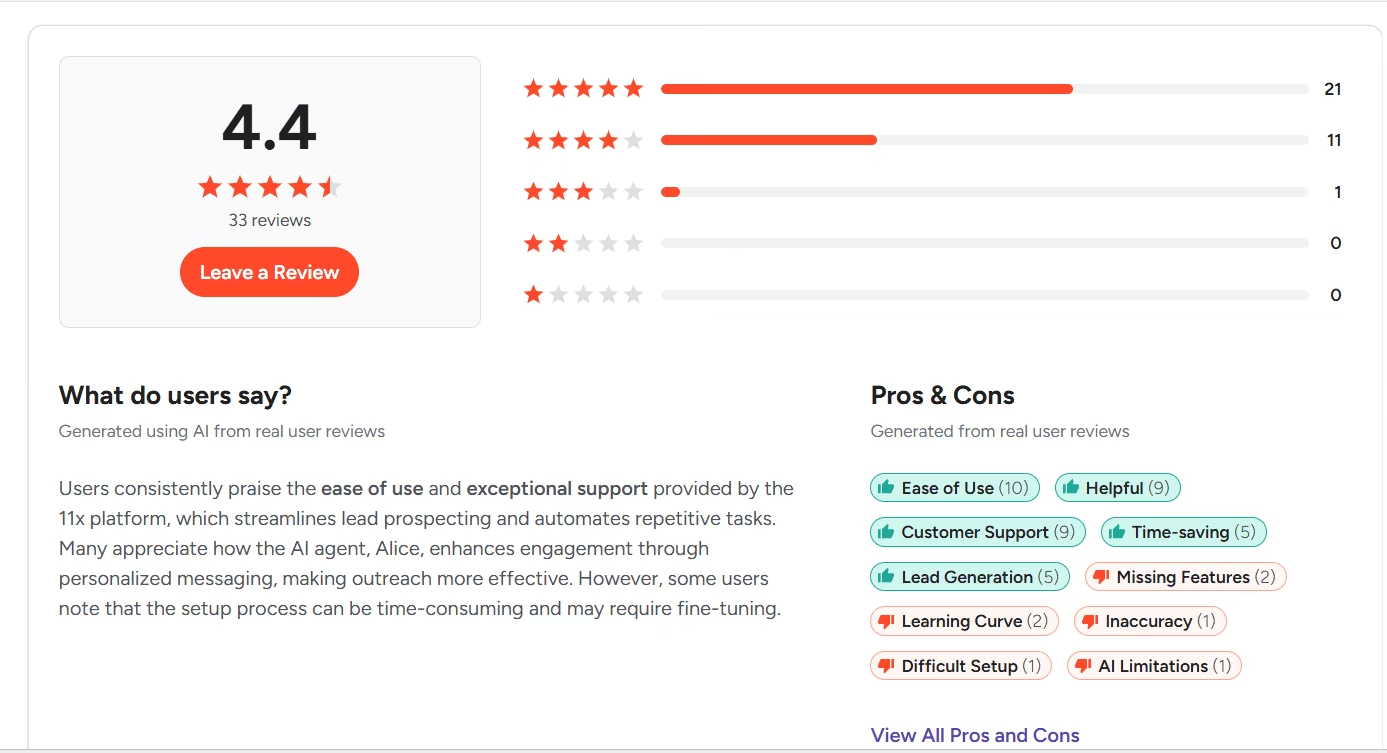
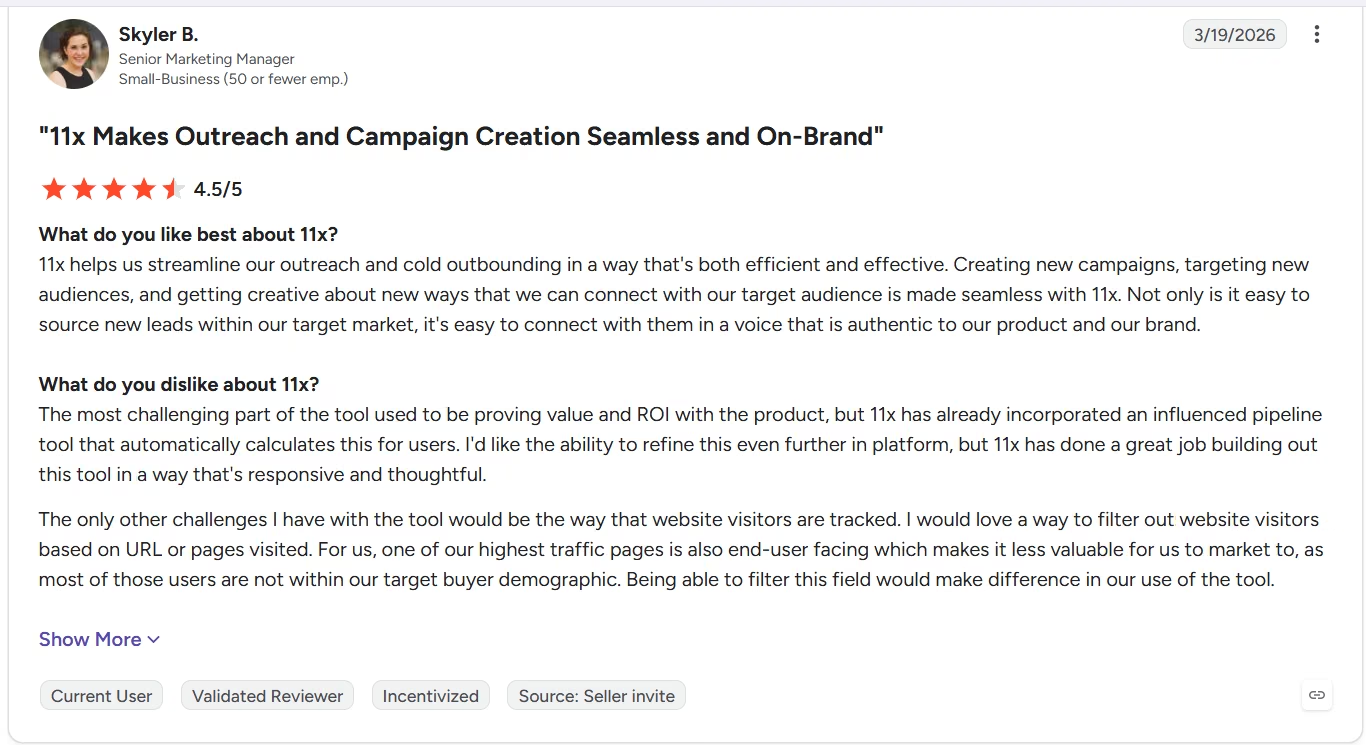
What do users say? The public G2 review profile for 11x shows a 4.4 rating, with positive feedback on campaign creation, personalization and support. It should also be noted that some reviewers found that messages require polishing, data may become obsolete, and the reaction management does not always fit well. All this makes testing real conversations and stop conditions relevant.
Bottom line: Look at the 11x when the main scenario is outbound sales development, and you have the ability to track the quality of your campaigns. Make sure that there is a pilot program with metrics for qualifying meetings, responses, and pipeline.
4. HubSpot Breeze Prospecting Agent

Best for: Sales teams that already manage customer and prospect information in HubSpot.
HubSpot's Breeze Prospecting Agent helps sales teams research prospects and recommend leads for outreach. Its biggest advantage is the potential to use existing CRM context rather than requiring teams to manage prospecting in a separate system.
This can be especially helpful when sales representatives use HubSpot for contact management, deal management, and customer interactions. This way, the agent can assist in doing the research and preparing for the outreach, but ultimately the decision will be taken by the sales representatives.
Key features
- AI-assisted prospect research.
- Lead recommendations for outreach.
- Connection to HubSpot's CRM context.
- A workflow designed around existing sales data.
Pros
- A natural fit for teams already using HubSpot.
- Can reduce switching between prospecting and CRM workflows.
- Outcome-based pricing gives teams a clear unit to evaluate.
Cons
- The value depends on the quality and completeness of CRM data.
- Teams outside the HubSpot ecosystem may get less benefit.
- A recommended lead does not automatically translate into a qualified opportunity.
Pricing: Starting April 14, 2026, HubSpot will move the Prospecting Agent to outcome-based pricing of $1 per lead recommended to reach out to.

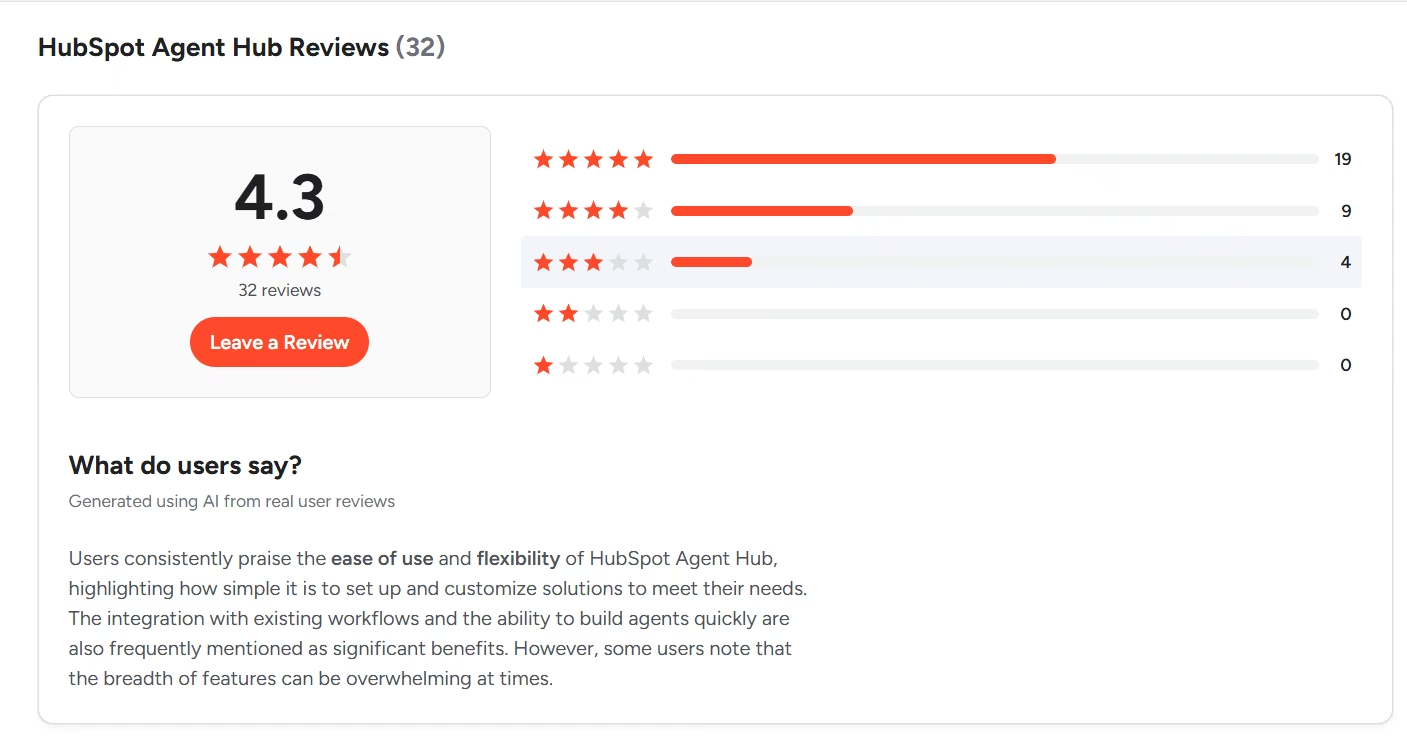
What do users say? Reviews of HubSpot Sales Hub on G2 frequently mention the value of a centralized CRM, accessible interface, and connected sales workflows. Some users also report that advanced features and higher-tier plans can become expensive. These reviews cover Sales Hub broadly, not only Breeze Prospecting Agent.
Bottom line:If you’re currently using HubSpot, then it could make sense to use the HubSpot Breeze Prospecting Agent as well because it is integrated with the software you’re currently using. Consider pricing and test whether the recommended prospects become qualified conversations.
5. Apollo.io

Best for: Teams that need a prospect database, sales engagement, and AI-assisted workflows in one place.
Apollo.io combines contact discovery and sales engagement. Sales teams can perform searches, apply filters on accounts, get information about contacts, perform email sequences, and engage in outreach all on one platform.
Apollo.io is not, strictly speaking, a robotic artificial intelligence agent. Apollo.io is more accurately described as a sales intelligence and engagement platform with AI features. This matters if you are looking for an agent to do things independently.
Key features
- B2B contact and company search.
- Filters for targeting accounts and decision-makers.
- Email sequencing and engagement tracking.
- AI-assisted research and messaging features.
- CRM integrations and sales workflow tools.
Pros
- Brings prospect discovery and outreach together.
- Offers a free plan for initial exploration.
- Useful for teams that want to consolidate sales tools.
Cons
- Contact data may need verification.
- Credit and usage limits can affect larger prospecting campaigns.
- The breadth of features can create a learning curve for new users.
Pricing: Apollo offers Free, Basic, Professional, and Custom plans. Features, credits, and usage limits vary by tier. Check the official Apollo pricing page for current prices rather than relying on outdated third-party figures.
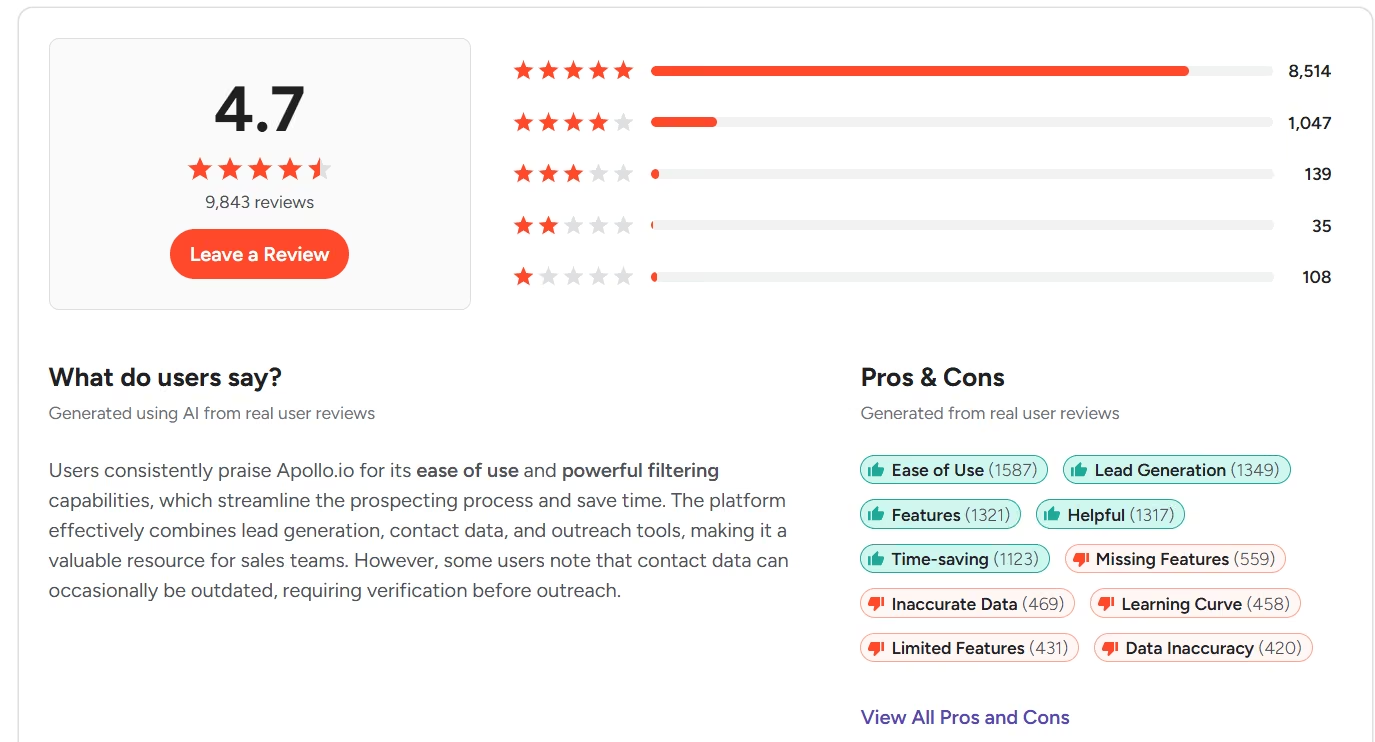
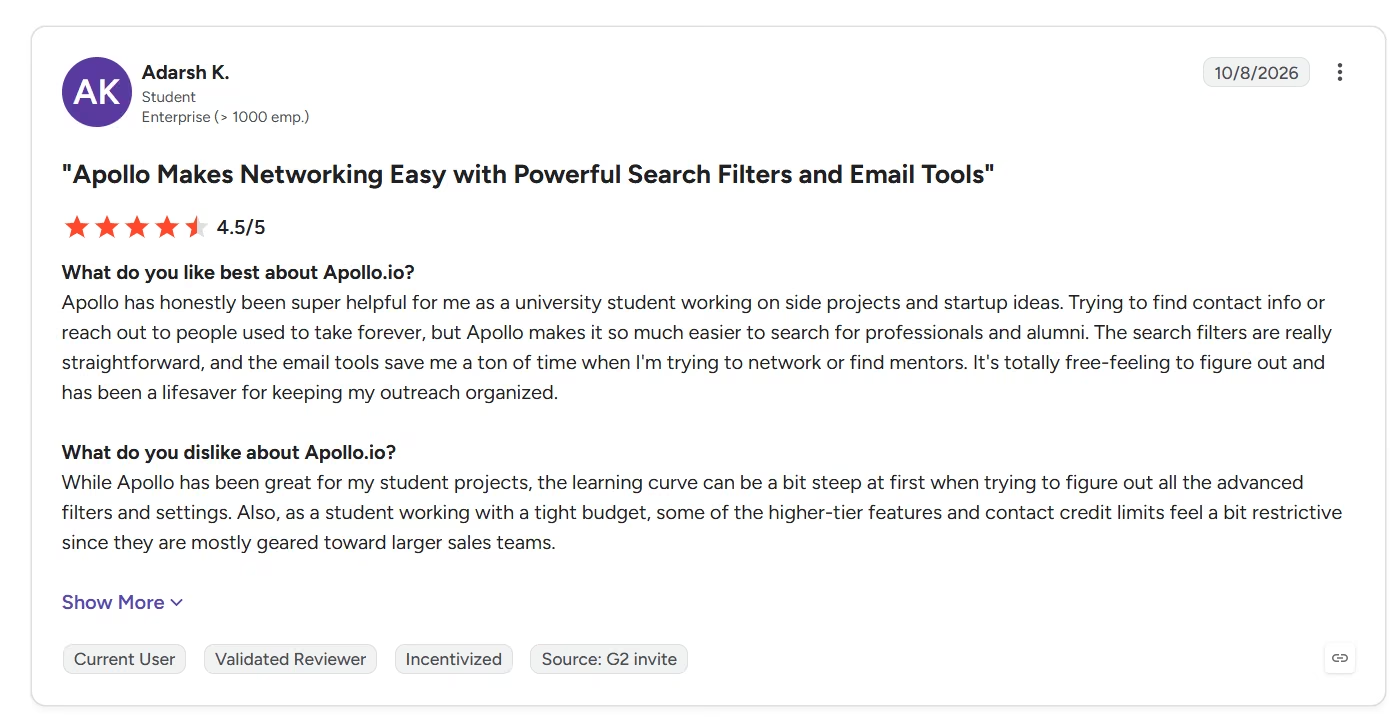
What do users say? Apollo has more than 9000 G2 reviews and a 4.7 rating, highlighting its contact database, search filters, and combined prospecting and sequencing features. However, reviewers also mention occasional data inaccuracies, limited credits on lower plans, and a busy interface.
Bottom line: Apollo.io can be a strong option if you need prospecting and outreach in one place. If you need a fully autonomous agent, and to confirm which actions are automated and which still require a salesperson's input.
6. Salesforce Agentforce

Best for: Businesses that want to build and deploy AI agents around Salesforce data and workflows.
Salesforce Agentforce provides tools for creating AI agents that can work with business data and carry out configured actions. In a sales environment, this can support workflows such as retrieving account information, updating records, summarising activity, or assisting with sales processes.
Agentforce is especially useful for those companies that have already implemented Salesforce. Nonetheless, its installation may involve planning of permissions, current CRM configuration, and usage.
Key features
- Agent-building capabilities and configurable actions.
- Access to Salesforce data and workflows, subject to permissions.
- Options for customer-facing and employee-facing agents.
- Consumption-based and license-based purchasing models.
Pros
- Fits organizations that already use Salesforce.
- Can connect agent behavior to CRM records and configured workflows.
- Offers multiple purchasing approaches for different usage patterns.
Cons
- Pricing requires careful modeling because usage may be metered.
- Setup and governance can be more involved than with a simple outbound tool.
- Teams using another CRM may need additional integration work.
Pricing: Salesforce lists Agentforce Flex Credits at $500 per 100,000 credits and conversation-based pricing at $2 per conversation on its published pricing page. Other licences and editions are available, and the total cost depends on usage and the Salesforce products required. Review the official Agentforce pricing page.
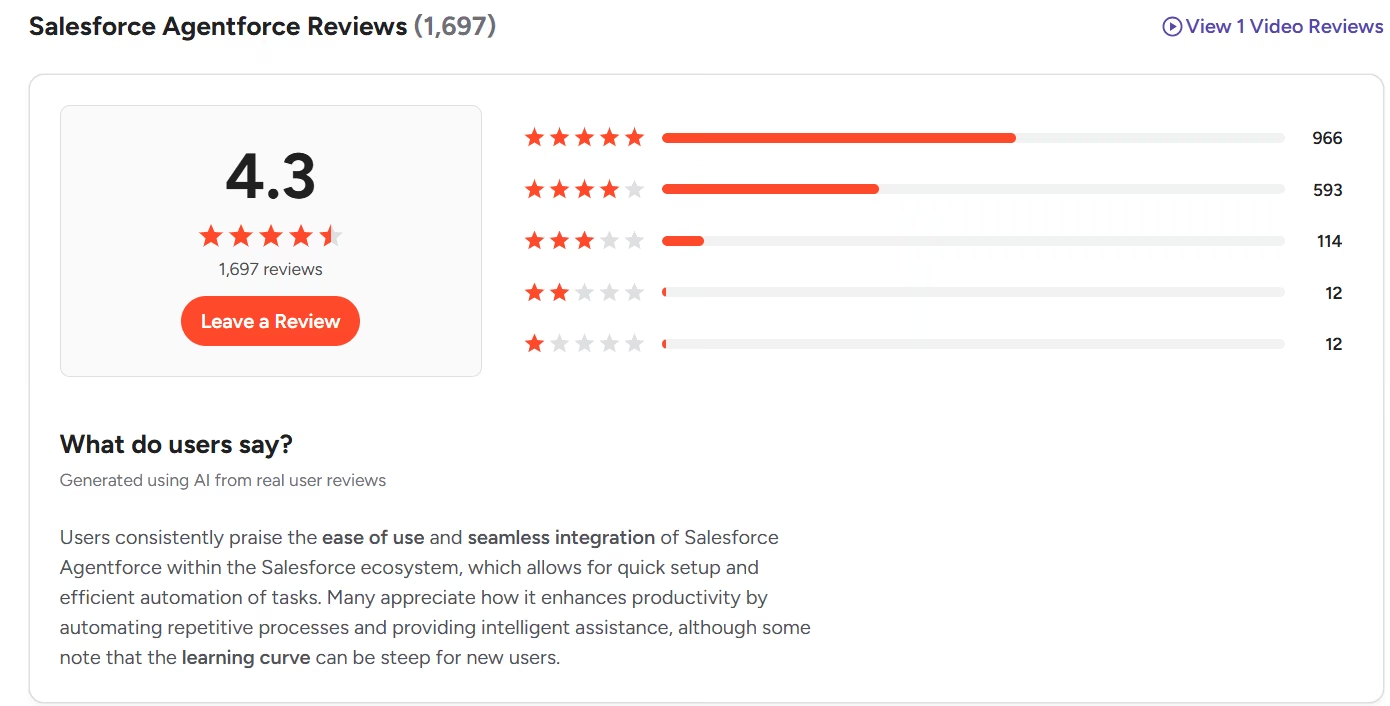
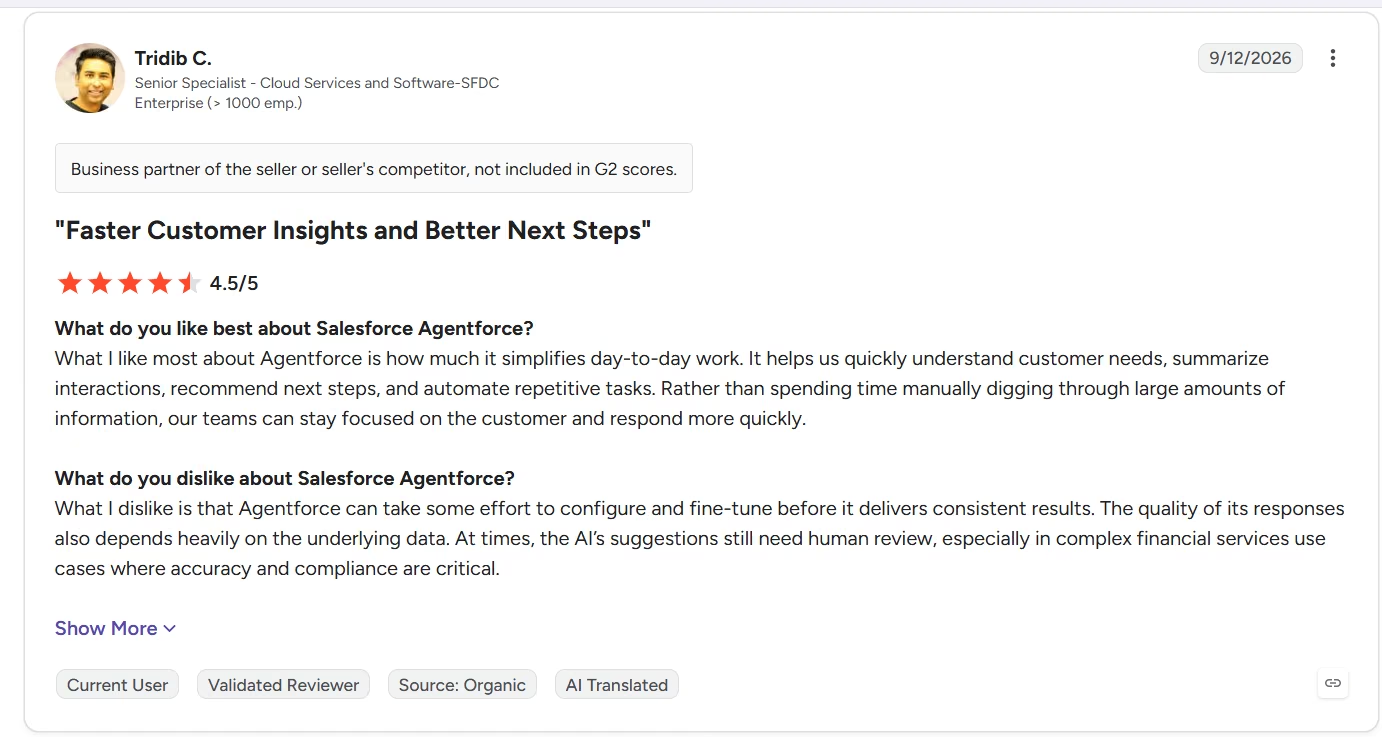
What do users say? On G2, Salesforce Agentforce has a 4.3 rating with more than 1500 reviews. Agentforce is part of the broader Salesforce ecosystem, so feedback about Salesforce products should not be treated as a direct measure of Agentforce agent performance. Evaluate a sales-specific pilot and ask how usage, action limits, auditability, and escalation will work in your organization.
Bottom line: Agentforce can be considered as an option where Salesforce is integral to your sales process and you want agents to integrate with CRM information. Calculate usage and implementation costs before comparing Agentforce with a sales development tool based on a fixed price model.
7. HubSpot Sales Hub

Best for: Growing sales teams that want to manage deals, communication, follow-ups, and AI-assisted productivity in one CRM.
HubSpot Sales Hub is an AI-assisted sales platform that goes beyond just an AI sales agent solution. It combines the benefits of a CRM system with sales engagement and automation. It helps organize contacts, track deals, conduct follow-ups, and monitor sales activities.
The challenge for many companies is not a lack of autonomy. It is scattered customer information and inconsistent follow-up. The right CRM configuration can address these issues without adding agents.
Key features
- Contact, company, and deal management.
- Sales sequences and follow-up workflows.
- Email tracking and meeting scheduling.
- Reporting and pipeline visibility.
- Integration with HubSpot's broader AI tools.
Pros
- Centralizes customer and sales activity.
- Offers a free CRM entry point.
- Useful for teams that need better process consistency before adopting more autonomous agents.
Cons
- Advanced capabilities may require higher-priced plans.
- Complex workflows can take time to configure.
- It is not equivalent to a standalone autonomous sales agent.
Pricing: HubSpot offers a free CRM and paid Sales Hub plans. Pricing depends on the edition, seats, and features required. Check the official HubSpot website for current terms.

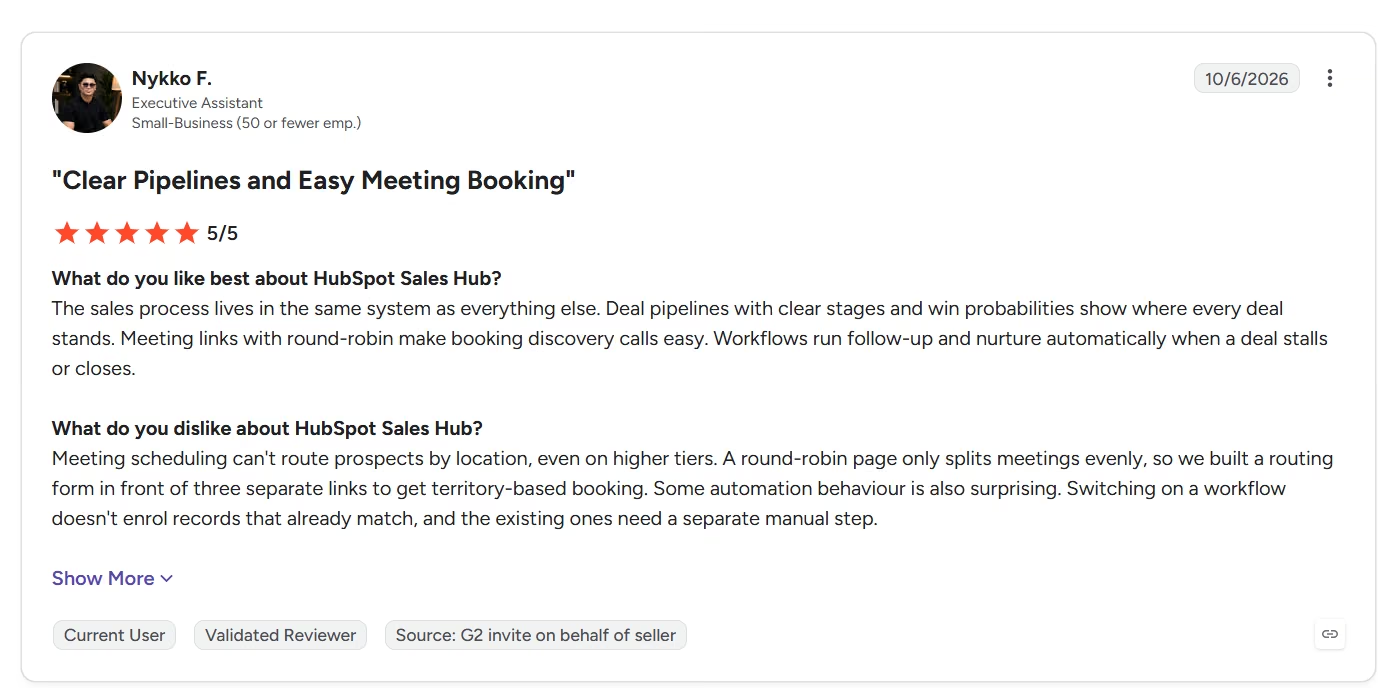
What do users say? On G2, HubSpot Sales Hub has a rating of 4.4 and more than 140000 reviews; users often praise HubSpot's usability, connected customer records, and sales workflows. Common concerns include higher costs as teams upgrade and advanced features that require more setup.
Bottom line: Consider HubSpot Sales Hub when you need a robust tool to manage contacts, deals, and follow-ups. The Breeze Agents, will make sense when you are ready to further automate your prospecting tasks.
How to Choose the Right AI Sales Agent
An effective AI sales agent will help you overcome any identifiable bottleneck in your sales process. First, identify the longest task: finding prospects, researching an account, drafting emails, qualifying leads, or maintaining your CRM.
Next, evaluate how much control you have over the system. Is it able to write messages for you, requiring your approval? Does it pause in case the prospect writes back? Does it switch the conversation to a human being when the request is too complex or simply out of its league? Controls are just as important as core functionality.
Determine your total costs at the predicted usage level. Just because the initial price looks attractive doesn't mean that the number of contacts, credits, seats, or actions available is sufficient for you. Calculate your expenses for usage-based tools before making a purchase.
Lastly, run a pilot test with a representative sample of your leads and track qualified responses, appointments set up, accuracy of the information gathered, opt-outs, CRM accuracy, and savings for sales representatives.
Build Your Own AI Sales Agent With Emergent
Prebuilt platforms can be a good fit when your sales process matches their supported workflows. But some teams need a combination of steps that does not fit neatly into a single product.
Using Emergent’s AI Sales Agent Builder, you can write your sales process workflow in natural language and create an agent based on it. For instance, you may describe the process by which the agent researches the lead, qualifies it, prepares for outreach, updates fields in the CRM, and routes a good prospect to a sales rep.
A custom-made workflow offers flexibility, but you have to test it, configure integrations, set up permissions, and define where the agent ends the process and needs further human intervention.
If you want to explore other workflows, the Emergent AI Agent Builder provides a broader starting point for building agents around different business needs.
Most AI app builders stop at prototypes. Emergent creates production-ready apps you can actually launch.
- Production-ready apps
- Web & mobile apps
- Deploy in minutes