
Imagine assigning a task to an AI assistant before leaving your office and returning the next morning to find the work completed, without having to provide instructions at every step.
That's what always-on AI agents promise. Unlike traditional AI chatbots that primarily respond to prompts, these agents can work independently, access connected applications, and continue working even when you're offline.
OpenAI Dots, Meta Muse, and Grok Bot are three recent entrants in this category. While all three aim to reduce the need for constant human supervision, they differ in how they handle tasks, connect with applications, manage permissions, and support everyday workflows.
In this Dots vs Muse vs Grok Bot comparison, we'll examine their features, pricing, availability, integrations, and safety controls to help you decide which AI agent best fits your personal or business needs.
Dots, Muse, and Grok Bot at a Glance
OpenAI Dots, Meta Muse, and Grok Bot can all work on tasks in the background, but they serve somewhat different needs. Dots focuses on ongoing personal and professional responsibilities, Muse emphasizes everyday assistance and personal goals, while Grok Bot is designed around AI teammates that can execute workflows across business applications.
Here's how they compare:
The takeaway: Dots is worth considering if you want an AI agent that understands your ongoing work. Muse is more suitable for everyday personal assistance, while Grok Bot stands out when you need to delegate repeatable workflows or coordinate multiple AI teammates.
What Each AI Agent Is Built to Do
Although Dots, Muse, and Grok Bot share the ability to work independently, they approach AI assistance differently. Dots focuses on managing ongoing responsibilities, Muse combines everyday assistance with long-term personal goals, and Grok Bot helps individuals and businesses delegate work to AI teammates.
OpenAI Dots: An AI Agent That Understands Your Ongoing Work
OpenAI Dots is designed to take responsibility for tasks that require continuous attention rather than responding to one instruction at a time.
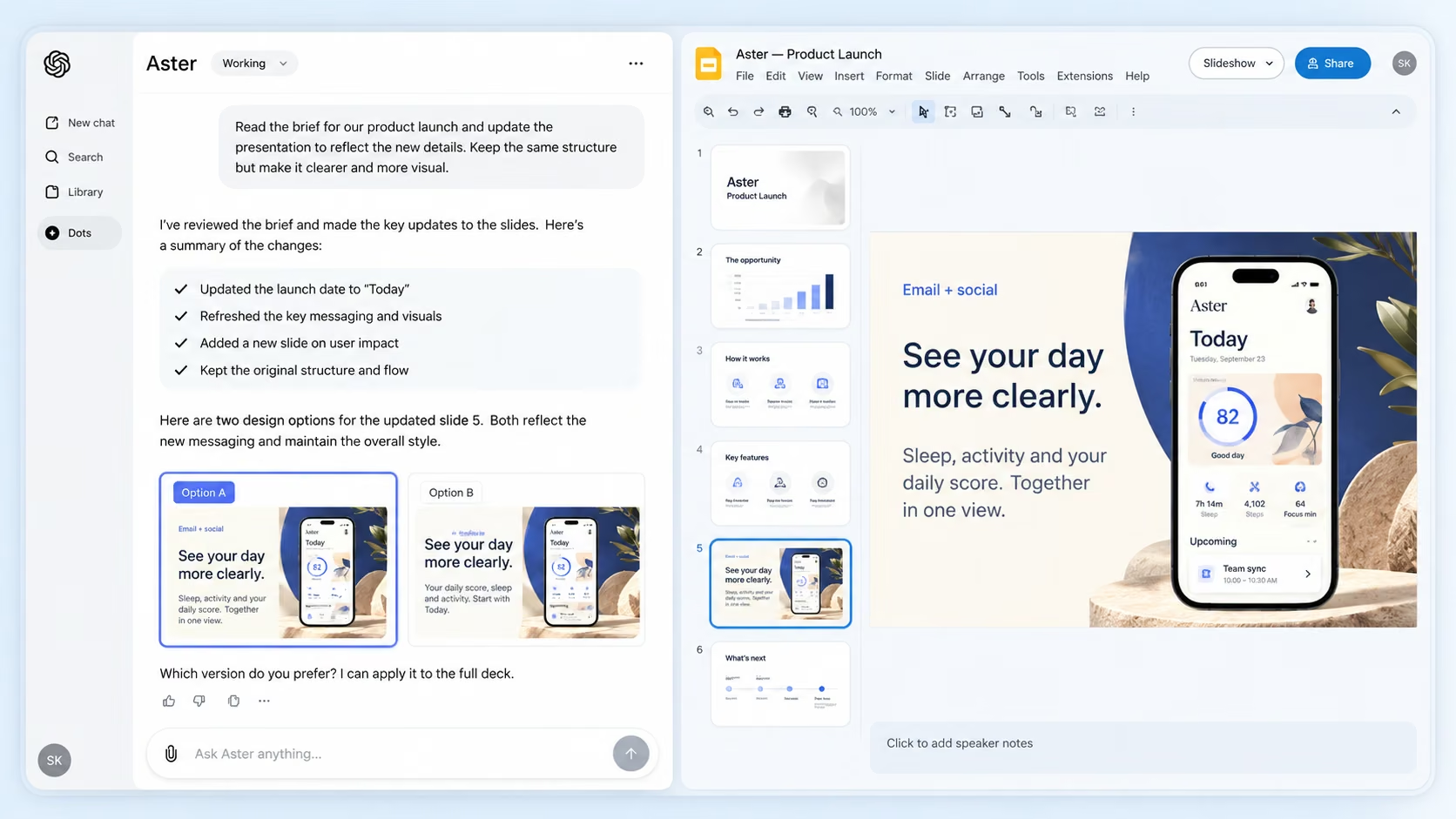
Image Source: OpenAI
Powered by GPT-6 Astra, Dots operates through its own cloud computer and can access applications you authorize. It also remembers relevant context from previous interactions, so it can make progress on ongoing assignments without you having to explain everything again.
For example, imagine you're managing several client projects simultaneously. You could ask your dot to monitor project-related emails, identify pending deliverables, and prepare a summary of tasks requiring your attention.
Instead of manually checking different applications, you can review the information your dot has gathered and decide what needs to happen next.
Dots also supports proactive research, allowing it to identify potentially useful information in connected applications even when you haven't assigned a specific task.
What makes it different: Dots combines persistent context, proactive assistance, and access to connected applications to help manage responsibilities that extend beyond individual conversations.
Meta Muse: A Personal AI Agent for Everyday Life
Meta Muse is designed to make AI assistance part of everyday life, helping users complete routine tasks while making progress toward longer-term personal goals.
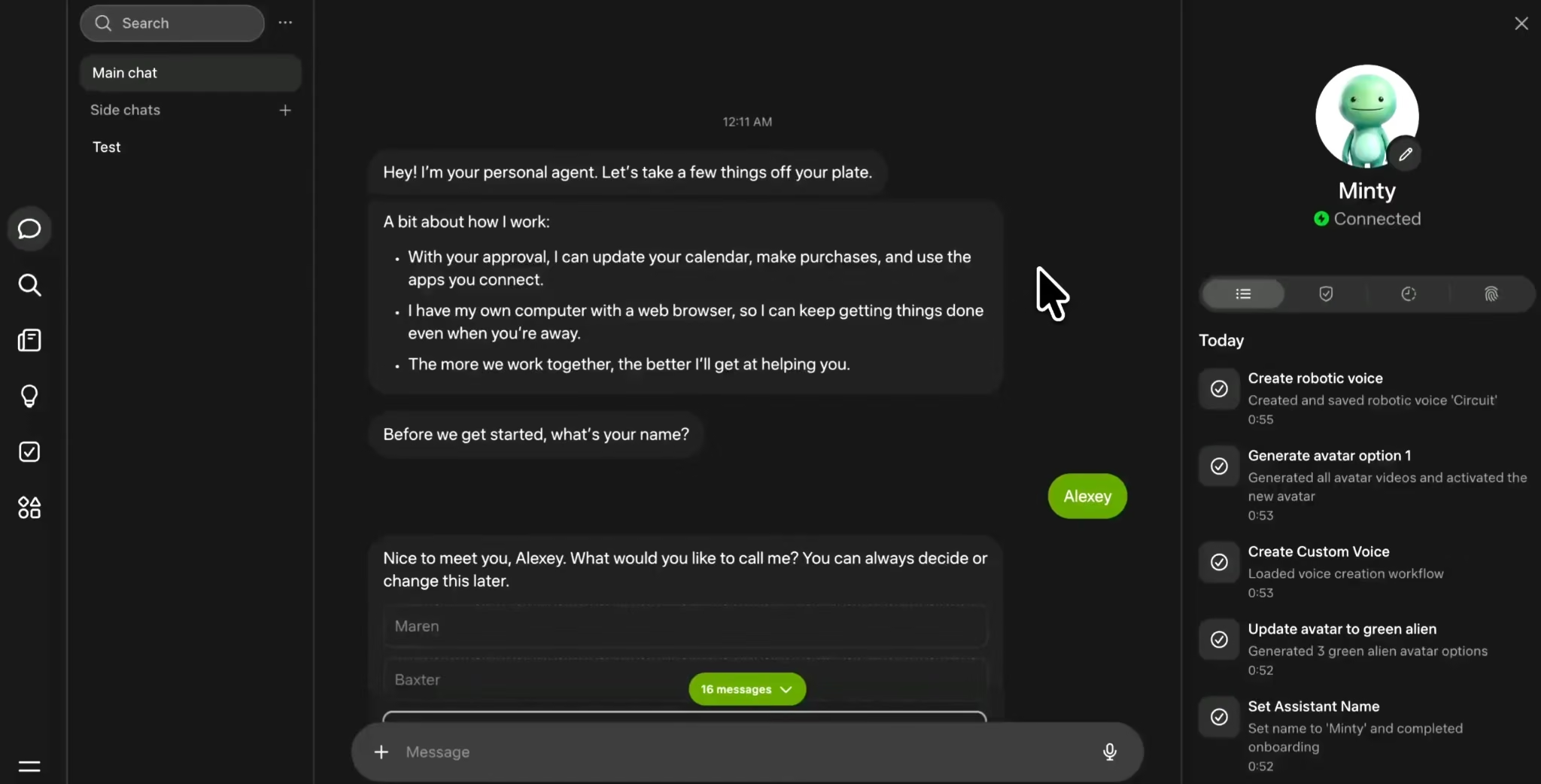
Image Source: MemeBurn
Powered by Muse Spark, the agent operates through a dedicated virtual computer called Muse Secure VM. Users can interact with Muse through its app or WhatsApp, making it accessible through familiar messaging interfaces.
For example, suppose you're planning a family vacation. You could ask Muse to research destinations, compare travel options, and help organize bookings around your budget and preferences.
Muse can keep working after you close the app and return when it needs more information or approval.
It can also remember relevant preferences and use them to make suggestions. For instance, if you've previously discussed dietary preferences or travel requirements, Muse may incorporate those details into future recommendations.
What makes it different: Muse emphasizes personalized assistance, familiar communication channels, and turning everyday goals into actionable tasks.
Grok Bot: AI Teammates for Business Workflows
Grok Bot takes a different approach by allowing users to create multiple AI teammates that can handle responsibilities across business applications.
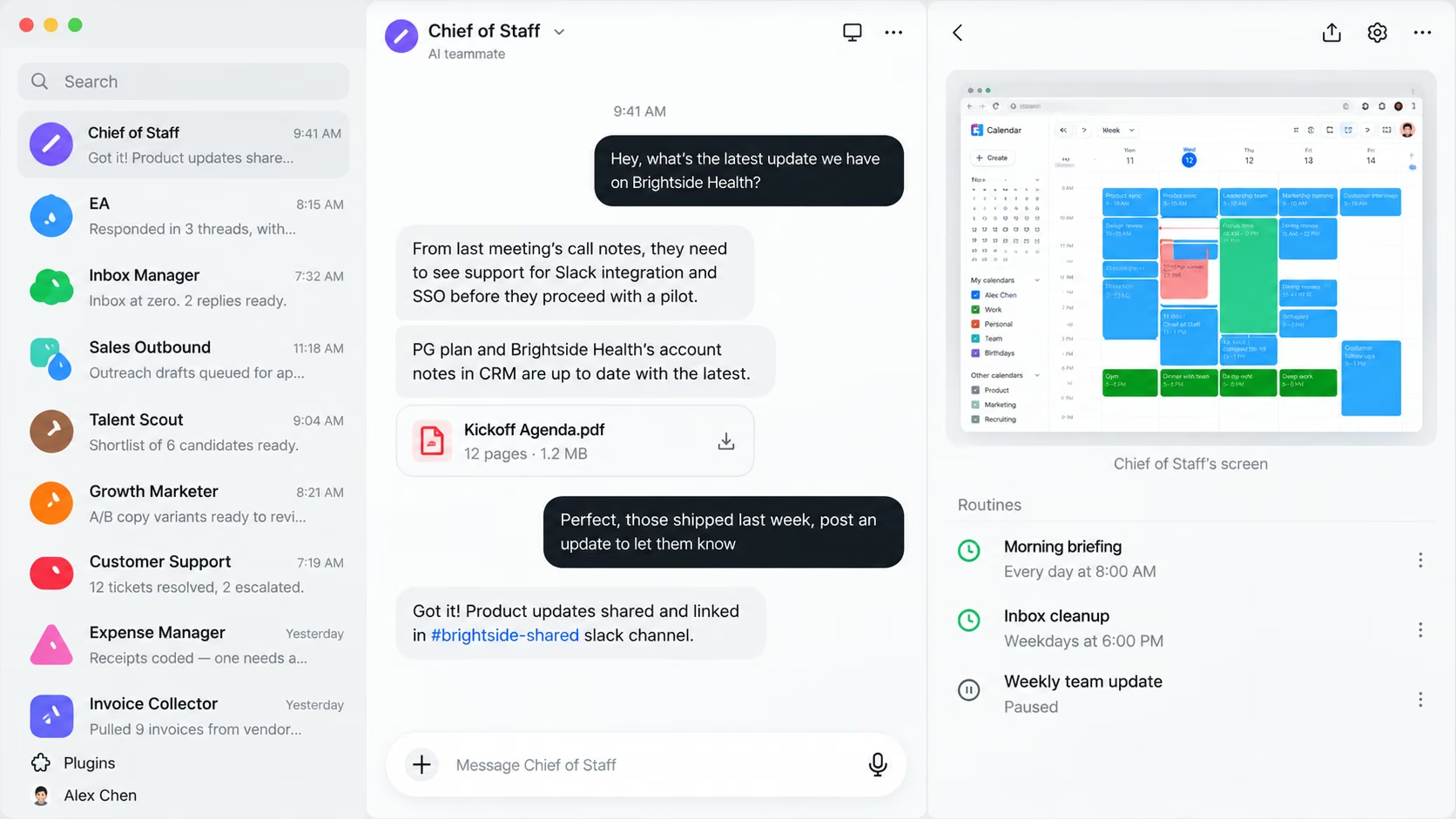
Image Source: MemeBurn
Each Bot can work with authorized tools, access websites, and carry out multistep assignments using a shared cloud computing environment. Bots can also communicate with one another, making it possible to coordinate related tasks without manually transferring information between them.
Consider a small business managing sales inquiries. One Bot could research potential customers, another could prepare personalized follow-up emails, and a third could update customer records in the CRM. To build a version around your own pipeline, To build a version around your own pipeline, you can build a lead qualification agent that scores each inquiry and routes it to the right rep.
Rather than giving each Bot detailed instructions repeatedly, users can demonstrate workflows and save them as reusable routines.
Grok Bot also retains relevant context and learns from feedback, allowing its Bots to adapt to established working practices over time.
What makes it different: Grok Bot emphasizes teamwork between multiple AI agents, repeatable workflows, and completing tasks directly within the applications businesses already use.
Feature-by-Feature Comparison
All three AI agents can take on tasks without constant supervision, but their capabilities differ when it comes to managing long-term work, remembering preferences, and coordinating activities.
Let's compare the features that matter most when choosing an AI agent.
1. Autonomous Task Execution
All three agents can continue working after you close the application, using cloud-based computing environments to complete tasks.
- OpenAI Dots: Can research information, prepare documents, and advance ongoing projects. It can also proactively identify relevant developments and bring them to your attention.
- Meta Muse: Can handle everyday activities such as researching travel options, organizing plans, and assisting with bookings. It can request approval before taking sensitive actions.
- Grok Bot: Can execute multistep workflows across business applications, such as updating customer records, preparing follow-ups, and processing routine administrative work.
The difference: Dots emphasizes ongoing responsibilities, Muse focuses on personal assistance, and Grok Bot is particularly suited to operational workflows.
2. Memory and Personalization
An always-on agent becomes more useful when it remembers relevant context instead of requiring you to repeat instructions.
Dots uses context from ChatGPT memory and learns from feedback to understand your preferences and ongoing projects. For example, it can incorporate your previous feedback when preparing the next version of a presentation.
Muse learns from conversations and remembers information relevant to your goals. This can help it personalize recommendations and adapt to your preferences over time.
Grok Bot maintains context within individual Bots, including their responsibilities, working preferences, and previous interactions. This allows a sales Bot, for example, to retain information about its assigned accounts and established workflows.
The difference: Dots emphasizes continuity across ongoing work, Muse focuses on personal preferences, and Grok Bot maintains role-specific context for specialized agents.
3. Multiple Agents and Collaboration
This is one area where the products differ significantly.
Grok Bot allows users to create multiple specialized Bots that work simultaneously. These Bots can communicate, share relevant context, and hand off tasks to one another.
For example, a research Bot could gather information about prospective customers and pass its findings to a sales Bot that prepares outreach.
Dots currently centers on a user's primary agent, with support for additional dots planned for the future. It can also delegate certain work through supported ChatGPT tools.
Muse is primarily designed around a personalized assistant rather than a team of separately configured AI agents.
The difference: Grok Bot offers the clearest documented support for coordinating multiple persistent AI teammates. Dots and Muse take a more centralized approach to personal assistance.
4. Recurring Tasks and Workflow Automation
All three agents can support ongoing activities, although the available automation mechanisms differ.
Dots supports scheduled tasks, recurring checks, and proactive updates. For instance, you could ask it to review your calendar every morning and highlight meetings requiring preparation.
Muse can work toward longer-term goals, follow up on ongoing activities, and suggest relevant next steps based on previous interactions.
Grok Bot supports reusable routines. Users can demonstrate a workflow, save the steps, and have a Bot repeat the process. Routines can run on schedules or supported event triggers.
The difference: Dots is useful for recurring personal and professional responsibilities, Muse emphasizes progress toward broader goals, and Grok Bot provides more explicitly documented workflow-repetition capabilities.
5. Customization and Control
The ability to guide an AI agent's behavior is important, especially when it works with business information.
Dots allows users to define goals, provide feedback, adjust instructions, and control the tasks an agent can perform.
Muse lets users personalize their assistant and manage the applications and permissions available to it.
Grok Bot allows users to create agents with distinct responsibilities, assign relevant tools, and establish reusable workflows for specific activities.
The difference: Dots and Muse focus on adapting a personal assistant to the user, while Grok Bot offers more granular customization through specialized AI teammates.
For businesses, the right choice depends on whether they need a single assistant that understands their ongoing responsibilities or multiple agents handling different operational functions.
Pricing and Availability Compared
Meta Muse offers the most accessible starting point with a free tier, while OpenAI Dots and Grok Bot require eligible paid subscriptions. However, the cost depends on your subscription, usage needs, and how much work you delegate.
Here's how their pricing and availability compare as of October 2026.
OpenAI Dots Pricing
OpenAI Dots does not currently have a separate subscription fee. Your first dot is included with eligible ChatGPT Pro and Business Premium subscriptions.
Enterprise customers, including eligible Edu and Healthcare workspaces, can access the beta when their administrator enables it.
Subscriptions include an allowance for deeper work, although usage limits and eligibility conditions apply. OpenAI has also announced plans to offer additional dots and expanded work capacity in the future.
Dots are rolling out gradually. Individual Pro users must be at least 18 years old, and access is initially unavailable in the European Economic Area, Switzerland, and the United Kingdom.
Meta Muse Pricing
Meta Muse offers a free tier, so you can try a personal AI agent without buying a subscription.
However, free usage is limited. Users who reach their allowance can wait for it to refresh or upgrade to a paid subscription for additional usage.
Meta has not established a single universally applicable paid subscription price across all markets in the official information reviewed.
Muse initially launched in the United States and expanded to Singapore in October 2026. Availability of individual app connections and features may vary by region.
Grok Bot Pricing
Grok Bot is included with Premium, Super, and Ultra plans under The X Subscription, starting at $30/month. Users with certain existing Cursor, SuperGrok, or other eligible subscriptions may also have access without purchasing a separate plan.
Price Source: x.ai
Annual billing options are also available at lower effective monthly rates.
Grok Bot usage is subject to subscription allowances. Additional work beyond the included usage may incur charges when paid overage is enabled.
Eligible team and enterprise customers can also access Grok Bot, although business pricing and administration requirements may differ.
Which offers better value?
Muse is the easiest option to explore without an upfront subscription. Dots may offer better value for users who already have an eligible ChatGPT plan, while Grok Bot provides more explicit pricing tiers for businesses that want multiple AI teammates.
However, the lowest subscription price doesn't necessarily mean the lowest operating cost. Businesses should also consider usage allowances, task complexity, and whether additional charges apply when agents perform extensive work.
App Connections, Channels, and Automation
An AI agent becomes more useful when it can work with the applications you already use. OpenAI Dots, Meta Muse, and Grok Bot all support connections to external services, but they differ in the number of supported integrations, communication channels, and automation options.
App Connections and Integrations
OpenAI Dots connects to applications through ChatGPT's plugin ecosystem, which supports more than 4,000 apps. Depending on the available integration and permissions, Dots can access information from connected services and use supported tools to complete tasks.
Meta Muse supports connections to everyday applications, including Gmail, Google Calendar, and Instagram. In Singapore, Meta has also announced integrations with services such as Grab, Shopee, Agoda, and Singapore Airlines. However, some connections are being introduced gradually and may not be available to every user.
Grok Bot can interact with business applications through supported integrations and its cloud-based browser. This allows Bots to work with websites and software even when a dedicated integration isn't available. Its documented automation triggers include Slack, GitHub, Linear, Sentry, PagerDuty, email, and webhooks.
Communication Channels
The way you communicate with an AI agent can be just as important as the applications it connects to.
Dots is particularly convenient for professionals already using ChatGPT and workplace messaging applications. Muse provides a familiar messaging experience through WhatsApp, while Grok Bot emphasizes communication with individual AI teammates.
Automation Across Connected Applications
All three agents can perform tasks using connected applications, but their automation approaches serve different requirements.
Dots supports scheduled activities and proactive research. For example, it can review your calendar each morning, identify upcoming commitments, and prepare a briefing. Its background research uses read-only access, while actions that modify information are subject to separate permissions and safeguards.
Muse can coordinate tasks across connected services and continue working toward longer-term goals. For instance, it could help organize a trip by researching travel options and coordinating plans through supported services, requesting approval before sensitive actions.
Grok Bot offers reusable skills and routines for recurring workflows. A business could configure a Bot to check customer records every morning, identify accounts requiring attention, and prepare a report. Routines can run on schedules or supported events, such as receiving a Slack message.
The key consideration: Dots offers broad connectivity through ChatGPT, Muse focuses on familiar personal services, and Grok Bot provides structured automation for repeatable business processes. Before choosing an agent, check whether your essential applications are supported and what permissions each connection requires.
Safety, Permissions, and Limitations
Always-on AI agents can access emails, documents, calendars, and other sensitive information. So, understanding their security controls is essential before letting them work independently.
All three agents offer safeguards, but their approaches differ.
- OpenAI Dots: Users control connected applications and can set rules for actions that require approval. Its proactive research operates with read-only access, while potentially sensitive actions undergo additional checks. Users can also monitor agent activity.
- Meta Muse: Operates within a dedicated secure virtual machine, with a separate Sentinel agent monitoring its actions. Users decide which applications Muse can access, and it requests approval for sensitive activities such as sending emails or making purchases.
- Grok Bot: Uses an automated review system to evaluate actions and request approval when necessary. Users can configure rules for specific activities. However, multiple Bots belonging to the same user share a cloud computer, making careful access management important.
What Are Their Limitations?
Despite these safeguards, all three agents can make mistakes, misunderstand instructions, or encounter problems with connected applications. Their performance also depends on available integrations, subscription limits, and granted permissions.
The takeaway: Start with limited permissions, review important actions, and avoid giving any AI agent unrestricted access to sensitive business information.
Which One Should You Choose?
The best AI agent in 2026 depends on what you want to accomplish. While all three can reduce manual work, each suits different requirements.
- Choose OpenAI Dots if you manage multiple projects, rely on connected applications, and want an assistant that remembers your preferences and keeps track of ongoing responsibilities.
- Choose Meta Muse if you primarily need help with everyday activities, personal planning, and long-term goals. Its free tier also makes it an accessible starting point in supported regions.
- Choose Grok Bot if your business needs multiple AI teammates to handle recurring activities such as sales follow-ups, research, and administrative workflows.
What If You Want to Build Your Own AI Agent?
While Dots, Muse, and Grok Bot offer ready-to-use AI agents, their predefined capabilities may not always align with your specific business requirements.
For example, you might need a custom AI sales agent that qualifies incoming leads, retrieves customer information, prepares personalized follow-ups, and updates your CRM based on predefined business rules.
That is where Emergent's AI Agent Builder comes in.
With Emergent, you can describe your requirements in plain English and build a customized AI agent without writing code. Its full-stack development capabilities also allow you to create supporting interfaces, databases, and integrations tailored to your workflows.
You can test, refine, and deploy your agent based on your operational needs.
The bottom line: Choose Dots, Muse, or Grok Bot when their existing capabilities meet your requirements. Consider Emergent when you want to build an AI agent tailored to your business processes.
Conclusion
OpenAI Dots, Meta Muse, and Grok Bot represent different approaches to always-on AI assistance. Dots emphasizes continuity across ongoing responsibilities, Muse focuses on personalized everyday assistance, and Grok Bot offers specialized AI teammates for business workflows.
However, choosing the right agent involves more than comparing features. Consider the applications you use, the tasks you want to delegate, your budget, and how much control you need over automated actions.
And if none of these agents fully meets your business requirements, you don't necessarily have to compromise. With Emergent, you can build custom software tailored to your workflows, without writing code.
Explore Emergent to turn your business requirements into a functional, deployable application.

Most AI app builders stop at prototypes. Emergent creates production-ready apps you can actually launch.
- Production-ready apps
- Web & mobile apps
- Deploy in minutes