
TL;DR
- Freemium: Free core product, paid upgrade for power users. Best for large audiences with mixed willingness to pay
- Subscriptions: Recurring revenue for ongoing value. The dominant model for apps used regularly
- One-time/paid upfront: A single purchase price. Works best for niche, high-value, but low-competition apps
- In-app purchases: Consumables, virtual goods, and power-ups. Common in games and hybrid-casual apps
- In-app advertising: Revenue from ad networks. Best for high-download, low-price-sensitivity audiences
- Win-back and partner offers: Turning subscription declines and cancellations into partner-funded revenue
- Web and app-to-web monetization: Moving payment off the app stores to cut commission and gain flexibility
- Marketplace commission: Taking a cut of transactions between two sides of your platform
- Data licensing: Selling aggregated or anonymized usage data to businesses can generate additional revenue, but carries significant legal and reputational risks
Most founders make the same mistake on launch day. They finish building, watch downloads spike, and then panic-slap a subscription paywall across the app because that's what successful apps seem to do.
Then reviews fall and uninstalls rise, and the founder wonders what went wrong. The problem was selecting a revenue model without considering what the app, its users, and its market wanted.
So rather than recycling a “ways to monetize your app" list from 2019, we went to the data: RevenueCat's 2026 dataset spanning 115,000 subscription apps and $16 billion in tracked revenue, current App Store and Google Play commission structures, and ad network eCPM (effective cost per mille) benchmarks.
We also reviewed founder interviews and industry conference talks on what's converting in 2026.
Below are nine models, each illustrated with real apps, numbers, and an honest evaluation of when it fits and when it doesn't.
One of them, the win-back offer model, is rarely covered in other guides on this topic despite its potential to turn cancellations into a revenue stream. By the end, you should have a clearer idea of which model, or combination, matches your app.
The 4 Factors That Decide Your Revenue Model
Before picking a model, you need to understand which one works best for your app.
Here, we go deeper into the four variables that should drive your decision.
User persona: A snapshot of your primary customer: age range, income bracket, and how they typically spend money. It is fine to start with a solution and work backward as long as you can identify a specific persona rather than assuming "everyone could use this."
Market size: How many potential customers exist. Bigger markets look more lucrative, but they're also far more competitive. A well-served niche can be more profitable than a crowded mass market, especially when it allows higher margins.
Barrier to entry: How hard would it be for someone else to copy what you've built? A weather radar app built on 12 years of satellite data is nearly impossible to replicate. A basic habit-tracking app with reminders and streaks is not. The harder you are to copy, the more pricing power you have.
Price elasticity of demand: How sensitive your users are to price changes. Professional essentials are often less price-sensitive because users depend on them. Raising prices for hobbyist apps is riskier: users price themselves out of the market fast if you push too hard, because the moment a cheaper or free alternative exists, users leave.
Three apps illustrate how these four factors combine into three completely different, equally valid pricing strategies:
- Crestron ($99 lifetime, ~50,000 downloads, ~$4.95M revenue): Targets wealthy homeowners with integrated smart-home systems. The market is small, but the barrier to entry is high because the app is tied to proprietary hardware. Users are also less price-sensitive because the app supports a system that may have cost thousands.
- RadarScope ($9.99 one-time, ~100,000 downloads, ~$5M revenue): Targets meteorologists and weather enthusiasts. Has a niche but passionate audience with an extremely high technical barrier to entry (satellite data integration). Its users are willing to pay a relatively high price for the app’s specialized capabilities that matter to them.
- Camcard ($0.99 intro price, ~10 million downloads, ~$6.6M revenue): Targets a much larger audience, but the product is easier to replicate. Its low price supports a volume-based strategy rather than high margins per customer.
There is no universally correct pricing model. The right approach depends on the combination of your target user, market size, competitive position, and willingness to pay.
All three of these charge at download, which is now unusual. Our how do apps make money guide covers the nine models most apps actually use, and the cost math behind each.
9 Proven Ways to Monetize an App
1. Freemium
What it is: A free and useful core product with a premium tier that unlocks features or removes limits or ads. The free tier serves as an acquisition channel, while the paid tier makes up the revenue stream.
Real example: Duolingo generated $1.04 billion in revenue in 2025, built on a freemium base of 133.1 million monthly active users. Only 12.2 million of them, about 9.2%, are paying subscribers, but that proved to be enough to generate over $360 million in free cash flow.
The free tier stays ad-supported and genuinely functional; Super Duolingo removes ads and unlocks unlimited energy, offline lessons, and personalized practice; the AI features sit one tier up in Duolingo Max.
The catch: RevenueCat's 2026 data across 115,000 apps shows freemium converts users to paid at a median of just 2.1% by day 35, versus 10.7% for apps that charge upfront with a hard paywall, a roughly 5x gap.
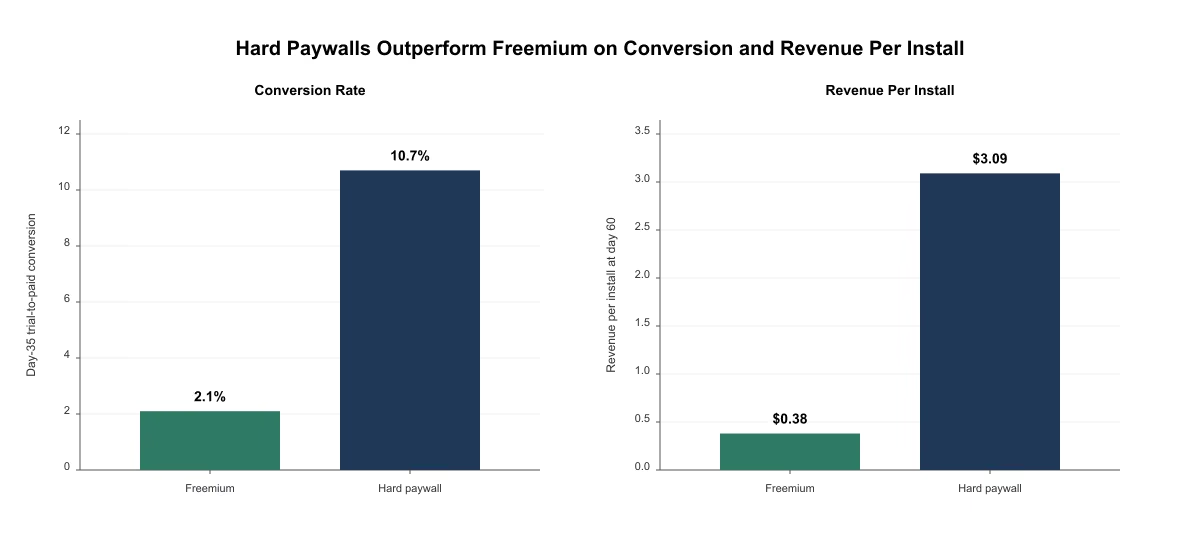
Source: RevenueCat, State of Subscription Apps 2026 (115,000 apps, $16B+ tracked revenue).
Freemium wins on volume and long-term brand reach; hard paywalls win on near-term revenue per install. Choose based on which one your runway can afford.
When to use it: Large addressable markets where most users will never pay, but the ones who do are worth funding the rest. Works best when the free tier has genuine standalone value, not a crippled demo.
2. Subscriptions
What it is: Recurring payments, typically monthly or annual, in exchange for ongoing access or continuously updated value. This is the dominant model for apps people use regularly rather than once.
Real example: In 2025, Strava, the popular fitness app, announced that it was approaching $500 million in annual recurring revenue (ARR), from a freemium-to-subscription model priced at $79.99/year or $11.99/month. The free tier covers GPS tracking and social features; Strava Summit subscribers get advanced analytics, route planning, and segment leaderboards.
The commission math matters here. Apple and Google both take a cut of subscription revenue processed through in-app purchases: 30% standard, dropping to 15% for developers enrolled in the Small Business Program (under $1 million in annual proceeds).
The rate also drops to 15% automatically on Apple subscriptions once a user has been subscribed for a full year.
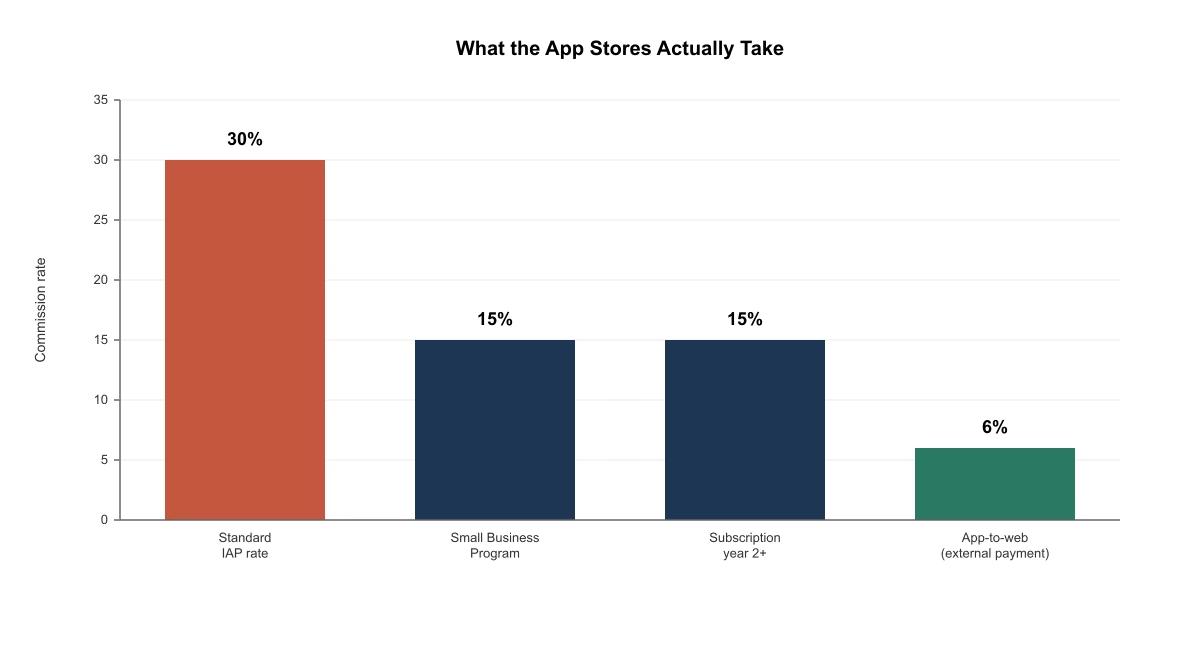
Standard commission vs. reduced rates. Google Play mirrors Apple's structure closely as of 2026.
If you're building a subscription product and evaluating whether to structure it more like a SaaS business than a consumer app, our guide on how to start a SaaS business covers pricing and packaging in more depth.
When to use it: apps that deliver continuous, ongoing value. Trial length matters more than most founders assume: RevenueCat's data shows trials under 4 days convert at just 25.5%, while longer trials convert roughly 70% better.
Subscriptions carry more setup than the other models here. Our how to build a subscription business guide covers all eight steps, from pricing with survey data to the failed-payment recovery that causes about a third of all churn.
3. One-Time / Paid Upfront Purchase
What it is: A single purchase price, no recurring billing. Rare in consumer mobile today, but still the right call for a specific kind of app.
Real example: RadarScope, the specialized weather-radar app, charges a one-time $9.99 fee and has more than 100,000 downloads on Google Play. Crestron's smart-home app targeted a small, affluent customer base with a one-time $99 price, illustrating how a specialized app can support premium pricing.
Why it works here specifically: Both apps score high on barrier to entry and low on competition. Nobody can casually clone 12 years of proprietary radar data integration or a hardware-tied smart-home protocol, so there's no race to the bottom on price.
The real risk: a one-time purchase means no recurring revenue to fund ongoing maintenance. A single upfront payment has to cover not only development but also years of updates, support, and fixes. If the app requires ongoing maintenance, you need to plan for funding that work.
4. In-App Purchases (Consumables and Virtual Goods)
What it is: Discrete purchases inside the app: virtual currency, extra lives, power-ups, cosmetic items, or unlockable content. The core app is usually free; revenue comes from repeat, smaller-ticket purchases rather than one large payment.
Where it dominates: Mobile games, particularly hybrid-casual apps, that combine simple gameplay with deeper progression and monetization systems. The free-to-play base is funded by a small percentage of players making frequent small purchases.
The category is increasingly blended with advertising. Tenjin's 2026 ad monetization report shows that more hybrid-casual games are combining rewarded ads with in-app purchases.
When to use it: This model works best when users return frequently and have recurring reasons to buy more, such as currency, content, or extra capabilities. It is a poor fit for apps that users open only occasionally, because there are fewer opportunities to make repeat purchases.
5. In-App Advertising
What it is: Revenue from ad networks showing banners, interstitials, native ads, or rewarded video inside your app. You get paid per impression or per completed view, typically measured in eCPM, revenue per 1,000 impressions.
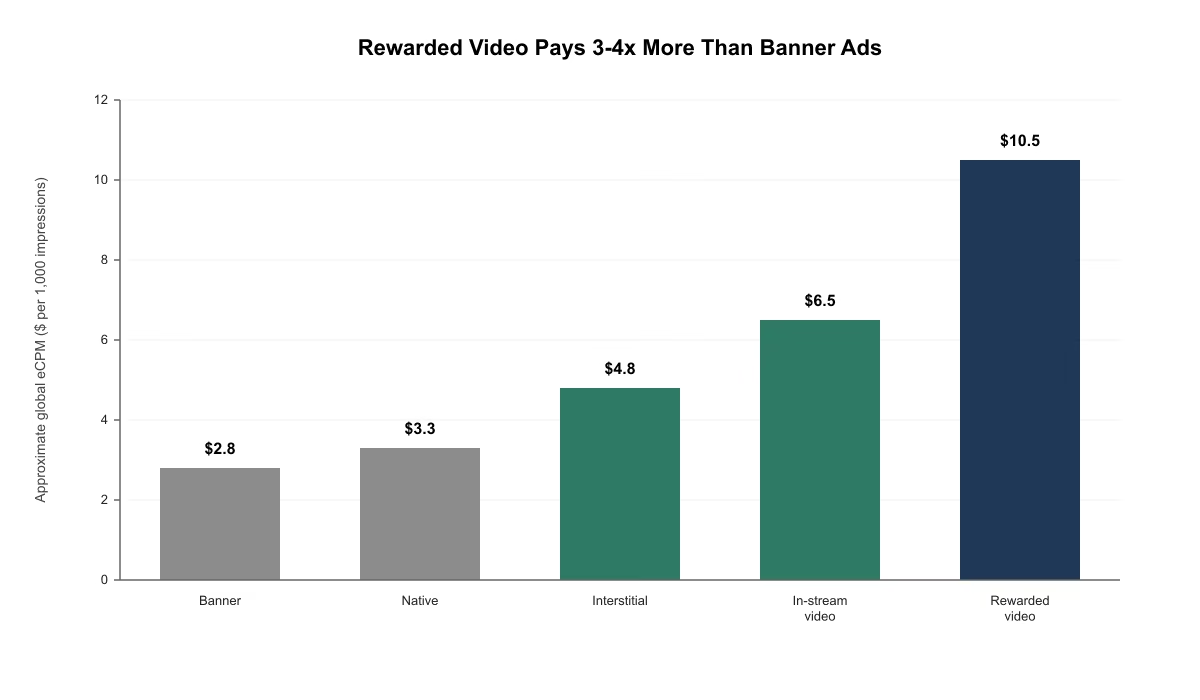
Approximate global eCPM benchmarks by ad format, based on Business of Apps and Liftoff 2026 industry data.
Real example: Duolingo runs a hybrid model where advertising sits alongside subscriptions and its English proficiency test; ads accounted for roughly 9% of total revenue in the years before subscriptions scaled past 75% of the mix.
It's rarely a primary model on its own anymore, but it's a way to monetize the users who will never subscribe.
When to use it: Best suited to apps with large audiences and relatively low willingness to pay, where the free tier attracts many users who are unlikely to subscribe. Rewarded video is particularly effective because users voluntarily watch an ad in exchange for a specific benefit, often producing completion rates above 95%, far higher than other ad formats.
No model earns anything until something is live. Our how to build an app without coding guide covers the seven steps to a tested first version, in an afternoon.
6. Win-Back and Partner Offers
What it is: Instead of losing a user when they decline a subscription or cancel, you offer them a free trial of a partner’s product, funded by that partner.
The user gets value for free, the partner gets a qualified customer at a lower acquisition cost, and your app keeps the user engaged rather than losing them entirely.
Real example: Encore’s founder, Michael Gants, discovered this model by accident. He and a Stanford friend initially built Yaw, an AI shopping assistant delivered through a Chrome extension. They tried growing it through TikTok and managed to attract 200,000 followers, but that translated into only about 7,000 users.
In an interview with Steven Young, Gants said he discovered something more interesting while building Yaw: brand-sponsored offers could generate substantial revenue from users without charging those users directly. He said they sometimes generated more than $1 per user per day from free offers from brands such as Disney, Paramount, and Hulu.
That led to the insight behind Encore: the same mechanism could rescue users at the exact moment they reject a subscription paywall. Instead of letting the user disappear, Encore presents a sponsored premium trial. The app gets a subscriber it otherwise would have lost, the user gets the product for free, and the sponsoring brand acquires a potential customer.
Gants believes most app owners should treat the “subscription decline” moment as a negotiation, suggesting that app owners have the same instinct: “This person does like your product. They want to use it. If they're walking away, there's some sort of deal you can strike."
How it works mechanically: When a user hits the cancel or decline button, rather than letting them go, the app offers a free trial of a partner service (Hulu, Disney+, ClassPass, or DoorDash) in exchange for staying subscribed to the original app for an extended period, commonly three months.
The partner brand pays for that free trial because it's cheaper than paid acquisition, and it's happening at a moment when the person is primed to try something new.
Two separate revenue streams stack here. The first is the payment from the partner brand for delivering a qualified trial user.
The second, and the one Gants calls more important long-term, is that a meaningful share of users who take the extended trial end up resubscribing to the original app later, and the app keeps 100% of that resubscription revenue.
Where to trigger it: The highest-converting moments are the ones where a user has explicitly signaled intent to leave. That includes tapping out of a paywall, canceling a trial, canceling in account settings, and even the hard-press "delete app" gesture.
A push notification sent the moment someone cancels in settings, rather than a generic email two days later, captures people while the app is still "on their mind," which meaningfully outperforms standard push open rates.
When to use it: Any subscription or freemium app with meaningful cancellation volume. It requires zero upfront cost to integrate and doesn't affect the experience of paying users at all, since these offers only appear to people who have already decided to leave.
7. Web and App-to-Web Monetization
What it is: Moving the purchase outside Apple and Google’s in-app billing to a web-based checkout. This can happen through web-to-app, where users discover and subscribe on the web before using the app, or app-to-web, where existing app users are directed to a website to complete their purchase.
Why it matters: Standard in-app commissions can reach 30%; a well-executed app-to-web payment flow can reduce payment costs to roughly 6%, according to Paddle’s 2026 web-monetization data.
That's before counting other advantages: full billing flexibility, faster payouts, better attribution, and freedom to run pricing experiments app stores don't allow
The cautionary tale: Cal AI, a calorie-tracking app built by two high schoolers that scaled to $50 million ARR and 15 million downloads, was briefly pulled from the App Store in April 2026.
The issue wasn't that it used external payments, which Apple now permits in the US. It was that Cal AI removed the in-app purchase option entirely rather than offering it alongside the web checkout, and used a billing design that obscured the true subscription cost.
Apple requires both payment paths to coexist, and the app was reinstated within days once that was fixed.
If you're considering building a dedicated website to support subscription sales, our guide to website builders for subscription services covers the strongest options to consider.
A five-step rollout, based on how the strongest app-to-web programs are run:
- Start with one path. Pick a single, measurable checkout flow rather than rolling out web payments everywhere at once
- Nail the handoff. The move from app to web and the return to the app after payment should feel fast and integrated rather than disruptive.
- Treat speed as the core KPI. Faster page loads can meaningfully improve conversion, so treat checkout performance as a key optimization metric.
- Surface Apple Pay first. Mobile users are less likely to complete checkout when they have to enter card details manually, so offer options such as Apple Pay whenever available.
- Resubmit the app for review. Before launching a new payment flow, verify Apple's and Google's current requirements and, where appropriate, obtain review or approval rather than assuming the flow is permitted.
The caveat: results are volatile. This is not a set-and-forget channel; it demands continuous experimentation, the same way any paywall or pricing test does.
8. Marketplace Commission
What it is: Your app connects two sides of a transaction, buyers and sellers, riders and drivers, guests and hosts, and takes a percentage cut of every transaction that flows through it. The app itself is typically free to download and use; revenue comes entirely from transaction volume.
Real examples: Airbnb charges hosts a 15.5% host-only service fee on the total booking, deducted directly from the payout. Etsy charges sellers a 6.5% transaction fee on the total sale price including shipping, plus a flat $0.20 listing fee and separate payment processing costs.
When to use it: Genuine two-sided marketplaces where your platform is doing matching, trust, or logistics work between two parties who wouldn't easily find each other otherwise.
The commission has to be justified by the value of that matching. If it becomes too expensive relative to that value, sellers or providers have an incentive to bypass the platform and deal directly with customers.
9. Data Licensing
What it is: Aggregating the usage or behavioral data your app collects and selling access to advertisers, researchers, or other businesses that value insight into user behavior at scale.
Real example, with an important caveat: Family-safety app Life360 generated an estimated $16 million, close to 20% of its 2020 revenue, from selling aggregated location data to data brokers and partners like Arity.
This example shows both the potential and the risk of data licensing. Life360 faced investigative reporting, a class-action lawsuit, and significant reputational criticism over its data-sharing practices, even after reducing the number of partners it sold data to.
If you pursue this model, disclosure needs to be explicit and specific, not buried in a privacy policy update. Sensitive data such as children's location and health information should be excluded from monetization unless applicable law permits it and users have provided the legally required, informed consent.
Which Revenue Model Should You Choose?
Run your app through the four factors from earlier: persona, market size, barrier to entry, and price elasticity. That combination points you toward a reliable starting model.
- Large market, low barrier to entry, mixed willingness to pay: Start with freemium, and expect roughly 2% baseline conversion until your onboarding and value proposition are strong enough to beat it
- Ongoing, repeated value delivered continuously: Subscriptions, with a trial length of at least a week, since short trials convert meaningfully worse
- Small, passionate, hard-to-compete-with niche: One-time purchase, as long as you can fund maintenance without recurring revenue
- High download volume, low intent to pay: In-app advertising, layered underneath whichever paid model you choose, never as a replacement for it
- Any app with cancellation or decline volume: Add win-back partner offers regardless of your primary model, since it only ever activates on users who were already leaving
Most successful apps don't run one model, they stack two or three. Duolingo runs freemium, advertising, and subscriptions simultaneously. Strava runs freemium and subscriptions.
As Michael Gants put it discussing what to do with an engaged but non-paying user: "If you have users, you have options. If the user has gone and is completely inactive, what are you going to do with that?" The mistake isn't picking the wrong single model, it's assuming you only get to pick one.
How to Validate Your Monetization Model Before You Build
Don't commit to a full pricing and packaging strategy before you have usage data. A basic, testable version first tells you far more than any framework.
- Ship a minimal version with one clear paid tier. Our guide on how to build an MVP app covers what belongs in that first version versus what can wait
- Track your day-35 trial-to-paid conversion, and benchmark it against your specific category, since the RevenueCat data shows this ranges from roughly 22% for photo and video apps up to over 40% for travel and health & fitness
- Test paywall placement and hard vs. soft paywall before scaling spend. The 5x conversion gap between freemium and hard paywalls only matters if you run the comparison on your own audience
- Instrument your cancellation and decline moments from day one, even if you're not running win-back offers yet, so you have the data to add them later without rebuilding your event tracking
- Price with the platform commission baked in. A subscription that looks profitable at the listed price can become much less attractive after Apple or Google takes its share. Calculate your unit economics based on the net revenue you actually receive, not the headline price.
Common Mistakes to Avoid
Picking a model before understanding the persona. The founders who succeed with a $99 one-time price and the founders who succeed with a $0.99 subscription both did the work of understanding who they were selling to first. The price came second.
Treating cancellation as the end of the relationship. Most apps let users cancel in settings and send nothing, no push, no offer, no attempt to understand why. That's the single highest-leverage moment in the entire user lifecycle, and it's usually left unmanaged.
Building a one-time-purchase app with no maintenance budget. A single upfront payment has to fund years of updates. Apps that stop maintaining after the first sale eventually crash, and when they crash, so does the reputation behind them.
Obscuring the true cost of a subscription. Cal AI’s brief App Store removal was partly due to deceptive billing design: Apple said the app emphasized a calculated weekly price over the actual amount users would be charged and obscured automatic-renewal information. Transparent pricing helps avoid confusing customers and potential platform enforcement.
Ignoring the commission math until after you've priced everything. A $9.99/month subscription nets roughly $7 to $8.50 depending on your platform program status and subscriber tenure, not $9.99. Price accordingly from day one.
How Emergent Makes It Easier to Build and Monetize Your App
Whichever model you land on, the build itself shouldn't be the bottleneck. Emergent's multi-agent system builds full-stack mobile apps, React Native and Expo, deployable directly to the App Store and Google Play, from a conversational description of what you want to build.
- Native mobile builds: Describe the app and Emergent's agents handle the UI, backend, and database, with a path straight to app store deployment.
- Built-in payment integrations: Connect Stripe directly to power subscriptions, one-time purchases, or in-app transactions without hand-rolling billing infrastructure
- Fast iteration on paywalls and pricing: Since the whole point of this guide is that you need to test your model, not just pick one, Emergent's speed to a working build means you can run those tests rather than guessing
- No engineering team required: Solo founders and small teams can ship, test, and iterate on a monetization strategy without hiring the mobile developers a full test-and-learn cycle would normally require
If you're still scoping what a build like this costs before committing, our breakdown of how much it costs to create an app walks through the numbers.
Most AI app builders stop at prototypes. Emergent creates production-ready apps you can actually launch.
- Production-ready apps
- Web & mobile apps
- Deploy in minutes