Any of these builders can spin up a good-looking app from a single prompt. The real test comes later: paying customers, a second user role, a layout the tool didn't plan for. That's where Base44, Bubble, and Emergent pull apart.
The Base44 vs Bubble debate usually comes down to speed versus control, and Emergent adds a third path built around vibe coding. I write about AI app builders for a living, and for this comparison, I went through all three platforms' live pricing pages, official docs, and dozens of user reviews side by side.
By the end, you'll know which of the three fits your project, what each one costs at current prices, and where each one will slow you down.
Base44 vs Bubble vs Emergent: What's the Difference?
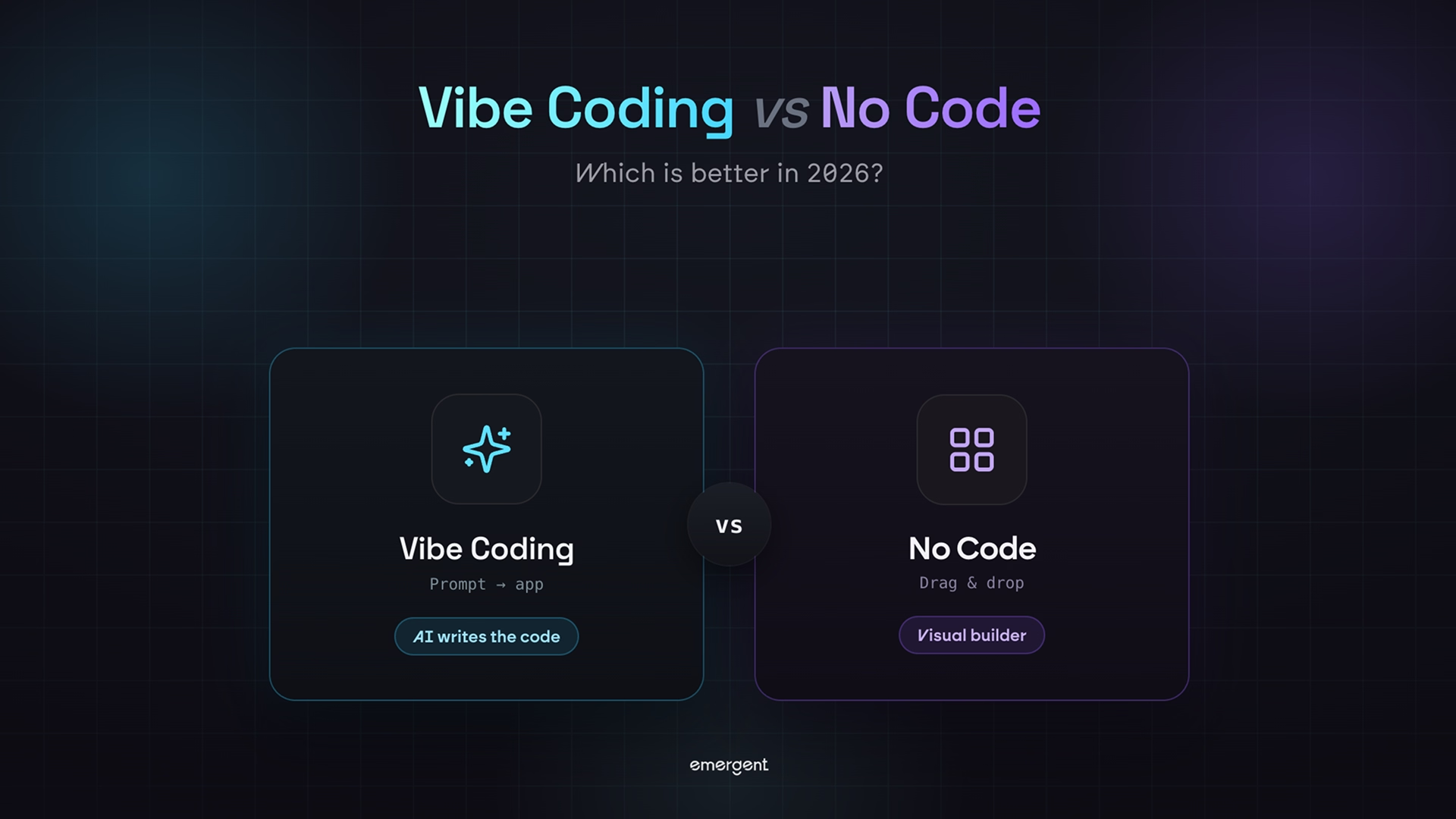
The difference between Base44, Bubble, and Emergent is how much of the app each platform builds for you. Base44 and Emergent generate the app from a plain-English prompt, while Bubble has you assemble every page and workflow yourself in a visual editor. That split matters more than any single feature, and it's the core of the vibe coding vs no-code divide.
The short version:
- Base44 is an AI app builder that turns a short prompt into an app, with the screens, sign-in, and data storage set up for you.
- Bubble is a no-code platform where you drag elements onto pages and wire up the logic by hand, trading speed for control.
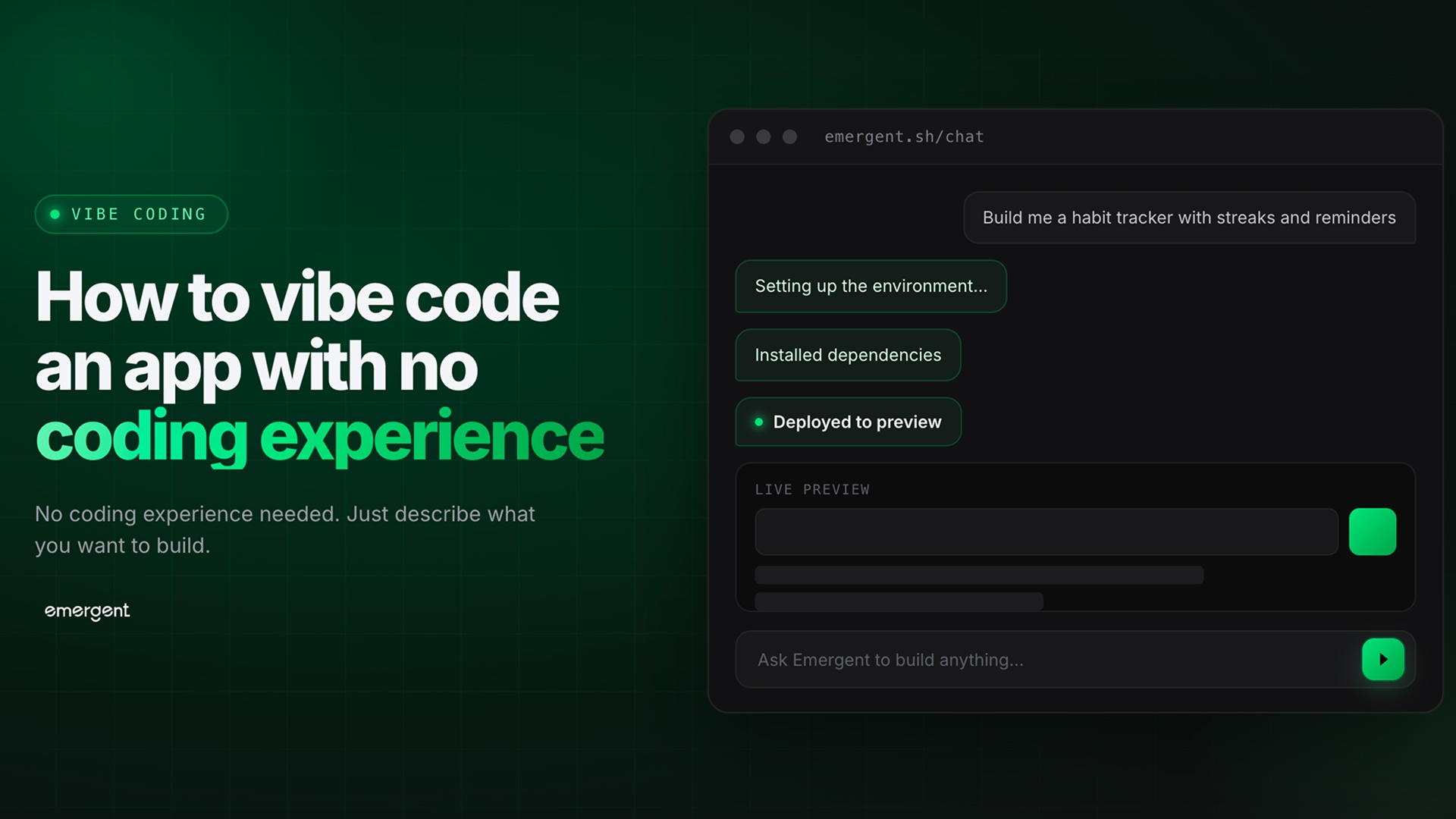
- Emergent is an AI app-building platform built for vibe coding, where AI agents turn a description into a complete app that can sign users in, take payments, and serve customers.
Choose Base44 if: You want the cheapest, fastest way to get a simple internal tool or MVP in front of people.
Choose Bubble if: You want to control every pixel and workflow yourself, and don't mind weeks of learning.
Choose Emergent if: You're building software that a business will run on and you want to describe it instead of assembling it.
Meet Base44: Features & Highlights
Base44 is an AI app builder, acquired by Wix in June 2025, that generates an app from a conversation. You describe what you need, and it sets up the pages, the sign-in flow, and the place your data lives, then hosts everything for you. A chat panel sits next to the preview, so you make changes by asking for them.
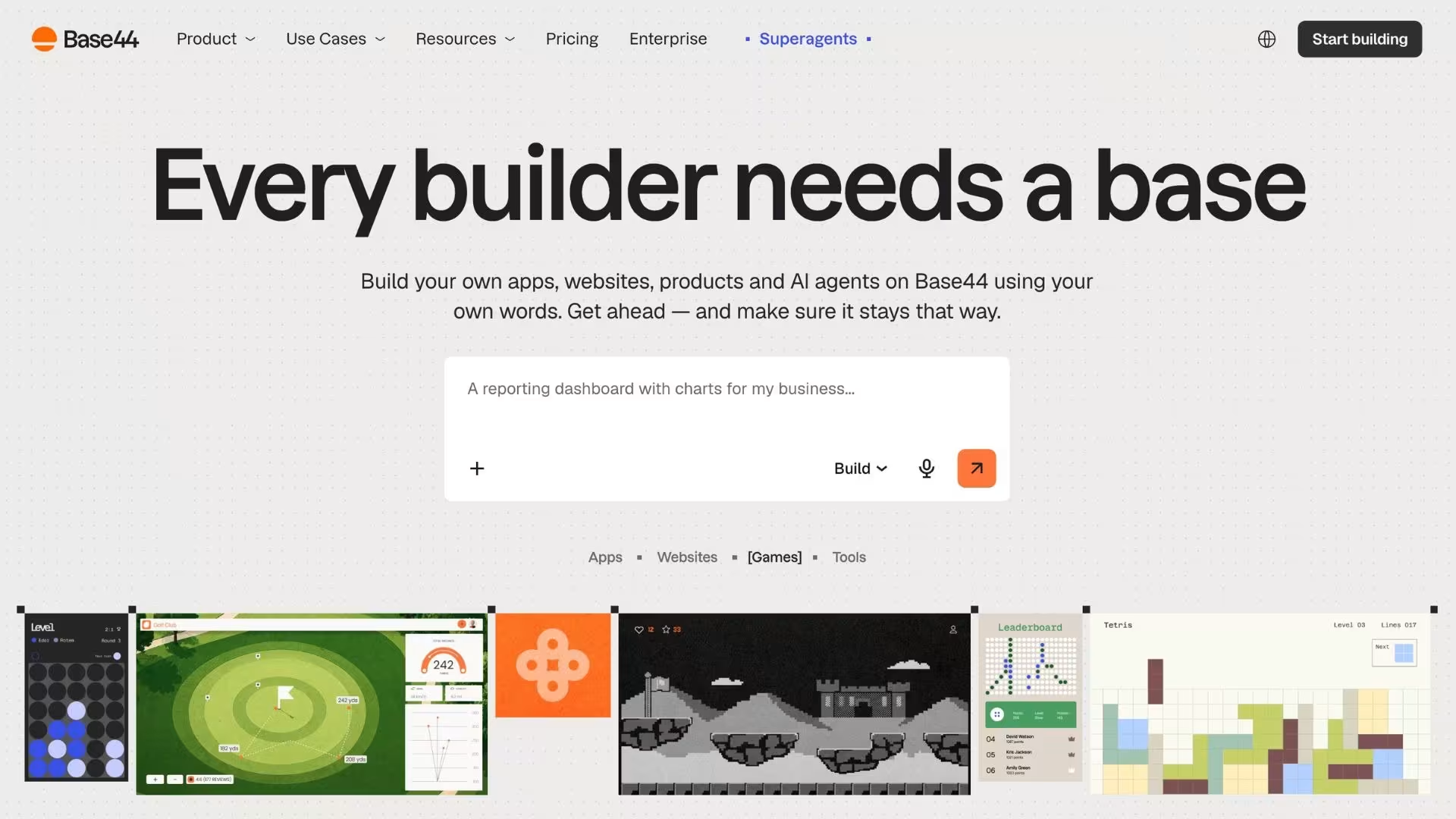
The platform runs on credits. Every AI request costs message credits, and connected services like payments or email spend integration credits, so heavy building sessions draw down your monthly allowance. Per Base44's docs, GitHub two-way sync, which puts the full source code in a repository you own, requires the Builder plan or higher.
Base44 fits founders who want an MVP this week. Where it strains is depth. Heavily customized layouts and layered logic, like multi-role permissions or unusual payment flows, tend to take repeated prompting to get right.
Read More: Base44 Pricing: How Much It Costs in 2026 (My Honest Take)
Meet Bubble: Features & Highlights
Bubble is the veteran of this matchup, a no-code platform that has been letting people build web apps without writing code since before AI builders existed. You lay out pages in a drag-and-drop editor, define how your data is structured, and build visual workflows that decide what happens when someone clicks a button.
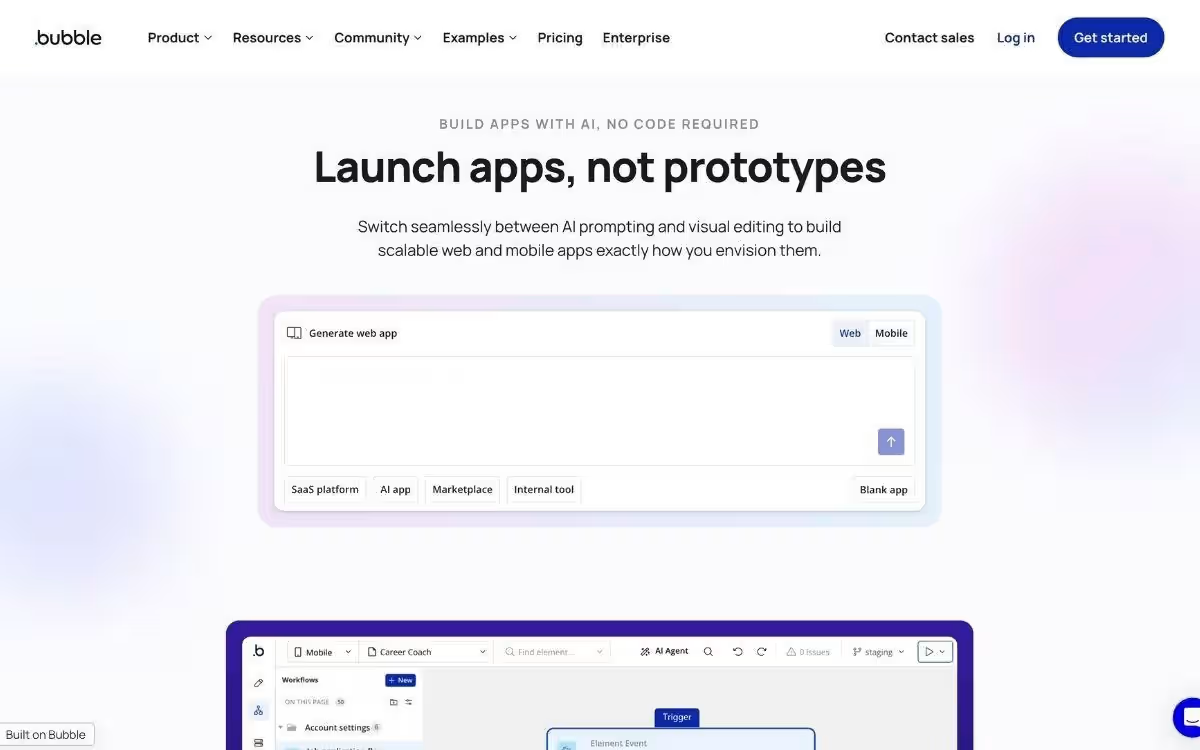
That manual approach gives you deep control, but it costs you time and a real learning curve. You get pixel-level design control, a plugin marketplace stocked with community add-ons, and the API Connector, a tool for hooking your app into outside services. In exchange, you learn Bubble's way of thinking about pages, workflows, and privacy rules before anything works.
Bubble did add an AI generator, and No Code MBA's hands-on test clocked it at five to seven minutes for a first MVP. After that first pass, though, you're back to building manually.
One limit to know before you commit. Per Bubble's own documentation, apps run only on Bubble's platform, and there's no way to export your app as code you could host somewhere else.
Bubble rewards the time you put into learning it, but our 10 best Bubble alternatives guide covers the tools that ask for less of it.
Meet Emergent: Features & Highlights
Emergent is an AI app-building platform built for vibe coding. You describe what you want in a sentence or two, and a coordinated system of specialized agents handles the build. Some shape the screens people see, others wire up the logic and connections to tools like Stripe, and testing agents run end-to-end checks and rewrite anything that breaks.
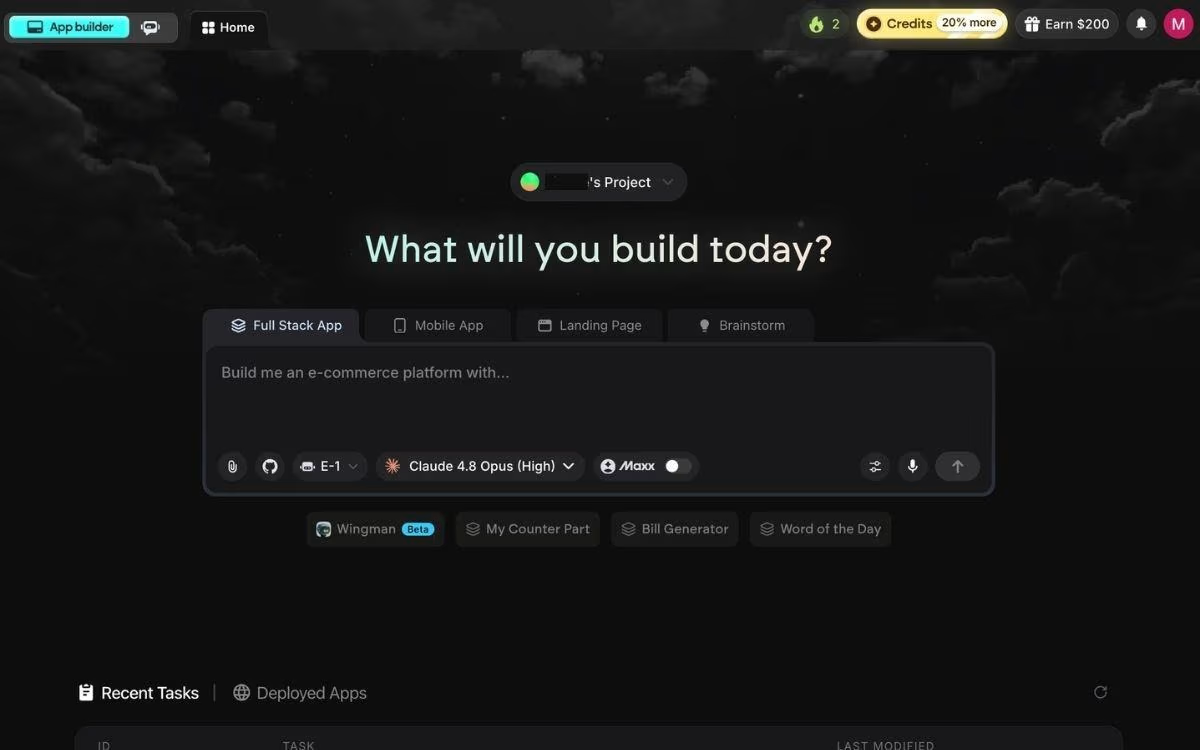
The agents start by asking clarifying questions, then build, test, and revise as you give feedback. When you're happy, you click the Deploy button, and after roughly 10 to 15 minutes, the app is live on an emergent.host web address. For a proper address, you can buy a custom domain through Emergent's built-in IONOS integration or connect a domain you already own.
Ownership is the other differentiator. You own the code your app runs on, and from the Standard plan up, you can sync each build to a GitHub repository under your account, so a developer can pick it up later, or you can move it to hosting you control.
Pro-plan builders also get Maxx mode, which reasons through more complex logic at a higher credit cost. Credits stretch further on a simple page than on a full app, so bigger builds draw down your allowance faster.
Base44 vs Bubble vs Emergent: At a Glance
How they compare at a glance:
| Feature | Base44 | Bubble | Emergent |
|---|---|---|---|
| Approach | AI prompt to app | Visual drag-and-drop | AI agents, vibe coding |
| Best for | Fast MVPs, internal tools | Pixel-level custom apps | Apps that run a business |
| Starting price | $20/month ($16/month billed annually) | $32/month ($29/month billed annually) | $20/month ($17/month billed annually) |
| Free plan | 25 message credits/month | Development only | 10 credits/month |
| Code export | GitHub sync on Builder+ | Not available | Yes, GitHub sync on Standard+ |
| Main weakness | Struggles with layered logic | Steep learning curve | Credits go fast on big builds |
Pricing pulled from each vendor's official pricing page in July 2026; plans change, so confirm before you buy.
Feature-by-Feature Comparison
Six areas separate these platforms in practice, and each ends with a clear call or an even split.
Speed to a Working App
Speed decides whether you validate an idea this week or this quarter, and it's the widest difference among the three.
- Base44: A single prompt produces screens, sign-in, and data storage in minutes, and the chat panel makes revisions quick, which adds up to the fastest first draft in the category. The catch is that the first version usually needs cleanup before you put it in front of users.
- Bubble: The slowest start by design. Its AI generator hands you a decent first draft, but everything after that is manual work in the editor, and building a complete app means learning workflows, data types, and privacy rules first.
- Emergent: Prompt-based like Base44, with a different emphasis. The clarifying questions and automated testing add minutes up front and save hours of fixing later, and one Deploy click puts the app live in about 10 to 15 minutes.
Winner: Tie between Base44 and Emergent. Base44 gets to a first draft faster; Emergent gets to a version you'd show a customer faster.
Ease of Use for Beginners
If you've never built software, the learning curve is the whole ballgame.
- Base44: Describing your app in a chat is as close to zero learning curve as this category gets, and the side-by-side preview keeps you oriented, which makes it the gentlest on-ramp of the three.
- Bubble: Bubble is no-code, but it still takes weeks to learn. Before your first app, you'll need to understand data types, repeating groups, custom states, and workflows, which is why so many founders hire Bubble specialists.
- Emergent: Also prompt-first and friendly to non-coders, though it asks more questions and offers more depth, which gives a beginner slightly more to take in than Base44's stripped-back chat.
Winner: Base44. It has the shortest distance between "I have an idea" and "I'm looking at it on screen."
Design and Workflow Control
Some apps need to look and behave exactly one way, and that's where manual control earns its keep.
- Base44: Clean default screens, limited fine-tuning. Getting an exact layout means re-prompting until the AI lands on it, which can take several tries.
- Bubble: The deepest control of the three. You place elements to the pixel, set custom breakpoints, and define every condition in a workflow, which is why two-sided marketplaces with unusual rules still get built on it.
- Emergent: Stronger than Base44 because the code is yours to open and edit directly, so you (or a developer) can change anything by hand. It's a different kind of control than Bubble's visual canvas.
Winner: Bubble. For pure design precision without touching code, nothing here matches its editor.
Code Ownership and Export
If you outgrow the platform, each of the three gives you a very different way out.
- Base44: You can take your code with you, but only after you pay to unlock it. GitHub two-way sync puts the source code in your own repository, but it unlocks on the Builder plan at $50/month ($40/month billed annually) or higher.
- Bubble: This is where Bubble is weakest: your app's logic lives on Bubble's engine and can't leave, so moving away means rebuilding from scratch. You can export your data, but the app itself stays.
- Emergent: Ownership is the default posture. The code is yours, GitHub sync is included from the $20/month Standard plan, and you can export the project and run it on any hosting you choose.
Winner: Emergent. It combines the lowest-priced GitHub access with a clear path to taking your code elsewhere, and there's no lock-in question hanging over your app.
Pricing
Sticker price and long-run cost diverge on all three platforms, so look at the model behind the first number. If you're budgeting a project, this guide on how much it costs to create an app puts these subscriptions in context against hiring.
- Base44: The lowest-priced entry point. Starter runs $20/month ($16/month billed annually) for 100 message credits, then Builder at $50/month ($40/month billed annually), Pro at $100/month ($80/month billed annually), and Elite at $200/month ($160/month billed annually).
- Bubble: Priced on workload units, Bubble's measure of how much server work your app performs. Web plans start at $32/month ($29/month billed annually) for Starter, then $134/month ($119/month billed annually) for Growth, and $399/month ($349/month billed annually) for Team.
- Emergent: Flat plans on a credit system. Standard is $20/month ($17/month billed annually) for 100 credits, and Pro is $200/month ($167/month billed annually) for 750 credits plus Maxx mode. Credits vary with build complexity, and you can buy extras when a project runs long.
Winner: Base44, by a nose. Its $20/month entry is the cheapest paid door into the category, though with annual billing, Emergent's Standard plan costs only $1 more per month and includes GitHub sync.
Wondering which Base44 tier you actually need? Our Base44 pricing guide makes the case for Builder, and explains why the two tiers above it can wait.
Payments and Live Users
A working demo is one thing; software that takes real payments and daily traffic is another. This is the dimension buyers most often discover too late.
- Base44: Capable for internal tools and simple portals, and Stripe payments can be added through its built-in connections. Reviewers consistently note that layered logic, like multi-role permissions, needs expert review before you trust it with customers.
- Bubble: Proven at scale when built well. Companies run production software on it, but performance depends heavily on how carefully you structured your workflows, and optimization becomes its own ongoing job.
- Emergent: Built for exactly this. The platform's deepest use cases are operational software like CRMs, booking systems, inventory tools, and client portals, with sign-in and Stripe payments wired in from the prompt and testing agents checking the app before it ships.
Winner: Emergent. When the software has to take payments and hold up under daily use, its testing-and-revision loop is the strongest default of the three.
What Real Users Are Saying
Ratings only tell part of the story. These individual reviews, the good and the bad, come straight from G2 and Trustpilot:
Base44
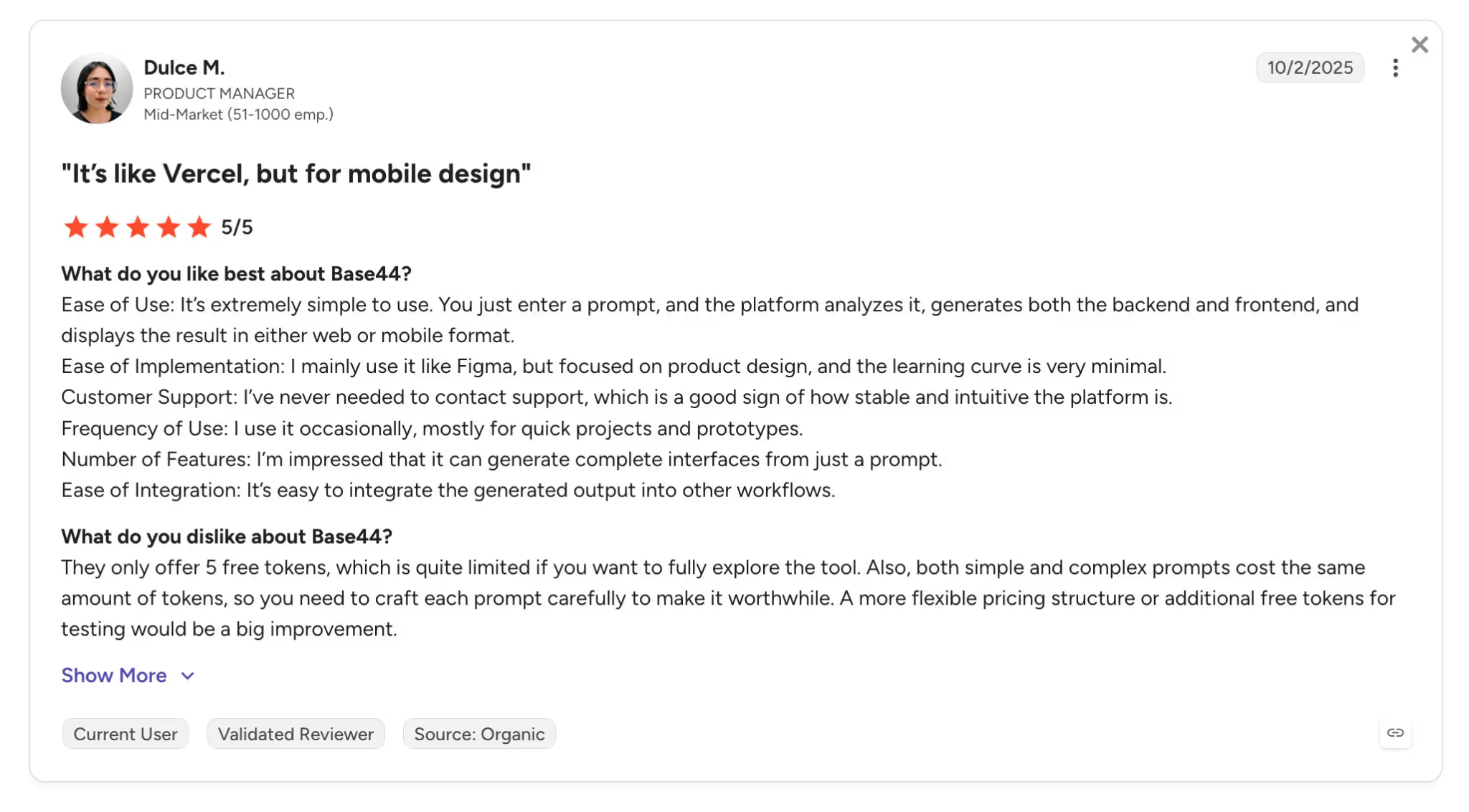
Pros: One five-star G2 reviewer, Dulce M., called it "extremely simple to use," describing how a single prompt produced both the screens and the working logic behind them. That matches its reputation as the easiest starting point in the category.
Base44 reviews split almost perfectly in two depending on what people were building, and our Base44 reviews roundup covers which side you are likely to land on.
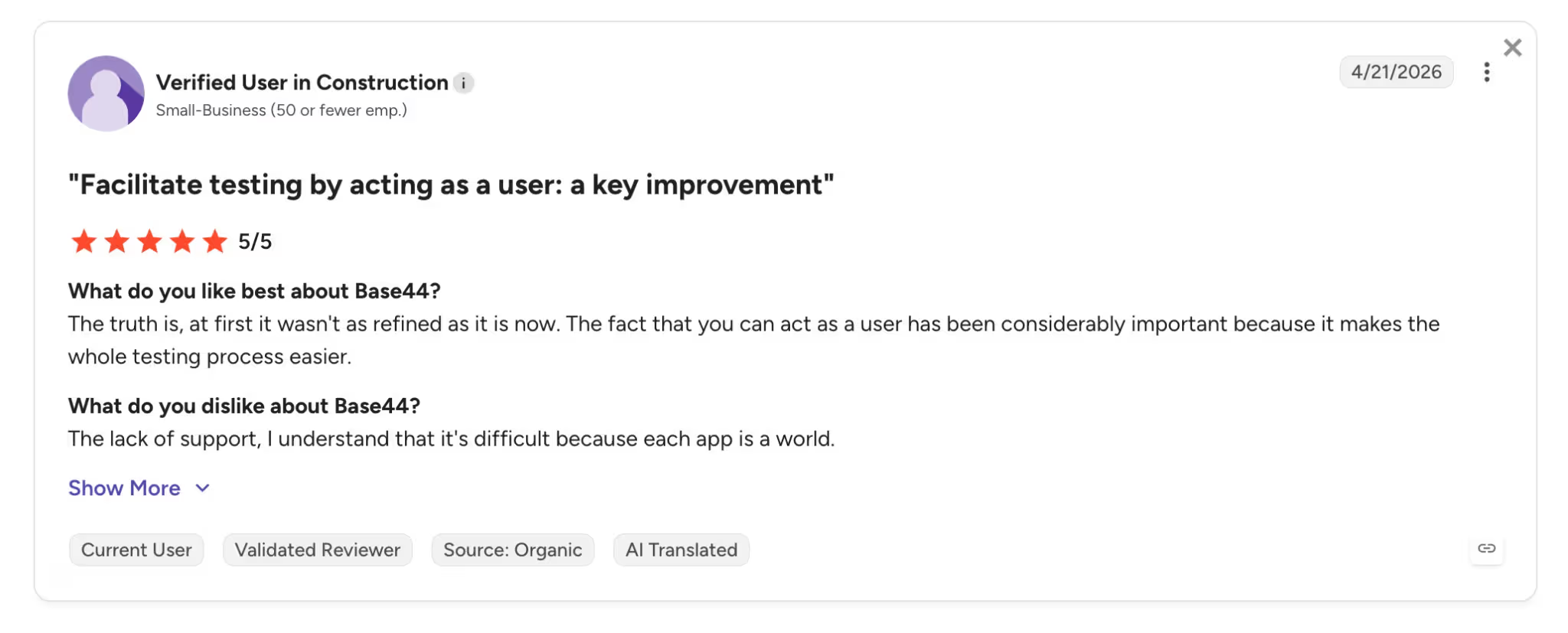
Cons: The same ease has limits. Another G2 reviewer flagged "the lack of support" when builds get complicated, even while rating the product highly overall.
Bubble
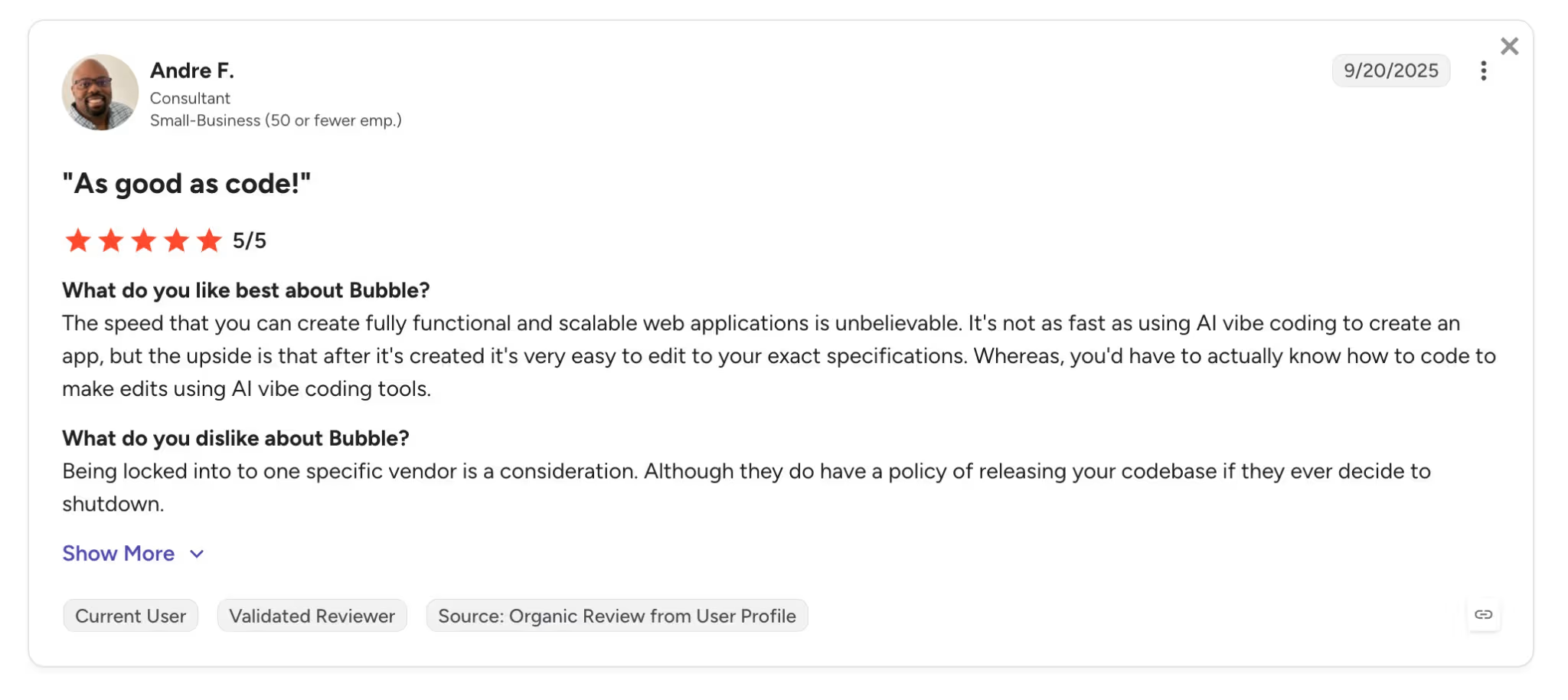
Pros: Andre F. wrote on G2 that "the speed that you can create fully functional and scalable web applications is unbelievable," a common sentiment among builders who've climbed the learning curve.
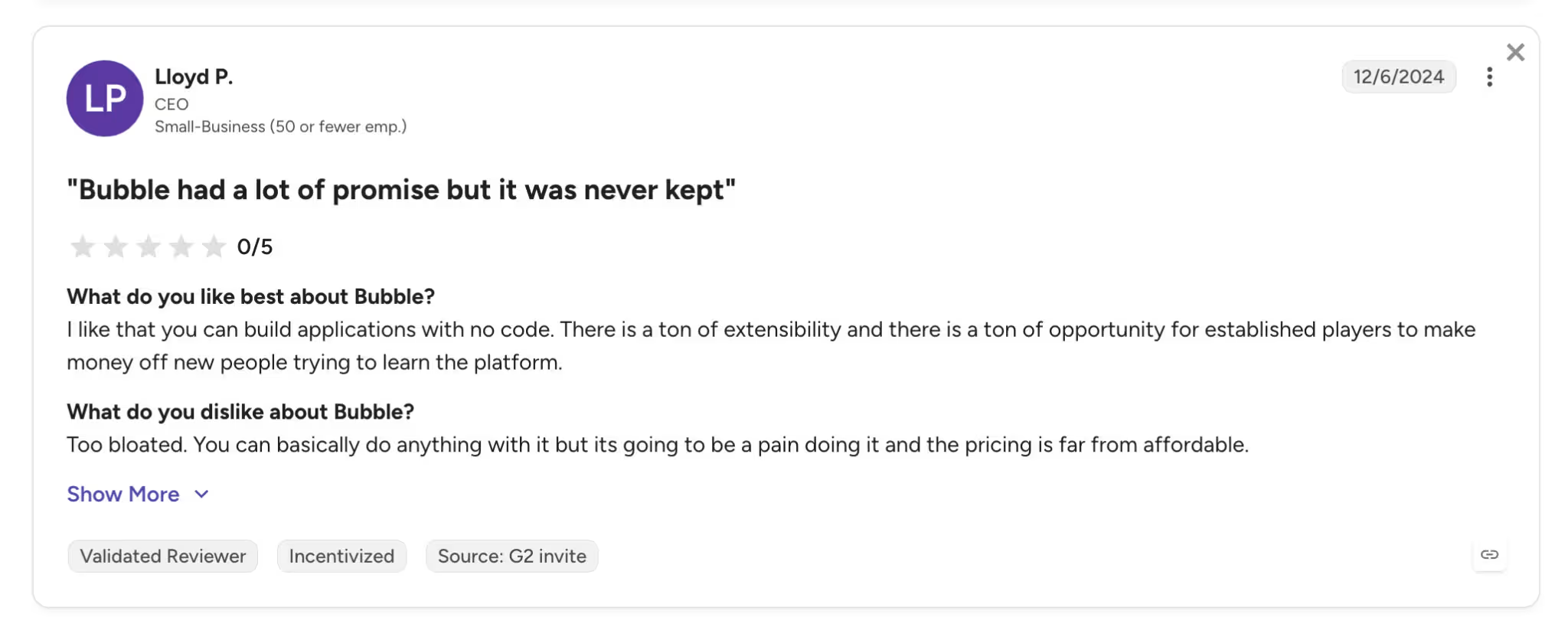
Cons: Lloyd P. was blunter in his G2 review, calling the platform "too bloated" and its pricing far from affordable, a complaint tied to how workload-based billing scales with app activity.
Bubble's AI builder produced a working first pass in six minutes, then handed the rest back, and our Bubble review covers the two weeks it took to finish the job.
Emergent
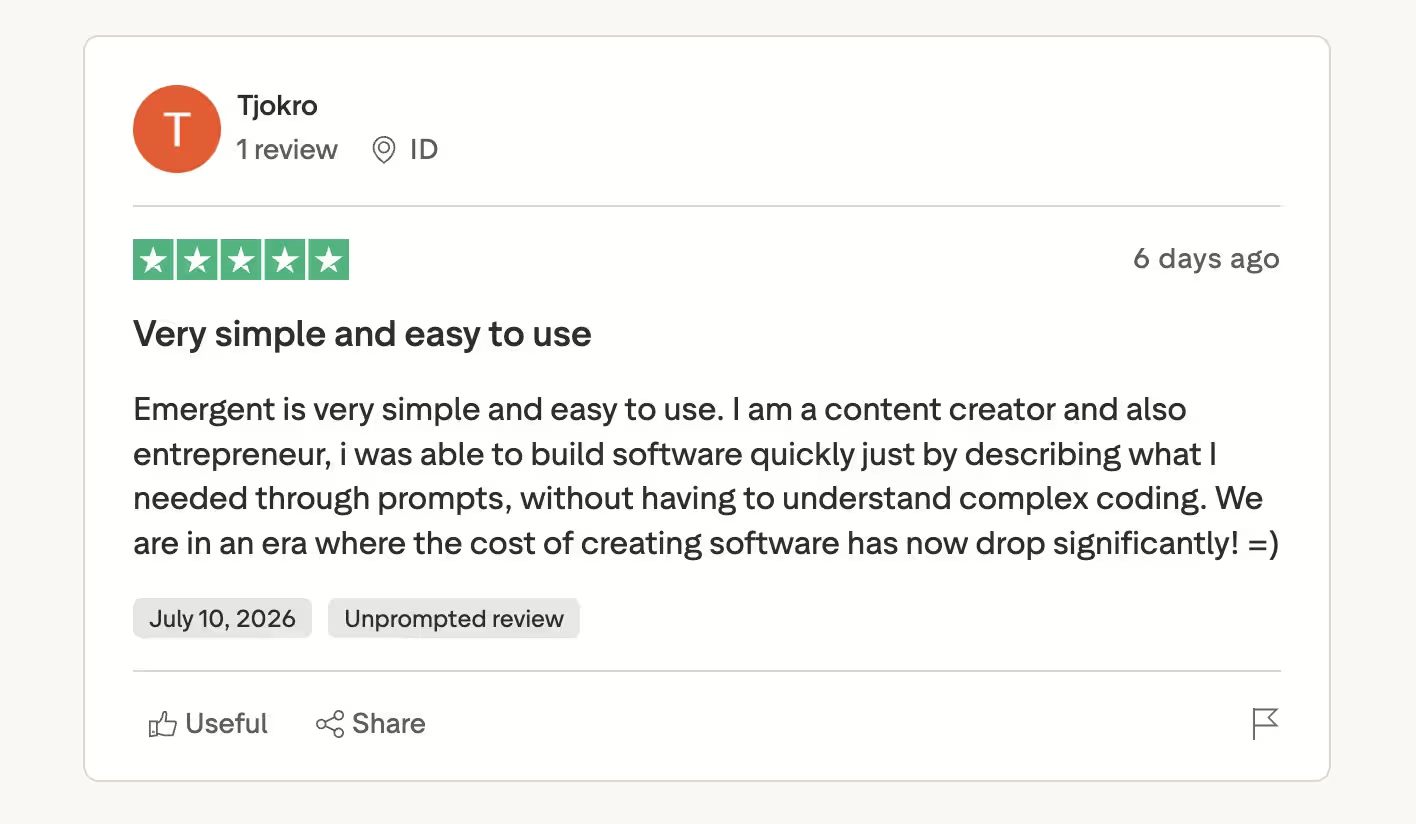
Pros: A five-star Trustpilot review from Tjokro in July 2026, titled "Very simple and easy to use," came from a content creator and entrepreneur who built software from prompts alone, without touching code.
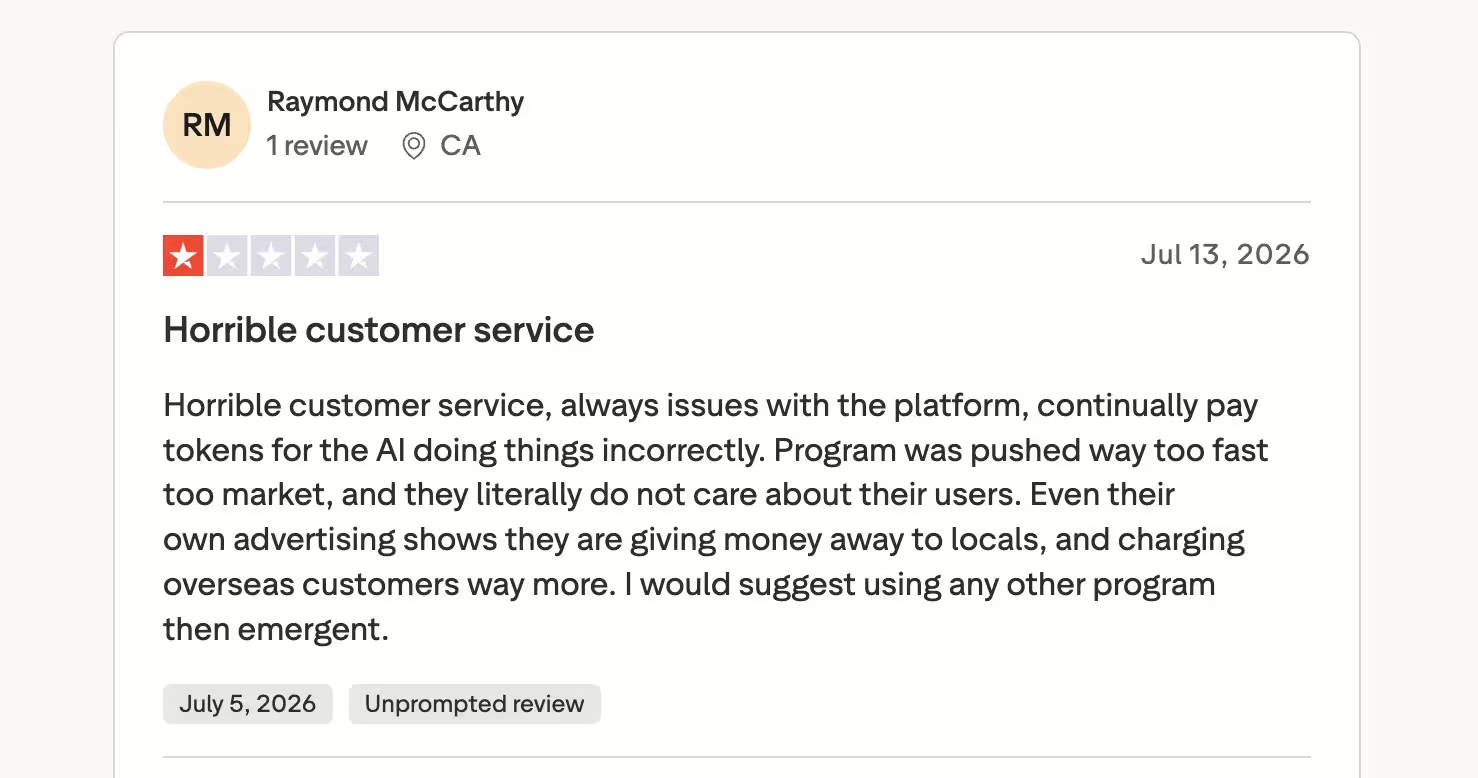
Cons: A one-star Trustpilot reviewer, Raymond M., complained about paying credits when the AI got something wrong, plus slow support. It's a fair warning that misfired prompts still cost you, which is why writing clear prompts matters so much on credit-based platforms.
How to Make Your Choice
Emergent is the strongest overall pick for anyone building software that a business will depend on, because it pairs prompt-based speed with testing, payments, and full code ownership. That said, Base44 is the better buy for a fast, cheap first draft, and Bubble still suits builders who want total control.
Base44 Is Better For:
- Non-technical founders who want an MVP in an afternoon
- Simple internal tools, admin dashboards, and quick validation projects
- Budget-first builders who want the lowest paid entry at $16/month billed annually
Bubble Is Better For:
- Designers and builders who want pixel-level control over every screen
- Marketplaces and portals with unusual rules that need hand-built workflows
- Teams willing to spend weeks learning the editor or hire a Bubble specialist
Emergent Is Better For:
- Business owners replacing spreadsheets with a CRM, booking system, or client portal
- Solo builders launching a product that takes payments from day one
- Anyone who wants to own the code and keep the option to move it elsewhere later
My Verdict
If I had to run a business on one of these three, I'd pick Emergent. The combination of agents that test their own work, payments handled from the prompt, and code I own outright answers the questions that matter after launch, and its $20/month Standard plan undercuts what Bubble charges for far more manual work.
Bubble still earns its place when a design has to be exact, and Base44 is the tool I'd hand someone who has never built anything and wants a result today. A first draft is the easy part, but the platform that carries you past it is the one worth paying for.
Start Your First Build on Emergent
If the comparison points you toward Emergent, this is what you get on day one:
- Go from idea to live app in one sitting: Describe the app, answer a few follow-up questions, and click Deploy to put it on the web in about 10 to 15 minutes.
- Take payments without wiring anything yourself: Mention Stripe checkout in your prompt, and the flow gets built in, so a booking site or storefront can charge customers from launch.
- Own the code from day one: On the Standard plan and up, you can sync each build to a GitHub repository under your account, then export the project and take it wherever you want.
- Skip the surprise rebuild: Because apps aren't locked to the platform, hiring a developer later means handing over a codebase they can pick up the same day.
- Try it before paying: Emergent's free plan includes 10 credits, enough to build a first app and judge it for yourself.
Most AI app builders stop at prototypes. Emergent creates production-ready apps you can actually launch.
- Production-ready apps
- Web & mobile apps
- Deploy in minutes