TL;DR
- Emergent: Best for complex web and mobile products, multi-step workflows, and a clearer path to a developer handoff.
- Base44: Best for getting a polished web app or internal tool live quickly through chat and visual editing.
Emergent is stronger for larger products with more connected workflows or a true mobile version, while Base44 is faster for a simple web app. Emergent asks its agents to take on more of the build; Base44 gives you more step-by-step control.
Emergent vs Base44 looks like a simple choice until your first dashboard needs logins, payments, outside data, mobile delivery, or a developer handoff. Base44 gives you the faster visual route for a straightforward web app, while Emergent gives you more room for a product with deeper logic and a longer life.
I based this on Emergent's and Base44's official pricing, product pages, and docs, plus a real user discussion on Reddit. My recommendation is direct: choose Emergent for a product you expect to expand; choose Base44 for a quick internal tool, portal, or visually guided web app.
Emergent vs Base44: What’s the Difference?
Emergent works from a prompt. When you describe the app you want in plain language, its AI agents build the screens, logic, data storage, integrations, tests, and hosting. It can create web, iOS, and Android apps, and you can sync the generated code to GitHub for a developer to continue the work.
Base44 gives you a working draft that you can edit on screen. Click into the result to adjust the layout, text, and design. It also handles sign-in, stored data, payments, email, analytics, and workflows. For mobile stores, it packages the web app inside a secure wrapper.
Choose Emergent if: You’re building a customer-facing product with connected workflows, custom logic, outside services, or a true cross-platform mobile roadmap.
Choose Base44 if: You need a business app, client portal, tracker, dashboard, or minimum viable product (MVP) that you can shape through prompts and point-and-click edits.
One common comparison claim is now outdated: Base44 is not a front-end-only builder. It has managed data, authentication, backend functions, application programming interface (API) access, integrations, and local development tools.
The real split is: Emergent lets its AI agents build more of the app at once and gives you a clearer route for handing the code to a developer later. Base44 walks you through the build step by step.
Why Emergent and Base44 Look Similar at First
Your first build can look similar in both tools. The difference appears when you add more roles, connected actions, outside services, mobile delivery, or a developer handoff. Emergent asks its agents to handle more of the work, while Base44 keeps you closer to each step.
That difference also appears in the Base44 vs Emergent Reddit thread. The original poster described Base44 as more structured and predictable, while Emergent seemed to generate larger parts of the app at once.
One commenter preferred Base44 for simpler work and Emergent for heavier apps with several outside services and processes. These are individual experiences, but they point to one question: do you want step-by-step control or an agent that takes on more of the build?
Both entry-level plans cost $20/month, but they divide their features differently. Emergent Standard plan includes 100 credits, private hosting, GitHub integration, and web and mobile building. Base44 Starter includes 100 message credits, 2,000 integration credits, unlimited apps, and in-app code edits.
Base44 lets teams work together on lower plans. Emergent saves live co-editing and shared workspaces for its custom Business plan.
Moving the code is another key difference. Emergent can send the full project to GitHub, so a developer can keep working on it or host it somewhere else. Base44 also supports ZIP downloads and GitHub, but the live app still uses Base44’s tools and hosting by default. Moving it to another backend takes extra work.
How I Compared Emergent and Base44
I researched official vendor pages and documentation as the source of truth for pricing, credits, mobile delivery, GitHub workflows, backend services, collaboration, and security. I also used a Reddit discussion to capture recurring perceptions about ease, complexity, and credit use.
I judged each platform on the decisions you will face after the first prompt:
- How quickly you can shape a useful first version.
- How well the platform supports connected logic and outside services.
- Whether the mobile result is a web wrapper or a cross-platform app project.
- What you can take to GitHub or a local development setup.
- Which paid tier provides the features needed for a public product.
- How collaboration and security controls change as your company grows.
Emergent vs Base44: At a Glance
The fastest way to separate the two is by the type of product you plan to ship:
| Category | Emergent | Base44 |
|---|---|---|
| Best For | Complex web and mobile products | Fast web apps and internal tools |
| Build Style | Agent-led, end-to-end | Chat plus visual editing |
| Mobile Path | Expo and React Native | Web app in a native wrapper |
| Visual Editing | Prompt-led refinement | Direct point-and-click edits |
| Code Workflow | GitHub sync and export | Code tab, GitHub, ZIP, and local tools |
| Collaboration | Custom Business plan | Included on paid plans |
| Free Plan | Yes | Yes |
| Starting Paid Plan | $20/month ($17/month billed annually) | $20/month ($16/month billed annually) |
The build, mobile, code, and collaboration rows use current official product and support documentation.
Meet Emergent: Features and Highlights
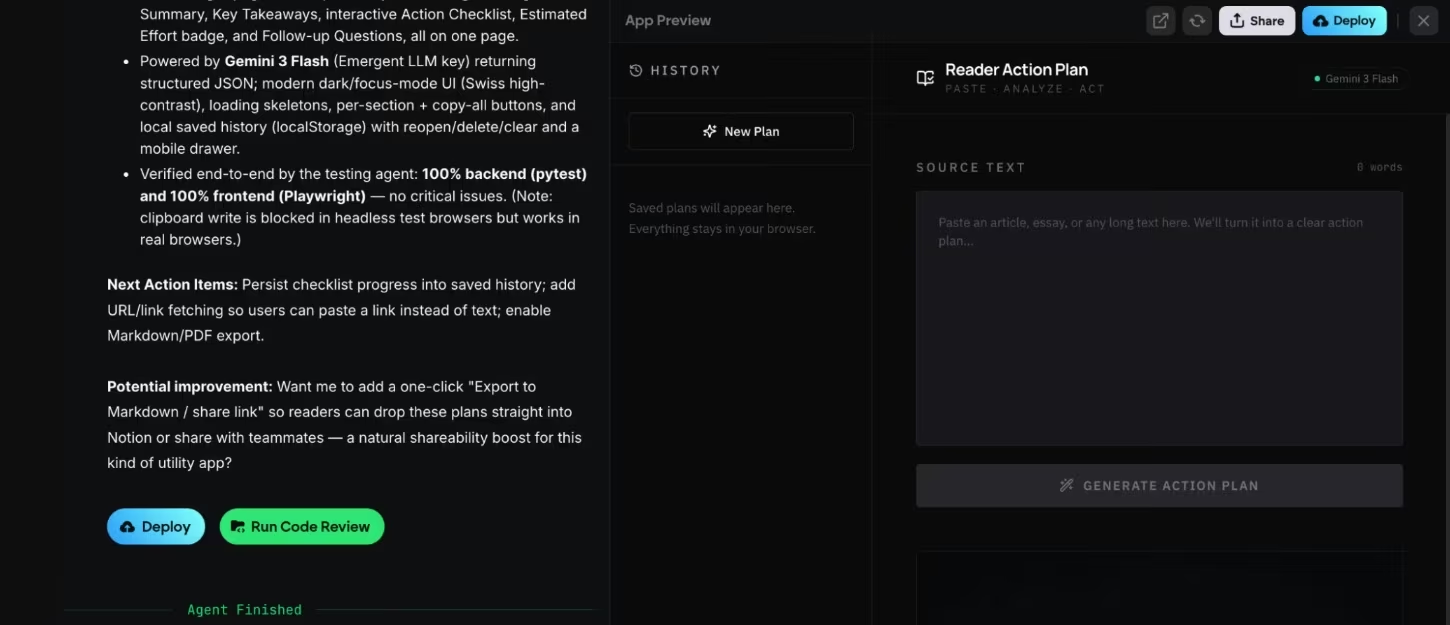
Emergent is built around a conversational, agent-led workflow. You describe the app you want, and its agents build the screens, logic, stored data, integrations, and tests.
Emergent also handles sign-in, payments, and hosting. It supports more than 100 integrations and Model Context Protocol (MCP) connections. You can build web, iOS, and Android versions from the same workspace.
Best For
Emergent is stronger when your app has many connected parts, such as customer accounts, different screens for each role, payments, automated actions, outside services, and a mobile version.
It also fits agencies and founders who expect to pass the code to an engineering team later.
Key Strengths
- Broader app scope: Emergent builds web apps and Expo/React Native mobile apps from the same workspace.
- Clearer code handoff: Generated code syncs to your GitHub repository, and Emergent supports export and deployment outside its managed hosting.
- Built-in product services: Authentication, database, payments, hosting, integrations, and deployment sit inside the build flow.
- Higher-end agent controls: Pro adds a one-million-token context window, Maxx mode for deeper reasoning, system-prompt editing, and custom agents.
Limitations
Emergent’s credit model can become expensive when your prompts are vague, the app needs repeated debugging, or one task covers too much at once.
The free plan has 10 monthly credits, so it is useful for a small trial rather than a serious comparison build. Real-time co-editing, shared workspaces, role-based access control, and single sign-on (SSO) sit on the custom Business plan instead of the entry paid tier.
Pricing
Free: $0/month; Standard: $20/month ($17/month billed annually); Pro: $200/month ($167/month billed annually). Business: custom; Enterprise: custom.
Meet Base44: Features and Highlights
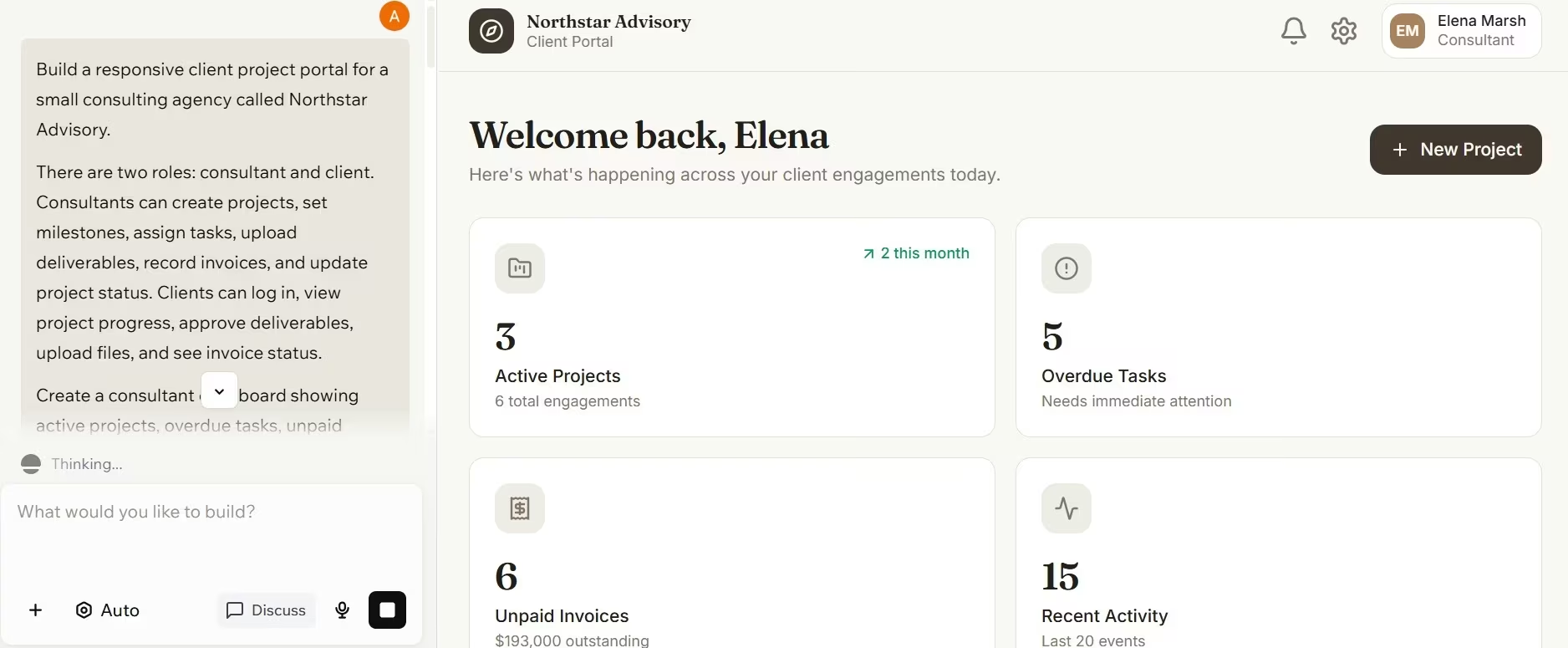
Base44 pairs natural-language building with direct visual edits. It creates the data structure, authentication, payments, emails, analytics, workflows, and hosting for you, then lets you click an element to change its style or open the React/Vite code when you need deeper control.
Best For
Base44 is the better fit for internal tools, dashboards, portals, intake systems, small client apps, and fast MVPs. Its visual editor lowers the friction of adjusting spacing, colors, typography, and page elements without turning each design change into another AI conversation.
Key Strengths
- Fast visual refinement: You can select interface elements and edit colors, fonts, spacing, and layout directly.
- Managed business features: Database, authentication, storage, payments, email, analytics, and workflow automation are built in.
- Developer tools have expanded: Base44 now provides a code tab, two-way GitHub workflows, local development, a command-line interface (CLI), and backend functions.
- Collaboration starts earlier: Multi-user editing and collaboration are available on Base44’s paid plans.
Also read our best Base44 alternatives guide for what else is worth trying when the managed backend or visual editor reaches its limits.
Limitations
Base44’s mobile-store files run the published web app inside a secure wrapper. It does not currently support push notifications, full offline mode, or HealthKit. Choose another route when those native features are central to the product. You need the Builder plan or higher to create app-store files or export the project.
Pricing
Free: $0/month; Starter: $20/month ($16/month billed annually); Builder: $50/month ($40/month billed annually); Pro: $100/month ($80/month billed annually); Elite: $200/month ($160/month billed annually). Enterprise: Custom.
Emergent vs Base44: Feature-by-Feature Comparison
App Building and Ease of Use
Emergent asks you to describe more of the product up front, then its agents take on more of the build. That can save steps when your brief is detailed, but a vague prompt can use more credits and leave more work to correct. Base44 wins this category because its step-by-step editing is easier for a beginner to follow.
Base44 is easier to follow during a first build. Discussion mode lets you plan without changing the app, while the visual editor lets you fix layout, spacing, colors, and text by clicking the screen. That gives you more direct control when you are building a portal, tracker, directory, dashboard, or booking tool.
Winner: Base44
Complex Logic and Multi-Step Workflows
Emergent is better when one action must trigger several others. It suits apps where different roles see different screens and where payments, stored data, alerts, and outside services must work together.
Emergent’s agents can work across those connected parts instead of changing one screen at a time. The Pro plan also adds custom agents and a larger context window for longer projects.
Base44 also supports backend functions, workflows, integrations, and custom API connections. Emergent still wins here because its agent-led workflow and mobile path suit a product whose logic will keep growing.
Winner: Emergent
Design and Visual Editing
Emergent lets you refine layouts and components through prompts and code, but Base44 gives you a more direct surface for routine visual cleanup.
Base44’s point-and-click visual editor is the clearer design tool. You can select an element, adjust its style, and see the result without writing a detailed prompt for each spacing or color change. That is a real advantage when you want to polish a business app yourself.
Winner: Base44
Backend, Data, Authentication, and Payments
Both platforms cover the services a real business app needs. Emergent includes authentication, database, payments, hosting, integrations, and mobile delivery. Base44 includes a MongoDB-compatible NoSQL database, authentication, backend functions, storage, payments, email, APIs, and hosting.
Emergent lets its agents handle more of the full build and makes it easier to export the code later. Base44 keeps more of the setup inside its own system, where you manage the app through its dashboard and visual controls.
Winner: Tie
Web and Mobile Delivery
Emergent can build one product for the web, iPhone, and Android. It uses Expo and React Native behind the scenes and supports release to both app stores. It can also create progressive web apps (PWAs), which run in a browser but can feel like installed apps.
Base44 can check whether your app follows Apple’s and Google’s store rules, then create the submission files on the Builder plan or higher. The submitted app runs the published web experience inside a native wrapper.
The submitted app runs your published Base44 web app inside a secure wrapper. That works for portals, directories, and booking tools, but it is a poor fit when you need push notifications, full offline use, HealthKit, or deeper native features.
Winner: Emergent
Code Ownership and Developer Handoff
Emergent has the clearer handoff story. All generated code can sync to your GitHub repository, and the official enterprise documentation supports export, outside deployment, and continued work by your engineering team.
Base44 is far more open than older comparisons suggest. It has direct code access, two-way GitHub workflows, ZIP export, local backend development, and CLI-based resource sync.
Its exported project uses the Base44 software development kit (SDK) and its production setup points to the Base44 backend by default, so a full move to another backend still requires replacement work.
Winner: Emergent
Collaboration and Team Controls
Emergent reserves shared workspaces, real-time co-editing, role-based access control, and SSO for Business. Enterprise adds audit logs, user-level credit limits, groups, private cloud deployment, and credit analytics.
Base44 includes multi-user editing and collaboration on its paid plans, which makes it easier to invite another person early without moving to a custom contract. Its Enterprise offer adds SSO, advanced security controls, and a dedicated account setup.
Winner: Base44 for small groups; Emergent for custom enterprise control
Security
Both platforms publish ISO 27001 and SOC 2 credentials.
Emergent specifies SOC 2 Type I and ISO 27001, with single sign-on (SSO), SAML, role-based access, and audit logs.
Base44 specifies SOC 2 Type II, plus encryption at rest and in transit, security scanning, data residency controls on Elite and Enterprise, and enterprise audit and access controls.
Certification does not replace reviewing your own permissions, data flows, and third-party services. Base44’s higher published SOC 2 report type gives it the edge in this category.
Winner: Base44 on published certification level
Pricing and Credits
Both starter plans cost $20/month, but Emergent gives you more at that price. Standard plan includes 100 credits, private hosting, GitHub integration, and web and mobile building.
Base44 Starter includes 100 message credits, 2,000 integration credits, unlimited apps, and in-app code edits. Custom domains, backend functions, model selection, and GitHub integration begin on Builder at $50/month ($40/month billed annually).
Base44 is slightly cheaper when you pay annually. Starter costs $16/month billed annually, while the Emergent Standard plan costs $17/month billed annually.
The two credit totals measure different types of work. Emergent uses one balance for planning, building, testing, and deployment. Base44 uses message credits while you build and integration credits when the finished app sends an email, runs AI, or starts an automation.
Compare both build activity and live-app activity before choosing a plan.
Winner: Emergent for a serious first product; Base44 for the lowest annual entry price
Want the full breakdown of what each Base44 plan actually covers? Read our Base44 pricing guide before you commit.
What Real People Are Saying
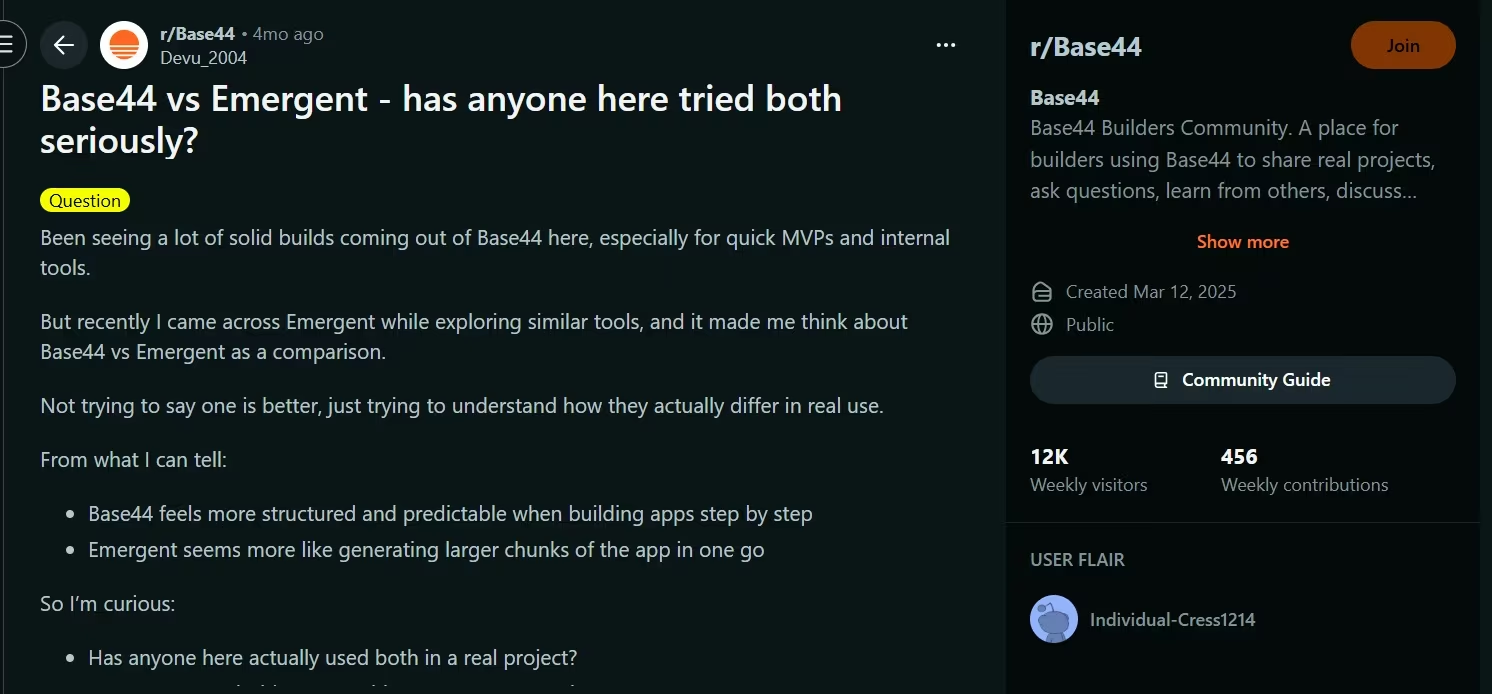
A small Base44 community discussion echoes the same product difference, but it is not a controlled test. The comments are useful for identifying recurring frustrations, not for proving that either platform performs the same way for everyone.
Emergent
Commenters who preferred Emergent focused on complex apps with several workflows, outside services, payments, and API connections. They also warned that broad prompts can use credits quickly when the agent tries to build and check too much at once.
Base44
The original poster who found Base44 easier to use liked its step-by-step flow for simpler apps, visual work, and everyday business tools. Some also said repeated changes can create problems that the AI struggles to repair once a project grows.
The practical lesson is simple: start with a written app specification, define the roles and data first, and build one complete workflow before adding the next. That approach protects credits on either platform.
Want the full picture of what users are saying? Read our Base44 Reviews for a closer look at what builders actually ran into.
How to Make Your Choice
Choose Emergent If You…
- Plan to release both web and cross-platform mobile versions.
- Need several roles, connected workflows, payments, and outside services.
- Expect a developer to inherit or extend the project.
- Want a $20/month entry tier that already includes GitHub and private hosting.
- Prefer giving a detailed specification to an agent system that handles the build end-to-end.
A useful real-world fit comes from Emergent’s contractor case studies. A US concrete contractor used Emergent to replace manual invoicing with a custom payment and receivables app built in hours. That is the kind of focused business system where connected screens, customer records, payment links, and operational logic justify Emergent’s broader build path.
Choose Base44 If You…
- Need an internal tool, client portal, dashboard, directory, or booking app quickly.
- Want direct visual control over layout and styling.
- Prefer separate build and live-action credit pools.
- Need early collaboration without a custom business contract.
- Are comfortable launching a mobile-friendly web app or secure web-view wrapper.
Base44 is the right recommendation for a small operations app where speed and visual adjustment outweigh native mobile features or a future backend migration.
Also read our best AI app builders guide for a fuller picture of what else is worth trying beyond these two.
My Verdict: Emergent Wins for Products You Plan to Grow
In this Emergent vs Base44 comparison, Emergent is the better overall choice for a customer-facing product you plan to expand. Its Standard plan gives you a stronger serious-build package at $20/month, its Expo/React Native path is better for mobile, and its GitHub handoff is clearer.
Base44 wins when your priority is a fast, visually guided web app. Choose it for an internal dashboard, portal, tracker, or lightweight MVP that benefits from direct visual editing and managed business features.
The decision line is direct: choose Base44 for the quickest structured web build; choose Emergent for the product with more logic, more integrations, mobile ambitions, and a longer development path.
Build Your First App With Emergent
Start with one narrow workflow, fake data, and a written description of the people, actions, and expected result.
Emergent’s free plan gives you 10 monthly credits, so use the first build to test the platform’s approach before adding payments or real customer data. Before release, review authentication, permissions, payments, error handling, and connected services. Treat any AI-generated app as something to test before it handles payments, real customer data, or business-critical actions.
Most AI app builders stop at prototypes. Emergent creates production-ready apps you can actually launch.
- Production-ready apps
- Web & mobile apps
- Deploy in minutes