TL;DR
- Gemini 4 Argon is the much stronger model. It scores 53 on the Artificial Analysis Intelligence Index, against 30 for Gemini 3.1 Pro.
- The gap is biggest on agents and coding. Argon scores 57% on Terminal-Bench 4.0, a 53-point jump over 3.1 Pro, and ranks first on AutomationBench-AA at 77.5%. Our Gemini 4 Argon benchmarks guide has the full score table.
- Argon is cheaper per output token only until November 30, 2026. Its price then doubles from $2 and $10 to $4 and $20.
- Gemini 3.1 Pro still wins on cost per task and factual accuracy, at 55% against Argon's 50%.
- Choose Argon for hard work, and keep 3.1 Pro for simple, high-volume jobs.
Gemini 4 Argon beats Gemini 3.1 Pro on almost every independent test, but it uses more tokens and costs more per finished task. That trade-off, plus a price change on December 1, decides whether the upgrade pays off for you.
Google announced Argon on September 30, 2026, and opened it to developers on October 13 as the first model in the Gemini 4 family. This guide compares it with Gemini 3.1 Pro on benchmarks, context and output limits, pricing, cost per task, and fit, and our guide to what Google Gemini is covers the wider family. Prices and scores are as of October 15, 2026, and Argon is new, so numbers can still move.
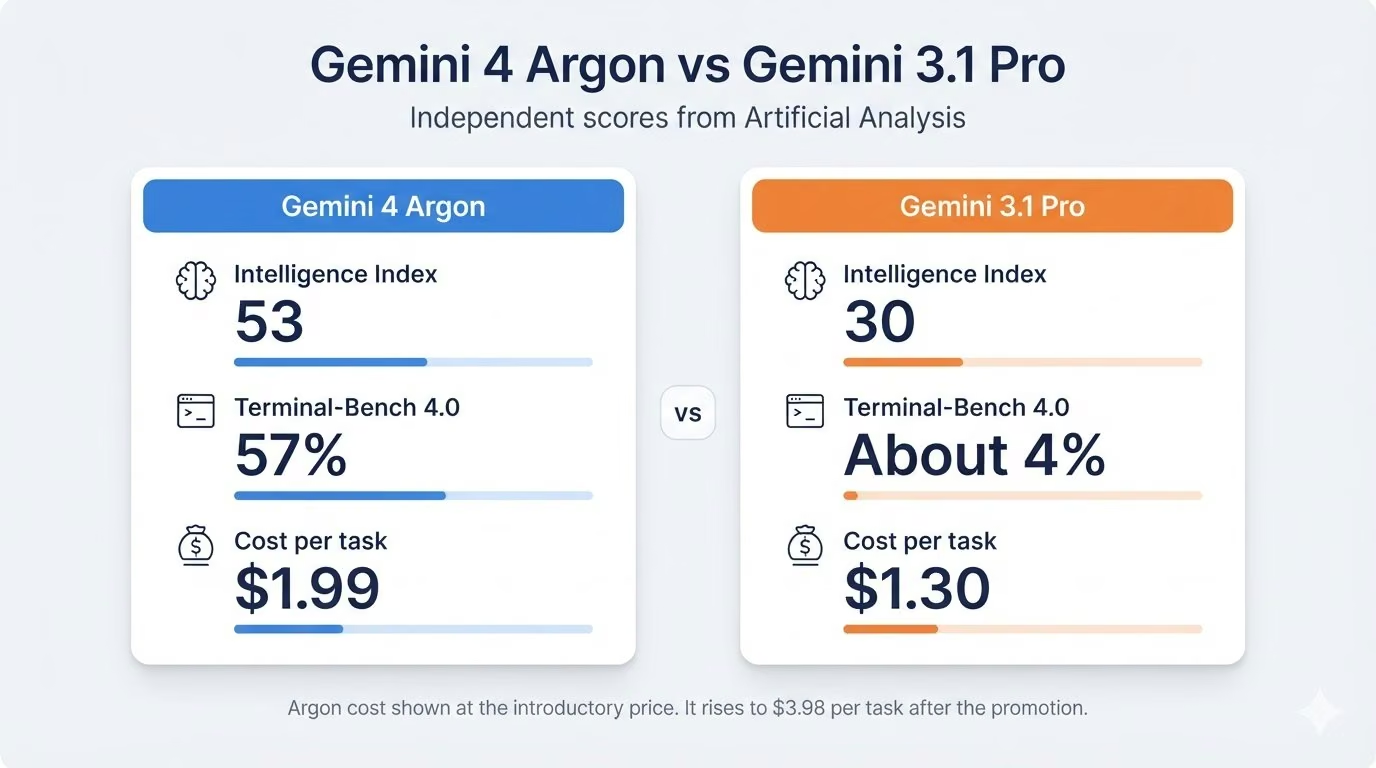
IMAGE 1: Side-by-side card graphic of Gemini 4 Argon vs Gemini 3.1 Pro on Intelligence Index (53 vs 30), Terminal-Bench 4.0 (57% vs about 4%), and cost per task ($1.99 vs $1.30). Recreate with AI.
Gemini 4 Argon vs Gemini 3.1 Pro at a Glance
Argon leads on capability, knowledge freshness, and output length. This table sums up the specs.
| Spec | Gemini 4 Argon | Gemini 3.1 Pro |
|---|---|---|
| Maker | ||
| Status | Available since October 13, 2026 | Preview model (gemini-3.1-pro-preview), launched in February 2026 |
| Context window | 1M tokens, input and output combined | 1M tokens |
| Maximum output | Up to 1M tokens with long decode | 64K tokens |
| Knowledge cutoff | March 2026 | January 2025 |
| Price, input/output | $2 / $10 through Nov 30, 2026; $4 / $20 from Dec 1 | $2 / $12 up to 200K-token prompts; $4 / $18 above |
| Intelligence Index | 53 (high reasoning) | 30 |
| Weights | Closed | Closed |
Sources: Google Cloud, the Gemini 4 Argon model card, Google's Gemini 3 developer guide, and Artificial Analysis.
What Are Gemini 4 Argon and Gemini 3.1 Pro?
Argon is Google's new frontier model, and 3.1 Pro is the older Pro model it replaces at the top of the lineup. Both are closed models that you reach through Google's API, apps, and cloud.
Google describes Argon as built for deep work in coding, finance, legal, cybersecurity, and science. Its model card says it is not a fine-tune of an earlier model, and that it is a sparse mixture-of-experts model trained with reinforcement learning on multi-step reasoning data.
Gemini 3.1 Pro arrived in February 2026 and is still labeled a preview. Artificial Analysis calls Argon Google's first proprietary model above the Flash class in over seven months.
It matters for choice that Argon is also stronger than Google's newest Flash model. Artificial Analysis puts it 12 points above Gemini 3.8 Flash on its index. For cheaper Flash-class options, see our Gemini 3.8 Flash alternatives guide.
Benchmarks: What Independent Tests Show
Argon leads Gemini 3.1 Pro by 23 points on the overall index and by a wide margin on agent tasks. Gemini 3.1 Pro wins only on factual accuracy.
Each benchmark tests a different skill, so the table adds a note on what it means for you.
| Benchmark | What it measures | Gemini 4 Argon | Gemini 3.1 Pro | What it means for builders |
|---|---|---|---|---|
| Intelligence Index | A blend of many independent tests | 53 | 30 | A rough overall ranking; Argon is far ahead |
| Terminal-Bench 4.0 | Multi-step command-line tasks | 57% | About 4% | Argon can run coding agents; 3.1 Pro mostly cannot |
| AutomationBench-AA | Multi-step workflows across business software | 77.5% | Not stated in AA's Argon article | Argon ranks first, so chained actions in CRMs and spreadsheets are a strength |
| AA-Omniscience accuracy | Facts answered correctly from memory | 50% | 55% | 3.1 Pro recalls slightly more facts |
| AA-Omniscience hallucination rate | How often it answers wrongly instead of declining | 15% | About 50% at launch (February 2026) | Argon is more willing to say "I don't know" |
Argon's figures come from Artificial Analysis. Gemini 3.1 Pro's Intelligence Index score comes from its Artificial Analysis page. Its Terminal-Bench figure is derived from the 53-point gain in the Argon article, and its hallucination rate is Artificial Analysis's measurement at launch in February 2026.
The Intelligence Index changes version over time, so scores from older articles will not match. All figures here use the current index.
One gap in the record deserves a mention. Google's own launch table compares Argon with GPT-6 Astra, Claude Fable 5.1, and Claude Opus 5.5. It does not include Gemini 3.1 Pro, so the head-to-head numbers come from outside testers.
Our Gemini 4 Argon benchmarks guide walks through Google's full table, row by row.
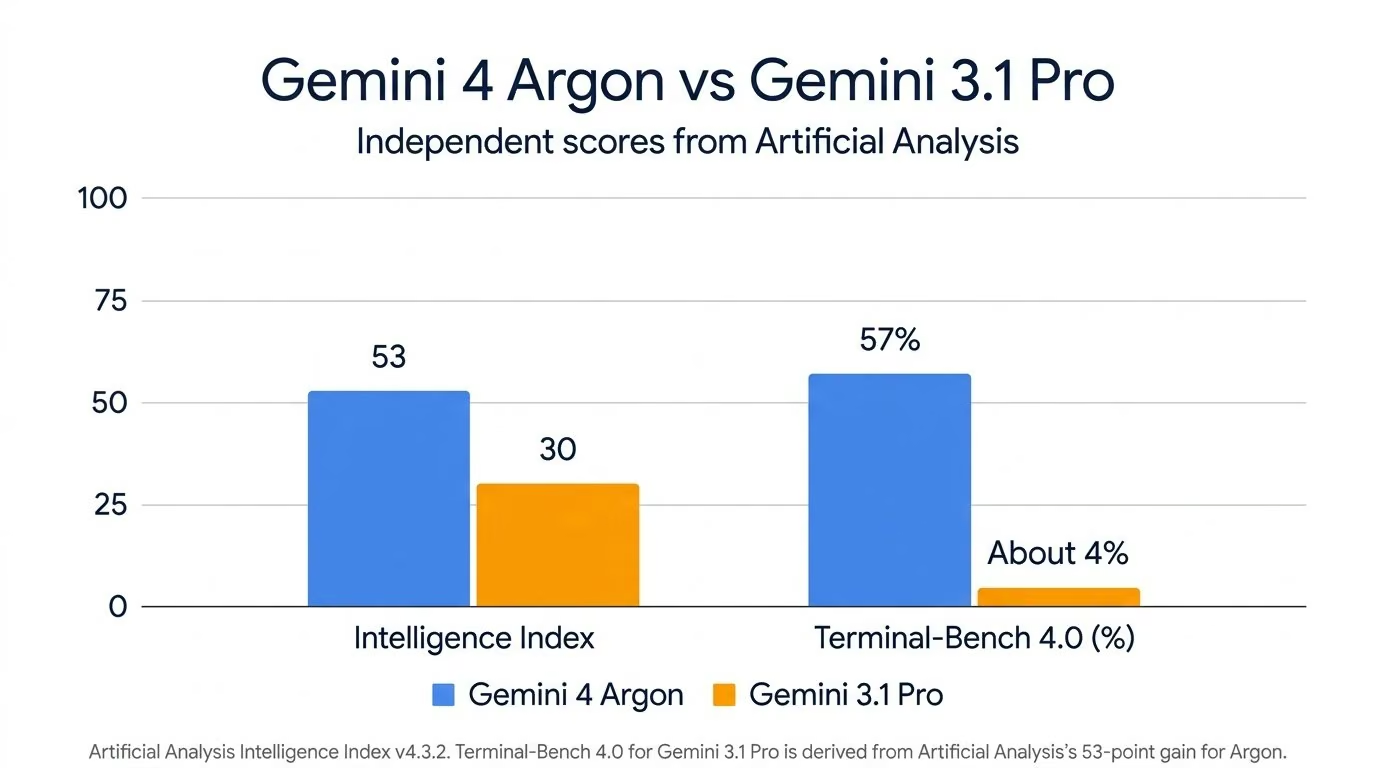
IMAGE 2: Grouped bar chart of Argon vs 3.1 Pro on Intelligence Index and Terminal-Bench 4.0.
Coding and Agent Work
Argon is the first Gemini Pro model that works well as a coding and workflow agent. Artificial Analysis calls agentic work historically a weaker area for Gemini models.
The numbers back that up. On Terminal-Bench 4.0, Argon scores 57%, a 53-point jump over Gemini 3.1 Pro. It trails only Claude Sonnet 5.5 (64%), Claude Opus 5.5 (60%), and GPT-6 Astra (59%) in that test.
On AutomationBench-AA, Argon ranks first at 77.5%, seven points ahead of Claude Sonnet 5.5.
Google's own table adds more data points. Argon scores 77.9% on DeepSWE v1.1 and 91.9% on Vibe Code Bench, the top result on both among the models Google compared. It trails Claude Opus 5.5 on Terminal-Bench 4.0 in Google's table, at 57.4% against 66.4%, which differs from Artificial Analysis's run.
What it means for you: if you use a model to write code, call tools, or run multi-step jobs, 3.1 Pro will often fail where Argon succeeds. If you only need short answers or simple classification, the gap matters less.
Knowledge, Accuracy, and Hallucinations
Argon says "I don't know" more often, and 3.1 Pro answers slightly more questions correctly. Both facts are true at once.
On AA-Omniscience, Argon has a 15% hallucination rate, the lowest of any model scoring 45 or higher on the Intelligence Index. Artificial Analysis measured about 50% for Gemini 3.1 Pro when it launched in February, and GPT-6 Astra's rate is 51%. Argon's accuracy is 50%, five points below Gemini 3.1 Pro.
The model card also reports a March 2026 knowledge cutoff for Argon, against January 2025 for 3.1 Pro. For current events and recent libraries, that is a 14-month head start.
Google's model card still warns that Argon can hallucinate. Give it source documents and ask it to answer from them, rather than from memory.
Context, Output Length, and Inputs
Both models have a 1M-token context window, but Argon can write far longer answers. Gemini 3.1 Pro caps output at 64K tokens. Argon can run up to 1M output tokens through a feature called long decode.
Artificial Analysis describes long decode continuation as a way to pause long responses and resume them across follow-up calls. It lets reasoning run to 1M output tokens without request timeouts.
Google's model card describes Argon's 1M limit as combined input and output, so a very long answer leaves less room for input. Our glossary entry on the context window explains how that limit works.
Use it for code migrations, long reports, and deep research. For everyday replies, the 64K limit rarely matters.
Argon accepts text, images, audio, and video, and returns text. Its reasoning runs at high effort at most, according to Artificial Analysis.
Pricing: Cheaper Now, Double on December 1
Argon's output tokens are 17% cheaper than Gemini 3.1 Pro's until November 30, then 67% more expensive. Input tokens cost the same now and double after that.
The Price Table
| Period | Gemini 4 Argon | Gemini 3.1 Pro (up to 200K tokens) |
|---|---|---|
| Through Nov 30, 2026 | $2 in / $10 out | $2 in / $12 out |
| From Dec 1, 2026 | $4 in / $20 out | $2 in / $12 out |
| Prompts over 200K tokens | Check Google's pricing page | $4 in / $18 out |
Google calls $2 and $10 an introductory rate. Cached input gets a 95% discount. Artificial Analysis lists the standard prices as $4 and $20.
For the full rates, read our Gemini 4 Argon pricing guide.
What Real Requests Cost
The table uses list prices and the same token counts for both models. It excludes extra thinking tokens, caching, and retries. For the large job, the table assumes Argon charges its flat rate, because the sources reviewed list no long-prompt rate.
| Request | 3.1 Pro | Argon, to Nov 30 | Argon, from Dec 1 |
|---|---|---|---|
| Short chat reply (5K in, 1K out) | $0.022 | $0.020 | $0.040 |
| Document analysis (100K in, 4K out) | $0.248 | $0.240 | $0.480 |
| Large codebase review (400K in, 10K out) | $1.78 | $0.90 | $1.80 |
At volume, the difference adds up:
| Monthly workload | 3.1 Pro | Argon, to Nov 30 | Argon, from Dec 1 |
|---|---|---|---|
| 20,000 short chat replies | $440 | $400 | $800 |
| 5,000 document analyses | $1,240 | $1,200 | $2,400 |
Until November 30, Argon costs about the same as 3.1 Pro per request. After that, it costs nearly twice as much for short and mid-size jobs.

IMAGE 3: Bar chart of cost per request across three request sizes for 3.1 Pro, Argon (intro price), and Argon (standard price). Recreate with AI.
Cost per Task: Argon Uses More Tokens
Argon costs more per finished task than 3.1 Pro, because it thinks longer. List prices alone hide this.
Artificial Analysis reports that Argon averages about 62,000 output tokens per task. It says Argon's cost edge over GPT-6 Astra comes from lower token prices, not from using fewer tokens.
Total token use shows the same pattern. Across its full Intelligence Index run, Argon wrote about 110 million output tokens, per our Gemini 4 Argon benchmarks guide. Gemini 3.1 Pro wrote 67 million, about 40% fewer.
At the introductory price, Argon costs $1.99 per Intelligence Index task, and $3.98 at standard pricing. Artificial Analysis puts Gemini 3.1 Pro at $1.30 per task. That makes Argon about 1.5 times as expensive per task now, and about 3 times after the promotion.
The lesson is simple. A lower per-token price does not mean a cheaper job. Measure cost per finished task on your own requests.
One mitigating point: Argon succeeds at tasks where 3.1 Pro fails. A cheap model that fails a task costs more than an expensive one that finishes it.
Safety and Access
Argon is widely available now, with extra safeguards around cyber use. Google rolled it out to a small group of trusted cyber defenders first, through its Fairwind program, then opened it more widely on October 13.
You can reach Argon in these places:
- The paid tier of the Gemini API, in Google AI Studio.
- Google Cloud, where Google says it is available to everyone.
- Google Antigravity and Android Studio, for developers.
- The Gemini app, for Google AI Pro and Ultra subscribers.
The model card also covers safety results against Gemini 3.1 Pro. Argon cuts unjustified refusals by 9.6 percentage points and improves image-to-text and multilingual safety. Its text-to-text safety rate moves by 1.57 points, which Google says stays within confidence intervals.
For risk teams, note that Google says it cannot rule out that Argon reaches its cybersecurity and biological critical capability levels. Google applies safeguards it believes bring that risk below the threshold.
Which Should You Choose?
Choose by task difficulty first and budget second. Argon wins on hard tasks. 3.1 Pro can still do simple ones for less.
| Your situation | Better pick | Why |
|---|---|---|
| Coding agents and terminal work | Gemini 4 Argon | 57% vs about 4% on Terminal-Bench 4.0 |
| Multi-step business automation | Gemini 4 Argon | Ranks first on AutomationBench-AA at 77.5% |
| Very long outputs, such as migrations | Gemini 4 Argon | Up to 1M output tokens vs 64K |
| Recent knowledge and libraries | Gemini 4 Argon | March 2026 cutoff vs January 2025 |
| Short, simple, high-volume tasks | Gemini 3.1 Pro | Lower cost per task and a steady price |
| Closed-book fact recall | Gemini 3.1 Pro | 55% vs 50% accuracy |
| Strict budget after December 1 | Gemini 3.1 Pro | Argon's price doubles on December 1 |
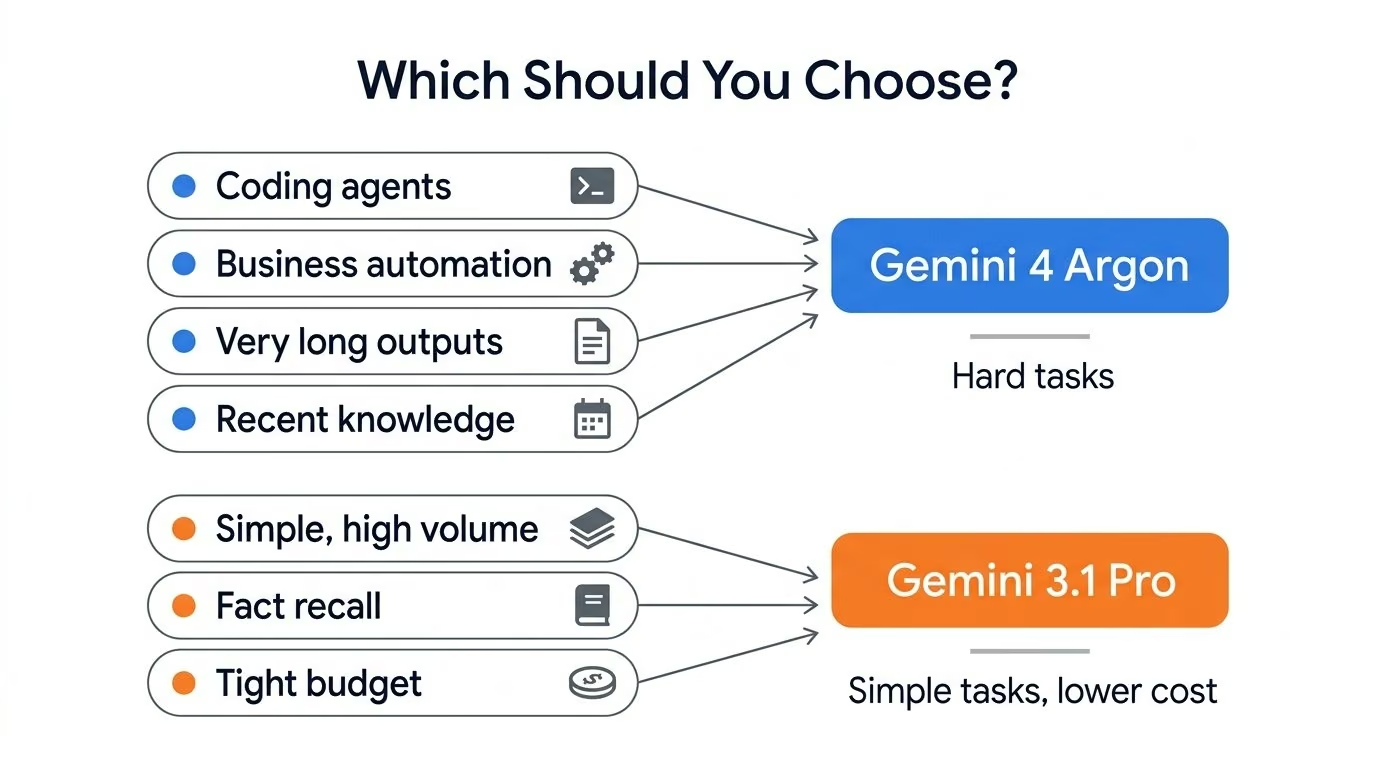
IMAGE 4: Decision flowchart from task type and budget to the recommended model. Recreate with AI.
If your traffic is mixed, consider routing. Send hard, long, or agentic requests to Argon, and simple requests to 3.1 Pro or a cheaper Flash model. That split pays off most when hard requests are a minority of your volume.
Google publishes a migration guide for moving from 3.1 Pro to Argon. Test on your own prompts before you switch production traffic, and rerun the cost math before December 1.
Looking beyond Google? Our guide to the best Gemini alternatives and competitors compares other options. Our Gemini 3.8 Flash alternatives guide covers cheaper Flash-class choices.
Final Thoughts
Gemini 4 Argon is the better model for hard work, and Gemini 3.1 Pro is the cheaper model for easy work. Argon leads by 23 points on the overall index and by wide margins on agent and coding tests. Its price advantage ends on December 1, and it already costs more per finished task.
The best next step is a small test. Consider running 20 to 50 real requests from your own workload through both models, then compare answer quality and cost per finished task. Check how the numbers look at Argon's December 1 pricing, not just the introductory rate. Scores for a model this new tend to move, so recheck them in a few weeks.
If you are ready to turn an idea into a working app, Emergent is a vibe coding platform where you describe what you want and AI agents design, code, and deploy it. With an AI app builder, you can go from a plain-English description to a working product without writing code. Start at emergent.sh.
Most AI app builders stop at prototypes. Emergent creates production-ready apps you can actually launch.
- Production-ready apps
- Web & mobile apps
- Deploy in minutes