Choosing a model for an app or agent is now as much a cost decision as a quality decision. Teams that build agents with an AI agent builder still pay for every token the model reads and writes.
In the GLM vs DeepSeek choice, that bill can differ by about 8 times for the same work.
GLM-5.3 and DeepSeek V4.1 Flash 1017 are only one point apart on the Artificial Analysis Intelligence Index.
So, quality alone cannot decide which one is better. Price, speed, input types, and the tasks you need to handle also matter.
This article uses the Artificial Analysis Intelligence Index v5.0.1, with all data checked on November 14, 2026. All scores are based on each model's Max reasoning setting.
GLM vs. DeepSeek at a Glance
GLM-5.3 has more parameters and supports text input only. DeepSeek V4.1 Flash 1017 has a smaller model size and a lower price.
The table below covers the features of GLM-5.3 and DeepSeek V4.1 Flash:
Source: Artificial Analysis, checked November 14, 2026 (Intelligence Index v5.0.1). DeepSeek's $0.30 and $1.20 are peak rates, and its official pricing page lists half that off-peak.
What Are GLM and DeepSeek? Zhipu AI vs. DeepSeek
GLM is the model family from Z.ai, also known as Zhipu AI. Z.ai sells it through its own API and lists three current tiers. GLM-5.3 is the top tier.
DeepSeek is a Chinese AI lab that publishes open-weight models and runs its own API. That API serves deepseek-flash, which runs V4.1 Flash 1017, and deepseek-v4-pro, which runs V4 Pro 0813. DeepSeek retired the older V4 Flash names, and its API now routes them to V4.1 Flash.
Sources: Z.ai pricing and DeepSeek pricing, checked November 14, 2026.


We compare GLM-5.3 with V4.1 Flash because Artificial Analysis ranks them #3 and #2 of 29 models. V4 Pro and the Flash tiers appear in the table above and in the notes on price and image input.
GLM 5.3 vs. DeepSeek V4.1 Flash 1017: Where They Diverge
The two models differ in size and speed. These differences affect their costs and how you use them.
1. Size and efficiency
DeepSeek V4.1 Flash 1017 has 552B total parameters, with 16B active per token, while GLM-5.3 has 753B total parameters, with 40B active. DeepSeek uses fewer active parameters per token, which means lower computing costs. This is one reason its price is lower.
2. Intelligence and reasoning
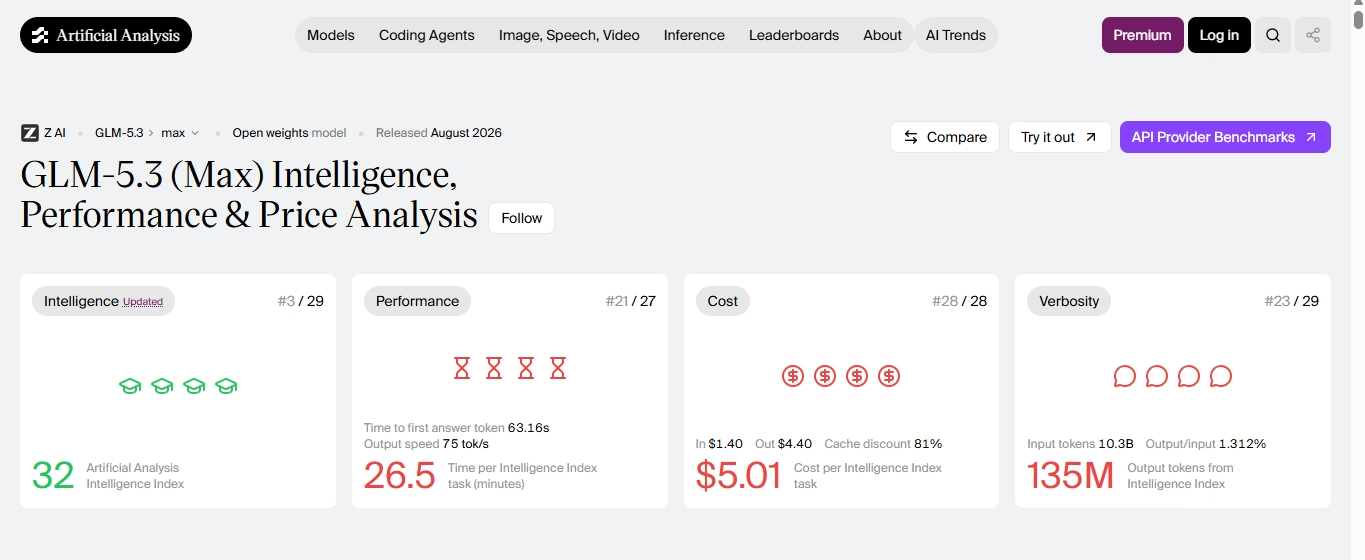
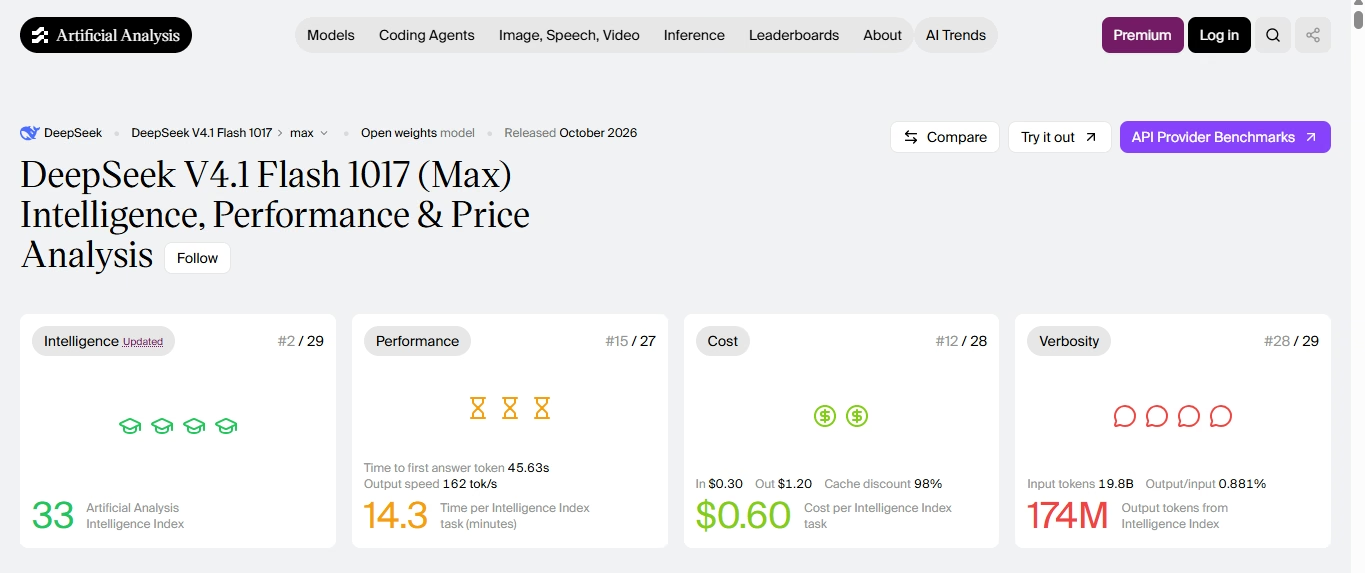
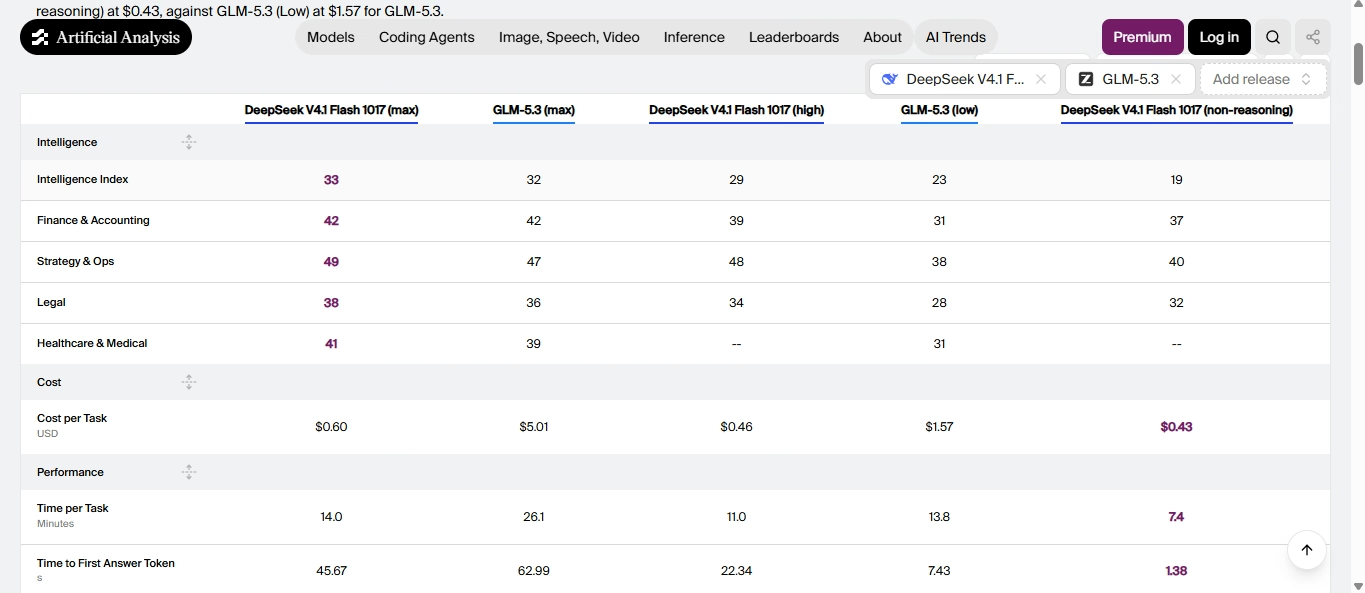
Both models score well above the median of 23 for comparable models. DeepSeek ranks #2 at 33, and GLM-5.3 ranks #3 at 32. Effort settings change both scores.
Artificial Analysis lists DeepSeek at 29 on High and 19 with reasoning off. It lists GLM-5.3 at 23 on Low.
Both models write a lot. DeepSeek produced 174M output tokens on the index, and GLM-5.3 produced 135M. The median is 104M.
3. Context window
Both models hold 1M tokens, about 1,500 A4 pages of 12-point Arial text. GLM-5.3 returns up to 128K tokens per response, according to Z.ai's model page. The window size ties, so it will not decide your pick.
4. Speed and latency
DeepSeek leads every speed measure in Artificial Analysis lists. It writes about 2.2 times faster and finishes a task in nearly half the time.
- Output speed: 162 tokens per second for DeepSeek, 75 for GLM-5.3.
- Time to first token: 1.32 seconds for DeepSeek, 3.09 seconds for GLM-5.3.
- Time to first answer token: 45.63 seconds for DeepSeek, 63.16 seconds for GLM-5.3.
- Time per Index task: 14.3 minutes for DeepSeek, 26.5 minutes for GLM-5.3.
- End-to-end time: 93.67 seconds for DeepSeek, 148.28 seconds for GLM-5.3.
The long wait for a first answer token comes from thinking time at Max effort. With reasoning off, Artificial Analysis lists DeepSeek's first answer token at 1.38 seconds.
Source: Artificial Analysis comparison, checked November 14, 2026.
GLM vs. DeepSeek Benchmarks
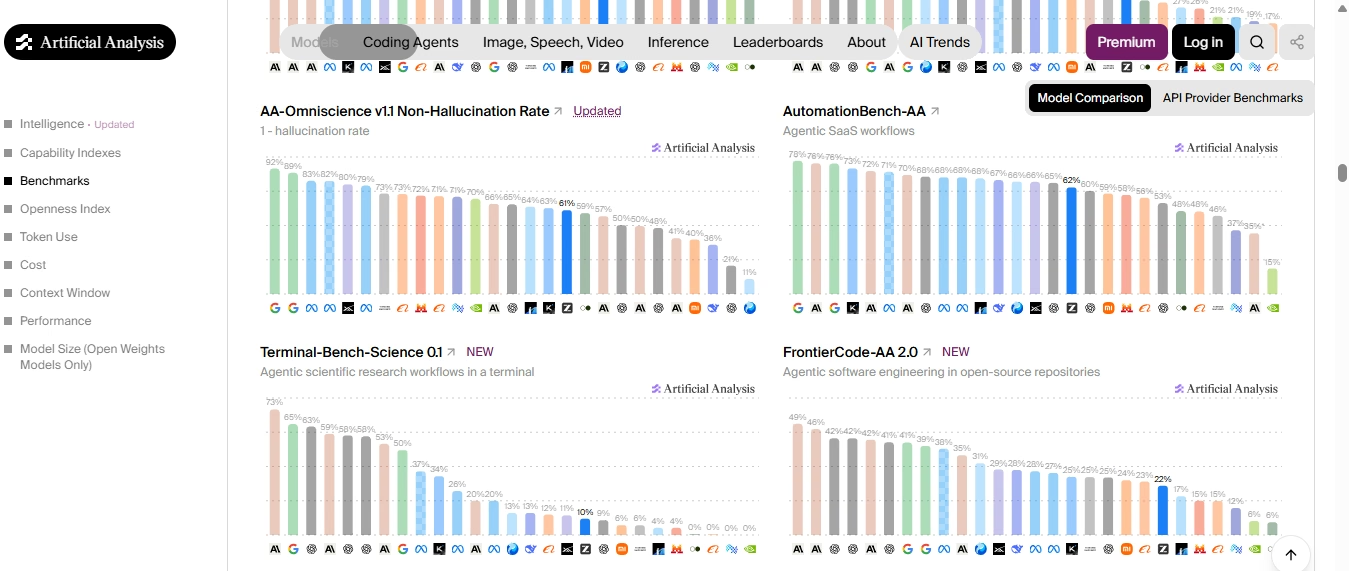
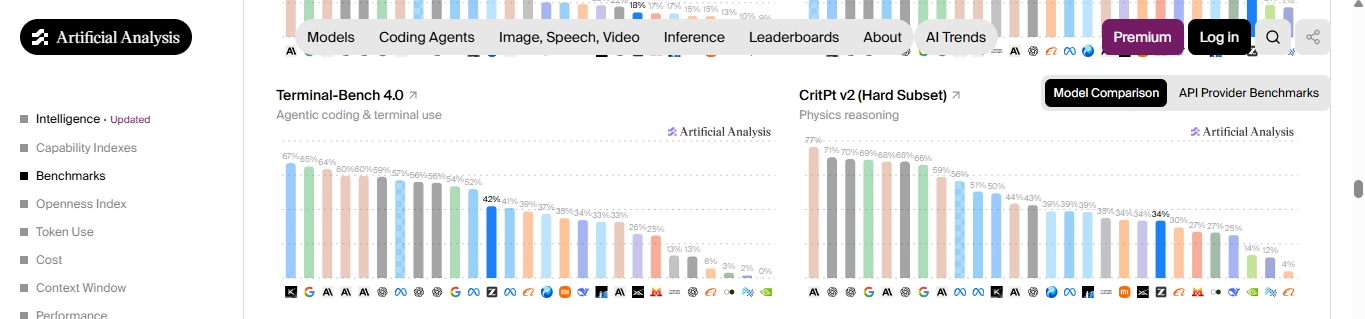
The results are mixed across the eight benchmarks. DeepSeek scores higher in five, while GLM-5.3 scores higher in three.
All scores are from the Artificial Analysis Intelligence Index v5.0.1.
Sources: Artificial Analysis pages for GLM-5.3 and DeepSeek V4.1 Flash 1017, checked November 14, 2026.
GLM-5.3 (Max) Benchmark Scores
DeepSeek V4.1 Flash 1017 (Max) Benchmark scores
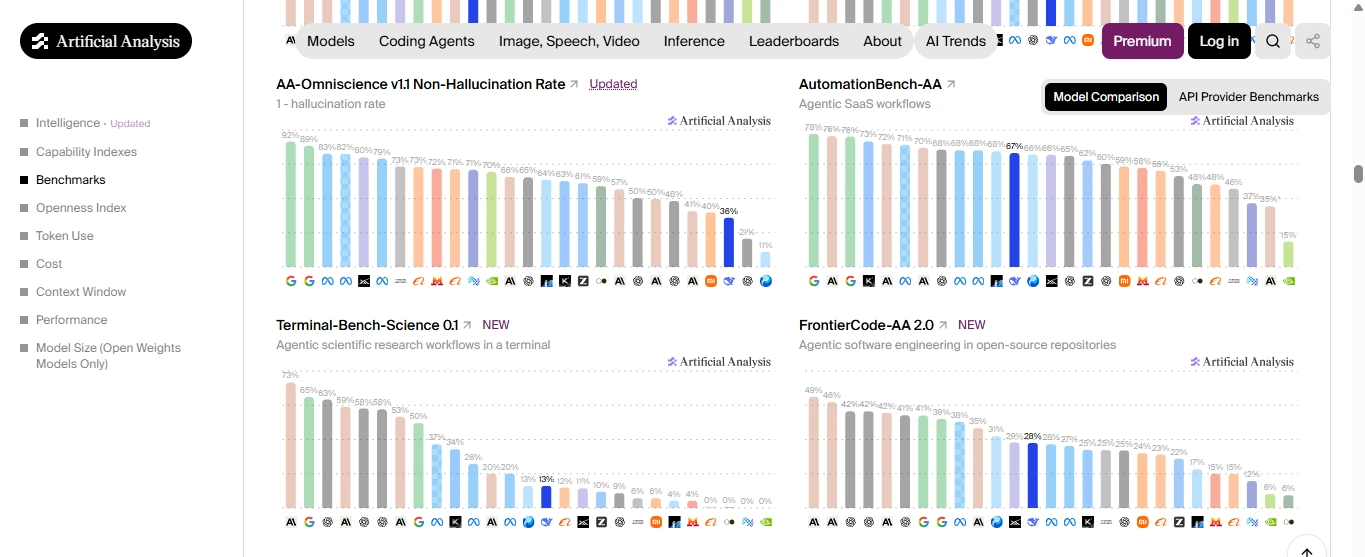
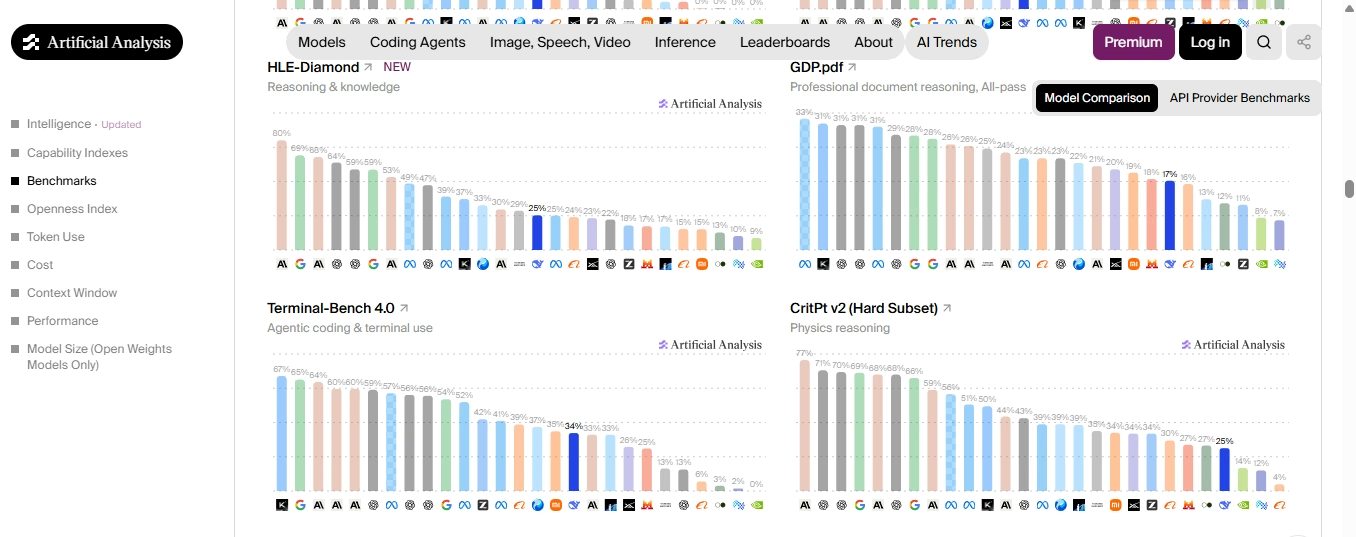
Here is what each test measures and who should watch it:
- AutomationBench-AA covers multi-step workflow tasks. Operations teams should watch it.
- Terminal-Bench 4.0 covers agents that work in a command line. Developers should watch it.
- FrontierCode-AA 2.0 covers hard coding problems. Engineers should watch it.
- Terminal-Bench-Science 0.1 covers command-line work on science tasks. Research teams should watch it.
- HLE-Diamond uses very hard expert-level questions. Anyone who needs deep reasoning should watch it.
- CritPt v2 uses hard physics research problems. Scientific users should watch it.
- AA-Omniscience v1.1 tests facts and whether a model guesses when it does not know. Artificial Analysis rolls both measures into one score: 6 for GLM-5.3 and 1 for DeepSeek.
The one-point difference in their index scores is small, so try both models with your own prompts. We have used only scores from one independent source, not numbers reported by the companies themselves. For GLM-5.3's own scores across more tests, see our GLM 5.3 benchmarks guide.
GLM vs. DeepSeek for Coding
GLM-5.3 has the higher Terminal-Bench score, but DeepSeek scores better on FrontierCode-AA. Their results on these tests show a bigger difference than the one-point gap in their overall index scores.
GLM-5.3 scores 41.9% on Terminal-Bench 4.0 against 33.8% for DeepSeek, an 8.1-point lead. DeepSeek scores 28.5% on FrontierCode-AA 2.0 against 21.6%, a 6.9-point lead.
Weigh the first gap against the price gap in the next section before you pick GLM-5.3 for an agent.
The effort setting affects both price and speed. Artificial Analysis lists DeepSeek at $0.43 with reasoning turned off, taking 7.4 minutes per index task. GLM-5.3 always uses reasoning. Even at its lowest setting, Low, it costs $1.57 and takes 13.8 minutes.
Both APIs cover the basics a coding agent needs:
- DeepSeek V4.1 Flash 1017: tool calls and JSON output, per DeepSeek's pricing page.
- GLM-5.3: function calling and structured output, per Z.ai's docs. Z.ai also sells the GLM Coding Plan, a subscription for coding agents.
For a wider look at coding tools, read our guide to AI tools for coding.
GLM vs. DeepSeek for Multimodal Work
DeepSeek V4.1 Flash 1017 accepts text and image input. GLM-5.3 accepts text only, according to Artificial Analysis and Z.ai's own model page. Both return text.
This gap matters for apps that read screenshots, scanned forms, or charts. DeepSeek takes the image in one API call. GLM-5.3 needs a separate vision step first.
DeepSeek's V4 Pro does not support vision, so the Pro tier drops image input. Z.ai's GLM-5.3-Flash accepts images, video, and files if you want image input inside the GLM family.
The data used here has no image-quality score. This article does not rank how well either model reads images. Test both on your own files before you commit.
GLM vs. DeepSeek Pricing and Access
DeepSeek V4.1 Flash 1017 costs less on every price line. The gap is widest on cached input and on the cost of a full benchmark run.
Sources: Z.ai pricing, DeepSeek pricing, and Artificial Analysis, checked November 14, 2026.
- List rates: DeepSeek's maximum input rate is 4.7 times lower than GLM-5.3's, and its maximum output rate is 3.7 times lower.
- Caching: Artificial Analysis rates the cache discount at 81% for GLM-5.3 and 98% for DeepSeek. Z.ai lists cache storage as free for a limited time.
- Peak hours: DeepSeek lists peak hours as 01:00 to 04:00 and 06:00 to 10:00 UTC on weekdays. Off-peak costs half.
- Per task: DeepSeek writes more tokens per Index run, yet each task costs about 8 times less.
Take a job with 10M input tokens, 1M output tokens, and no cache hits. GLM-5.3 costs $18.40. DeepSeek costs $4.20 at peak and $2.10 off-peak. or GLM-5.3's full rate card, see our GLM 5.3 pricing guide.
On access, Z.ai serves GLM-5.3 through OpenAI-style and Anthropic-style endpoints. DeepSeek offers the same two formats for V4.1 Flash. Artificial Analysis tracks about 25 hosts for GLM-5.3 and about 21 for DeepSeek.
Open Weights, Privacy, and Data Residency
Both models make their weights available. DeepSeek V4.1 Flash 1017 is released under the MIT license. GLM-5.3 has separate licensing terms that you should check before fine-tuning or reselling it.
Three things matter when running these models on your own servers:
- Size: DeepSeek has 552B total parameters, while GLM-5.3 has 753B. You still need to load all the parameters, even though only 16B or 40B are used per token.
- Hosts: You can also use third-party hosting providers. Check their regions and terms before choosing one.
- Fine-tuning: MIT places few limits on it. For GLM-5.3, check the license text for commercial limits.
On data handling, we stick to what the vendors publish. Z.ai's privacy policy covers individual users and refers API developers to its Data Processing Addendum.
DeepSeek's privacy policy says it does not cover end-user data in apps that developers build on its platform.
In this case, the developer is responsible for the data and must provide their own privacy policy. Neither page replaces a legal review. Before sending customer data to either API, check how long the data is kept, where it is stored, and what the contract says.
GLM 5.3 vs. DeepSeek V4.1 Flash 1017: The Latest Models, Head to Head
GLM-5.3 and DeepSeek V4.1 Flash 1017 are the newest flagships from Z.ai and DeepSeek. The index gap is one point, so the real split shows up in cost, time, and overall task scores.
Sources: Artificial Analysis model comparison, Z.ai pricing, and DeepSeek pricing, checked November 14, 2026 (Intelligence Index v5.0.1).
DeepSeek costs about 5 times less than GLM-5.3 on blended price per 1M tokens. It also finishes each task in almost half the time.
The benchmark table above shows where each model wins on individual tests. DeepSeek leads six of the nine quality measures, and GLM-5.3 leads on Terminal-Bench 4.0, CritPt, and AA-Omniscience.
Both labs make their own claims. Z.ai calls GLM-5.3 its most capable model, and DeepSeek says V4.1 Flash is smarter and faster than the last generation. Use the independent scores to check those statements.
Which Should You Choose? GLM or DeepSeek by Use Case
Choose the model based on the task. Each row below shows the data behind the choice.
Sources: Artificial Analysis, Z.ai docs, and DeepSeek docs, checked November 14, 2026.
Conclusion
DeepSeek V4.1 Flash 1017 is a practical option for projects with tight budgets, faster responses, image input, or difficult coding tasks. Choose GLM-5.3 when command-line agent work or a higher non-hallucination rate matters more.
The models are only one point apart on the index. But the cost per task differs by about 8 times, which could make the decision easier for most projects. If you're weighing models beyond these two, our best LLM guide ranks the field.
Both models live on Emergent, an AI app and agent builder for building full-stack apps. Describe the app or agent you want and run it on each model. Keep the one that fits your budget and task.
Describe it. Build it. Launch it.
- End-to-End Creation
- No Code Needed
- Live in Minutes
Most AI app builders stop at prototypes. Emergent creates production-ready apps you can actually launch.
- Production-ready apps
- Web & mobile apps
- Deploy in minutes