A newer model may seem like an easy upgrade, but price, speed, and error rates can all change. GPT-6.2 Astra vs GPT-6 Astra is a good example. The newer model performs better in most tests, but not all of them. Anyone building with these models will notice these differences in their daily work.
GPT-6.2 Astra vs GPT-6 Astra comes down to intelligence, speed, and cost. This guide compares both models using independent benchmark data and official API prices.
All figures come from Artificial Analysis Intelligence Index v5.0.1.
GPT-6.2 Astra vs GPT-6 Astra: Comparison Table
GPT-6.2 Astra has a higher intelligence score, faster response times, and lower task costs. GPT-6 Astra still has an advantage when you need longer outputs or more provider options.
Data checked on November 18, 2026. Artificial Analysis Intelligence Index v5.0.1, Max effort. Sources: Artificial Analysis pages for GPT-6.2 Astra and GPT-6 Astra.


GPT-6.2 Astra and GPT-6 Astra: What’s Different?
GPT-6 Astra launched on September 3, 2026. GPT-6.2 Astra followed on November 17, 2026, when OpenAI announced it alongside GPT-6.2 Sol. While the shared specifications remain the same for the two models, the following things make them different:
- Availability: GPT-6.2 Astra is available through OpenAI’s API and Microsoft Foundry/Azure. GPT-6 Astra is also available through Amazon Bedrock.
- Knowledge cutoff: GPT-6 Astra's knowledge ends on April 30, 2026. GPT-6.2 Astra includes information up to May 18, 2026.
- Tracker status: Artificial Analysis now treats GPT-6 Astra as an older model. It tests it less often and recommends GPT-6.2 Astra instead.
Pricing: How Much Cheaper Is GPT-6.2 Astra?
GPT-6.2 Astra is 20% cheaper than GPT-6 Astra for both input and output tokens. All prices below are in US dollars per 1 million tokens, based on OpenAI's API.
Data checked on November 18, 2026. Sources: OpenAI Pricing page and Artificial Analysis provider pages for GPT-6.2 Astra and GPT-6 Astra.
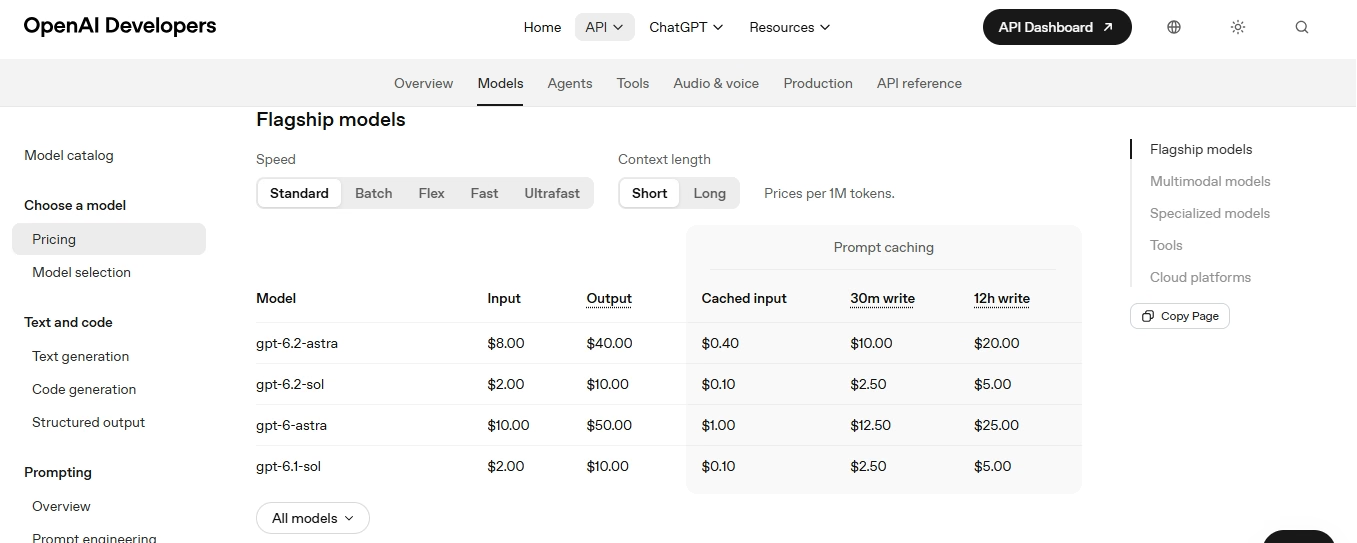
Cached inputs make the price gap even larger. If you reuse a prompt often, it costs $0.40 per 1M tokens with GPT-6.2 Astra and $1.00 with GPT-6 Astra. As per a worked example at list price, with no caching, a request with 100K input tokens and 20K output tokens costs $1.60 on GPT-6.2 Astra. The same request costs $2.00 on GPT-6 Astra.
Neither model is cheap compared to the field. Artificial Analysis puts the median for comparable models at $2.00 input and $10.00 output. GPT-6.2 Astra costs four times that median, and GPT-6 Astra costs five times. Both rate cards are broken out in our GPT-6 Astra pricing and GPT-6.2 Astra pricing guides.
Intelligence and Benchmark Results
GPT-6.2 Astra leads on 8 benchmarks. GPT-6 Astra leads on 2. The three sections below group the results by skill.
Artificial Analysis Intelligence Index
GPT-6.2 Astra scores 62 on the Intelligence Index, five points above GPT-6 Astra’s 57. That is about 9% higher. It ranks third of 92 models, while GPT-6 Astra ranks 13th. The median for comparable models is 43. Both models clear it by a wide margin. The newer model's full effort-level breakdown is in our GPT-6.2 Astra benchmarks guide.
Reasoning and Science Benchmarks
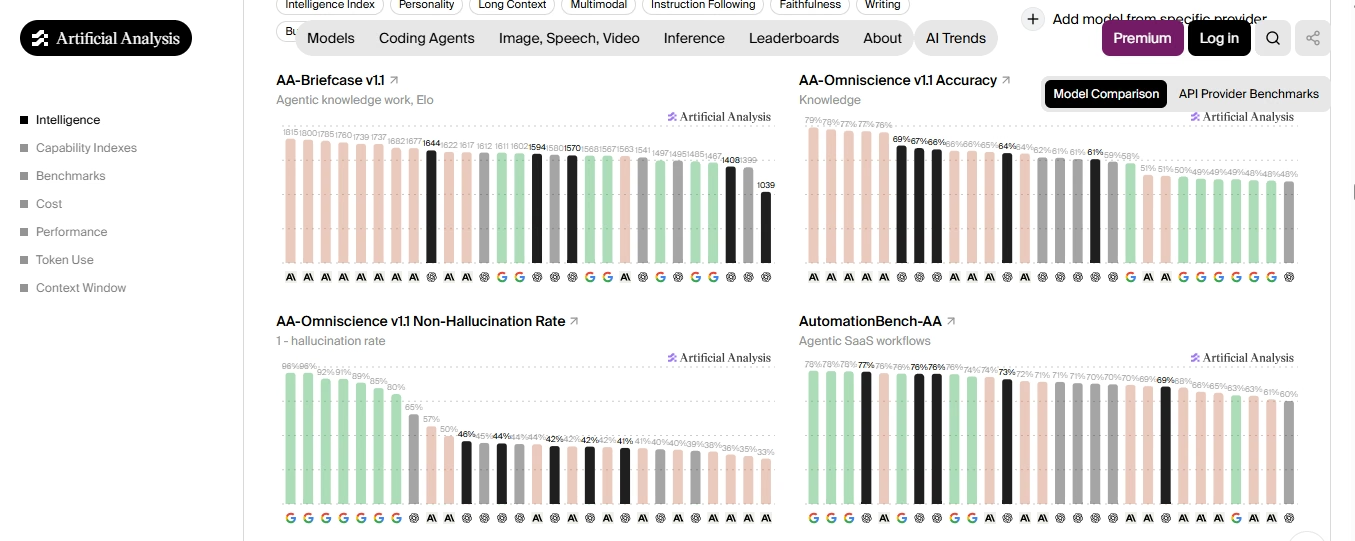
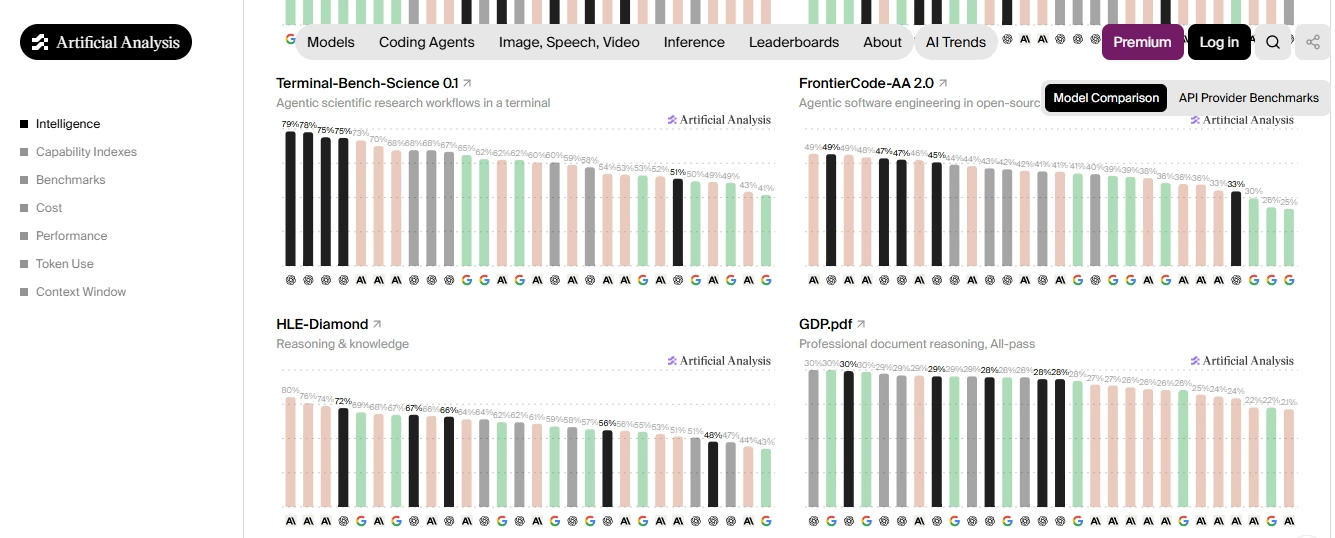
GPT-6.2 Astra comes out ahead in four of the five tests:
Data checked on November 18, 2026. Source: Artificial Analysis, GPT-6.2 Astra and GPT-6 Astra, Intelligence Index v5.0.1.
GPT-6.2 Astra Benchmark scores

GPT-6 Astra Benchmark scores


The biggest jump is Terminal-Bench-Science, where the newer model scores 78% against 63%. HLE-Diamond rises eight points, and Omniscience accuracy rises seven. CritPt v2 is a near tie.
The exception is the Omniscience non-hallucination rate. GPT-6 Astra scores 50%, and GPT-6.2 Astra scores 41%. The older model hallucinates less often, even though the newer one answers more questions correctly.
Professional Work and Agentic Benchmarks
GPT-6.2 Astra gets higher scores in both agent-style tests and matches GPT-6 Astra's score on the document test.
Source: Artificial Analysis, GPT-6.2 Astra and GPT-6 Astra, Intelligence Index v5.0.1. Data checked on November 18, 2026.
AutomationBench-AA covers workflows across SaaS tools. AA-Briefcase scores knowledge work as an Elo rating, and the newer model gains 75 points. GDP.pdf tells a different story. GPT-6 Astra edges ahead by one point, so treat it as a tie.
Coding and Software Development Performance
GPT-6.2 Astra scores higher in both coding tests, but the difference is small.
Source: Artificial Analysis, GPT-6.2 Astra and GPT-6 Astra, Intelligence Index v5.0.1. Data checked on November 18, 2026.
Terminal-Bench 4.0 shows the bigger gain, at five points. Command-line work needs a model that plans several steps and tracks earlier output. The newer model handles that slightly better.
FrontierCode-AA 2.0 uses real open-source repositories. GPT-6.2 Astra scores 45%, and GPT-6 Astra scores 42%. Neither model solves half the tasks.
The difference is bigger on terminal tasks than on code fixes. The index does not test the actual codebase, so try both models on a few of your own tasks before switching.
Speed, Latency, and Token Efficiency
GPT-6.2 Astra completes tasks faster in all speed tests. GPT-6 Astra uses fewer tokens in its responses.
Source: Artificial Analysis, GPT-6.2 Astra and GPT-6 Astra, Intelligence Index v5.0.1. Data checked on November 18, 2026.
Both models think before they answer. At Max effort, the first answer token arrives after almost three minutes. That rules out both settings for live chat. If you want a chat experience built around a faster setting, you can build one with an AI chatbot builder and test how it feels with real users.
The task time shows a bigger gap. GPT-6.2 Astra needs 12.9 minutes per task, close to the 12.4-minute median. GPT-6 Astra needs 20.0 minutes.
Token use runs the other way. GPT-6.2 Astra produced 65.8M output tokens in the index, against 54.3M for GPT-6 Astra. Artificial Analysis calls the newer model somewhat verbose and the older one fairly concise.
Both models offer lower effort settings. This data covers Max only, so test a lower setting if latency matters.
Cost per Task: Which Model Offers Better Value?
GPT-6.2 Astra costs $4.00 per Intelligence Index task, against $6.24 for GPT-6 Astra. That saves $2.24 per task, or about 36%. The savings are larger than the 20% price cut. Artificial Analysis builds this figure from input, cache, reasoning, and answer token prices. The newer model also gets a bigger cache discount and runs faster.
The difference becomes clear at scale. For 1,000 tasks, based on these average costs, GPT-6.2 Astra costs $4,000, while GPT-6 Astra costs $6,240. Your actual token costs may vary depending on prompt length and caching.
The newer model gives you five more index points for less money. The verbose output does not erase that gain. It only matters if you pay for long answers you do not need. If Astra's price is too high for your workload, our GPT-6.2 Sol vs GPT-6.1 Sol comparison covers the cheaper tier.
When to Choose GPT-6.2 Astra vs GPT-6 Astra
Match the model to the risk in your workload. Use this section with any broader AI model comparison you run.
When to Choose GPT-6.2 Astra
Choose GPT-6.2 Astra when scale, speed, or agent work drives your decision.
- Agent and automation tasks: It scores 77% on AutomationBench-AA, compared with 68% for GPT-6 Astra.
- Terminal and science tasks: It scores five points higher on Terminal-Bench 4.0 and 15 points higher on Terminal-Bench-Science.
- Large monthly bills: Lower prices and a 95% cache discount add up across thousands of runs.
- Throughput: It cuts task time from 20.0 to 12.9 minutes.
- New projects: You start on the model that Artificial Analysis recommends.
When to Choose GPT-6 Astra
GPT-6 Astra may be a better choice if accuracy and platform requirements matter more to you.
- When factual accuracy matters: Its non-hallucination rate is 50%, compared with 41% for GPT-6.2 Astra.
- When you need Azure or Bedrock: GPT-6 Astra is available on Amazon Bedrock, while GPT-6.2 Astra is available through OpenAI and Microsoft Foundry/Azure.
- Shorter outputs: It generated 54.3M tokens in the index, compared with 65.8M for GPT-6.2 Astra.
- Existing workflows: Switching models takes time and effort, especially when your current setup is already tested. Some tasks also get similar scores on both models.
Conclusion
GPT-6.2 Astra is a better choice for most tasks. It scores 62 compared with 57, performs better in 8 benchmarks, and costs 20% less through the API. It also brings the cost per task down from $6.24 to $4.00 and takes 12.9 minutes instead of 20 minutes to finish a task.
GPT-6 Astra still fits two cases. Its 50% non-hallucination rate beats 41%, and it runs on Amazon Bedrock as well as OpenAI. Benchmark tables only go so far, because a real build shows how a model behaves on your own data.
GPT-6 Astra is live on Emergent, an app builder. Build a small app for a fact-sensitive task, then check its answers against your own data.

Describe it. Build it. Launch it.
- End-to-End Creation
- No Code Needed
- Live in Minutes

Most AI app builders stop at prototypes. Emergent creates production-ready apps you can actually launch.
- Production-ready apps
- Web & mobile apps
- Deploy in minutes