



Kimi K3 arrived on July 16, 2026 as the largest open model the industry has seen, a 2.8 trillion parameter Mixture-of-Experts system from Beijing-based Moonshot AI. According to Moonshot's technical blog, it offers a 1 million token context window, native text, image, and video input, and always-on reasoning at maximum effort. On raw scale, nothing public comes close.
The reasons teams start shopping for Kimi K3 alternatives sit in the fine print. Moonshot itself states that K3 shows a noticeable gap in user experience next to Claude Fable 5 and GPT-5.6 Sol. The open weights are not out yet, with release scheduled for July 27, and Moonshot recommends 64 or more accelerators to self-host the model. Near-frontier scores paired with real operational friction is what sends people looking.
Kimi K3 does three jobs at once: agentic coding, hard reasoning, and multimodal work. Its alternatives fall into two groups. Closed flagships trade openness for polish and predictable operations. Lighter open-weight models give up some capability but ship weights you can run today. Six stand out, and they split between those two camps.
TL;DR
- Kimi K3 is the largest open model yet announced at 2.8 trillion parameters, and it is strong on agentic coding, reasoning, and multimodal work, but Moonshot admits a user-experience gap and the weights do not ship until July 27.
- For polish and reliability, the closed-flagship alternatives are Claude Fable 5 for the most capable agent, GPT-5.6 Sol for the OpenAI ecosystem, Claude Opus 4.8 for reliability at a mid price, and Gemini 3.1 Pro for multimodal work on a smaller budget.
- For open weights you can run today, GLM-5.2 is MIT-licensed but text only, and DeepSeek V4 Pro is the cheapest option here.
- On raw token price, K3 at $3 input and $15 output per million undercuts Fable 5, Sol, and Opus 4.8, but not Gemini 3.1 Pro at its standard tier.
- No single model replaces everything K3 bundles, so the right pick depends on whether you value polish, open weights, multimodal input, or the lowest cost.
What Kimi K3 is, and why teams are looking for its alternatives
What it is
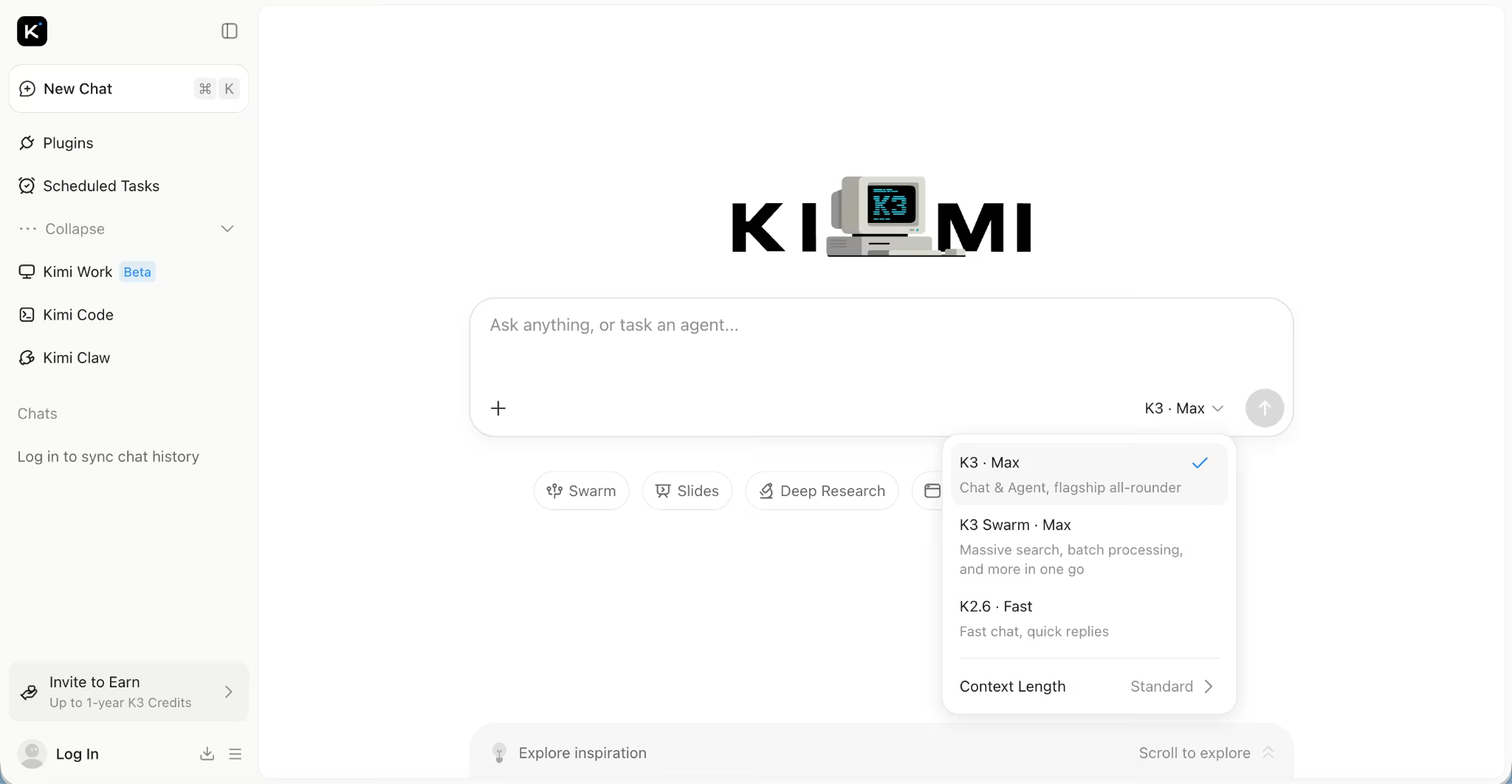
Kimi K3 activates 16 of 896 experts per token and was trained with quantization-aware methods for broad hardware compatibility, according to Moonshot's technical blog. It ships in two variants, K3 Max for chat and agent work and K3 Swarm Max for parallel processing, and it reads text, images, and video inside one model rather than through a separate vision module.
Moonshot also points to vendor-reported demonstrations, including building a compact GPU compiler from scratch and completing a 48-hour autonomous chip-design run. Those are showcase results rather than reproducible benchmarks, so they belong in the promising-signal column, not the proven one.
Where it genuinely leads
Independent evaluator Artificial Analysis placed K3 at 57.1 on its Intelligence Index v4.1, which puts it in Claude Opus 4.8 territory and behind Fable 5 and GPT-5.6 Sol. After LMArena unblinded the model, it ranked first on the Frontend Code Arena. Moonshot's own benchmark table, which is vendor-reported and not yet independently reproduced, shows leads on SWE Marathon and BrowseComp.
There is one caveat. Moonshot evaluated K3 and its rivals under different coding harnesses, so its cross-vendor numbers are not strictly comparable, and the independent Intelligence Index gives a cleaner read on where K3 actually sits.
Price is the other draw. At $3 input and $15 output per million tokens, with cached input at $0.30, K3 undercuts Fable 5, GPT-5.6 Sol, and Opus 4.8 on raw token rates. It does not undercut Gemini 3.1 Pro, which is cheaper at its standard tier of $2 input and $12 output for prompts up to 200K tokens, and only rises above K3 once a prompt crosses that threshold. Raw rates also understate the real bill.
Because K3 runs at persistent maximum reasoning effort, its output is verbose, and Artificial Analysis estimates its cost per task at about $0.94, close to GPT-5.6 Sol at $1.04, which narrows the expected savings. For iterative coding workloads that reuse a large prefix, the cached input rate is where most of the spend lands, and Moonshot reports a cache-hit rate above 90 percent on its own coding traffic, though your result depends on how stable the prompt prefix stays.
Where it falls short
The limitations are mostly operational. Moonshot has not released the weights yet, so the open-weight promise is a commitment rather than something you can download today. Self-hosting calls for 64 or more accelerators, which keeps the benefit theoretical for small teams.
Generation can also become unstable if the agent harness fails to pass back the full thinking history, or if a session that started on another model switches to K3 partway through. Only the maximum reasoning effort is available at launch, with lighter modes promised but undated. These operational rough edges are the main reason teams evaluate other models.
Who should stay on it
K3 suits teams that want near-frontier performance with an open-weight path and low token prices, and that can either wait for the July 27 weights or resource the hardware to run them.
Kimi K3 alternatives at a glance
Six models stand out as replacements, split between closed flagships that fix the polish gap and open-weight options you can run today.
| Model | Best for | Pricing (input / output, per 1M) |
|---|---|---|
| Claude Fable 5 | The most polished autonomous agent, when budget is not the constraint | $10 / $50 |
| GPT-5.6 Sol | Mature agent tooling inside the OpenAI stack | $5 / $30 |
| Claude Opus 4.8 | Closed-model reliability at half Fable 5 pricing | $5 / $25 |
| Gemini 3.1 Pro | Multimodal and long-context work on a smaller budget | $2 / $12 (to 200K), $4 / $18 above |
| GLM-5.2 | An open-weight coding engine whose weights already shipped | $1.40 / $4.40 (cached $0.26) |
| DeepSeek V4 Pro | The cheapest open-weight route for high-volume work | $0.435 / $0.87 |
Pricing as on July 2026, per million tokens (input / output).
Closed-flagship Kimi K3 alternatives that fix the polish gap
If the reason for leaving K3 is user experience or predictable operations, closed flagships are the direct answer. They give up open weights and self-hosting, and in return they behave consistently and ship as finished products.
1. Claude Fable 5
The case for it
Claude Fable 5 is the model Moonshot names as ahead of K3 on user experience, which makes it the natural first stop for anyone leaving over polish.
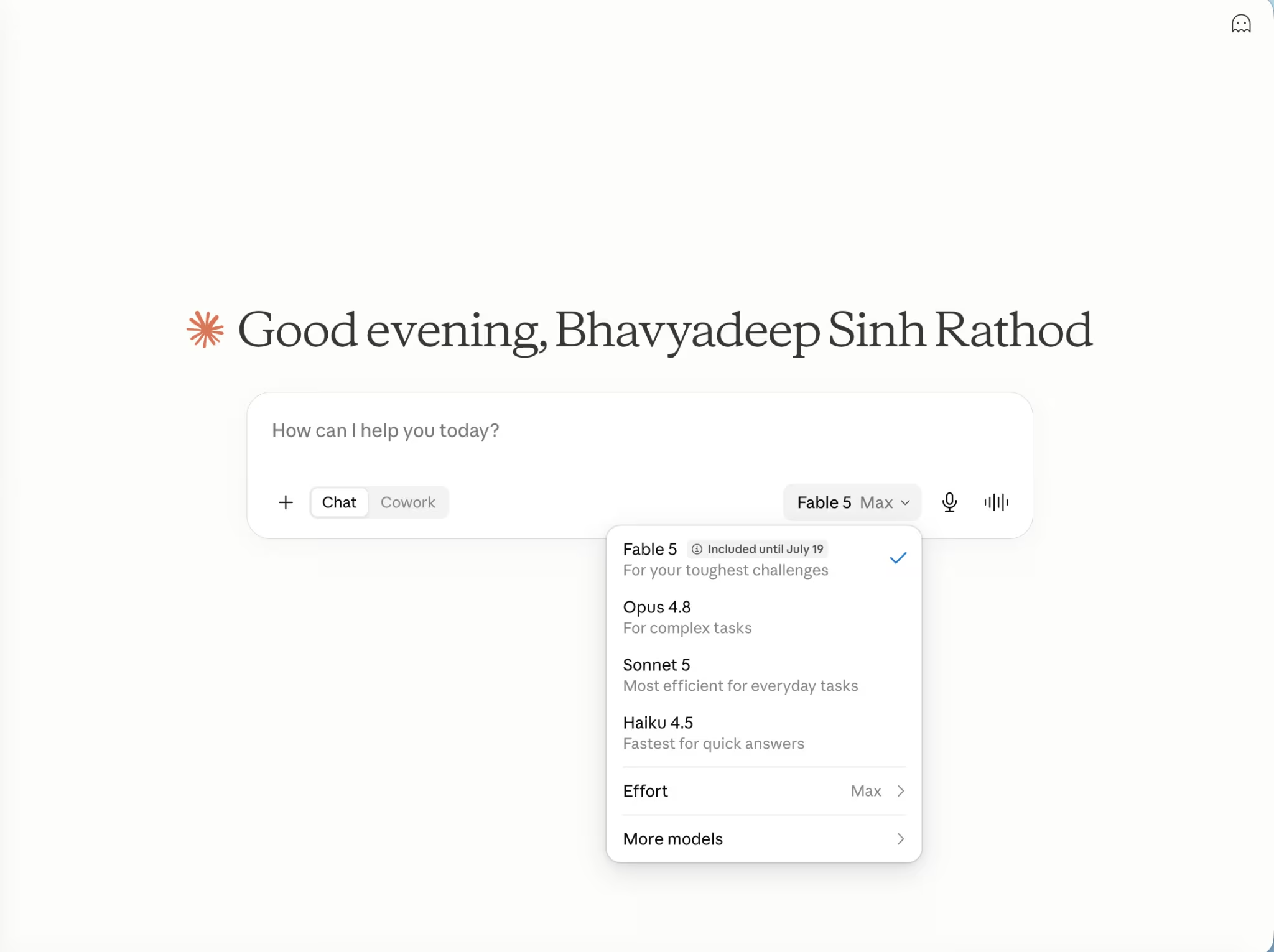
It is Anthropic's Mythos-class flagship, built for long-running autonomous work, with a 1 million token context window.
What works
In Moonshot's own comparison table, Fable 5 leads K3 on FrontierSWE and PostTrain Bench, and Artificial Analysis ranks it above K3 on the Intelligence Index. For end-to-end tasks that would otherwise need frequent human check-ins, that consistency is the reason to pay for it.
The sticker price is also not the whole story. Anthropic prompt caching can cut input costs by up to 90 percent on repeated context, which softens the gap for agent workloads that reuse a large prefix across many calls.
The catch
Fable 5 is the most expensive option here at $10 input and $50 output per million tokens, double Opus 4.8 on both sides, per Anthropic pricing. Availability has also been less than constant. Anthropic suspended access on June 12, 2026 to comply with U.S. export controls, then restored it on July 1. For production planning, that history belongs in the risk column.
Best fit
Choose Fable 5 when a single failed agent loop costs more than the premium token rate, and when both the price and the platform access history are acceptable.
2. GPT-5.6 Sol
What it is
GPT-5.6 Sol reached general availability on July 9, 2026 as the top tier of OpenAI's Sol, Terra, and Luna family, with a 1.05 million token context window and list pricing of $5 input and $30 output per million tokens. It is the second model Moonshot concedes a UX gap to.
Strengths
Sol is strong on terminal and agentic coding, and OpenAI's ecosystem is the widest in the market, spanning ChatGPT, Codex, and a deep bench of third-party integrations. For teams already building on OpenAI, moving a K3 workload to Sol is close to a model-string change.
A higher-effort Sol Ultra mode is available for the hardest problems, and OpenAI reports base Sol at 88.8 on Terminal-Bench 2.1, among the top agentic-coding scores published at launch.
The catch
Requests above 272K input tokens bill at a higher rate, $10 input and $45 output per million tokens, applied to the whole request, according to OpenAI's pricing documentation. Sol is also fully closed, so the self-hosting and fine-tuning options that pull people toward K3 are not available.
Best fit
Sol fits teams inside the OpenAI stack that want a mature agent and can plan around the long-context surcharge.
3. Claude Opus 4.8
The honest peer
Claude Opus 4.8 is the one model that independent evaluators place in the same tier as K3.
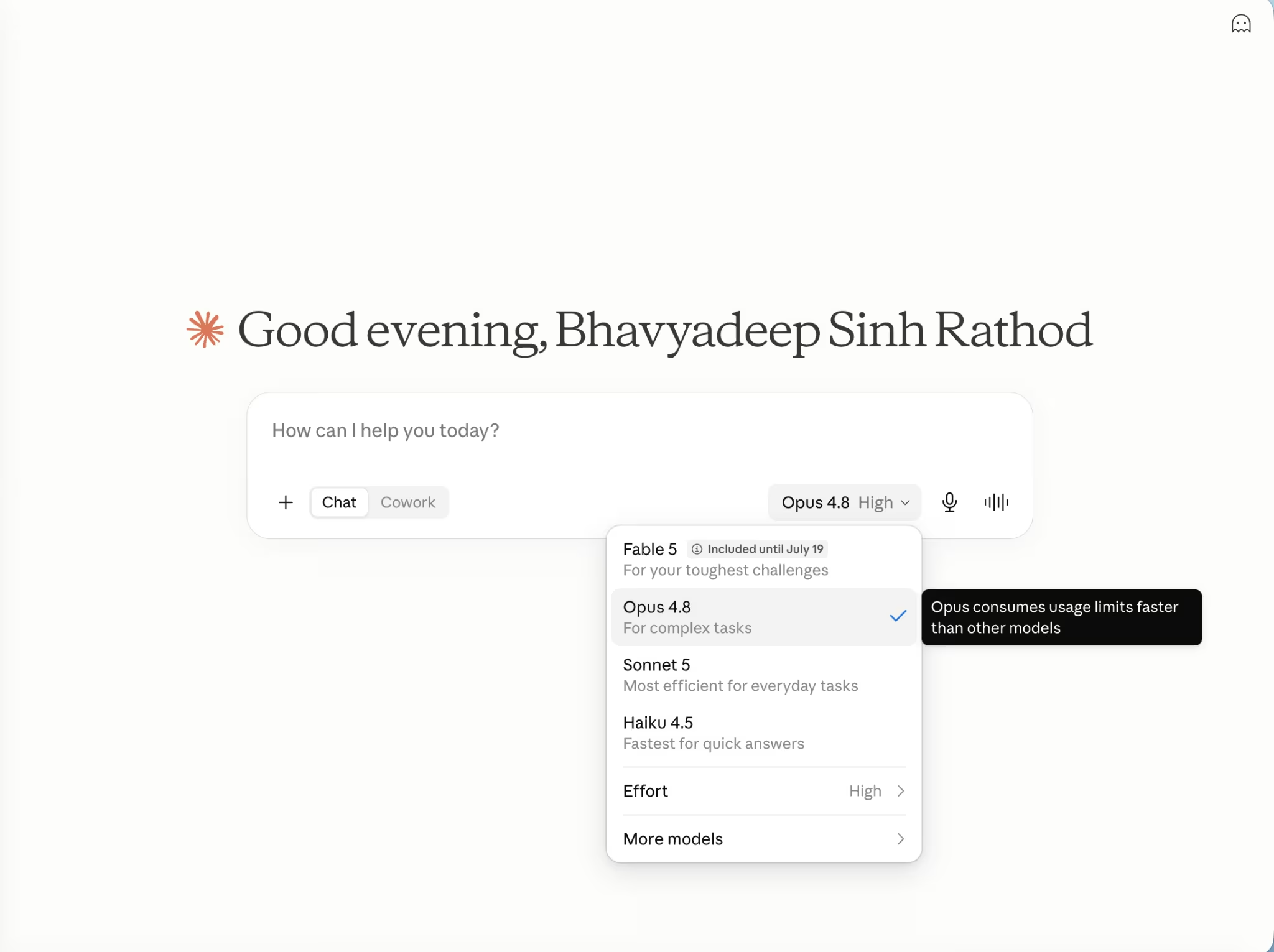
On the Artificial Analysis Intelligence Index, K3's score of 57.1 sits beside Opus 4.8 rather than the higher-scoring flagships, which makes Opus the most direct like-for-like comparison for K3.
Why it is the pragmatic pick
Opus 4.8 costs $5 input and $25 output per million tokens, half of Fable 5, with the full 1 million token context at standard pricing. It offers closed-model reliability without paying flagship rates, which is the trade most teams are actually weighing.
Best fit
Pick Opus 4.8 when you want predictable, closed-model behavior at a mid-tier price and do not need the absolute top of the frontier.
4. Gemini 3.1 Pro
What it is
Gemini 3.1 Pro is Google's flagship Pro-tier model and the successor to the Gemini 3 Pro preview, though it still carries a preview label in Google's API docs, where it is listed as Gemini 3.1 Pro Preview.
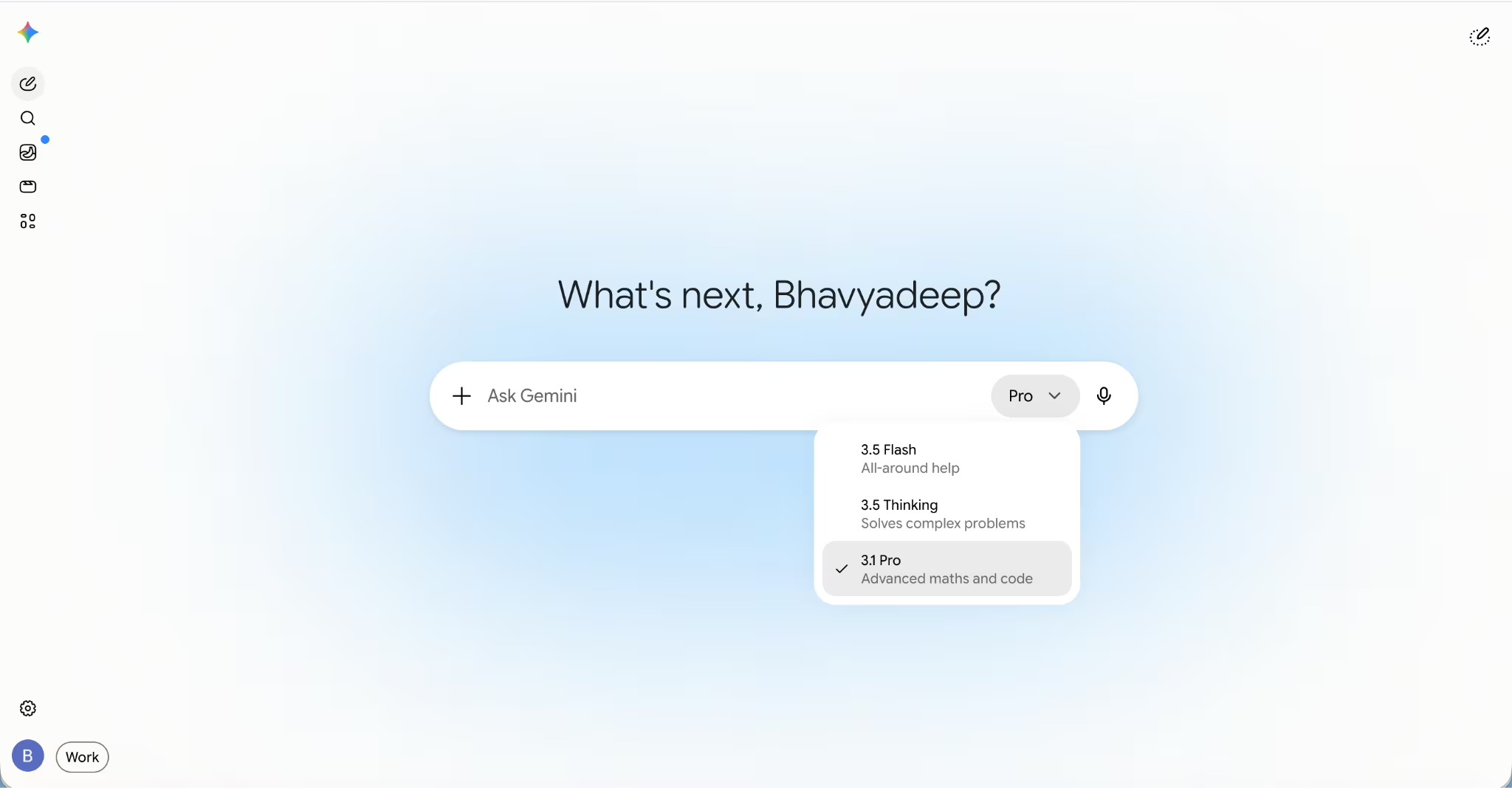
Pricing is context-tiered: $2 input and $12 output per million tokens up to 200K tokens, rising to $4 and $18 above that, per Google's pricing. It reads multiple modalities natively and carries one of the largest context windows on the market.
Strengths
For multimodal parity with K3, Gemini is the strongest closed comparison, and at the standard tier it is the cheapest closed flagship here. Long-document analysis and retrieval over very large inputs are where it earns its keep.
Google also ships Gemini 3.5 Flash, a cheaper sibling tuned for agentic coding, so a common pattern is to route lighter tasks to Flash and reserve 3.1 Pro for the reasoning-heavy work.
The catch
The price step above 200K tokens can surprise long-context budgets, and Gemini's internal reasoning tokens bill at the output rate, so heavy reasoning tasks cost more than the sticker rate implies. Both details are in Google's official pricing.
Best fit
Gemini 3.1 Pro suits multimodal and long-context workloads where budget matters and most requests stay under the 200K threshold.
Open-weight Kimi K3 alternatives you can run today
The other reason people leave K3 is the opposite of polish. They wanted an open-weight model, then hit the 64-accelerator requirement and the July 27 weight date. These two MIT-licensed models answer that by shipping weights you can download now, at a fraction of K3 scale.
One consideration applies across all three open options, K3 included: each comes from a China-based lab, so teams in regulated sectors will want to weigh data residency and governance alongside capability. The confirmed MIT licenses on GLM-5.2 and DeepSeek V4 Pro do remove the usage restrictions common to closed models, and K3's own license terms had not been published as of mid-July.
5. GLM-5.2
What it is
GLM-5.2 is Z.ai's open-weight flagship, a Mixture-of-Experts model of roughly 744 to 753 billion parameters with about 40 billion active per token, a 1 million token context window, and MIT-licensed weights already published on Hugging Face, as described in its technical report.
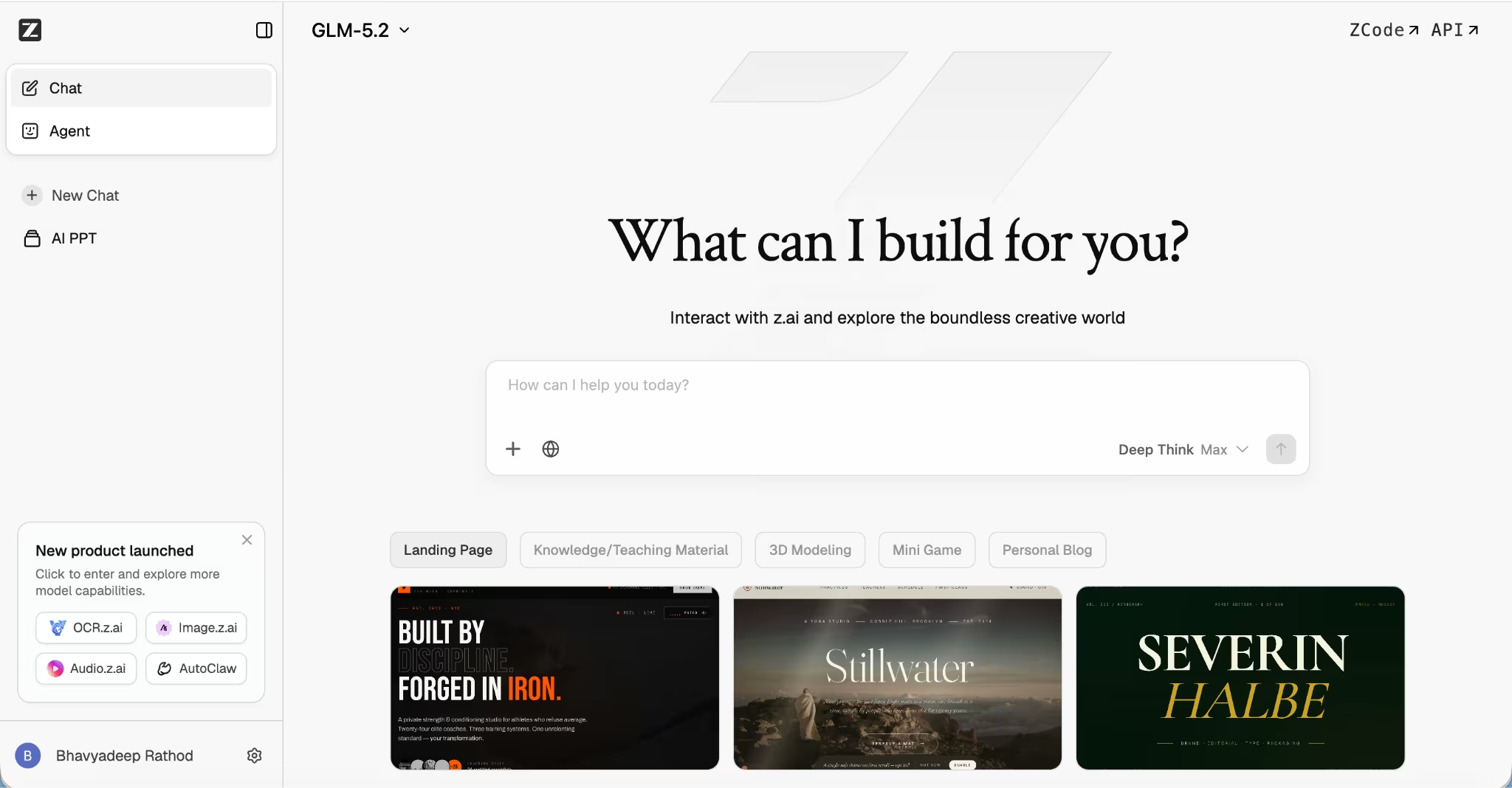
The Z.ai API runs $1.40 input and $4.40 output per million tokens, with cached input at $0.26. Third-party hosts list it lower, around $0.56 to $0.95 on input via OpenRouter.
What works
Artificial Analysis ranks GLM-5.2 as the top open-weight model on its Intelligence Index, at 51. On coding it posts a vendor-reported 81.0 on Terminal-Bench 2.1, and unlike K3, its weights are genuinely available to run.
Beyond the token API, Z.ai sells a GLM Coding Plan subscription starting around $18 per month for teams that prefer a flat rate. One budgeting note before you switch: the model is verbose, so cost per completed task can run higher than the low per-token price first suggests.
The catch
GLM-5.2 is text only, so it does not match K3's native image and video input. Its BF16 weights still run to about 1.51 TB, which keeps serious self-hosting in the domain of well-resourced teams. On Z.ai's own benchmarks it trails Opus 4.8 on the hardest long-horizon evaluations.
Best fit
GLM-5.2 works for teams that want an open-weight coding engine available today and do not need multimodal input.
6. DeepSeek V4 Pro
What it is
DeepSeek V4 Pro held the open-weight scale record before K3, at 1.6 trillion parameters with 49 billion active.
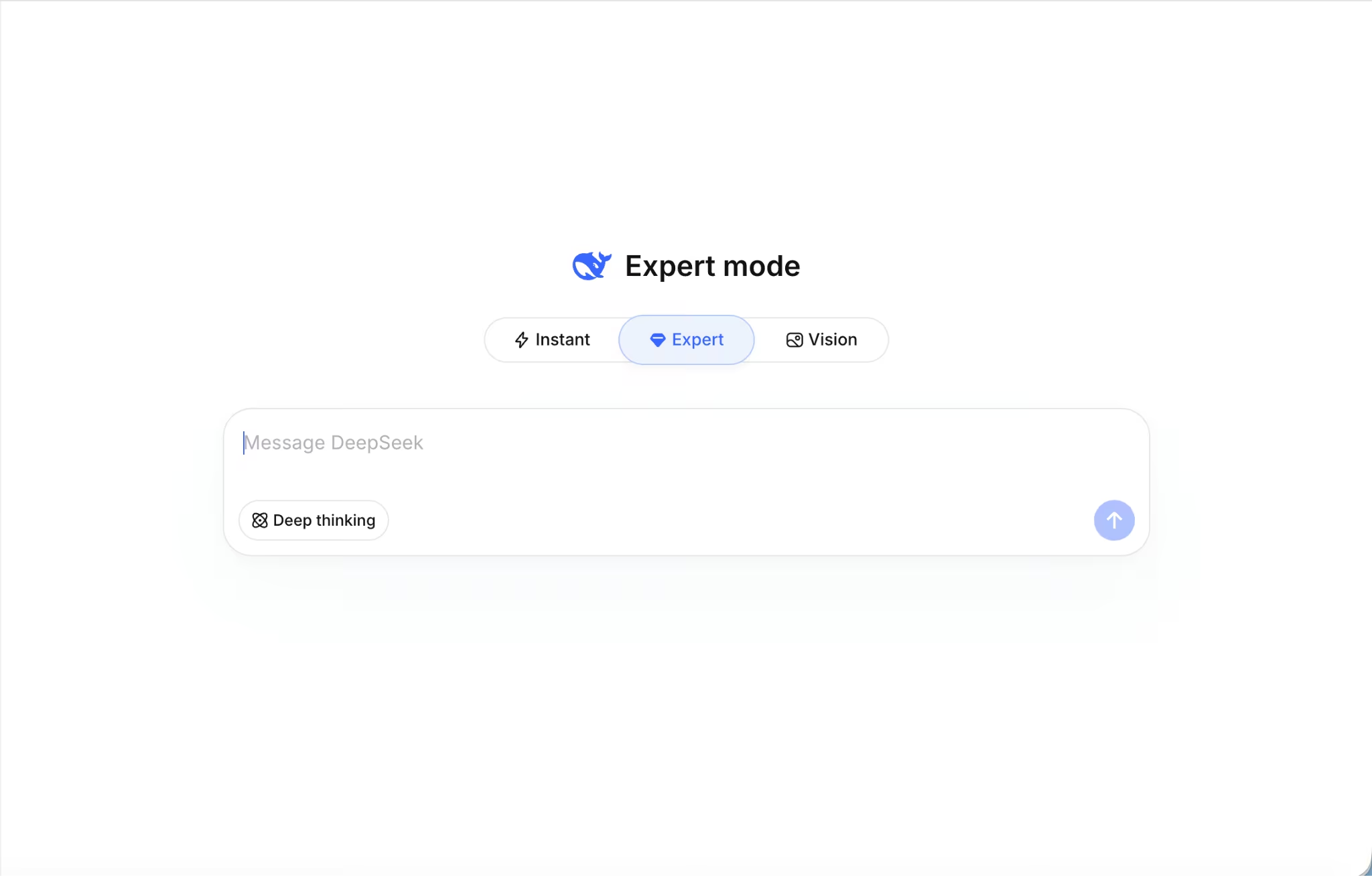
It carries a 1 million token context window, ships under an MIT license with weights available, and is the cheapest model here at $0.435 input and $0.87 output per million tokens, with cache-hit input at $0.003625, per DeepSeek pricing.
The case for it
For high-volume or cost-sensitive work, the price-to-capability ratio is hard to match, and the open weights make self-hosting a real path rather than a promise. It handles long-context reasoning and coding at a level that covers most everyday production tasks.
Adoption is low-friction, too. DeepSeek exposes OpenAI-compatible and Anthropic-compatible endpoints and is hosted across many third-party providers, so moving a workload rarely means rewriting an integration.
Where it stops
DeepSeek V4 Pro trails the current frontier on the hardest reasoning and long-horizon coding, and it is smaller than K3. Teams chasing the very top of the benchmark tables will feel the gap. Teams optimizing quality per dollar usually will not.
Which Kimi K3 alternative fits your workload
No single model on this list replaces everything Kimi K3 bundles at once, which is frontier agentic coding, hard reasoning, native multimodal input, an open-weight roadmap, and low token prices in one system. The right alternative depends on which of those you actually need.
For the most polished autonomous agent, Claude Fable 5 leads on user experience, with a premium price and an access history to plan around. Teams already on OpenAI get mature tooling from GPT-5.6 Sol, provided they watch the surcharge above 272K tokens. Claude Opus 4.8 is K3's true tier peer and the pragmatic pick for closed-model reliability at a fair price.
Gemini 3.1 Pro covers multimodal and long-context work on a smaller budget, as long as most requests stay under 200K tokens. GLM-5.2 gives an open-weight coding engine you can run today, without vision. DeepSeek V4 Pro is the cheapest open-weight route, at the cost of frontier-level reasoning.
If the open-weight path and low token prices are what drew you to Kimi K3 in the first place, the model is still worth testing on your own workload rather than trusting any vendor's benchmark table, Moonshot included. You can get an API key at platform.kimi.ai and select kimi-k3, or try it directly at kimi.com. A recharge promotion runs through August 11, 2026 with bonus credits on API top-ups, and the open weights are scheduled for July 27, so teams planning to self-host should watch Moonshot's Hugging Face page for the drop.
Beyond the model comparison
Every option above assumes you need a coding model. That is the right frame if you are a developer choosing infrastructure for an agentic coding pipeline.
Not everyone comparing coding models actually needs one. If the real goal is a finished product, whether a CRM, a booking system, an internal tool, or a client portal, the model is only a means to an end.
If that resonates with you, Emergent might be the solution you need. Here, you describe the application in plain language, and its multi-agent system builds a full-stack product with a working backend, live integrations such as Stripe, MongoDB, and Shopify, and code you own.
It is not another Kimi K3 alternative. It is an alternative to needing to code at all. If that fits your situation, give Emergent a try and see how far a simple prompt gets you.
Most AI app builders stop at prototypes. Emergent creates production-ready apps you can actually launch.
- Production-ready apps
- Web & mobile apps
- Deploy in minutes







