




Manus AI Review: Quick Verdict (TL;DR)
Manus AI is a strong pick if you want an agent that plans and executes long, multi-step jobs on its own, then hands you a finished result instead of a to-do list to work through.
It runs in a cloud sandbox, operates in the background, and can build a working web app or research hundreds of sources in one pass.
The catch is cost and polish. Manus runs on a credit system that big tasks can drain fast, and the apps and reports it produces often need tidying up before they're client-ready.
So the fit depends on what you're after. If you want a hands-off agent for prototyping and research, it delivers. If you need production-ready output with predictable billing, read the cons first.
I spent a week running Manus AI through the kind of work it promises to take off your plate, and this review covers what I learned. I gave it a working web app to build from scratch and a research task with dozens of sources, then watched how much it could finish on its own before I had to step in.
Manus is one of the more ambitious agents on the market right now, working through whole jobs on its own, and it does things a chat assistant simply can't. It also has a credit system that surprises people, and output that isn't always ready to ship. Here's who it's for, and who's better off with something else.
What Is Manus AI?
Manus is an autonomous AI agent that goes beyond answering questions to take on whole tasks for you, from running a workflow to delivering a finished piece of work. The company leans into that framing, positioning it as an "Action Engine" rather than a chatbot.
Manus works inside a full cloud sandbox with a file system, a terminal, and command execution, so it can run scripts, build its own tools, and carry a job to completion, well past what a chat window can do. To keep a big job on track, it breaks the goal into steps and assigns them to specialized sub-agents.
It's made for people who want to hand off whole tasks rather than supervise each step, like founders and operators who care more about the finished deliverable than the mechanics of getting there.
Ownership is a separate question worth flagging. Meta announced a deal worth roughly $2 billion to acquire Manus in late 2025, but China's regulator blocked it in April 2026. By August 2026, the two companies had unwound the deal entirely, and Manus resumed operating as an independent company.
Manus AI Features
Manus tries to be a general agent, so the feature list runs long, and each piece earns a different amount of trust. Here are the parts that matter and where each one has limits:
- Autonomous, background execution: You assign a task, and Manus works on it in its own cloud environment without continuous supervision, so you can close the tab and come back to a result. Long or heavy jobs cost more credits and take longer.
- Wide Research for work at scale: For big research jobs, a main agent splits your request into many sub-tasks, each running in its own sandbox with fresh context, so quality holds up across hundreds of items. Manus cites analyzing 100 sneaker models or profiling 250 AI researchers as examples. This depth is credit-heavy.
- Full web app building: From a plain-English prompt, Manus handles the code, database, and deployment for a working web app, with native integrations like Stripe, maps, and image generation. Bigger apps still need review before you ship them.
- Your code, your control: You can export the entire codebase, connect a custom domain, and roll back to earlier versions, with no lock-in. That export matters if you ever hand the project to a developer.
- Browser Operator for authenticated tasks: A browser extension lets Manus act inside your own logged-in sessions to handle tasks on sites you already use, running from your local browser, so access stays steady. It works with the sites and permissions you grant it.
- Recurring, scheduled workflows: Manus can turn repeat tasks into scheduled agentic workflows that run without you, plus supporting tools for slides, images, and data analysis.
- Credit-based usage you have to watch: Manus runs on credits, and heavy jobs eat them fast. One big build like my booking app burned roughly 1,000 in a single pass. Plans start at $20/mo with a free tier to test first (full pricing below).
Also read our guide on what is agentic coding to understand how tools like Manus fit into the broader landscape of autonomous AI agents.
How Manus AI Works
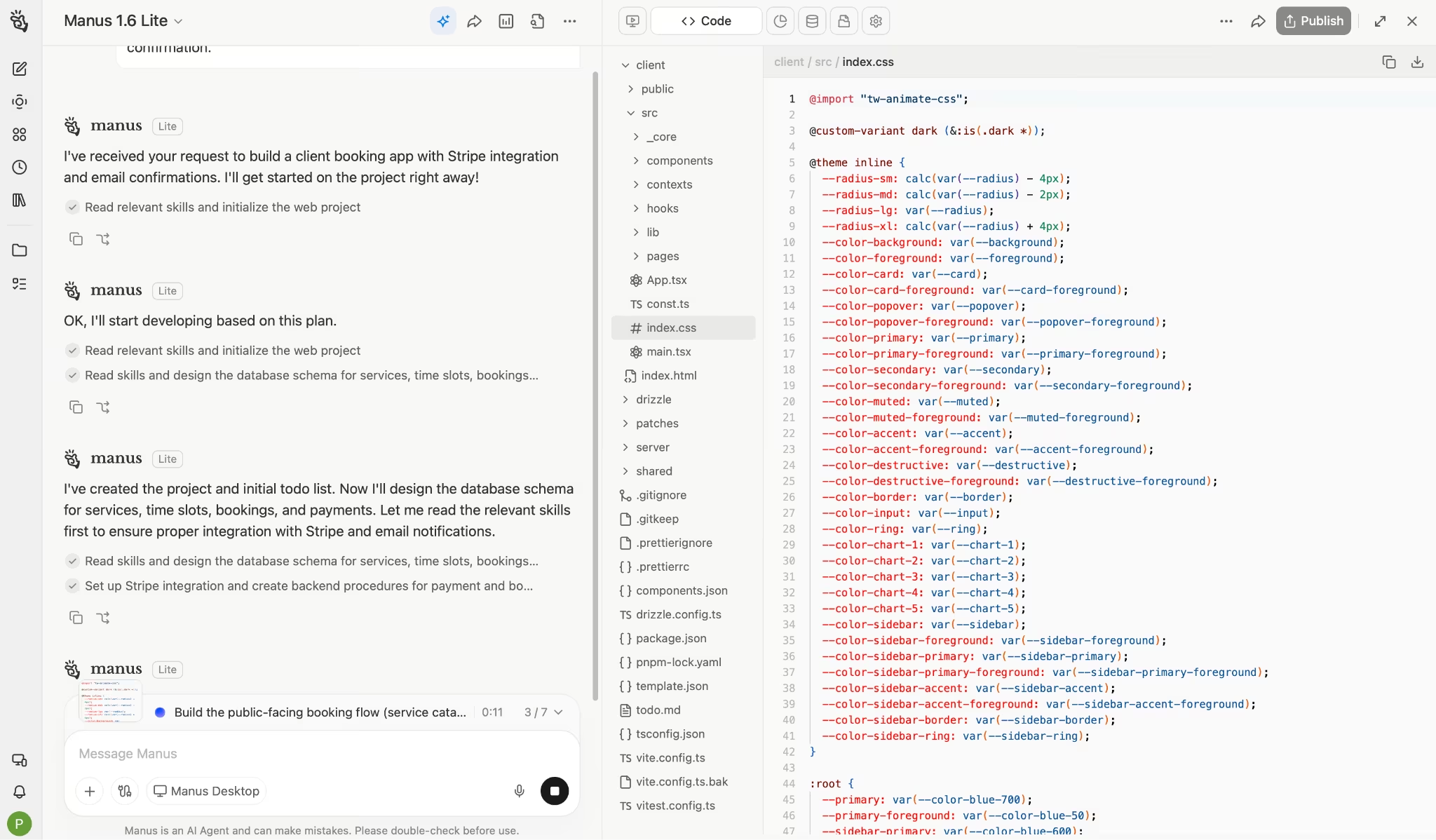
Getting a result out of Manus is closer to briefing a coworker than driving software. The web-app flow runs in three steps:
- Prompt: You describe what you want in plain English, including features, design, and behavior.
- Build: Manus writes the code and wires up the database on its own, then sets up the login and designs the interface without your input.
- Launch and grow: It deploys the app, then tracks analytics and collects leads so you can iterate.
The research flow works the same way at a bigger scale. A main agent breaks your request into independent sub-tasks, each sub-agent processes its piece with a clean context, and the main agent gathers everything into one report.
To see how that holds up, I gave it a build I'd normally hand to a developer:
"Build a client booking app where visitors pick a service, choose a time slot, pay a deposit through Stripe, and get an email confirmation."
I hit send and closed the tab, which is the whole pitch.
About 40 minutes later, Manus came back with a live app. There was a booking calendar, a Stripe sandbox wired up, and a database holding my test reservations. That single build ate roughly 1,000 credits. The meter kept climbing while it worked, with no live alert to tell me how fast.
The result worked as a prototype, though it still had rough edges before it was ready to launch. The confirmation email fired inconsistently, and the mobile layout needed manual fixing before I'd show it to anyone.
Manus AI Reviews: What Users Are Saying

Read enough of these reviews, and the same split keeps showing up. People are impressed by how much Manus finishes unsupervised. They get frustrated, though, watching how fast it spends credits and how much tidying the output needs before it's usable.
Pros
- It completes tasks instead of just answering: Reviewers keep coming back to how much of the work Manus finishes for you, past the point where a chatbot would stop. As Muzammil M. puts it, "What stands out to me is that Manus can handle complete tasks instead of only answering prompts." It's the same delegation I felt when it built my booking app end-to-end.
- You own and export what it makes: Darlene G. notes she likes "being able to export and download what I create in a range of options and formats, which makes Manus a very practical tool with strong performance." Being able to walk away with the files makes it safe to prototype in Manus and finish the job elsewhere.
- Fast from idea to a clean page: For quick builds, users praise how little effort it takes. Manila B. says the one-page website creation "allows me to quickly turn ideas into clean, structured pages with minimal effort." That prototyping speed is what makes Manus tempting for early ideas.
Cons
- A learning curve at the start: The autonomy comes with a setup cost for new users. Péter T. writes that "the user interface can feel a bit overwhelming for beginners at first, and there is a slight learning curve to get the best out of the agent's capabilities." Expect a few runs before you know how to brief it well.
- Thin onboarding and slower moments: Some users want more guidance and snappier performance. A verified reviewer notes that "a few advanced options could be explained better with tutorials" and that "performance could also be improved slightly for faster loading."
- The "unlimited context" claim has limits: what stings for heavy users is the token math. Himanshu J. explains that "once a conversation gets long, it can end up consuming a lot of tokens, which may affect performance or run into usage limits." That ties directly to the credit burn I hit during longer builds.
Overall, users respect what Manus can finish unattended, but many watch the credit meter closely and treat its output as a strong first draft rather than a final deliverable.
My Personal Take on Manus AI
What impressed me was the delegation. With the other tools I've used, I get a plan, and I have to carry it out. Manus took the goal, made its own calls along the way, and handed me something I could open and click through.
When I later pointed it at a research task across dozens of sources, the detail held from the first item to the last, the exact place the chat-based tools I'd used had always thinned out.
The frustration set in around billing, the same place it does for most users. That credit burn I hit on the booking build showed up on every big task I ran.
It matches what I read from people who bought a plan, ran one agent task, and watched a big chunk of their monthly credits disappear before the first result landed.
So my read lines up with the wider verdict. Manus is a clear step ahead for autonomous research and data work, and for spinning up a fast prototype. It's a poor match, though, if you require finished, ship-ready output on a budget you can predict.
In practice, that means I'd reach for it to explore an idea quickly. I wouldn't lean on it to deliver a client's production app without a review pass.
Is Manus AI Right for You?
Manus pays off when you want to delegate whole tasks, and you don't mind keeping an eye on credit costs. Look elsewhere if you need finished, ship-ready work on a fixed budget.
Who will love it:
- Operators who want true delegation: If you'd rather brief an agent and walk away than babysit each step, Manus goes further without hand-holding than the tools you've tried.
- Researchers and analysts working at scale: Wide Research maintains quality across hundreds of sources, where ordinary chatbots start to thin out.
- Founders prototyping fast: Turning a prompt into a working app with a database and login is a quick way to test an idea.
Who should avoid it:
- Anyone on a tight, fixed budget: Credit burn is unpredictable, so a hard monthly cap is hard to guarantee.
- Teams that must ship production-ready output: If the deliverable has to go live without a cleanup pass, plan for review time.
- People who want a simple chat assistant: If you just need quick answers or drafts, a conversational tool is cheaper and easier to use.
The Best Manus AI Alternative: Emergent
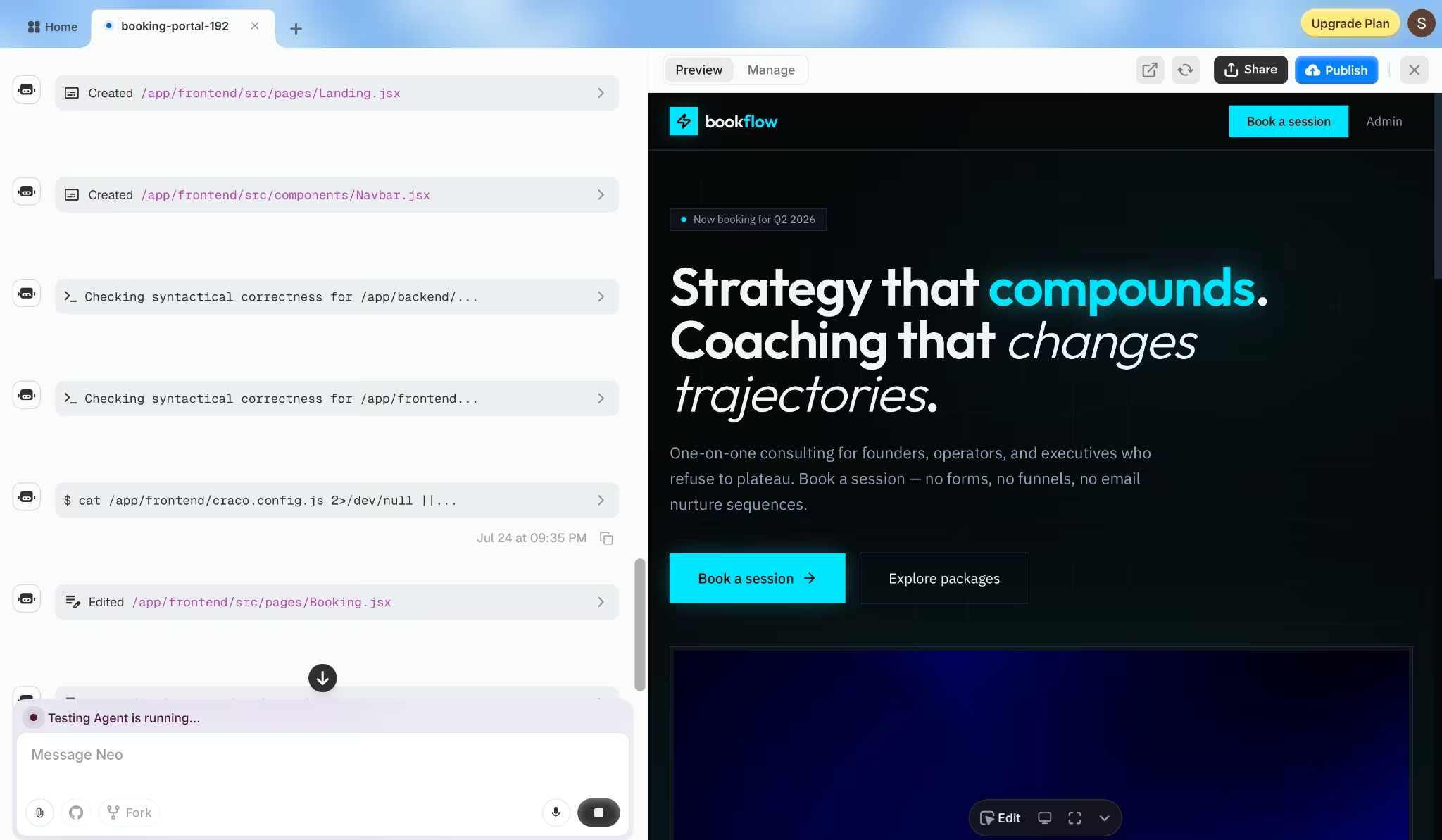
If you came here because you want to build and launch an app rather than manage an agent's credit meter, there's a closer fit. Manus is a broad, do-anything agent.
If your goal is to ship software as a non-technical founder, the tool for that is an app builder.
Emergent is an AI app-building platform that turns a plain-English description into working software you can actually launch, with the app's data, sign-in, and payments handled for you.
Under the hood, it runs on a coordinated system of specialized agents that design and build the app, then test it before it ships.
A few things make it a fit where Manus can feel like overkill:
- Made for non-technical founders: You describe the app in plain terms, and Emergent handles the rest, with no sandbox or credit strategy to manage first.
- It ships software you can launch: The system puts together a functioning app that can take payments and serve customers, rather than stalling at a prototype that needs rework.
- It connects to the tools you use: Emergent integrates with GitHub, Figma, and Notion, so everything you build stays in sync.
- You own what it makes: Your code, data, and the live app stay yours, so you can export everything and take it elsewhere whenever you want.
There's a free tier if you want to test the idea before committing. Try building your first app on Emergent to see what a single description can produce.
Also read our guide on AI agents for business to see how Emergent and Manus compare against the broader field of business-focused AI tools.
My Final Verdict
For someone who wants an autonomous agent to plan and finish long, messy tasks, Manus AI delivers where other tools only hand you a plan, as long as you accept the credit costs and some finishing work on the output. Prototyping and large-scale research are where it shines.
If your goal is to launch an app and you don't write code, an app builder is probably the closer fit. Manus is very capable of being a general agent. If that's the job, it's worth trying, and if you're set on shipping software, start with a builder instead.
Most AI app builders stop at prototypes. Emergent creates production-ready apps you can actually launch.
- Production-ready apps
- Web & mobile apps
- Deploy in minutes







