Wix pricing starts at $0, and paid plans run from $17 to $159/month when billed annually. After reviewing Wix’s current plans, billing notes, and payment fees, I’d start a typical service business on Core, and this guide shows the real cost behind each plan.
Wix Pricing Plans: At a Glance
Wix has five plans: Free, Light, Core, Business, and Business Elite. Displayed prices are based on yearly subscriptions paid upfront; prices and currency vary by location, and the final price appears at checkout.
How the main options compare:
| Wix Plan | Price | Best For | Main Limitation |
|---|---|---|---|
| Free | $0/month | Testing Wix before paying | Wix branding and Wix subdomain |
| Light | $17/month, billed annually | Portfolios, blogs, and simple business sites | No online payments |
| Core | $29/month, billed annually | Small businesses, bookings, and starter e-commerce | Basic e-commerce tools |
| Business | $39/month, billed annually | Growing stores and service businesses | Costs rise with apps and payment volume |
| Business Elite | $159/month, billed annually | High-traffic or more advanced businesses | Overkill for most small sites |
TL;DR
- Choose Free only to test the editor.
- Choose Light for a simple branded site without online payments.
- Choose Core if you need payments, bookings, or starter e-commerce.
- Choose Business if e-commerce is already driving revenue.
- Skip Business Elite unless you already need advanced e-commerce, unlimited storage, or a larger team setup.
What Each Wix Pricing Plan Includes
Wix Premium plans remove Wix branding, allow a custom domain, and include 24/7 Wix Customer Care. Light is designed for a basic online presence, while Core and Business are better for selling products or services. Business Elite is aimed at higher-traffic sites with more advanced needs.
Free: $0/month
The Free plan gives you a way to test Wix before committing to a paid site. It lets you build and publish a website with Wix hosting, templates, security, and design tools, but the free setup uses Wix branding and a Wix subdomain.
Pros:
- No-cost testing: You can explore the editor before paying.
- Publishable preview: You can publish a basic site on a Wix subdomain.
- Useful for mockups: It works for personal projects and early site drafts.
Cons:
- Wix branding: The published site displays Wix branding.
- No custom domain: You must use a Wix subdomain.
- No online payments: You’ll need a paid plan to take payments through the site.
Free is useful for evaluation, but it’s not a real launch plan for a founder, consultant, or service business.
Light: $17/month
Light is the cheapest paid Wix plan. It includes a free domain for one year, 2 GB of storage, multi-cloud hosting, a light marketing suite, and two site collaborators.
Light is best for portfolios, blogs, resume sites, and simple service pages. A solo consultant, photographer, or local contractor can use it to publish a clean site with a custom domain and no Wix ads.
Pros:
- Lowest-paid entry point: It removes Wix branding without forcing you into e-commerce pricing.
- Good for simple sites: You can publish a branded site with a custom domain and no Wix ads without paying for e-commerce tools you won’t use.
- One-year domain voucher: Selected yearly or multi-year plans include a first-year domain voucher.
Cons:
- No payments: Light users can’t accept payments through the site.
- Low storage: 2 GB is tight for media-heavy sites.
Light is worth it if your website’s job is to look professional and collect leads. It’s not the right plan for online stores, paid bookings, or client portals.
Core: $29/month
Core is the first Wix plan I’d consider for solo founders and small teams that need the site to take payments, bookings, or online orders. It includes 50 GB of storage, basic marketing tools, payment acceptance, basic e-commerce, scheduling and services, and five site collaborators.
This plan is best for small businesses that need to accept payments, online orders, or paid bookings. A Brooklyn real estate agent collecting lead forms, a Texas roofing contractor taking quote requests, or a consultant selling paid strategy calls are good examples.
Pros:
- Payments start here: Core unlocks online payments.
- More room to grow: 50 GB of storage gives small businesses more space for product images, service pages, blog content, and marketing assets than the Light plan.
- Good first paid business plan: You get payments, e-commerce, and scheduling tools without moving straight to the more expensive Business or Business Elite plans.
Cons:
- E-commerce is basic: Stores with higher volume or more complex operations may outgrow it.
- Payment fees still apply: In the United States, Wix Payments charges 2.9% + $0.30 for standard credit and debit card payments, excluding American Express.
Core is the best-value Wix plan for most small businesses because it unlocks the features that turn a site into a business tool: payments, bookings, and e-commerce.
Business: $39/month
Business is for Wix users who are already selling and need more room. Business includes 100 GB of storage, standard marketing tools, standard e-commerce, scheduling and services, and 10 site collaborators.
Use Business when your store or service site has enough activity that the extra storage, collaborator access, and e-commerce tools save time.
Pros:
- Better for growing stores: It gives you more room than Core for products, media, and business activity.
- More collaborators: Up to 10 team members can access and manage the site without sharing a single login.
- Stronger e-commerce fit: Business gives growing stores more storage and selling capacity once product pages, order volume, and store operations outgrow Core.
Cons:
- Still not custom software: You’re working inside Wix’s website and commerce system, so custom workflows, dashboards, and app-like logic may need another tool.
- Add-ons can raise the bill: Wix’s App Market includes apps with labels like “Free to install,” “Free plan available,” and “Premium Site Required,” so the real cost depends on the apps you add.
Business is worth paying for when your site is already part of revenue operations. It’s too much if you only need a five-page marketing site.
Business Elite: $159/month
Business Elite is Wix’s highest self-serve plan. Business Elite includes unlimited storage, advanced marketing tools, advanced e-commerce, scheduling and services, an advanced developer platform, and 100 site collaborators.
This plan fits established businesses that need more scale, more collaboration, or more advanced site functionality. Enterprise is custom-priced for larger teams with multi-site management, support, and account management.
Pros:
- Unlimited storage: It suits media-heavy sites and large catalogs.
- More team access: Up to 100 collaborators can manage content, marketing, store operations, and site updates.
- Advanced e-commerce: It gives established stores more capacity than the Business plan.
Cons:
- Large price jump: $159/month equals $1,908/year before payment fees, apps, email, domain renewal, or outside help.
- Too much for a first paid site: Core or Business will cover the needs of many service businesses and smaller stores.
What Does Wix Really Cost?
Wix’s real cost is the plan price plus domain renewal, payment processing, paid apps, business email, and any outside help you need. The sticker price tells you what Wix costs to access; the real bill depends on what the site needs to do.
A $29/month Core plan costs $348 per year before taxes if you pay annually. If you process 100 US card orders at $50 each in one month, Wix Payments fees would be about $175 for that month: 2.9% of $5,000 is $145, plus $0.30 across 100 orders is $30. That makes the effective business cost much higher than the sticker price.
| Site Type | Likely Wix Plan | Base Platform Cost | What Changes the Real Cost |
|---|---|---|---|
| Simple portfolio or brochure site | Light | $204/year | Domain renewal after year one, email, basic apps |
| Service business with forms and bookings | Core | $348/year | Payment fees, booking setup, email, lead tools |
| Small online store | Core or Business | $348–$468/year | Payment volume, product media, apps, shipping tools |
| Growing e-commerce site | Business | $468/year | Paid apps, refunds, chargebacks, support workflows |
| High-traffic or multi-team site | Business Elite | $1,908/year | Advanced e-commerce, integrations, staff workflows |
| Custom website or web app | Agency or developer | $1,500–$100,000+ | Scope, design, integrations, maintenance, security |
I looked at broader benchmarks when comparing Wix with custom or in-house work. The US Bureau of Labor Statistics (BLS) lists the median annual wage for web developers at $90,930 in May 2024, before benefits, tools, management, and overhead.
If you only need occasional website help, a freelancer or agency quote can still make sense, but the budget should cover scope, design, review, support, and later fixes.
Hidden and Ongoing Wix Costs to Budget For
Wix isn’t hiding the main plan price, but recurring extras can push the real bill higher. Payment processing is usually the biggest surprise because fees rise with every order, before you add apps, refunds, chargebacks, or shipping tools.
| Cost | What to Budget For | Why It Adds Up |
|---|---|---|
| Domain renewal | Regular renewal price after year one | The free domain voucher covers the first year, then the domain renews at the regular price. |
| Payment processing | 2.9% + $0.30 for standard US credit/debit cards | Payment fees grow with order volume, even if your plan price stays flat. |
| Refunds | Original processing fee may not be returned | Refunded payments still keep the original processing fee. |
| Chargebacks | $15 for Wix Payments, excluding PayPal, in the US | Chargebacks can turn small disputes into extra costs. |
| Apps | Free, freemium, or paid app costs | App Market tools can add marketing, forms, reviews, subscriptions, chat, or store features. |
| Separate business email subscription | You buy business email separately through Google Workspace once you have a domain. | |
| Outside design help | Hundreds to thousands of dollars | Agencies and designers can help, but custom work can cost more than the Wix plan itself. |
| Human review | Expert review for sensitive workflows | Payments, private data, permissions, and automated actions need review before launch. |
Your checkout total may differ because Wix varies prices by location and adds applicable taxes at checkout.
Which Wix Plan Should You Choose?
Choose the cheapest Wix plan that supports the action your site needs users to take.
| Use Case | Best Wix Plan | Why |
|---|---|---|
| Testing Wix | Free | You can learn the editor without paying. |
| Portfolio, resume site, or simple brochure site | Light | It removes Wix branding and supports a custom domain. |
| Local service business | Core | It unlocks payments, scheduling, and basic business tools. |
| Small online store | Core | It’s the lowest plan that supports e-commerce and payments. |
| Growing e-commerce brand | Business | It adds more storage and stronger e-commerce capacity. |
| High-volume site or larger team | Business Elite | It adds unlimited storage and 100 collaborators. |
| Multi-site enterprise program | Enterprise | Pricing is custom and depends on scope. |
Is Wix Worth the Cost?
Yes, Wix is worth the cost if the plan supports a clear business outcome: leads, bookings, orders, paid appointments, or saved setup time. Core costs $348/year before taxes when billed annually, so a $1,000 client from a contact form can cover the platform cost for a consultant.
A store with thin margins needs a stricter ROI check because payment fees, apps, refunds, and shipping tools can change the real bill. It’s less useful when your real goal is a custom product, internal dashboard, client portal, or workflow that needs flexible app logic.
Wix is worth it if you:
- Need a marketing website more than custom software.
- Want to launch a portfolio, service site, blog, or small store.
- Prefer templates, visual editing, and built-in website tools.
- Don’t want to manage hosting separately.
- Need bookings, e-commerce, forms, and basic marketing in one system.
Skip Wix if you:
- Need a custom workflow, not just website pages.
- Want a customer portal, dashboard, marketplace, or internal tool.
- Need complex roles, permissions, or business logic.
- Expect to move fast through product experiments.
- Need code-level flexibility beyond a website builder.
For a consultant’s website, Wix is a practical choice. For a consultant’s client portal with logins, project dashboards, approval workflows, and payment steps, an AI app builder or custom development route may fit better.
Ready to build something beyond a website? Try our small business app builder for custom workflows, portals, and dashboards that Wix can't handle.
Wix Alternatives and Pricing Comparison
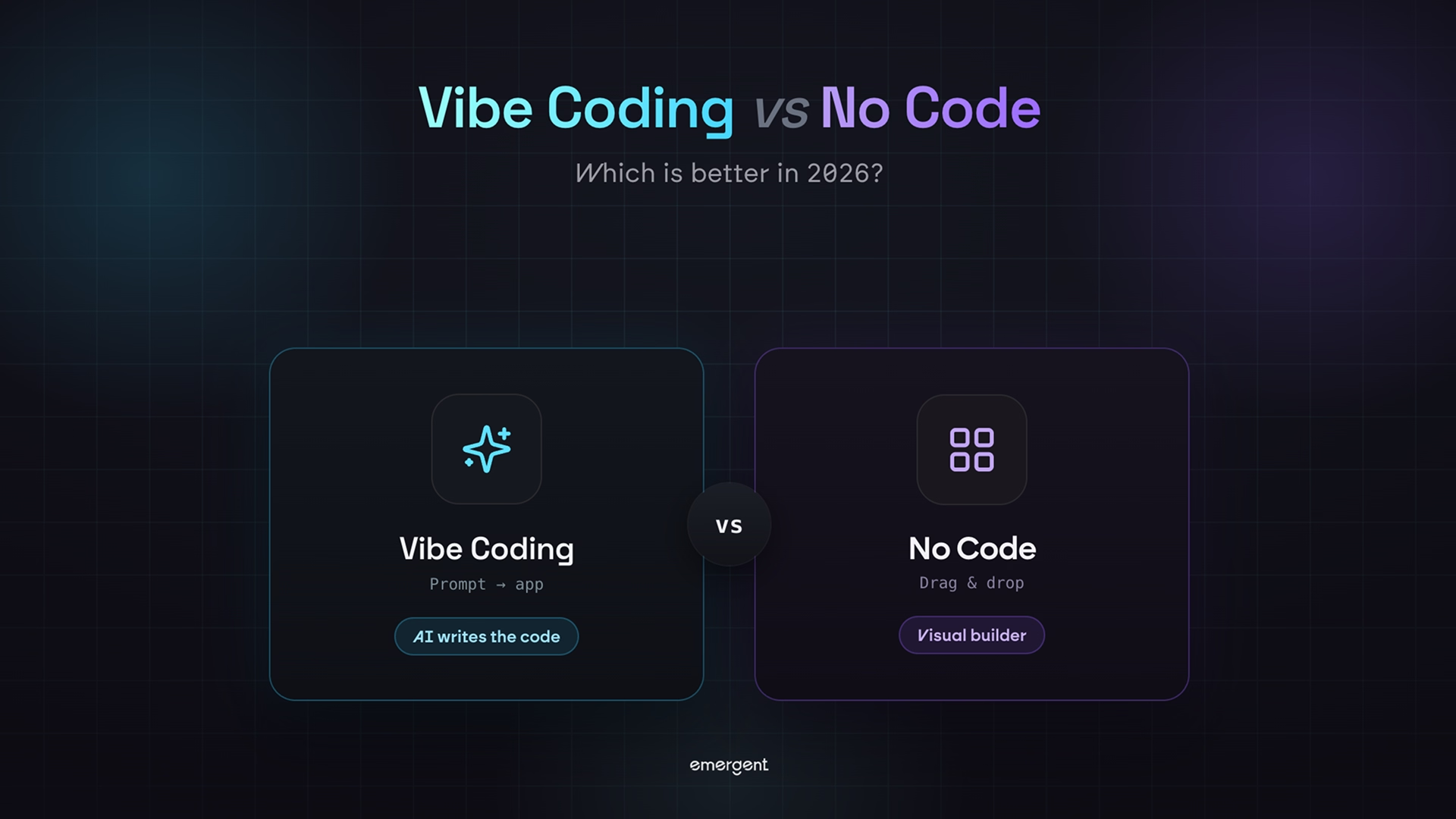
Wix sits in the website-builder lane, so it’s a strong fit for public sites, portfolios, blogs, and basic stores. Emergent is different: it’s closer to vibe coding, where you describe the app or workflow you want and use AI to help build a working product instead of assembling only website pages.
How the main alternatives compare:
| Tool or Route | Starting Price or Typical Cost | Pricing Model | Best For |
|---|---|---|---|
| Emergent | $20/month ($17/month annually) | Credit-based AI app building | Production ready apps, mobile apps, dashboards, portals, and internal tools |
| Webflow | $25/month ($15/month billed annually) | Site plan plus workspace options | Design-heavy marketing sites and content-rich sites |
| Shopify | $39/month ($29/month billed annually) | Commerce subscription plus payment fees | Online stores with deeper commerce operations |
| Custom web development | $1,500–$100,000+ | Project or agency quote | Custom websites, complex integrations, and larger builds |
Also read our best Wix alternatives guide for a deeper look at what else is worth trying.
Emergent vs Wix: Which Should You Choose?
Choose Wix when you need a website. Choose Emergent when you need a working app, dashboard, mobile app, or business workflow that goes beyond pages.
Emergent is a better fit when you need an AI app builder for dashboards, portals, mobile apps, or internal tools instead of a template-based website.
Emergent is better for:
- A contractor building a job-tracking dashboard.
- A real estate agent building a lead-routing workflow.
- A consultant building a client portal.
- A small agency building a reporting dashboard.
- A founder validating a software product before hiring developers.
Wix is better for:
- A public-facing website.
- A portfolio or service page.
- A blog.
- A simple booking site.
- A starter e-commerce store.
Use both if:
- You want Wix for the public marketing site and Emergent for the workflow behind it.
- You need a polished website now, then a custom internal tool later.
- You want to validate an app idea in Emergent before committing to agency or developer costs.
Emergent can build a simple website, but it earns its place when the job goes beyond pages. Workflows, dashboards, and connected tools are where it pulls ahead of a template builder.
For payments, private customer data, admin access, or automated actions, treat any AI-generated app as a draft that needs human review before launch. According to OWASP, overreliance on AI outputs and weak oversight can create security, legal, and decision-making risks.
Try building the first version in Emergent before committing to a custom-development budget.
My Bottom Line on Wix Pricing
Wix pricing is fair if you need a website and choose the right tier. Core is the best plan for a typical service business because it unlocks payments, e-commerce, scheduling, and enough storage without jumping to the $39 or $159 tiers.
Choose Light if you only need a polished site with a custom domain. Choose Business if e-commerce is already working and you need more room. Choose Business Elite only if your site has scale, team, or advanced e-commerce needs.
Skip Wix if your “website” is really an app. If you need user accounts, dashboards, approval flows, internal tools, or custom product logic, compare Wix against an app builder like Emergent or a custom development route before locking into a website-builder stack.
Emergent designs, writes, and publishes your whole site from one prompt. No templates, no drag-and-drop.
- Full site from one prompt
- Custom design, real pages
- Publish in minutes