



TL;DR
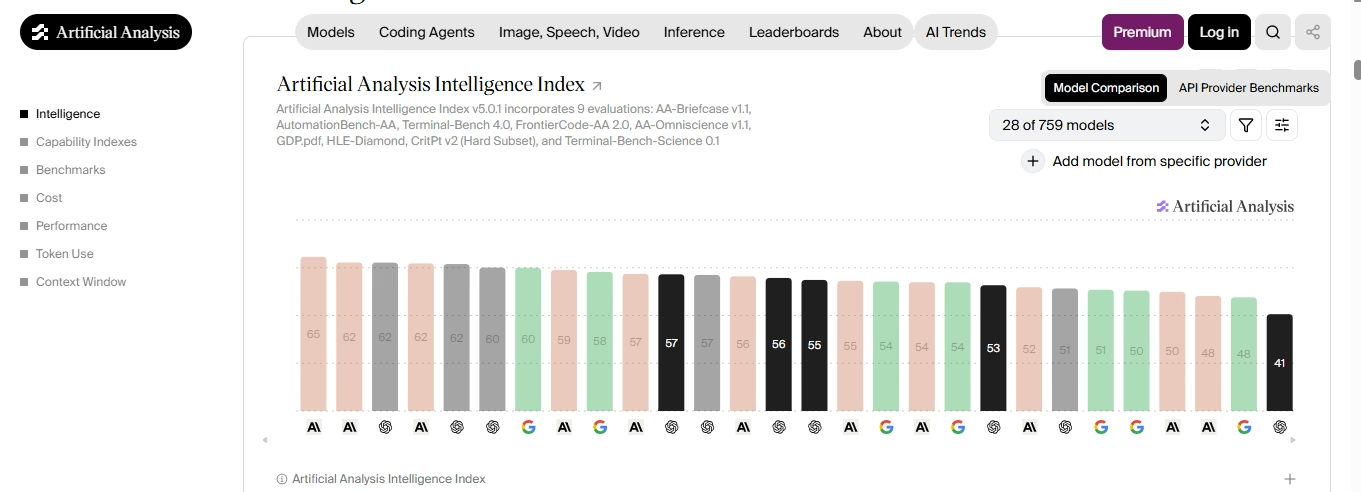
- GPT-6.2 Sol scores 57 on the Artificial Analysis Intelligence Index. That ranks it 11th of 92 models, above the median of 43.
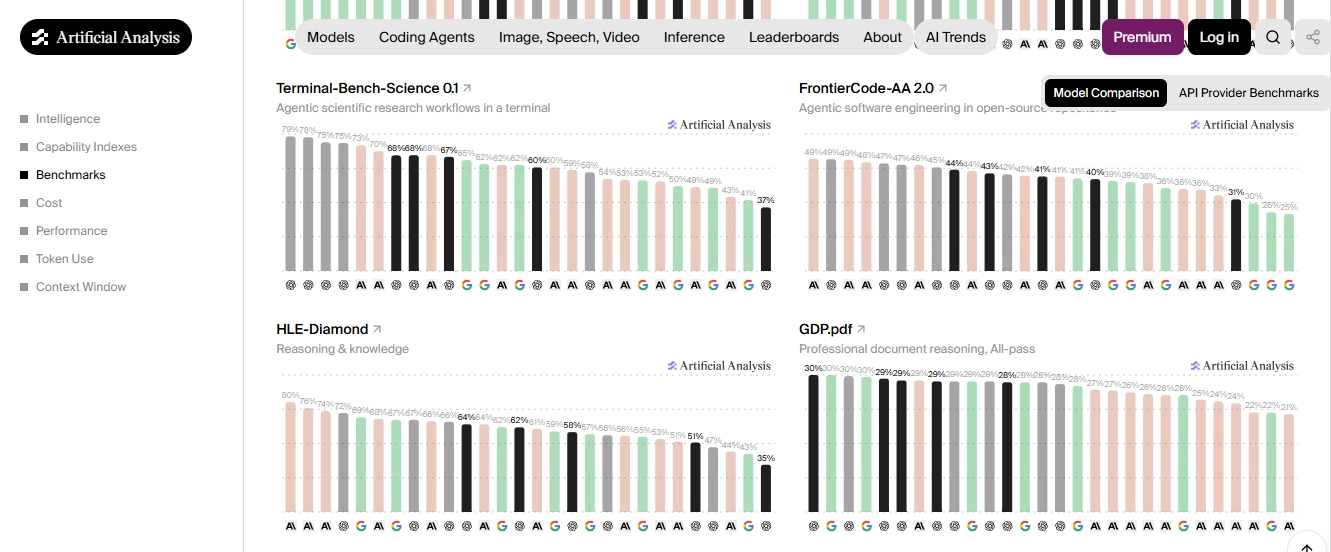
- Its strongest percentage-based results are in automation, science, and reasoning: 71 on AutomationBench-AA, 68 on Terminal-Bench-Science 0.1, and 64 on HLE-Diamond.
- It costs $1.01 per task and runs at 85 tokens per second. The first answer token takes 66.70 seconds at max effort.
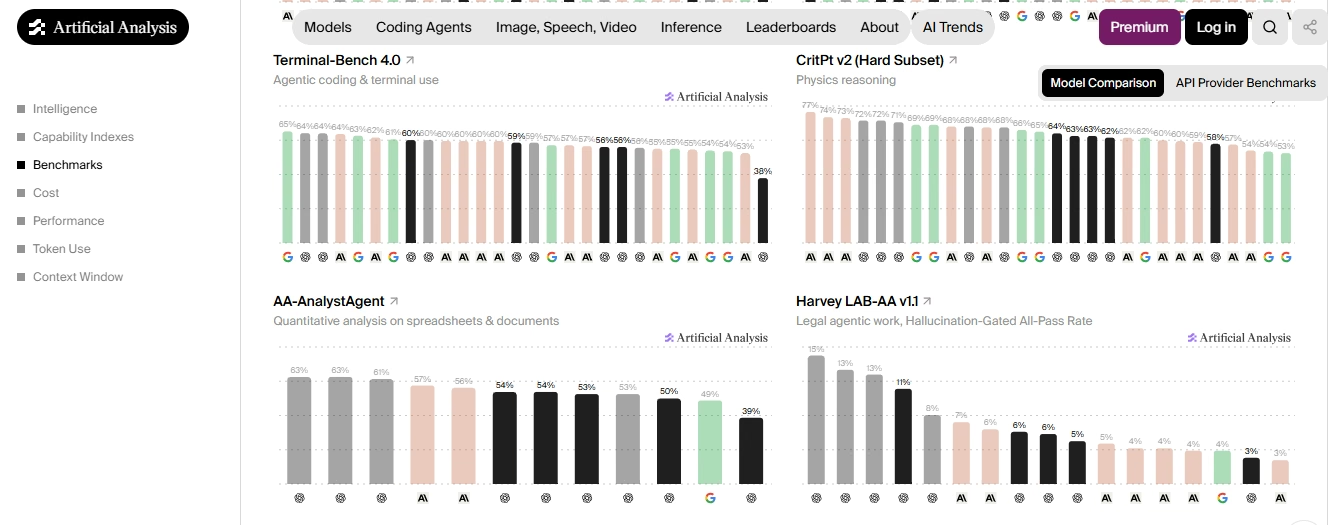
- Its weak spots are legal work (11 on Harvey LAB-AA) and a 55% hallucination rate.
- API pricing is $2.00 input and $10.00 output per 1M tokens. It beats GPT-6.1 Sol on score, speed, and cost per task.
Launch posts often highlight a lab’s best results, so they may not help much when choosing a model. GPT-6.2 Sol benchmark results from an independent tester give a more balanced view. A benchmark gives you a number to compare a model's performance. It also shows where the model falls short, which is just as important as where it does well.
GPT-6.2 Sol scores 57 on the Artificial Analysis Intelligence Index, which ranks it 11th of 92 models. Most tests measure agent work, the kind an AI agent builder relies on a model to finish. GPT-6.2 Sol performs well on terminal-based coding tasks and is weaker on open-source repository work.
This guide covers its scores in reasoning, coding, science, and knowledge tests, along with the cost of running it.
GPT-6.2 Sol Benchmark Scores at a Glance
GPT-6.2 Sol posts its strongest percentage-based scores on automation, science, and reasoning tests. The table lists every score in our data set and what each test measures. Scores are out of 100, except the two Elo ratings.
| Benchmark | GPT-6.2 Sol score | What it measures |
|---|---|---|
| Intelligence Index v5.0.1 | 57 | Overall score across nine tests |
| AA-Briefcase v1.1 | 1612 (Elo) | Agentic knowledge work |
| AA-Omniscience v1.1 Accuracy | 62 | Factual knowledge |
| AA-Omniscience v1.1 Non-Hallucination Rate | 45 | How often it avoids guessing wrong |
| AutomationBench-AA | 71 | Agentic SaaS workflows |
| Terminal-Bench-Science 0.1 | 68 | Scientific research workflows in a terminal |
| FrontierCode-AA 2.0 | 44 | Software engineering in open-source repositories |
| HLE-Diamond | 64 | Reasoning and knowledge |
| GDP.pdf | 30 | Professional document reasoning |
| Terminal-Bench 4.0 | 60 | Agentic coding and terminal use |
| CritPt v2 (Hard Subset) | 63 | Physics reasoning |
| AA-AnalystAgent | 54 | Quantitative analysis on spreadsheets and documents |
| Harvey LAB-AA v1.1 | 11 | Legal agentic work |
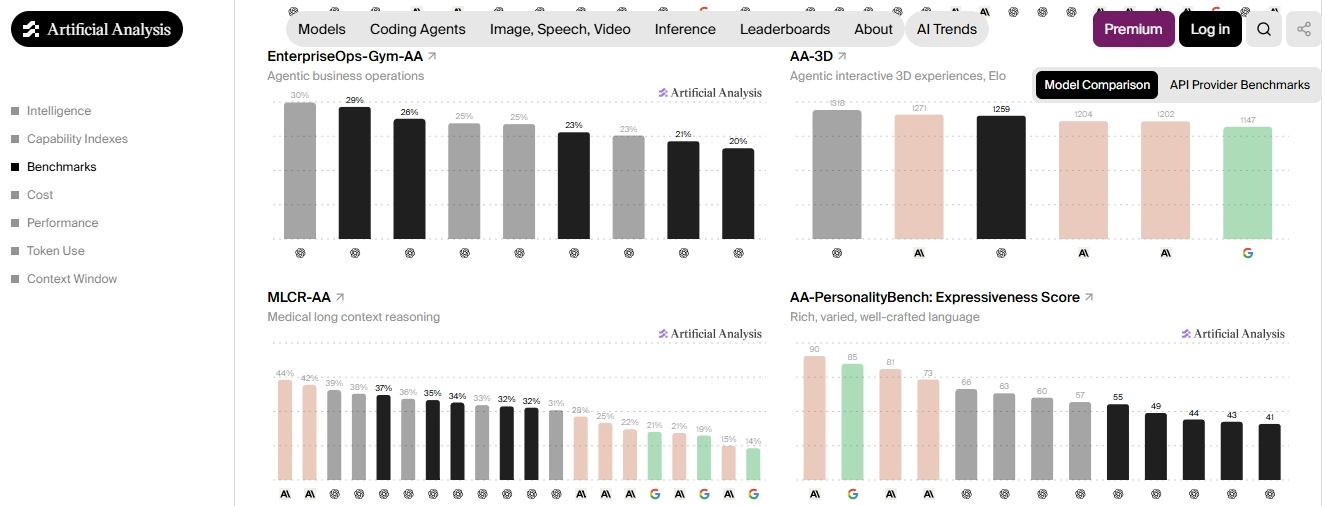
| EnterpriseOps-Gym-AA | 29 | Agentic business operations |
| AA-3D | 1259 (Elo) | Interactive 3D experiences |
| MLCR-AA | 37 | Medical long-context reasoning |
Source: Artificial Analysis, GPT-6.2 Sol. Intelligence Index v5.0.1. Data checked November 18, 2026.

GPT-6.2 Sol Performance Across Different Benchmarks
Sol’s performance varies across tasks. Its scores also change with the effort level, so each section shows where more thinking improves the results.
Reasoning and Problem-Solving Benchmarks
GPT-6.2 Sol performs well on difficult reasoning tasks. It scores 64 on HLE-Diamond, a test of reasoning and knowledge, and 63 on CritPt v2 (hard subset), a test of physics reasoning.
More effort makes the biggest difference on some multi-step tasks:
- AA-Briefcase v1.1 (long knowledge-work tasks): Scores 1230 at low effort and 1612 at max effort.
- HLE-Diamond: Scores 35 at low effort and 64 at max effort.
The improvement is not universal. GDP.pdf (document reasoning) scores 29 at low effort and 30 at max effort. For professional document reasoning, max effort adds cost without materially improving accuracy.
Coding and Software Engineering Benchmarks
Sol is stronger at terminal-based coding than at open-source repository work:
- It scores 60 on Terminal-Bench 4.0, which tests agentic coding and terminal use.
- It scores 44 on FrontierCode-AA 2.0, which tests software engineering in open-source repositories.
Extra effort adds little in coding. Terminal-Bench 4.0 reads 59 at high effort and 60 at max. FrontierCode-AA 2.0 moves from 40 to 44 across the same step.
Artificial Analysis also tracks a Coding Agent Index. Sol lost 3 points there against GPT-6.1 Sol. A 14-point drop on SWE-Atlas-QnA-AA caused it, because the model omits key facts more often.
Mathematics and Scientific Reasoning Benchmarks
Science is Sol’s strongest area. It scores 68 on Terminal-Bench-Science 0.1, a test of scientific research tasks done in a terminal. Artificial Analysis says OpenAI models perform best on this test.
CritPt v2 scores 63 for physics reasoning, while HLE-Diamond scores 64. Effort levels affect these tests differently. Terminal-Bench-Science goes from 37 at low effort to 68 at high effort, with no further increase. CritPt scores change only from 58 to 63 across all five effort levels.
Knowledge and General Understanding Benchmarks
Sol answers factual questions well, but it guesses too often. It scores 62 on AA-Omniscience v1.1 Accuracy. Its non-hallucination rate is 45, which implies a 55% hallucination rate on AA-Omniscience.
Subject tests show a split. HLE-Diamond reads 64, but medical long-context reasoning (MLCR-AA) reads 37. Check Sol’s factual output in high-stakes work.
Instruction Following and Tool-Use Benchmarks
Sol uses tools well on SaaS workflows but struggles with broad business operations.
- It scores 71 on AutomationBench-AA, which tests agentic SaaS workflows.
- It scores 29 on EnterpriseOps-Gym-AA, which tests agentic business operations.
AA-AnalystAgent adds a 54 for quantitative work on spreadsheets and documents. AutomationBench-AA scores 70 at medium effort and 71 at max.
Teams running automation can test medium effort before paying for max. Sol also takes text and image input and holds a 1M-token context window.
GPT-6.2 Sol Artificial Analysis Index Score
GPT-6.2 Sol scores 57 on the Artificial Analysis Intelligence Index at max effort. That ranks 11th of 92 models and sits well above the median of 43. By effort level, it scores 41 (low), 53 (medium), 55 (high), 56 (xhigh), and 57 (max).
Per the index methodology, v5.0.1 combines nine tests. They are:
- AA-Briefcase
- AutomationBench-AA
- Terminal-Bench 4.0
- FrontierCode-AA 2.0
- AA-Omniscience
- GDP.pdf
- HLE-Diamond
- CritPt v2 (hard subset)
- Terminal-Bench-Science 0.1.
An individual benchmark shows one skill. The index blends nine, so a strong average can hide a weak spot. Sol shows this: its 57 overall sits beside a 30 on GDP.pdf. Further, Artificial Analysis places Sol 5 Index points below GPT-6.2 Astra at about 25% of that model’s cost per task. For how Astra scores across all nine tests and five effort levels, see our GPT-6.2 Astra benchmarks guide.
GPT-6.2 Sol Speed and Cost Performance
GPT-6.2 Sol Output Speed and Latency
Sol outputs 85 tokens per second and finishes an Index task in 8.0 minutes. The median for similar-priced models is 11.5 minutes. Artificial Analysis ranks its performance 34th of 89.
The wait before the first answer token is longer: 66.70 seconds at max effort. That time includes the model’s thinking.
This wait rules max effort out for live chat. It fits background jobs, such as report drafts or batch automation, where nobody watches a screen.

GPT-6.2 Sol API Pricing
OpenAI charges $2.00 per 1M input tokens and $10.00 per 1M output tokens at Standard rates. Cached input costs $0.10, a 95% discount. A 30-minute cache write costs $2.50.
Prompts over 272K input tokens cost more. Input and cache rates double, and output costs 1.5 times as much for the full request.
| Tier | Input | Cached input | Output |
|---|---|---|---|
| Standard | $2.00 | $0.10 | $10.00 |
| Batch | $1.00 | $0.05 | $5.00 |
| Fast | $4.00 | $0.20 | $20.00 |
Source: OpenAI API pricing. Prices per 1M tokens. Data checked November 18, 2026.
Artificial Analysis estimates the cost at $1.01 per Index task. Its average price is $1.47 per 1M tokens, based mostly on cached input. Sol ranks 25th out of 91 models for cost. Agent workloads save the most when using cached input. For the previous Sol’s full rate card, including caching and long-prompt pricing, see our GPT-6.1 Sol pricing guide.
How Does GPT-6.2 Sol Compare With Other AI Models?
GPT-6.2 Sol costs far less per task than GPT-6.2 Astra and Claude Opus 5.5, and it scores 5 and 2 points lower. The table compares them on the one score they share, the Intelligence Index. GPT-6.1 Sol shares Sol’s price tier, while Astra and Opus 5.5 sit higher. For the full head-to-head, see GPT-6.2 Sol vs GPT-6.1 Sol and GPT-6.2 Sol vs Claude Opus 5.5.
| Model | Index score | Cost per task | Output speed | Time per task | First answer token | Price (in / out per 1M) |
|---|---|---|---|---|---|---|
| GPT-6.2 Sol | 57 | $1.01 | 85 tok/s | 8.0 min | 66.70 s | $2.00 / $10.00 |
| GPT-6.1 Sol | 55 | $1.27 | 48 tok/s | 23.4 min | 143.29 s | $2.00 / $10.00 |
| GPT-6.2 Astra | 62 | $4.00 | 53 tok/s | 12.9 min | 170.99 s | $8.00 / $40.00 |
| Claude Opus 5.5 | 59 | $10.04 | 117 tok/s | 24.6 min | 353.86 s | $4.00 / $20.00 |
Sources: Artificial Analysis pages for GPT-6.2 Sol, GPT-6.1 Sol, GPT-6.2 Astra, and Claude Opus 5.5. Max effort, Intelligence Index v5.0.1. Data checked November 18, 2026.
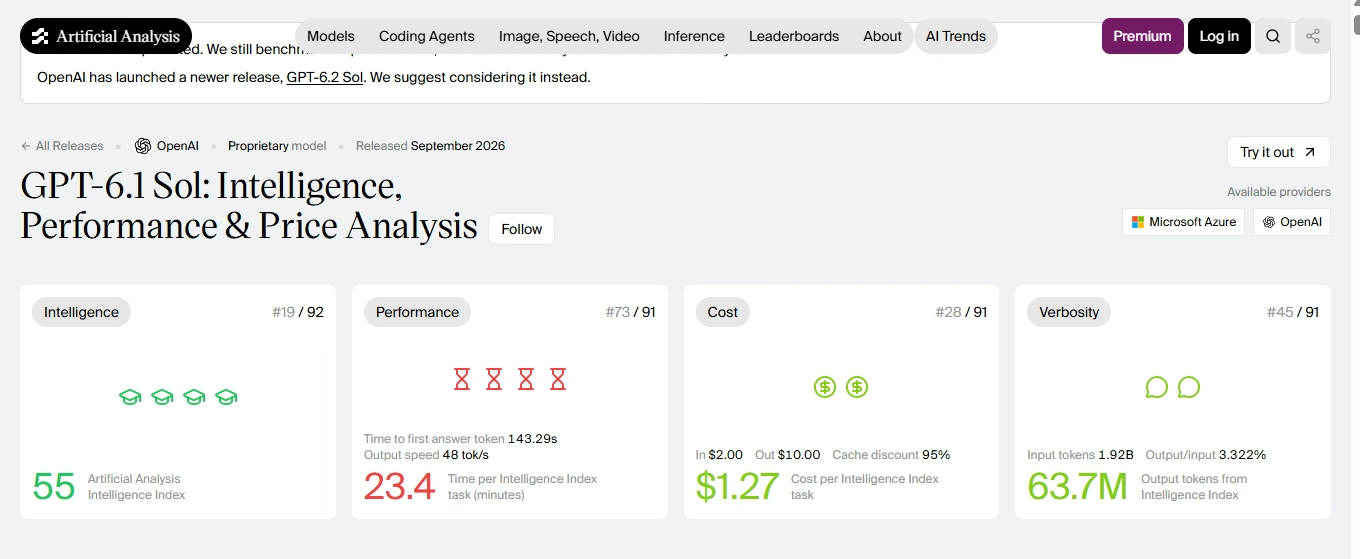
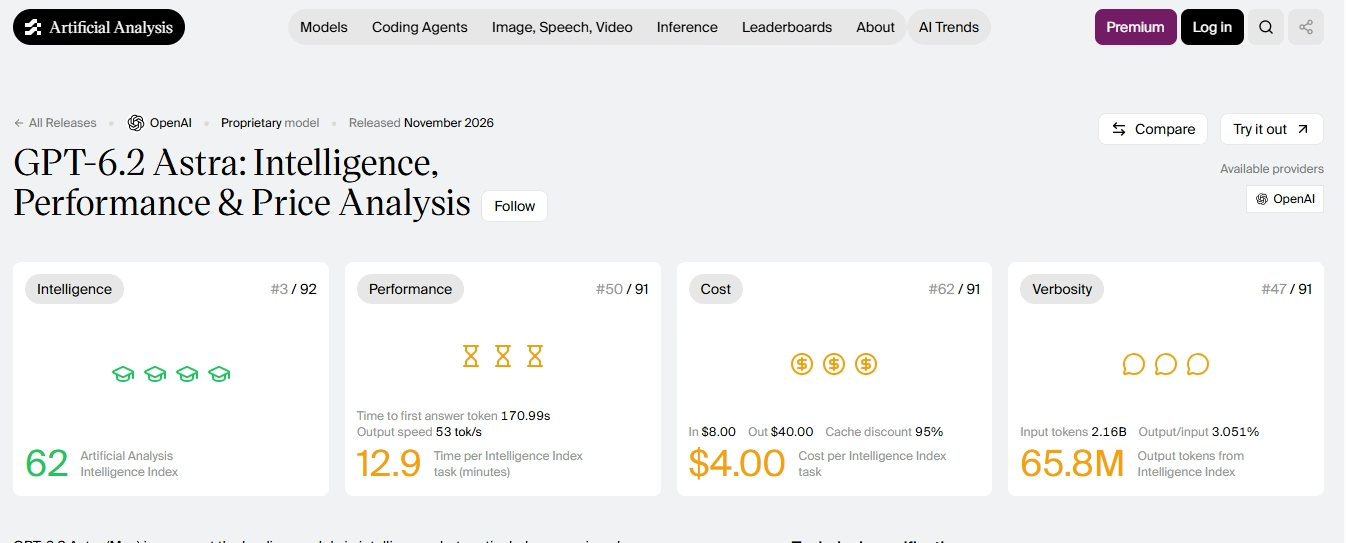
Astra scores 62 but costs $4.00 per task, about four times more than Sol’s $1.01. Its token prices are also four times higher. Sol completes tasks faster too, taking 8 minutes compared with Astra’s 12.9 minutes.
Opus 5.5 scores 59 and costs $10.04 per task, about ten times more. It outputs faster per token, 117 against 85. Yet it needs 24.6 minutes per task, about three times Sol’s time. For Opus’s scores test by test, see our Claude Opus 5.5 benchmarks guide.
What Are GPT-6.2 Sol’s Strengths and Limitations?
Where GPT-6.2 Sol Performs Well
- Science and reasoning: 68 on Terminal-Bench-Science, 64 on HLE-Diamond, and 63 on CritPt v2. Its highest percentage-based benchmark score is 71 on AutomationBench-AA.
- Automation: 71 on AutomationBench-AA.
- Terminal coding: 60 on Terminal-Bench 4.0.
- Cost: $1.01 per task, about a quarter of Astra’s cost and a tenth of Opus 5.5’s.
- Task speed: 8.0 minutes per task against an 11.5-minute median.
These results support research, workflow automation, and terminal coding work.
Where GPT-6.2 Sol Has Limitations
- Legal work: 11 on Harvey LAB-AA.
- Document reasoning: 30 on GDP.pdf.
- Business operations: 29 on EnterpriseOps-Gym-AA.
- Honesty: a 55% hallucination rate on AA-Omniscience.
- Coding agents: 3 points lower than GPT-6.1 Sol on the Coding Agent Index.
- Latency: 66.70 seconds to the first answer token at max effort.
Is GPT-6.2 Sol Worth Using?
GPT-6.2 Sol is worth using when cost per task matters. Its 57 Index score and $1.01 task cost give a strong balance. However, no single benchmark settles the question, so match the model to your work.
- Coding: Sol works well for coding tasks in terminals and automation. Test it with your own code repository, as it scores 44 on FrontierCode-AA and its Coding Agent Index score has dropped.
- Reasoning and research: Sol performs well on science tests. Check its answers, as it guesses 55% of the time when it does not know the answer.
- Document and legal work: Scores of 30 and 11 mean you should test Sol carefully before using it for these tasks.
- Speed and budget: Max effort is better for background tasks because it takes 66.70 seconds to produce the first token. Batch pricing cuts Standard rates in half for tasks that don't need quick results.
Final Verdict
GPT-6.2 Sol is a good model at a mid-range price. It scores 57 on the Intelligence Index, ranks 11th out of 92 models, and costs $1.01 per task. It performs strongest on automation, science, and reasoning benchmarks, scoring 71 on AutomationBench-AA, 68 on Terminal-Bench-Science, and 64 on HLE-Diamond.
It generates 85 tokens per second and takes 66.70 seconds to produce the first token at max effort. The API costs $2.00 per 1M input tokens and $10.00 per 1M output tokens. It performs better than GPT-6.1 Sol in score, speed, and cost per task.
Legal work (11 on Harvey LAB-AA) and a 55% hallucination rate are the main limits. Developers who automate workflows, researchers, and teams that watch budgets gain the most. Each of those groups needs a working product, not a score sheet.
Benchmarks tell you what a model can do, but you only learn its value on a real build. Emergent is an app builder that turns a plain-language description into a working full-stack app. Describe the product you need, choose the model, and ship it with a real backend and code you own.

Describe it. Build it. Launch it.
- End-to-End Creation
- No Code Needed
- Live in Minutes

Most AI app builders stop at prototypes. Emergent creates production-ready apps you can actually launch.
- Production-ready apps
- Web & mobile apps
- Deploy in minutes





