Emergent vs. Lovable: The Quick Verdict
- Emergent: Choose Emergent when you want the platform to handle more of the working app, and you may need web plus mobile.
- Lovable: Choose Lovable when you're building for the web and want more direct control over the interface and design process.
My recommendation: Emergent fits more involved business apps. Lovable fits web projects where design and hands-on refinement are more important.
Both Emergent and Lovable can turn a prompt into a working app, but my client-portal test showed the difference quickly.
I built the same client portal in both and found that Emergent went deeper on the working portal, while Lovable was more accurate with the structure I asked for on the first try.
I also compared their current pricing, deployment options, design tools, integrations, and code workflows. By the end, you’ll know which one fits the kind of app you want to build.
Emergent vs. Lovable: What’s the Difference?
Emergent is an agentic app-building platform that creates web and cross-platform mobile apps from a conversation. It can work through the interface, app logic, data, testing, integrations, and deployment, with GitHub access on paid plans. Its mobile agent uses Expo and React Native to produce apps for iOS and Android from one codebase.
Lovable is an AI development platform for web applications. It combines natural-language generation with Plan mode, Agent mode, Visual Edits, version history, GitHub synchronization, Lovable Cloud, and optional Supabase connections.
It supports the full lifecycle of a web app, but it doesn’t provide the same native mobile build path as Emergent.
Choose Emergent if: You want one platform to carry a larger share of the build and you need web plus iOS and Android support.
Choose Lovable if: You’re building for the web and want stronger tools for picking, editing, and standardizing the visual design.
Why This Comparison Matters After the First Prompt
Both tools can produce an attractive first screen. The differences show up when you add sign-in, customer data, payments, account roles, error handling, and somewhere for the app to run.
That changes what “best” means.
Both tools also sit inside the vibe coding category, where you describe software in plain language and refine the result through conversation.
A solo founder building a polished waitlist page needs different tools from a consultant building a client portal with payments and private records. A contractor replacing several monthly subscriptions needs different support from a designer creating three interface concepts for a product demo.
Emergent’s case-study library shows where that wider scope can matter. One roofing contractor replaced $1,800 per month in software subscriptions with a custom command center. Another contractor built a crew-dispatch tool, while a local service business created a lead-pipeline customer relationship management (CRM) app.
These examples are vendor-published outcomes, so they show what customers have built rather than a guarantee that every project will produce the same result.
Lovable approaches the problem from a web-product angle. It gives you guided design directions, direct page edits, version history, browser testing, backend verification, and two-way GitHub synchronization. That mix gives you more ways to inspect and shape a web app after generation.
Bolt, Replit Agent, and Base44 often appear on the same shortlist, but this comparison stays focused on the direct Emergent vs. Lovable decision.
How I Tested Emergent and Lovable
I built the same basic consulting client portal in Emergent and Lovable. The project included a public homepage, email-and-password sign-in, session booking, deliverables, proposal approvals, invoice tracking, questions, and separate client and consultant dashboards.
I kept the scope matched. Payments were recorded manually instead of through Stripe, booking used simple date and time requests, messages were text-only, and I skipped Google Calendar, file uploads, PWA features, and native mobile building.
Lovable reached a working version in 11 minutes and used 5.60 credits. Emergent took 12 minutes and used 20 credits. Both asked clarification questions before building, although Emergent asked more.
I did not edit either project’s code by hand. Lovable interpreted the public-facing design brief correctly on the first pass.
Emergent built more of the authenticated portal workflow, but initially opened on the sign-in screen instead of the requested public homepage.
One targeted follow-up prompt fixed that routing without rebuilding the rest of the portal.
I used the hands-on build to compare speed, first-draft quality, prompt following, basic workflow depth, and follow-up editing. Claims about native mobile development, security, integrations, GitHub, and hosting come from the companies’ current documentation.
What Other Builders Say About Emergent and Lovable
My client-portal build was one short project, so I also checked public discussions from people who have spent more time with the tools.
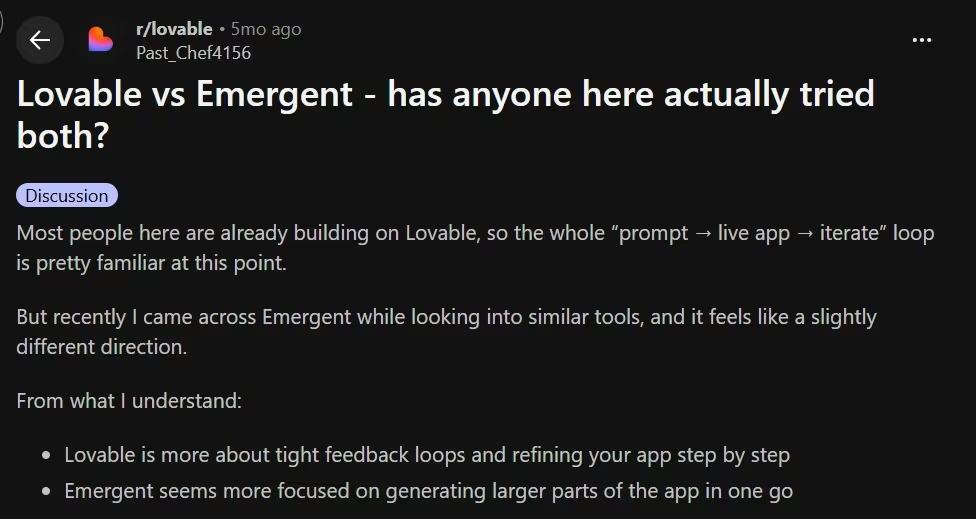
One Reddit user, Past_Chef4156, who had tried both, said “Lovable is better for iteration/control”, especially as projects become more complex. The same commenter was less certain about how Emergent would hold up during heavier debugging.
A discussion in r/vibewithemergent described the workflow split as Lovable being “generate and then build on top,” and Emergent being “generate and keep shaping the system.” That is close to what I saw in my smaller test.
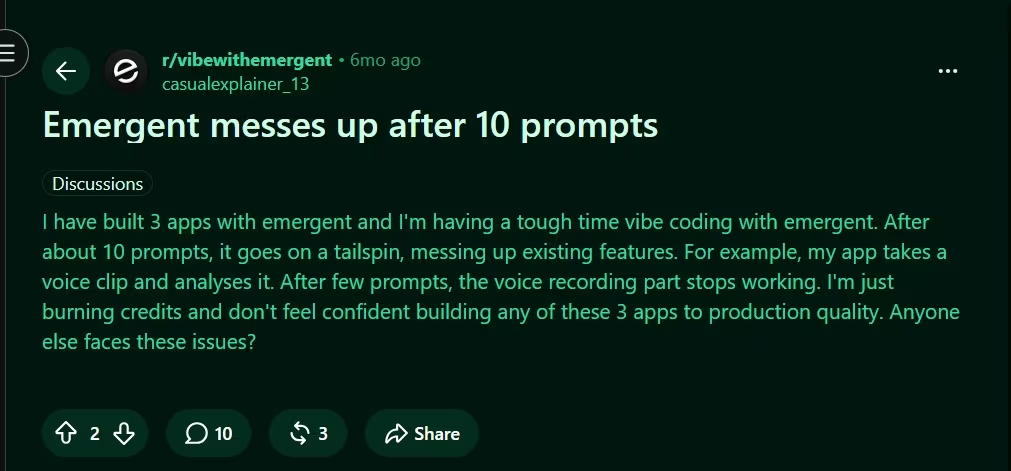
Likewise, one Emergent user, casualexplainer13, who said they had built three apps, reported that after about 10 prompts the agent began “messing up existing features” and said they felt they were “just burning credits.”
Bilal Umrani, who says he has built with both, describes Lovable as “AI inside a structured product team” and Emergent as “optimized for momentum.”
His broader recommendation is Lovable for collaboration and long-term maintenance, and Emergent for faster experimentation and web-plus-mobile work.
Lovable also has the larger independent review sample: G2 currently lists it at 4.6/5 from 269 reviews, with credit use appearing among the recurring complaints in its review summary.
These individual accounts do not prove that every project will behave the same way. They do reinforce the same broad tradeoff I saw: Emergent pushes further toward a system you keep expanding, while Lovable puts more emphasis on controlled web iteration.
Want the full picture of what users are saying? Read our Lovable Review for a closer look at what builders actually ran into.
Emergent vs. Lovable at a Glance
The main differences:
| Category | Emergent | Lovable |
|---|---|---|
| Best For | Complete web and mobile apps | Design-led web apps |
| App Output | Web, iOS, and Android | Web applications |
| Build Style | Agent-led conversation | Plan, Agent, and visual editing |
| Visual Control | Prompt-led refinement | Direct visual editing |
| Testing | Built-in checks and health check | Browser, frontend, and edge tests |
| Code Handoff | GitHub on paid plans | Two-way GitHub sync |
| Starting Plan | Free, then $20/month | Free, then $25/month |
| Main Tradeoff | Credits can rise on larger builds | Web-only product focus |
Feature availability can vary by plan, and usage costs depend on what you build.
Meet Emergent: Features and Highlights
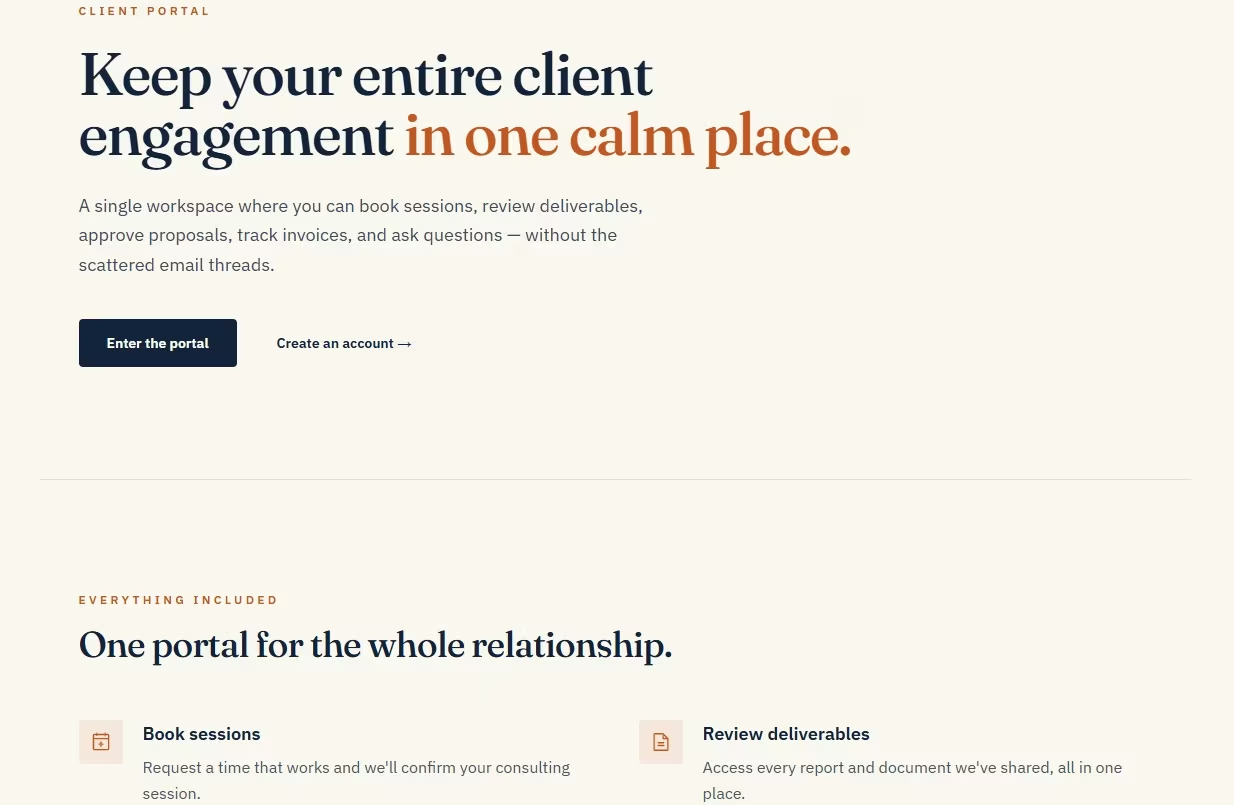
Emergent is built for you if you would rather describe the result you want and let the platform work through the technical steps. Instead of treating each screen or code edit as a separate task, its agent workflow can cover the broader app, including data structures, integrations, testing, and deployment.
That approach fits business software particularly well. Picture a Brooklyn consultant who needs a client portal with session booking, private deliverables, invoices, and payment links.
Lovable can build that same portal as a web app and gives you more control over how the client-facing screens look. Emergent becomes the clearer fit when you want the builder to take on more of the connected workflow or eventually extend the project to a dedicated mobile app.
Emergent also supports mobile app development through Expo and React Native. You can create one codebase for iOS and Android, with support for device features such as camera access, location, push notifications, files, and sensors.
The mobile agent requires a paid subscription and doesn’t support Flutter, native Swift, or native Kotlin.
The main downside is cost predictability. Emergent uses credits for generation, changes, testing, debugging, integrations, and deployments.
A deployed app consumes 50 credits per month on Emergent’s managed infrastructure, so a Standard plan’s 100 monthly credits can feel tight when you’re both maintaining a live app and continuing to build.
Emergent Pricing
Emergent has five public plans: Free at $0/month, Standard at $20/month ($17/month billed annually), Pro at $200/month ($167/month billed annually), and custom Business and Enterprise plans. Free includes 10 monthly credits, Standard includes 100, and Pro includes 750.
My Personal Take on Emergent
Emergent asked me more questions before it started building and initially missed the public homepage I had asked for. Once I pointed that out, it fixed the issue quickly and gave me the stronger final design of the two. The portal also felt more complete overall, with more of the client and consultant experience already thought through.
Meet Lovable: Features and Highlights

Lovable gives you more ways to shape the visual result without expressing every small change as another full prompt. Visual Edits lets you select elements and adjust text, colors, images, spacing, borders, and other page details directly.
Version history lets you revisit an earlier result, and Plan mode lets you work through a feature or bug before Agent mode changes the code.
Its design guidance is the clearest advantage over Emergent. For open-ended visual prompts, Lovable can generate three design directions before completing the full build. You can compare layouts, typography, palettes, and spacing, refine the closest direction, and then use it as the foundation.
That visual control fits marketing sites, portfolios, web product demos, and SaaS interfaces where the look of each screen is part of the decision.
Lovable also has a strong handoff model. Its GitHub integration works in both directions, so edits in Lovable appear in the connected repository, while changes pushed to the default GitHub branch sync back. A developer can clone the project, work locally, review changes, and deploy elsewhere.
Lovable’s limitation is output scope. It creates production-grade web applications, but you don’t get Emergent’s dedicated Expo and React Native workflow for publishing a cross-platform mobile app.
For a responsive web app that works well on a phone, Lovable is competitive. For an iOS and Android product that needs device features and app-store packaging, Emergent is the direct fit.
Also read our best Lovable alternatives guide for what else is worth trying when the web-only output or visual control reaches its limits.
Lovable Pricing
Lovable has four plans: Free at $0/month, Pro at $25/month ($21/month billed annually), Business starting at $50/month ($42/month billed annually), and Enterprise with custom pricing. Free includes five daily build credits up to 30 per month; Pro and Business add paid monthly credits, daily build grants, and Cloud credits.
My Personal Take on Lovable
Lovable understood the brief more accurately on the first try. It gave me the public-facing homepage I wanted without another prompt, and the whole process felt a little more straightforward. I preferred Emergent’s finished design and overall portal depth, but Lovable did a better job of getting the structure right from the start.
Want the full breakdown of what each plan actually covers? Read our Lovable pricing guide before you commit.
Emergent vs. Lovable: Feature-by-Feature Comparison
App Types and Platform Support
Emergent supports web apps and cross-platform mobile apps for iOS and Android. Its mobile workflow uses Expo and React Native, while the data and server pieces follow a fixed setup you do not have to choose or configure.
Lovable focuses on web applications. You can create responsive pages and apps that work in mobile browsers, but that’s different from generating a dedicated mobile project with access to app-store workflows and native device features.
Choose Emergent for a customer app that needs push notifications, location access, camera features, or an App Store and Google Play presence. Choose Lovable when the product will live in a browser.
Winner: Emergent
Interface Design and Visual Editing
Lovable’s design tools give you three useful levels of control. You can set the direction before generation, edit visible elements after generation, and create reusable templates or design systems on higher plans.
Design templates are available on Business and Enterprise, while reusable React design systems are an Enterprise feature.
Emergent can create and revise interfaces from prompts, and its strength is coordinating the whole app around them. Pixel-level adjustment is where Lovable pulls ahead.
Winner: Lovable
Also read our Lovable vs Bolt vs Emergent breakdown to see how all three compare before you commit to either.
Planning and Agent Autonomy
Emergent centers the workflow on specialized agents completing the app from a conversation. The platform gives you a path from the initial description through code generation, integrations, checks, and deployment.
Paid plans add features such as forked tasks, and Pro adds a larger context window, higher-performance computing, custom agents, and system-prompt editing.
Lovable divides planning and execution more explicitly. Plan mode investigates the request without changing code.
Agent mode then applies coordinated changes across files, configuration, the browser interface, and backend behavior, while showing tasks, file differences, and summaries.
Emergent is better when you want to hand over the outcome. Lovable is better when you want to inspect and approve the approach before implementation.
Winner: Tie
Data, Sign-In, Payments, and App Logic
Emergent handles app logic, data, sign-in, integrations, and deployment as parts of the same build. Its documentation includes connections for GitHub, Stripe, Supabase, outside services, and Model Context Protocol (MCP) tools.
Lovable supports a complete web-app stack through Lovable Cloud or Supabase. You can add authentication, database behavior, server functions, payment products, subscriptions, trials, and discounts through prompts. Lovable can also create Stripe or Paddle payment flows and store secrets outside browser code.
Both can support serious web-app logic. Emergent gets the edge because sign-in, data, payments, and integrations can be handled inside the same building workflow.
Winner: Emergent
Testing, Debugging, and Security Checks
Lovable provides browser testing for customer-facing workflows, frontend tests for interface behavior, and edge-function verification for backend logic.
Its security tools can review database row-level security, scan application code, and audit dependencies, though Lovable correctly notes that automated scans don’t replace a professional review for sensitive or critical software.
Lovable also disclosed a security incident in April 2026.
The company said authenticated users with the link to a public project could potentially access that project’s chat history and source code between February 3 and April 20; Lovable said private projects and Lovable Cloud were not affected, and it fixed the issue after the public report.
Emergent includes testing, debugging, live previews, and a pre-deployment health check. Its previews expire after 30 minutes, while deployment creates the persistent version that runs for customers.
Emergent handles checks inside the broader agent workflow. Lovable exposes a wider set of named testing paths, which makes it easier to understand what you’re validating.
On security posture, not just tooling: Emergent is SOC 2 Type I and ISO 27001 certified, and puts role-based access and SSO on Business and audit logs on Enterprise. Lovable's edge here is visibility into what's being tested rather than certification.
Check both against your own compliance requirements before you store customer records.
Winner: Lovable
Deployment and Hosting
Emergent provides managed deployment, custom domains, secure environment variables, previews, and production environments. Its hosted deployment costs 50 credits per app each month.
Lovable publishes web apps to a shareable URL and supports access controls based on plan. Lovable Cloud hosting and in-app AI use a consumption model, with included Cloud credits and extra usage drawn from the workspace’s balance.
Larger apps with more traffic, storage, or AI calls can produce costs beyond the subscription.
For a web app, both provide a direct publishing path. Emergent takes this category on the hosting setup itself, with managed deployment, custom domains, secure environment variables, and separate preview and production environments.
Winner: Emergent
Code Ownership and Developer Handoff
Both platforms let you retain the generated code and connect projects to GitHub. Emergent includes GitHub integration on Standard and Pro, making it possible to save the project and continue outside the platform.
Lovable’s documented two-way synchronization is more developed. Changes move between Lovable and the connected repository’s default branch, and developers can work locally or use normal GitHub collaboration practices.
Neither platform should be treated as a substitute for code review when an app handles sensitive records, large payments, or business-critical workflows. But Lovable gives a development team a clearer ongoing handoff process.
Winner: Lovable
Pricing and Cost Control
Emergent’s first paid plan costs $20/month ($17/month billed annually), compared with Lovable’s $25/month ($21/month billed annually). Both include a free option, but their credits don’t represent equal work, so a one-to-one credit comparison is misleading.
Emergent uses credits across generation, modifications, tests, troubleshooting, and managed deployments.
Lovable uses credits for building, Cloud hosting, and in-app AI, while many direct Visual Edits don’t require AI generation. That can make Lovable more economical for repeated text, color, spacing, and image changes.
Emergent’s Standard plan is the better starting purchase for a complete first app. Lovable Pro is easier to justify when you expect many design revisions and want to make them directly.
Winner: Emergent for starting price; Lovable for visual iteration
Entry pricing side by side:
| Plan | Emergent | Lovable |
|---|---|---|
| Free | $0/month, 10 monthly credits | $0/month, 5 daily build credits up to 30/month |
| First Paid Plan | $20/month ($17/month billed annually) | $25/month ($21/month billed annually) |
Emergent then jumps to Pro at $200/month ($167/month billed annually). Lovable adds Business starting at $50/month ($42/month billed annually), while both offer custom organization-level plans.
The subscription price is only part of the cost. Before choosing, estimate:
- How many apps you’ll keep deployed
- How often you’ll regenerate or debug features
- Whether your live app uses built-in AI
- Expected traffic and storage
- Whether you’ll hand the code to a developer
- Whether you need mobile app publishing
Which Is Better for Your Project?
Choose Emergent When You Need
- A web and mobile product from one platform
- iOS and Android support through Expo and React Native
- App logic, data, integrations, and deployment handled together
- A business tool such as a client portal, CRM, scheduling system, operations dashboard, or marketplace
- A lower-priced first paid plan
- GitHub access without turning the builder into a traditional development environment
Emergent is the better choice for the non-technical founder who needs the app to do real work. In Lovable, that same portal is buildable on the web, and you'd get finer control over how the booking and invoice screens look, but you'd be wiring Supabase or Lovable Cloud behind it, and there's no path to a phone app when the client asks for one.
Choose Lovable When You Need
- A web-only app or website
- Multiple visual directions before generation
- Direct editing of text, spacing, colors, images, and page elements
- Clear Plan and Agent modes
- Two-way GitHub synchronization
- Browser, frontend, and backend testing options
- Reusable web-design templates or an Enterprise design system
Lovable is the better choice for a design-led founder, product designer, or web team that wants to stay close to each interface decision.
My Verdict
My Emergent vs. Lovable build made the difference between the two easier to see. Emergent gave me the more complete portal experience, while Lovable followed the structure of my original brief more closely from the start.
Neither tool wins every category. The better choice comes down to how much of the build you want the platform to handle for you.
Here’s the final call:
- Emergent is best for a working product that needs to operate across web and mobile. It is the better overall choice for building a complete business app without managing separate web, mobile, data, testing, and deployment workflows.
- Lovable is best for a polished web app that you want to shape screen by screen. It is the better web-design product. Pick it when a polished interface, direct visual edits, design exploration, testing visibility, and close GitHub collaboration matter more than native mobile output.
For a scheduling app, client portal, internal operations tool, mobile product, or SaaS application with several connected workflows, choose Emergent. For a landing page or design-heavy prototype, Lovable wins.
Build Your App With Emergent
Start with three things: the customer, the action they need to complete, and the information the app has to remember. That’s enough for a first build without a 40-page product document.
A useful first prompt looks like this:
Build a client portal for a small consulting firm. Clients should sign in, book sessions, view deliverables, approve proposals, pay invoices, and send questions.
Consultants need an admin dashboard showing upcoming sessions, unpaid invoices, active projects, and overdue approvals. Build the web app first, then prepare a cross-platform mobile version.
Start on the free plan to explore the workflow. Move to Standard when you’re ready to use GitHub, keep projects private, purchase extra credits, or use the mobile agent.
Most AI app builders stop at prototypes. Emergent creates production-ready apps you can actually launch.
- Production-ready apps
- Web & mobile apps
- Deploy in minutes