
Maybe your restaurant doesn't have a website yet. Maybe it has one that's five years old, with a slow PDF menu, a blurry hero photo, and no way to book a table online. Either way, a search for your restaurant right now doesn't show what you've actually built.
You need a new website, and fast. Building one with AI means turning one written description into a working site. No developer needed, and no weeks of back-and-forth.
And if you don't have a prompt yet, that's fine. I curated seven restaurant website design ideas across different restaurant types and built every one on Emergent.
Find the concept closest to yours in these restaurant website examples, copy its prompt, and you'll have a working site started before your coffee gets cold.
7 Restaurant Website Examples Built With AI
I picked seven different restaurant concepts: a bistro, a coffee shop, a diner, a bar, a fine dining spot, a food truck, and a multi-location group. One of them is probably close to what you run.
Every site below was built on Emergent's restaurant website builder from the prompt shown. None of the prompts are fixed; swap in your own cuisine, features, or tone, and the build adjusts.
How I Built These Seven Restaurant Website Examples
Each concept started from one written prompt, covering the restaurant type, palette, hours, and one primary feature.
Emergent asked a handful of follow-up questions on each build, things like how to store a booking or whether to include an admin dashboard, and I answered those directly with no autopilot defaults.
Every site shown is the first draft that came back, with no manual edits layered on afterward. All seven ran on the Standard plan.
The multi-location build took 13 minutes; the other six averaged closer to eleven minutes each. Payment and login setup varied by build. Emergent supports Stripe, PayPal, and Razorpay for payments and Square for point of sale, and you can describe any other service you use in the prompt.
Also read our best AI website builders guide for what else is worth trying beyond restaurant-specific builds.
Neighborhood Bistro
Prompt: "Create a website for Hearth & Bramble, a neighborhood bistro at 148 Birchwood Lane. I want a warm, photo-forward homepage in terracotta and cream tones, hours, and a way for guests to book a table online. Seed the menu with placeholder dishes and prices I can edit later."
I asked for terracotta and cream, and got a warm homepage with the bistro's story broken into a few short sections. The seeded menu came back with 18 placeholder dishes across starters, mains, and dessert, along with a short wine pairings section for the mains. Before finishing the draft, Emergent also asked whether guests should get a text reminder the day before their reservation.
The menu filters by course with dietary badges and prices attached, and booking a table returns a six-digit confirmation code guests can show at the door. A password-protected admin panel handles both reservations and the full menu.
Best for: Spots that want a real booking confirmation code, not just a generic thank-you page.
Third-Wave Coffee Shop
Prompt: "Create a website for Cinder Coffee Co., a specialty coffee shop at 62 Foundry Street. I want a clean, minimal layout in black and white with a single amber accent color, hours, and a way for regulars to order ahead for pickup. Seed the menu with placeholder drinks and prices I can edit later."
The generated site is black-and-white with a single amber accent. Ordering only asks for a name, phone, and pickup time before handing off to a live Stripe checkout. Paid orders land in a staff dashboard that tracks queued, preparing, ready, and completed. A password-protected Back of House page manages drinks, prices, and hours.
The order-status pipeline is the difference between a website that just takes orders and one that helps run a shift.
Best for: Counters that want a live order queue the barista can glance at mid-rush.
Family-Style Diner
Prompt: "Create a website for Maple Street Diner, a bright, retro-diner-style spot at 410 Maple Street with red and chrome accents. I want hours and online ordering. Seed the full menu with placeholder dishes and prices, including a kids' section, that I can edit later."
The site is red, chrome, and neon, full 1950s retro. The menu came back with more than 40 dishes, split across seven categories including the kids' section, with tabs, search, and diet filters built in.
Ordering runs through a cart and multi-step checkout, with no live payment processing since none was requested. Each order also gets a diner-flavored status tracker that moves from Received to Grilling to Ready.
The hours section also shows live open/closed status based on the time of day, a detail I didn't request. A password-protected admin page handles the menu and hours behind the scenes.
Best for: Kitchens pushing 40+ dishes, where search and diet filters do more for orders than another hero photo.
Rooftop Cocktail Bar
Prompt: "Create a website for The Gilded Perch, a rooftop cocktail bar at 900 Skyline Avenue. I want a moody, upscale feel in charcoal and gold, hours, and a way for people to inquire about private events. Seed the drinks menu with placeholder items and prices I can edit later."
My rooftop bar website is charcoal and gold, with a searchable drinks menu split across Signature, Rare Spirits, Wine & Champagne, and Zero-Proof. It also shows hours with an open or closed badge, and the private-event inquiry form I asked for.
A password-protected admin panel lets staff 86 a drink with one toggle instead of deleting and re-adding it, an actual restaurant term Emergent used correctly without being told to.
Best for: Venues that make real money on private bookings and need the inquiry form as prominent as the drinks list.
Fine Dining Tasting Menu
Prompt: "Create a website for Ember & Oak, a tasting menu restaurant at 12 Cellar Row. I want it to feel quiet and editorial in ivory and deep green, built around the chef's story, with hours and a waitlist instead of open booking. Seed the tasting menu with a placeholder price I can edit later."
I asked for ivory and deep green, and the build added gold accents on top.
The tasting menu request became three separate menus (tasting, wine, and a botanical pairing menu), each with its own placeholder pricing, editable from a passcode-protected panel.
The waitlist saves straight to a database, with both an inline and a modal version of the form.
Best for: Waitlist-only spots that want the tasting menu split out from the wine list automatically.
Food Truck
Prompt: "Create a single-page website for Two Forks, a food truck, in bold orange and navy so it's easy to spot at a glance. The most important thing is customers can see where I am right now, plus today's hours. Seed the menu with placeholder items and prices I can edit later."
Two Forks is navy and orange as asked, with a live location-and-hours section front and center. A locked-down admin panel lets you update the location, hours, and menu from a phone between stops.
The menu was seeded with 10 items, including smash burgers and tacos, each tagged for dietary content like spicy or vegetarian. The header has an "Admin" button that asks for a passcode; once logged in, it switches to "Manage" for quick edits.
Best for: Trucks whose regulars need dietary tags on the menu before they walk up.
Multi-Location Restaurant Group
Prompt: "Create a website for Harvest Table, a farm-to-table restaurant group with a warm, earthy look in olive green and wood tones. I want one homepage, with each of the three locations, 220 Elm Avenue, 88 Harborview Road, and 5 Meadow Court, showing its own hours, address, and a way to book a table. Seed each location's menu with placeholder dishes and prices I can edit later."
Each of the three locations, Elm Avenue, Harborview Road, and Meadow Court, got its own hours, address, and Book Table button. Each also has a minimal seeded menu with dietary tags and prices. Reservations save straight to a database with a working confirmation flow.
Harvest Table is the only one of the seven without a password to demo. A Demo Admin button sits right in the header instead. It's a fair trade for a quick walkthrough, but any restaurant launching this would still need a proper login added first.
Best for: Groups that want each location's booking and menu managed from one panel.
Also read our best restaurant website builders guide for what else is worth trying when multi-location management is the priority.
How to Build Your Own Restaurant Website
Start with a prompt that names your restaurant type, your must-have features, and the tone you want, in the same shape as the seven prompts above.
And if you’re not sure how to phrase your own prompt? Emmy, the assistant built into Emergent, can turn a rough idea into a clearer one. "Something warm and casual for my taco spot" becomes a fuller description with menu structure and ordering specified.
A few tips that get the first draft closer to what you want:
- Always include the basics. Menu, prices, hours, and address make a restaurant site usable on day one, so include all four in the first prompt. Ask Emergent to seed placeholder dishes and prices you can edit later rather than leaving the menu blank.
- Combine the basics with one primary feature. Every prompt above combined color palette, hours, one main feature like reservations or ordering, and a seeded menu, all in one go, and it worked cleanly every time.
Layer anything more from there. Adding a loyalty program on top of an ordering flow that's already live, for example, works better as a follow-up prompt once the first draft is in front of you.
- Describe the mood and the palette. "Warm and family-run" and "sleek and upscale" already push color and type in different directions; layout alone doesn't carry that. Naming an actual palette (terracotta and cream, or charcoal and gold) gets you closer to the result you pictured.
- Give it a specific name, even a placeholder one. "Hearth & Bramble" produces a more specific, ownable first draft than "a neighborhood bistro." A named business reads as an actual client rather than a category.
- Mention your existing tools by name. Already using a specific POS, reservation platform, or delivery integration? Say so directly, "connected to your reservation platform" or "synced with your POS." Emergent has integration pages for a long list of these tools, and you can describe any other service you use in the prompt.
- Expect a few clarifying questions. Every build above got asked something specific before Emergent finished the first draft: how to store a booking, whether to include an admin dashboard, and how deep to seed the menu. A precise answer gets you there faster.
- Add real photos and reviews once you have them. Placeholder images and a seeded menu carry a first draft, but professional food photos and a few visible reviews are what turn a browser into a booking. Swap them in through a follow-up prompt as soon as they're ready.
Once your site is live, changes work the same way your first draft did. A new seasonal menu section, an updated reservation form, or a different hero image is another prompt, not a rebuild.
Also read our guide on how to build a website with AI for a step-by-step walkthrough that applies to any restaurant site you're building.
Build Your Restaurant Website on Emergent
A restaurant site needs a menu a manager can edit, hours that show open or closed, and either bookings or ordering wired up. Describe the restaurant to Emergent's website builder, and it comes back with all three on the first pass.
All seven builds above got there from one written description.
Updating a menu in any of these seven builds also takes one prompt. Most sites need you to log into a separate content management system to make that same edit. This skips it entirely.
What else comes with your site:
- Payments: Stripe, PayPal, and Razorpay all connect natively, set up by describing what you need instead of wiring the integration yourself.
- POS: Square connects natively, syncing orders and inventory through the same prompt-driven setup.
- Delivery platforms: Delivery services that let outside tools connect can plug into Emergent, including smaller local ones. Name the service you use, and Emergent handles the connection.
Once the site is published, new or updated keys go through the Secrets tab instead.
- Local SEO: Every build includes the address, hours, and location details marked up on the page, which is what a nearby searcher needs.
- Built for phone screens: Every build resizes cleanly from a phone screen up. Mobile accounts for roughly 63% of global web traffic, and a restaurant site that fights a phone screen is fighting most of its own visitors.
- A companion mobile app: The restaurant can also get a dedicated mobile app, built the same prompt-first way through Emergent's AI app builder, instead of starting the whole project over on a separate platform.
Your restaurant already knows what it's about. Give the website the same clarity, one prompt at a time. Pick the concept closest to yours above, copy its prompt, and build it on Emergent.
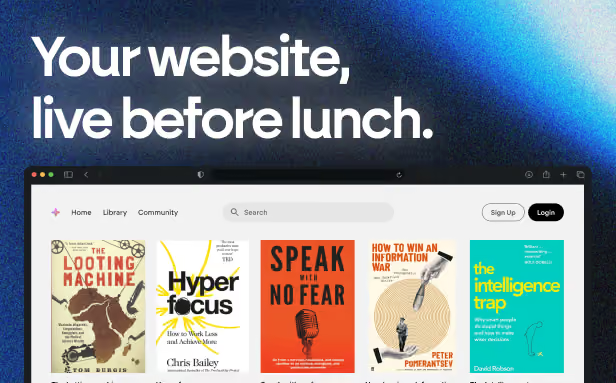
Emergent designs, writes, and publishes your whole site from one prompt. No templates, no drag-and-drop.
- Full site from one prompt
- Custom design, real pages
- Publish in minutes