The Softr vs Bubble question usually comes down to one thing: whether you want a clean interface on top of data you already have, or a custom web app built from the ground up. Both are among the most established no-code app builders around, and founders who would rather not hire a developer constantly compare them.
Every price and claim below was checked against the tools' live pricing pages and verified customer reviews on G2 and Trustpilot, so none of it is recycled from an older roundup.
It also brings in a third name that shows up in the same searches, Emergent, an AI app-building platform built for vibe coding, where you describe what you want in plain English, and a coordinated system of AI agents plans, builds, and ships it.
By the end, you’ll know which of the three suits the software you are trying to ship, and exactly where each one starts to strain.
Softr vs Bubble vs Emergent: What's the Difference?
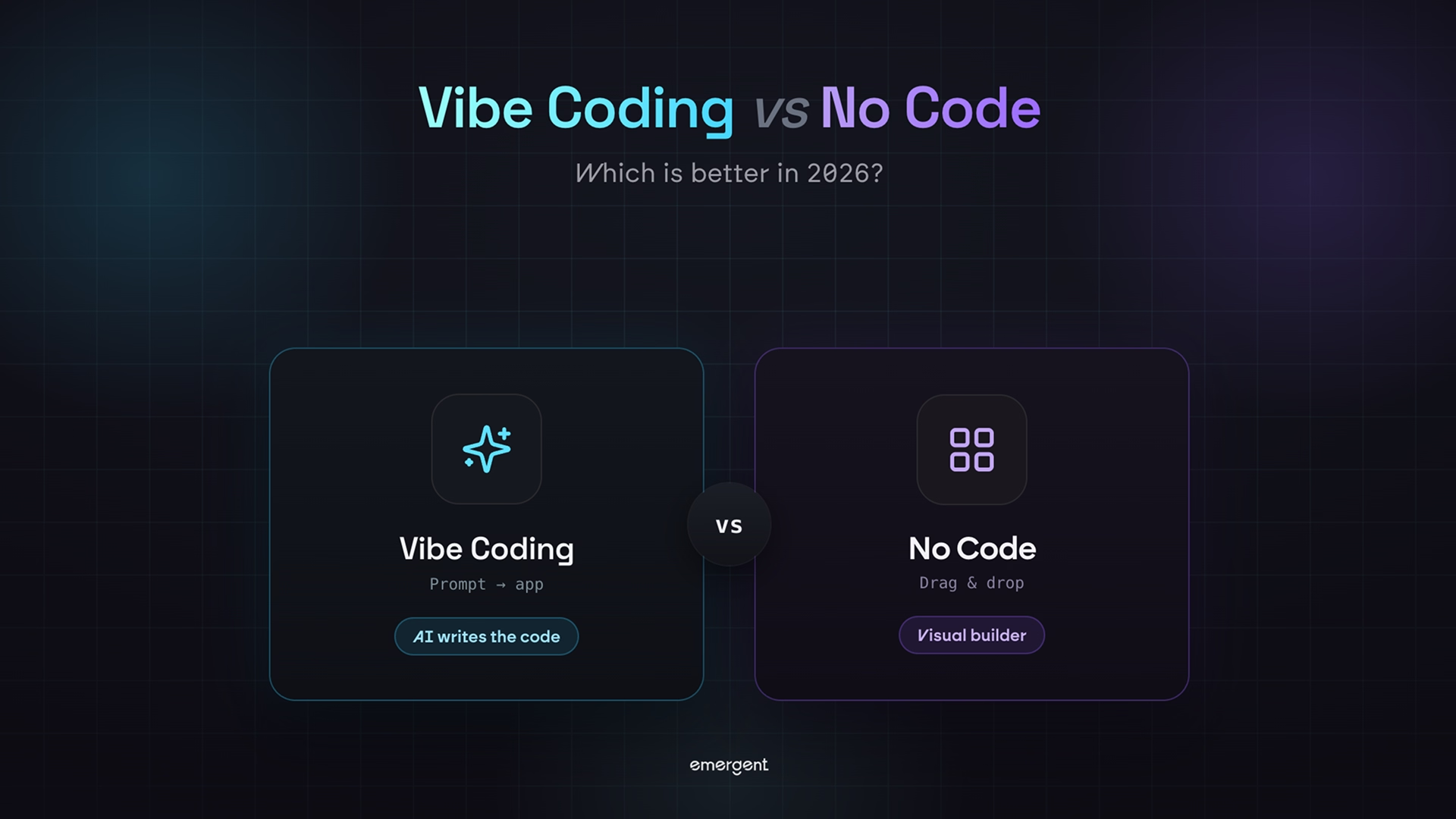
The short version is that Softr puts a clean interface on data you already have, Bubble is a build-it-yourself platform for custom web apps, and Emergent generates the app for you from a plain-English description. The three solve related problems in very different ways.
- Softr turns data you already keep in Airtable, Google Sheets, or Notion into a branded portal or internal tool, using ready-made blocks and no code.
- Bubble gives you a full visual builder for custom web apps, with its own database and deep logic, aimed at people willing to learn the platform.
- Emergent is an AI app builder where you describe the app in plain language and it generates a complete, working product you can own and export.
Choose Softr if your data lives in Airtable and you want a client portal or dashboard live today.
Choose Bubble if you are building a complex, custom web app and have time to learn the tool.
Choose Emergent if you want a custom app without learning a builder, and you want to keep the code.
Meet Softr: Features and Highlights
Softr is a no-code platform for building client portals, internal tools, and simple dashboards on top of existing data. It began as a way to put a usable interface on Airtable data, and that heritage still shows in its two-way Airtable sync, which stays clean even as records change on either side.
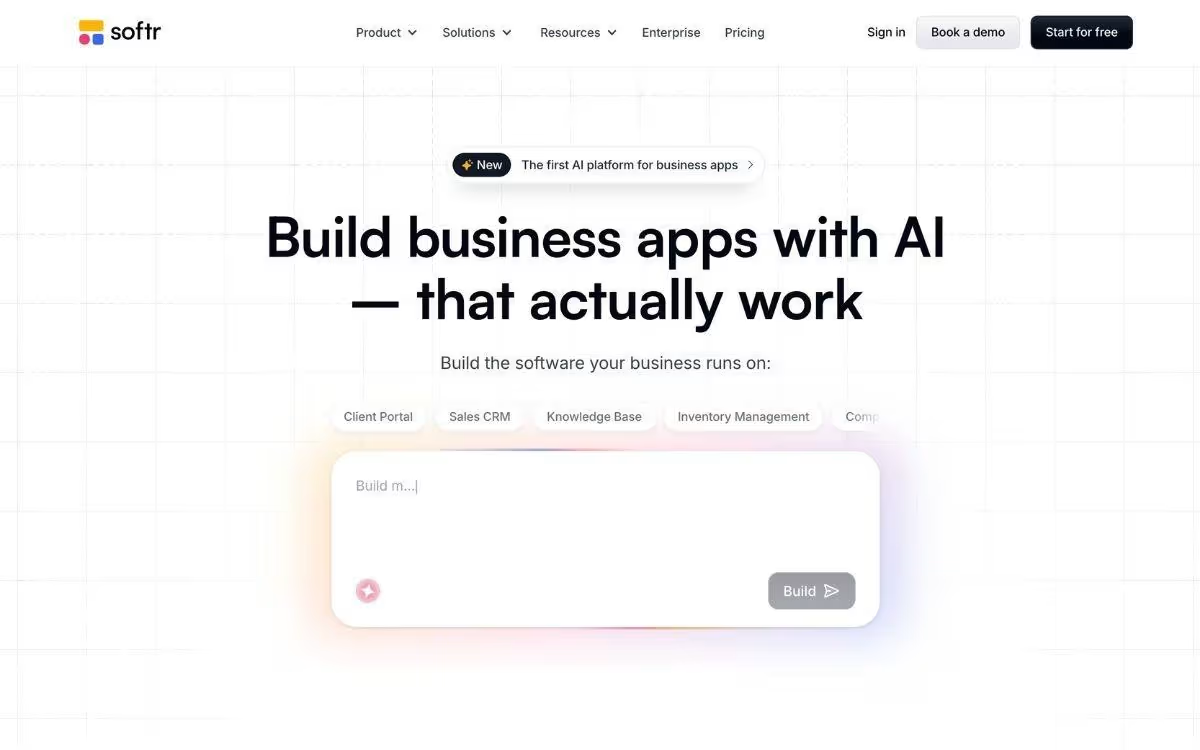
You build by dragging pre-made blocks (lists, tables, charts, forms, payment buttons) onto a page, then wiring in user sign-in and role-based permissions. Non-technical teams tend to get a working portal up fast, and reviewers on G2 repeatedly single out how quickly they went from an Airtable base to a portal clients could log in to.
The trade-off is depth. Because Softr is block-based, you work within the layouts it already offers, so teams that need heavy custom logic or a fully bespoke interface hit its ceiling. It’s a strong pick for ops teams, agencies, and consultants, and a weaker one for a product that needs to behave in ways the blocks do not anticipate.
Meet Bubble: Features and Highlights
Bubble is a visual builder for fully custom web apps, and it goes far deeper than Softr in terms of logic. You get its own database, conditional workflows, privacy rules, and an API connector, the piece that links an app to outside software and data, plus a large plugin marketplace built up over more than a decade.
We break down the best Softr alternatives and competitors in a separate guide, including where each one wins.
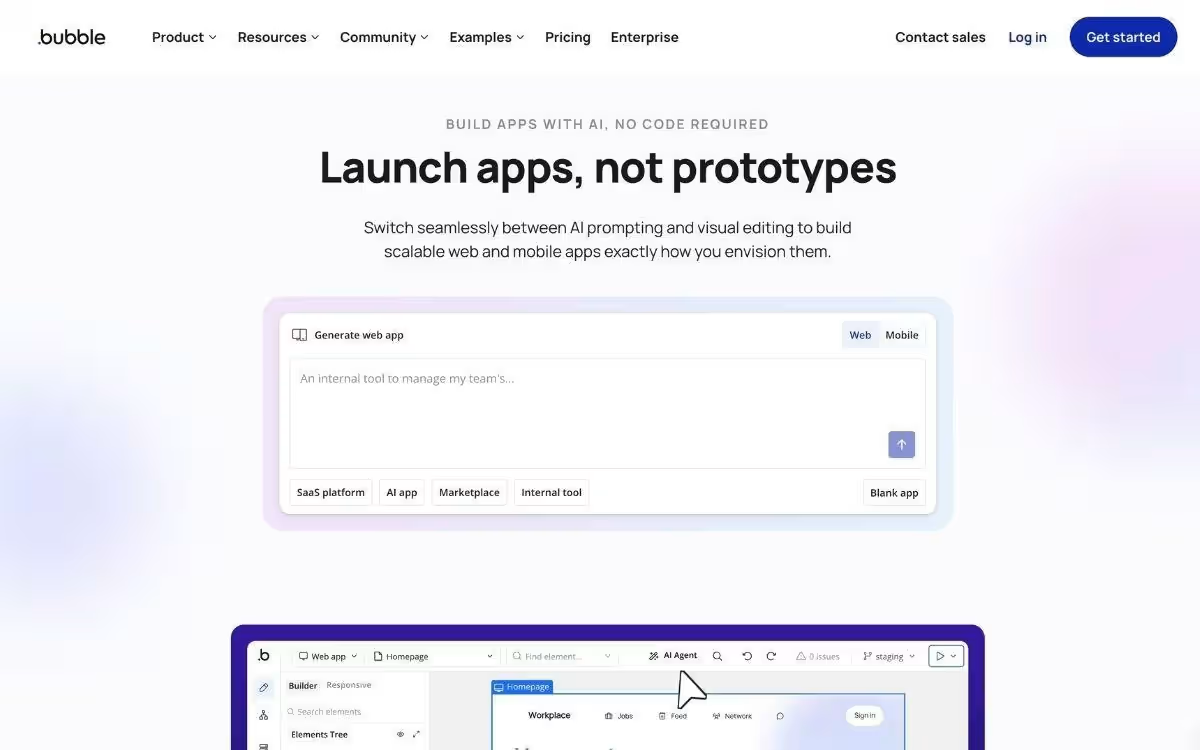
That power is why people use Bubble for two-sided marketplaces, subscription products, custom CRMs, and other apps that would otherwise need a development team. Reviewers on G2 consistently praise how fast it gets a fully functional app in front of users.
The cost of that flexibility is a steep learning curve. Bubble is technically no-code, but mastering its workflow logic, data structures, and performance tuning takes time, and complex apps can slow down if not built carefully. It rewards founders who treat it like a craft, and frustrates anyone hoping to skip the learning entirely.
Meet Emergent: Features and Highlights
Emergent is an AI app-building platform built for vibe coding. You describe the software you need in plain English, and it produces a complete, working app (the screens people see, the logic behind them, sign-in, and payments), which you can publish live with a click, then keep improving as you request changes.
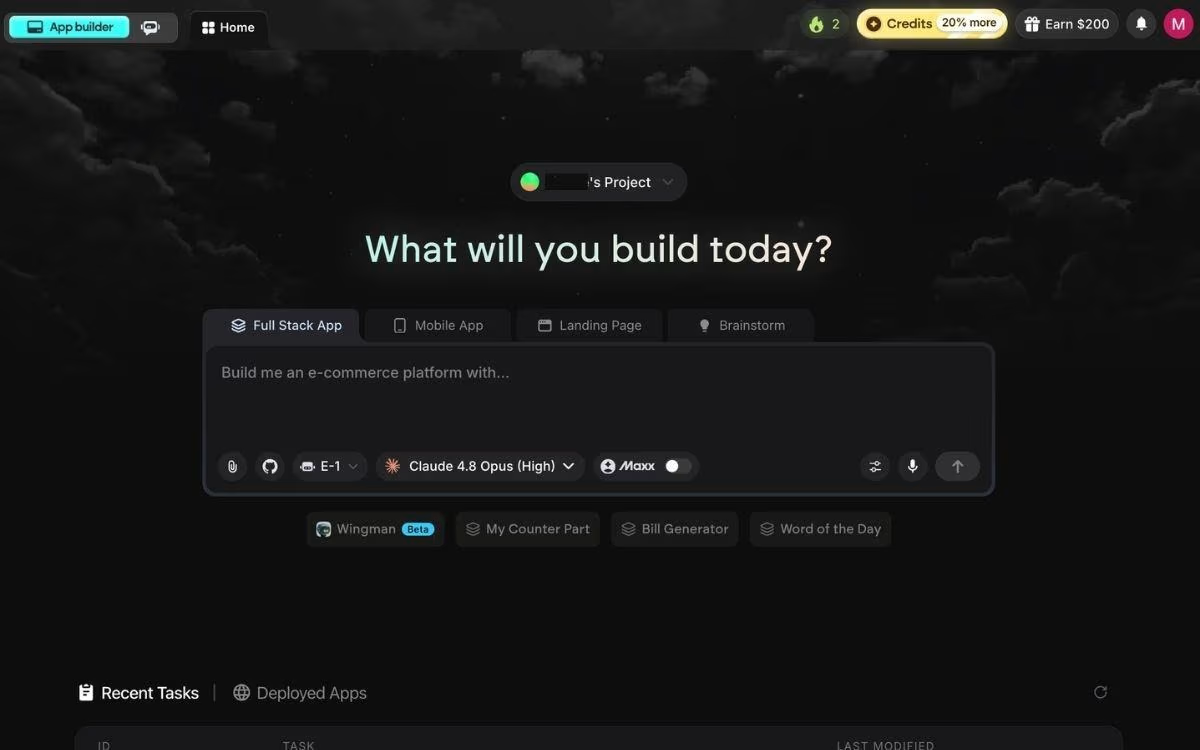
Under the hood, a coordinated system of AI agents handles the work, with some shaping the interface, others wiring up the logic and integrations, and testing agents checking that the build holds together.
It connects to the tools most businesses already use, with Stripe and Razorpay for payments and more than 100 integrations available, and it can build a business app like a CRM, a booking system, or inventory tracking.
The part that sets it apart from both no-code tools is ownership. On the Standard plan and up, every build syncs to a GitHub repository under your account, so you can export the code and run it anywhere, with no lock-in.
The honest caveat is that Emergent runs on credits, so the cost depends on how much work you ask for, and getting good output largely depends on writing a clear prompt. Credits stretch much further on a simple page than on a full app with lots of moving parts.
How I Compared Softr, Bubble, and Emergent
I compared the three platforms using their official product and pricing pages, their documentation, verified customer reviews on G2 and Trustpilot, and I checked every price against each tool's live pricing page.
The focus was on five things a buyer cares about: how hard each is to learn, what you can actually build, how data and integrations work, how predictable the pricing is, and whether you own the result.
Where the tools genuinely tie, I say so. And since we built Emergent, our bias is worth stating plainly: when Softr or Bubble wins a category, we hand it to them. A comparison that rigs every round reads as marketing, and it helps no one decide where to spend money.
Softr vs Bubble vs Emergent: At a Glance
Here is the short version before the detailed breakdown. Prices lead with the monthly rate; each platform also offers a free plan to test first.
| Feature | Softr | Bubble | Emergent |
|---|---|---|---|
| Best for | Portals and internal tools on Airtable data | Complex, custom web apps and SaaS | AI-built custom apps from a prompt |
| Starting price | $25/month($19/month billed annually) | $69/month($59 annually) | $20/month($17 annually) |
| Key strength | Fast setup, clean Airtable sync | Deep logic and flexibility | Full app from plain English, you own the code |
| Main weakness | Limited deep customization | Steep learning curve, usage-based costs | Credit costs can be unpredictable |
| Ideal user | Ops teams, agencies, consultants | Technical founders, SaaS builders | Non-technical founders and operators |
Feature-by-Feature Comparison
These five areas are where the Softr vs Bubble choice is usually settled, and adding Emergent changes the answer in a few of them.
Ease of Use and Learning Curve
This is about how fast a non-technical person gets to a working result. Softr is the easiest of the three to learn, since the work is arranging blocks and connecting a data source, with no logic to design from scratch, and most people ship a first portal the same day.
Bubble is the steepest, because its power comes from workflows and data rules you have to understand before anything complex works. Emergent removes the building step entirely by generating the app from your description, though the quality of the result tracks the quality of your prompt.
Winner: Softr, narrowly, for the most predictable path to a first app. Emergent has the lowest technical barrier, but its output still needs a round or two of refining.
What You Can Build
The ceiling counts for more than the first hour. Softr is built for interfaces on top of data, so it is excellent for portals and dashboards, but limited when you need custom behavior that the blocks do not cover. Bubble can build almost anything on the web if you invest the time, from marketplaces to subscription products.
Emergent also produces custom software, including apps with sign-in, payments, and a working data layer, generated instead of hand-assembled.
Winner: Tie between Bubble and Emergent. Both build custom products, just by different routes, one hand-tuned and one generated. Softr sits a clear tier below on raw capability.
Data and Integrations
Where your data already lives should drive this choice. Softr shines when your records sit in Airtable, Google Sheets, or Notion, thanks to real-time sync, and it now offers its own database too. Bubble brings its own database, plus a deep API connector and a large plugin library.
Emergent uses managed data behind the scenes and connects to more than 100 services, including Stripe, Razorpay, and Google sign-in.
Winner: It depends. Pick Softr if your data already lives in Airtable or Sheets. If you need the data and logic built for you from scratch, Bubble and Emergent are the stronger options.
Pricing and Predictability
A tool is only cheap if you can forecast the bill.
Softr uses flat monthly tiers, so its pricing is predictable, even though feature gating and user caps can push you into a higher plan. Bubble runs on Workload Units, the usage credits that every action in your app consumes, and reviewers report that costs are hard to predict and can climb sharply as an app gets busier.
Emergent runs on credits, which are also usage-based, and users note that iteration and bug fixes both consume them.
Winner: Softr. Flat pricing is the easiest of the three to budget around, and that is one win we cannot claim for Emergent.
Code Ownership and Lock-In
This is the question most builders forget until it matters. Softr is fully managed and does not hand you raw source code, so your app lives on Softr.
Bubble also does not export source code, and while it promises to open-source the platform if it ever shuts down, that path is untested. Emergent syncs every build to your own GitHub repository on the Standard plan and up, so you can export the code and self-host whenever you want.
Winner: Emergent. Owning and exporting the code changes what happens if you ever outgrow the tool, and it is the clearest reason to pick it over either no-code option.
What Users Say
Ratings tell a split story, so it is worth reading the praise and the complaints side by side. The quotes below are taken from public reviews, linked so you can read each in full.
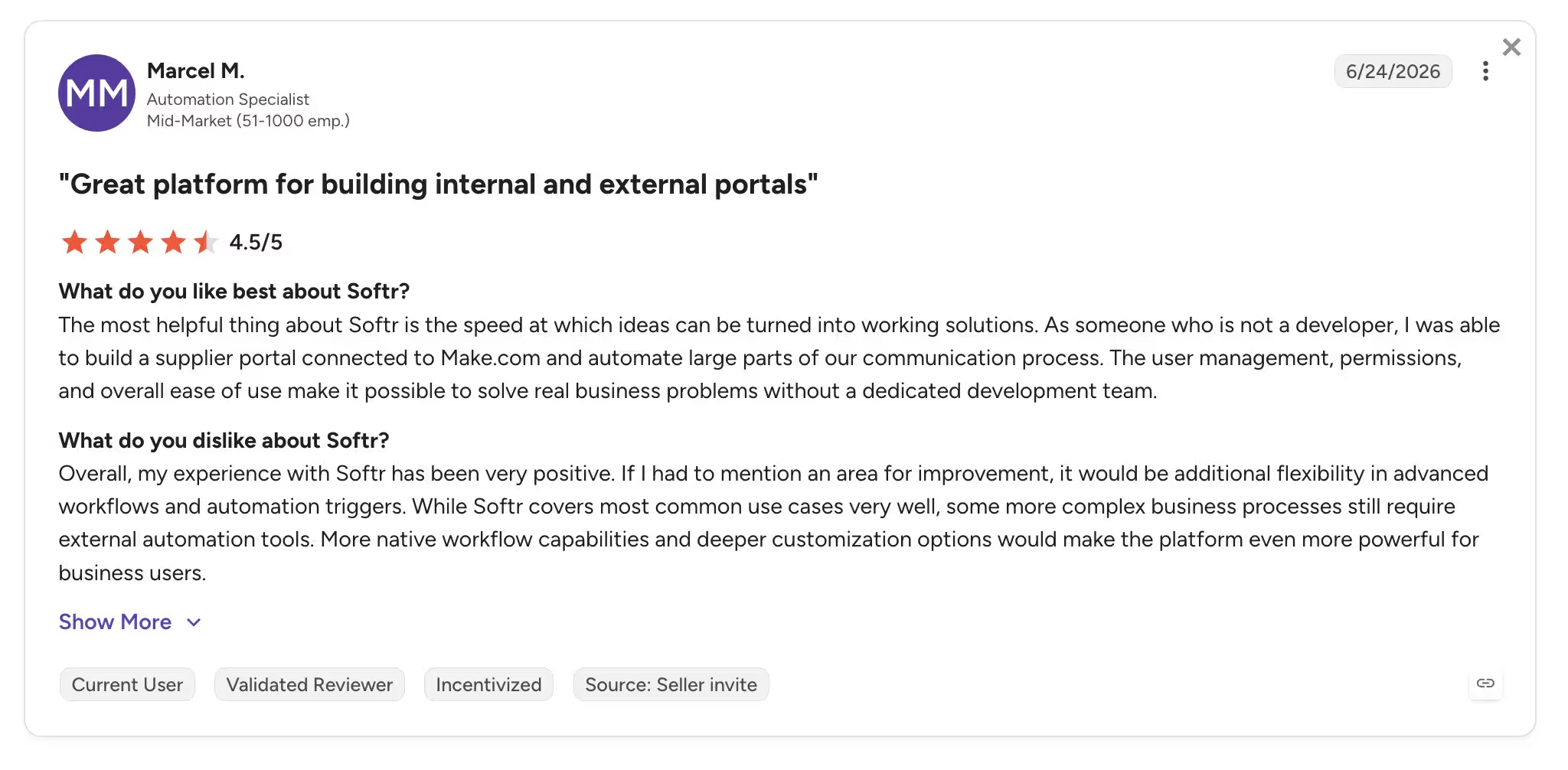
Softr holds around 4.7 out of 5 on G2. Marcel M., an automation specialist who built a supplier portal without writing code, credits "the speed at which ideas can be turned into working solutions."
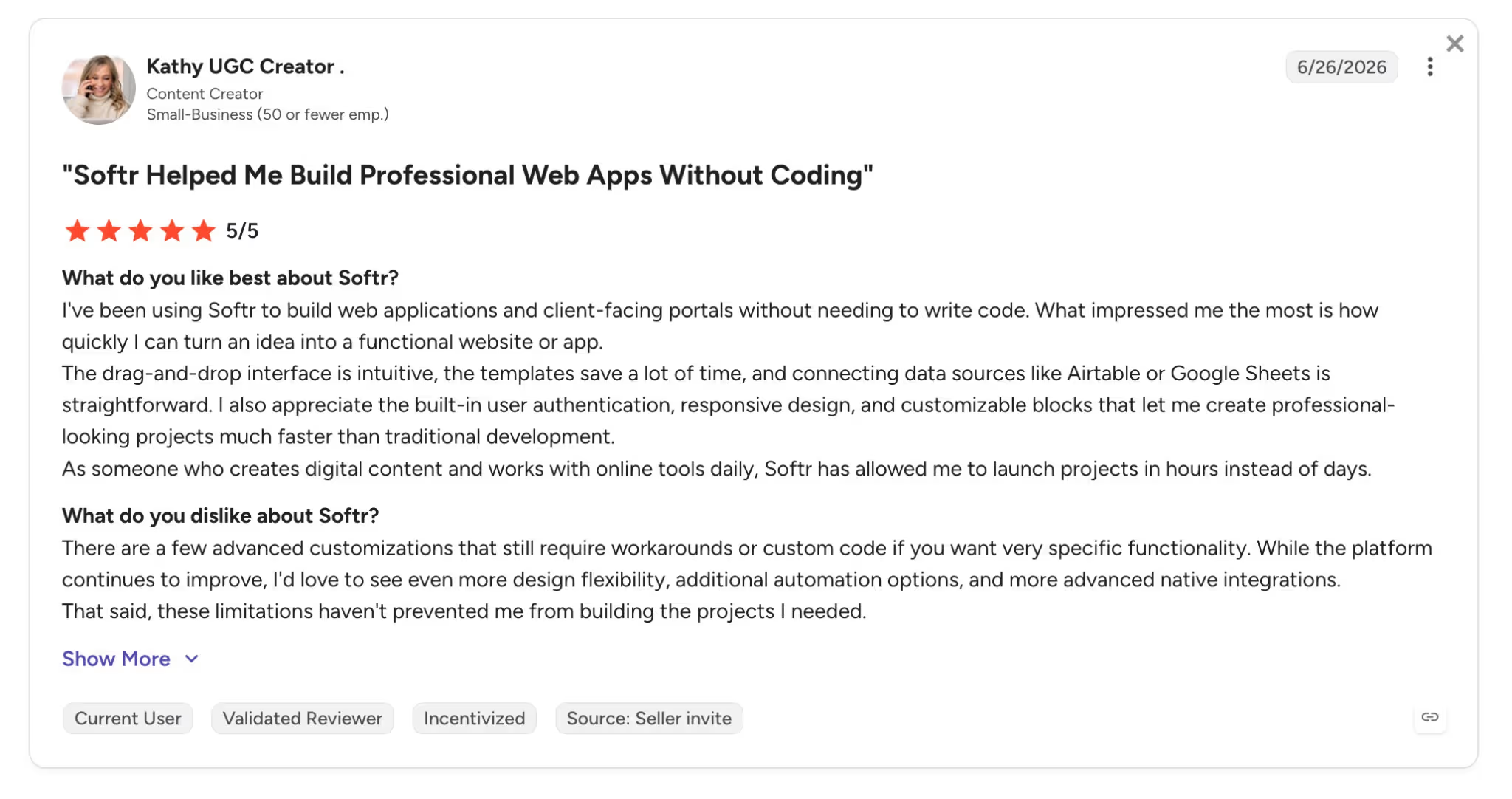
On the critical side, Kathy, a content creator, points to "a few advanced customizations that still require workarounds or custom code," and other reviewers add that pricing climbs once you add users or need higher-tier features.
Bubble sits near 4.4 on G2 among people evaluating features, but around 1.7 on Trustpilot, where billing complaints dominate.
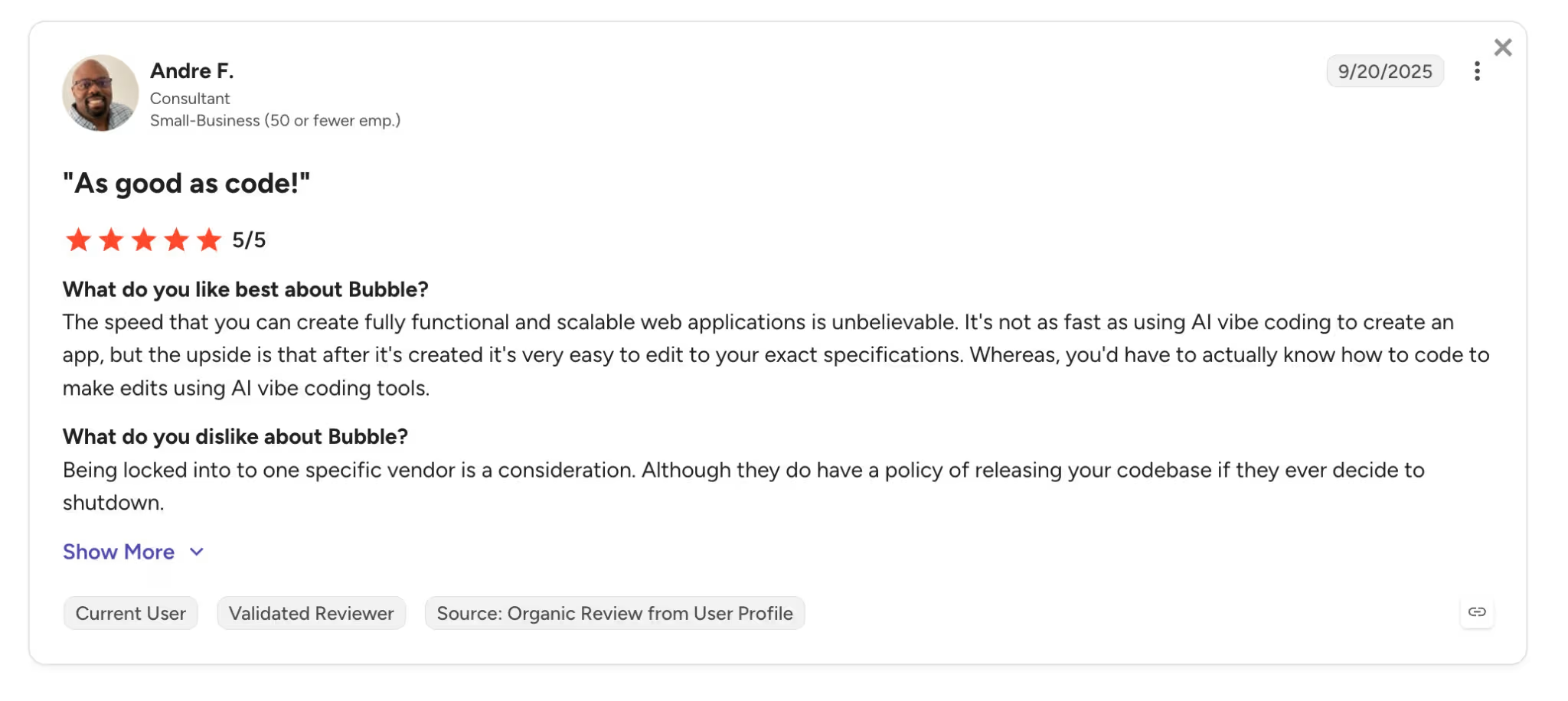
Andre F., a consultant, writes that "the speed that you can create fully functional and scalable web applications is unbelievable."
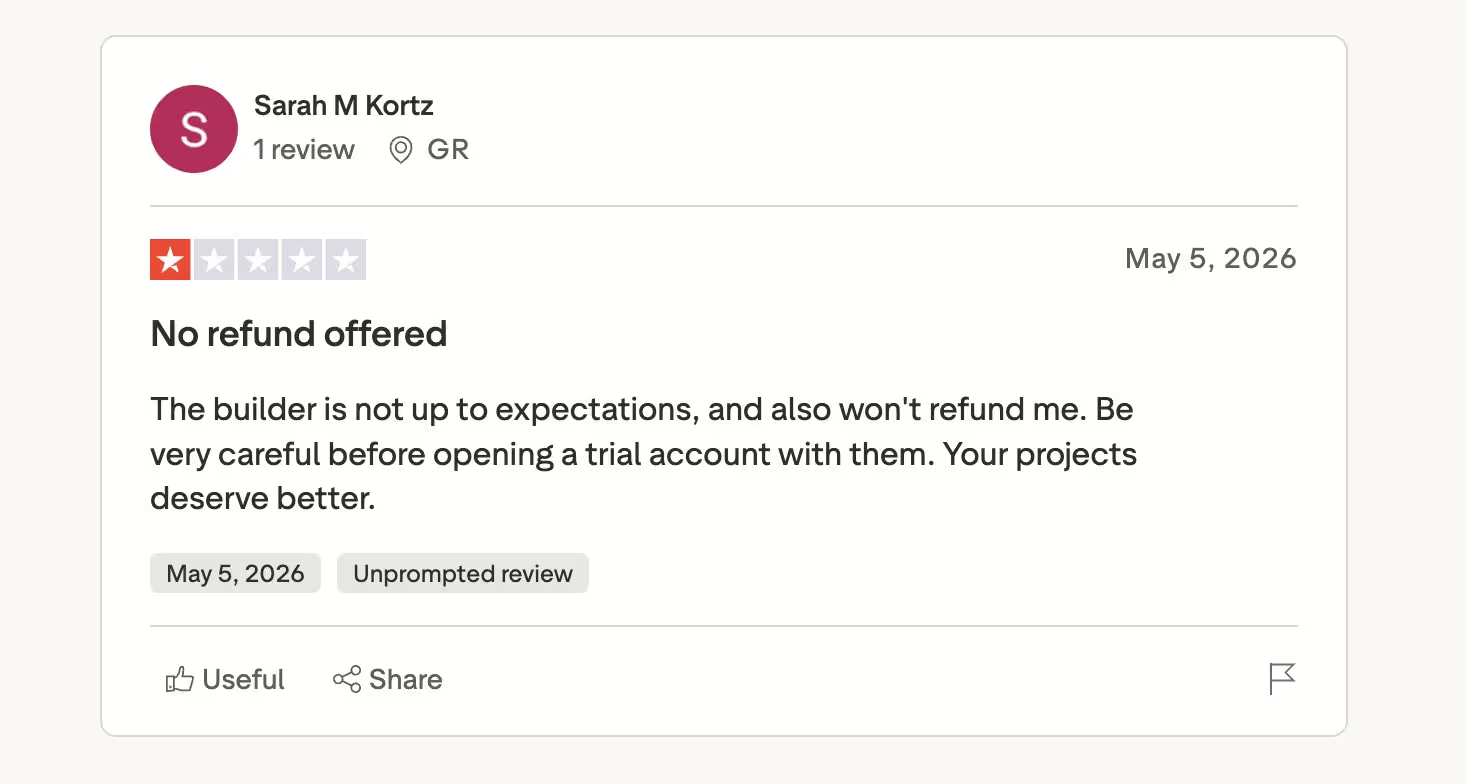
Sarah M. warns on Trustpilot that "the builder is not up to expectations, and also won't refund me." Beyond individual reviews, the loudest recurring complaints are the learning curve and the unpredictability of Workload Unit costs at scale.
Emergent runs around 3 out of 5 stars on Trustpilot, and the reviews are split.
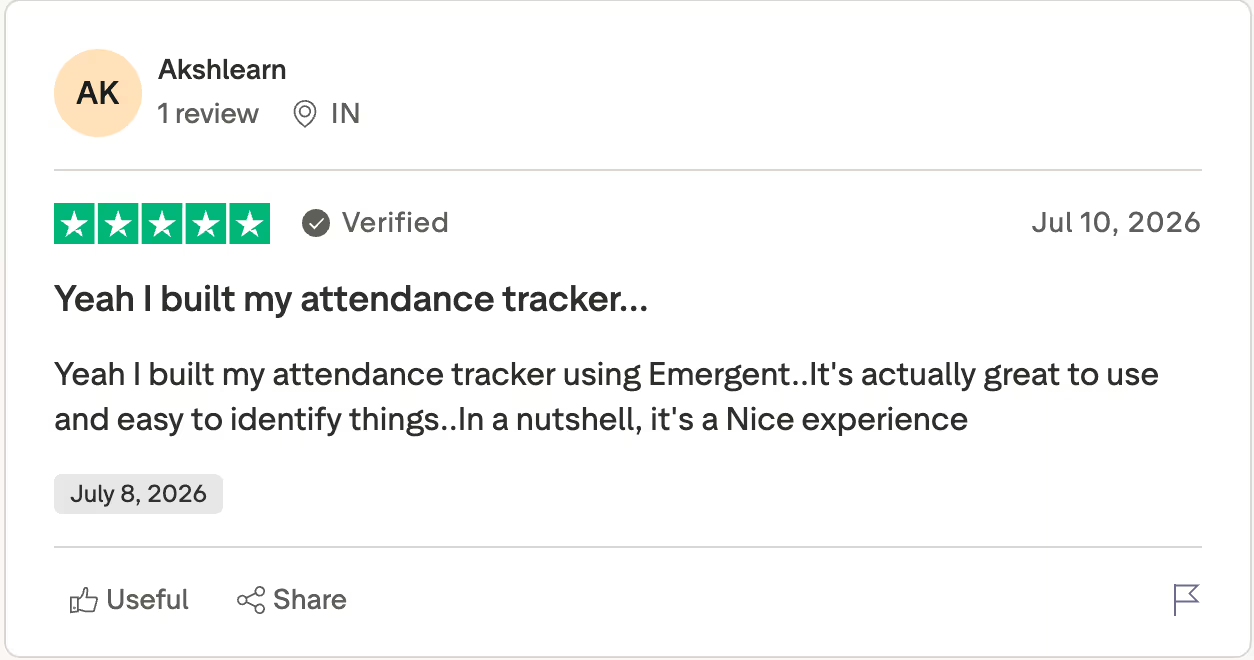
Akshlearn calls it "an incredibly useful tool for bringing almost any idea you can imagine to life," and a verified reviewer describes building a working attendance tracker from prompts alone.
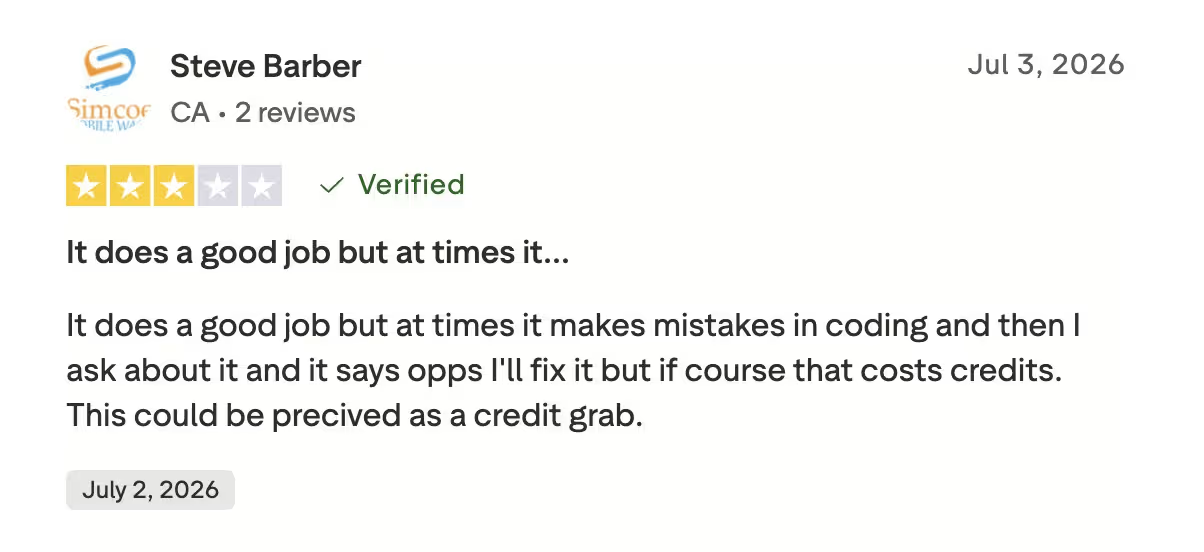
On the critical side, Steve B. says, "It does a good job but at times it makes mistakes in coding."
How to Make Your Choice
The right pick depends on the job you are doing.
Softr Is Better For
- Teams whose data already lives in Airtable, Google Sheets, or Notion.
- Client portals, member directories, and internal dashboards.
- Non-technical ops teams and agencies that value speed and predictable pricing.
Bubble Is Better For
- Founders building a complex, custom web app or SaaS product.
- Teams with time to learn the platform, or budget for a Bubble developer.
- Products that lean on Bubble's large plugin library and intricate workflows.
Emergent Is Better For
- Non-technical founders and operators who want custom business software without learning a builder.
- Apps that handle live users, sign-in, and payments, like a CRM, bookings, or inventory.
- Anyone who wants to own and export their code instead of staying locked to a platform.
Emergent is not the right tool for a marketing-only website, where a site builder like Webflow is a better fit, nor is it aimed at developers who want a faster way to write code.
My Verdict
The Softr vs Bubble decision rarely comes down to a single winner, and any comparison that names one is selling you something. The honest read is that these three tools are not really competing for the same job.
Softr is the fastest way to turn an Airtable base into a usable portal, and if that is your situation, nothing here beats it for speed or predictability. Bubble is the most flexible if you are willing to learn it, and it can carry a full SaaS product as long as you keep a close eye on Workload Units.
Emergent is the one to reach for when you want a genuinely custom app but do not want to spend months in a builder or hand your source code to a platform you cannot leave.
If your data already lives in Airtable, start with Softr. If you want deep control and have the patience, Bubble earns its reputation. But if you want to describe the software, let the AI assemble it, and walk away owning the code, Emergent is the one built for that.
Build Your Custom App Without Learning a New Tool
If the comparison above made the choice clearer and you want software that holds up with live users, sign-ins, and payments, Emergent is worth a look as the AI-native option. Its free plan includes 10 monthly credits, enough to build a first app and judge the output for yourself.
- Describe it instead of building it: You write what you want in plain English, and AI agents working in concert plan, build, test, and ship a working app.
- Own and export your code: Your builds land in a GitHub repository you control on the Standard plan and up, so leaving is as easy as staying.
- Skip the setup that other tools make you wire by hand: Sign-in, payments through Stripe or Razorpay, and more than 100 integrations connect to the tools you already use.
- Start free and judge the output: The free plan's 10 monthly credits are enough to build something usable before you pay anything.
Try building your first app on Emergent and see how far a clear prompt gets you.
Most AI app builders stop at prototypes. Emergent creates production-ready apps you can actually launch.
- Production-ready apps
- Web & mobile apps
- Deploy in minutes