

Build a Brand Awareness Survey That Shows Who Knows You
Build a brand awareness survey that asks for unprompted recall before any list, and saves every answer in your own database.
Build a brand awareness survey that asks people to name brands in my category before showing them any names.
Trusted by Builders Worldwide
Active Builders Worldwide
Apps Successfully Created
Countries Globally Reached



The Pieces That Keep Recall Numbers Honest
Each one protects the unprompted answer or the line from one round to the next.
Unprompted recall on a screen of its own
Ask people to type every brand they can name in your category into a blank box. No logo or brand name appears on that screen, and the back button stays off once they move on.
A brand lineup with a decoy mixed in
Show your brand among real rivals in random order, plus one plausible brand that does not exist. The share who tick the invented one tells you how much to discount prompted recall.
Typed names matched to the right brand
Write aliases for each brand, such as misspellings and short forms, and each typed answer counts toward the brand it means. Anything the aliases miss waits in a queue for a person.
A first-heard question on your channels
Offer the channels you pay for, such as podcasts or billboards, as the answer options. Each answer is stored against the market and the survey round, ready to set beside spend.
Recall by market, round against round
Chart unprompted and prompted recall per city or region next to the previous round. When a market moves more than the margin you set, its owner gets a Slack message or an email.
Responses and source code that stay yours
Keep every response in a database you own, one row per person per round. Export the whole survey app to your GitHub repository on paid plans, then change it with a prompt.
Four Awareness Studies in the Field
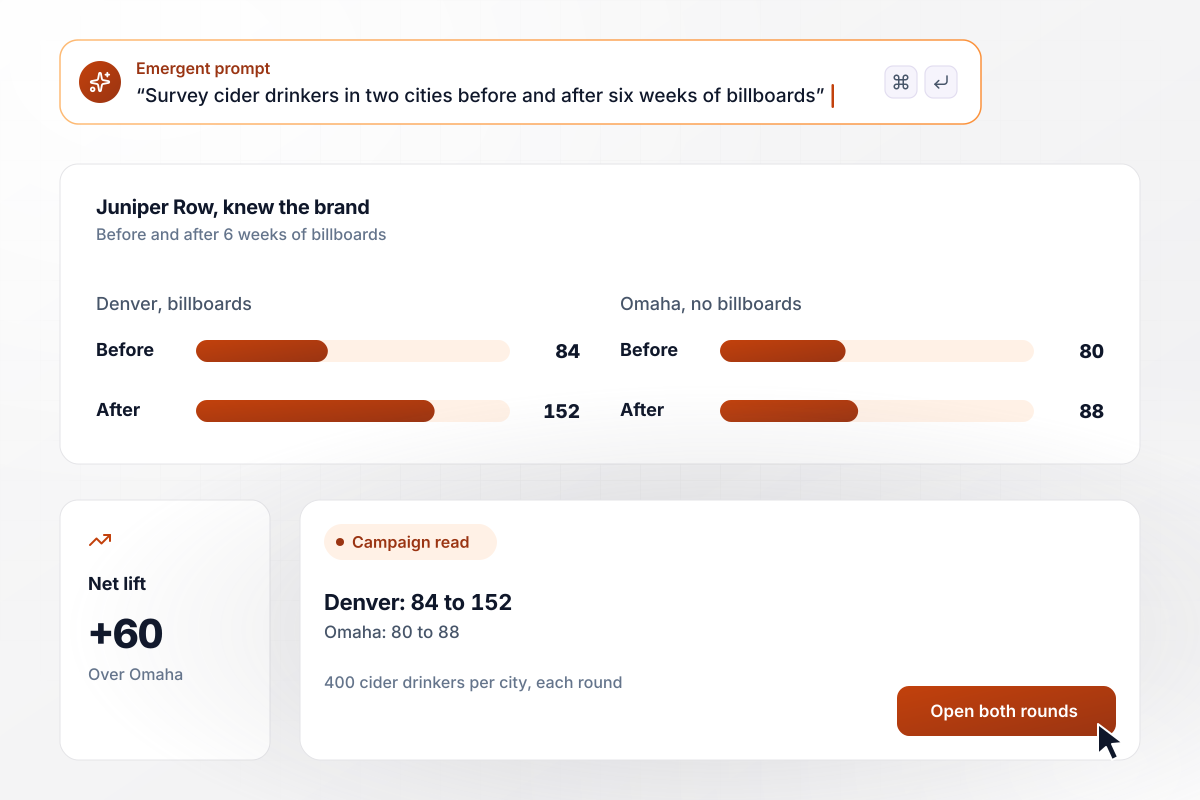
Six weeks of billboards, read against a city with none
Juniper Row Cider booked six weeks of billboards in Denver and none in Omaha. Before and after, 400 cider drinkers per city picked the brands they knew. Denver climbed to 152 from 84. Omaha drifted to 88 from 80 without a single billboard, and lift is whatever Denver gained beyond that.
window.awbMockup = { campaignLift: "Build a before-and-after awareness survey for my cider brand. Survey 400 cider drinkers in Denver, where our billboards run for six weeks, and 400 in Omaha, where they do not. In both rounds, ask which brands they know from a list. Chart the two cities side by side and show how much more Denver gained than Omaha.", regionalRecall: "Every quarter, survey 600 pet owners across four regions. First ask them to type every pet insurer they can name, then show our brand and three rivals in random order with one made-up insurer mixed in. Show unprompted and prompted recall by region with the count who picked the fake insurer, and email the regional manager when a region trails.", checkoutQuestion: "Add one question to my furniture store's order confirmation page asking where the buyer first heard about us, with options like podcast, search, Instagram, and friend or family. Save each answer on the order with its total. Post a count by channel to our marketing channel in Slack every Monday morning.", logoRecognition: "Before we open in Phoenix, show 300 local homeowners our moving company's logo on their phones with the name blurred, and ask them to type which company they think it is. Run the same survey in Tucson, our home city. Show how many named us correctly in each city side by side." };
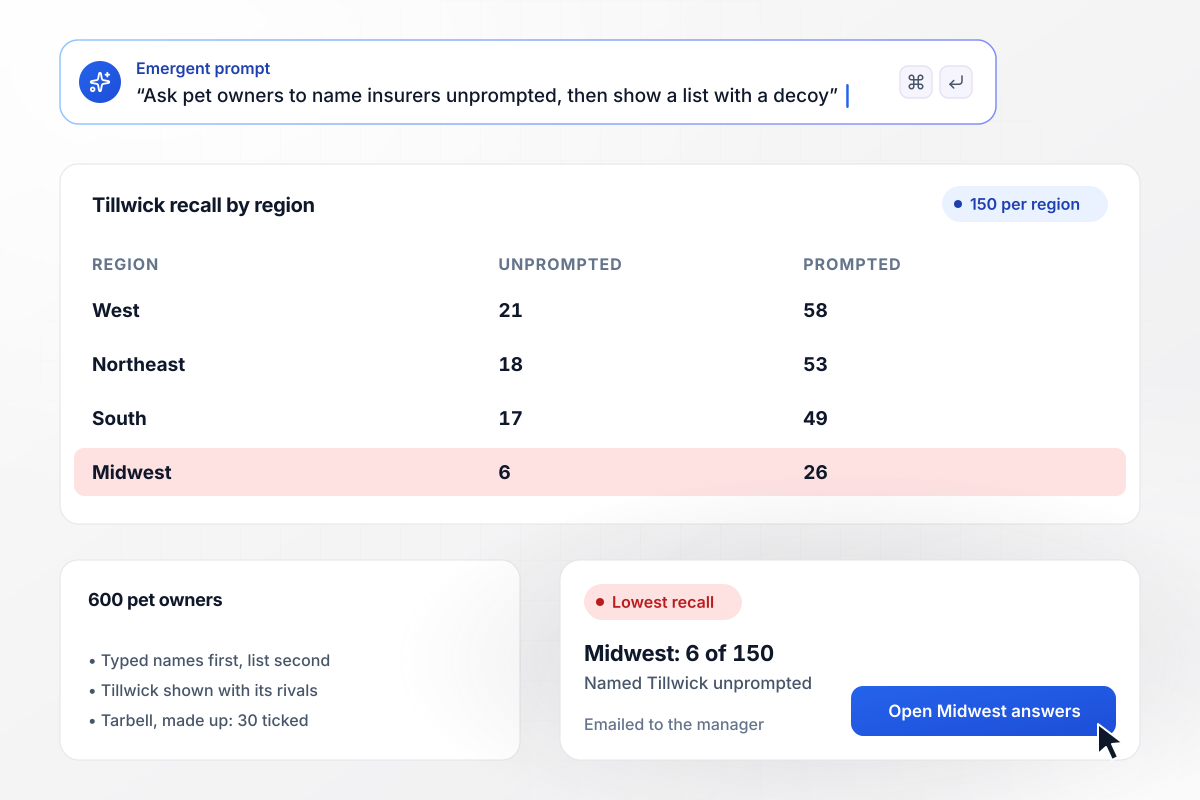
Four regions, one made-up insurer in the list
Every quarter, 600 pet owners type every pet insurer they can name into a blank box. Only then do they see a list that hides Tarbell Pet Cover, a made-up insurer, among the real ones. Thirty claimed to know it. In the Midwest, 6 of 150 named Tillwick unprompted, and the regional manager got that number by email.
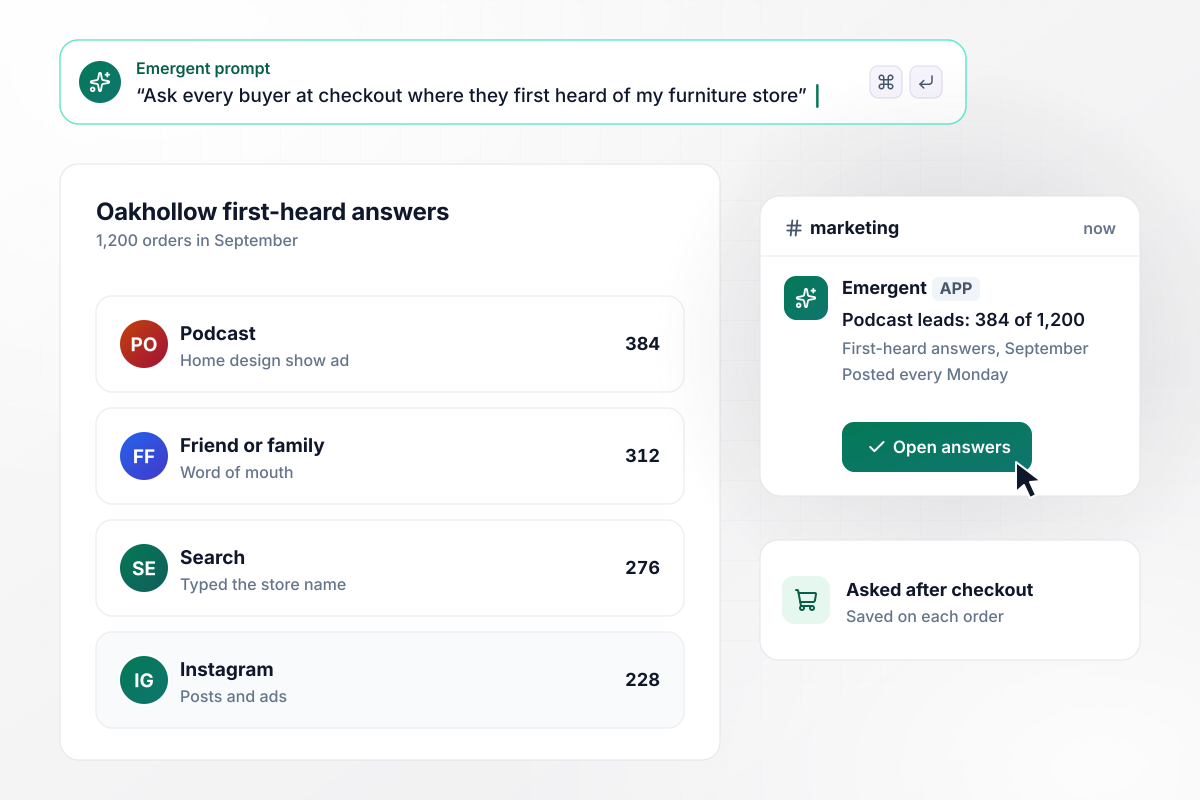
One question on the order confirmation page
Right after checkout, Oakhollow's order confirmation page asks one thing: "Where did you first hear about us?" The answer is saved on the order. In September a home design podcast led with 384 of 1,200 answers, ahead of friend or family at 312 and search at 276, and topped the Monday post to the marketing channel.
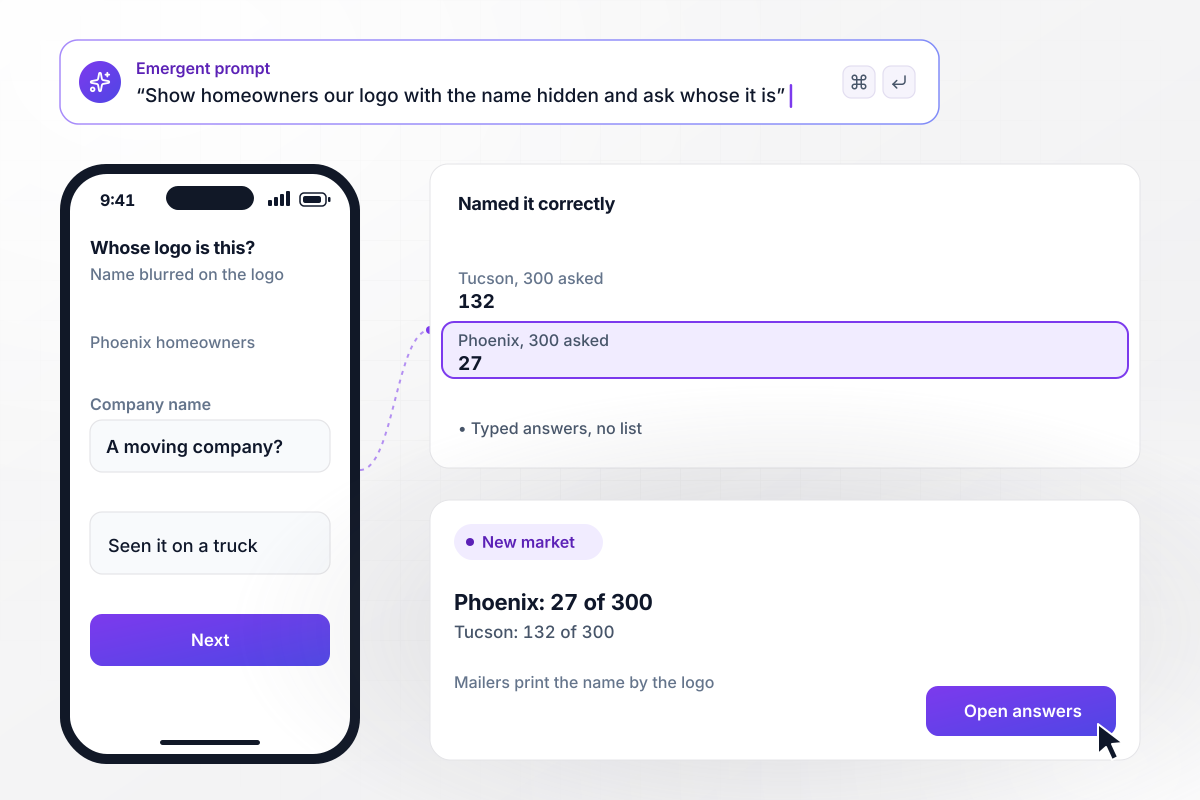
The logo without the name, in a new city
Before the first truck rolls in Phoenix, 300 homeowners there see the Selby Movers logo on their phones, name blurred, and type whose they think it is. Only 27 of the 300 named Selby. In Tucson, its home city, 132 of 300 did. The first Phoenix mailers print the name in large type beside the logo.






How to Design a Brand Awareness Survey
Seven steps to design a brand awareness survey that measures recall honestly and tracks it by market, then build it with Emergent.
Pick the category you compete in the way a buyer would say it, such as pet insurance instead of your product line. Then fix the market: the cities or regions you sell in, plus one screening question that keeps only people who buy in the category.
Ask people to name every brand they can think of in that category before any name or logo appears. The first brand typed is top-of-mind, and the full answer is unprompted recall. Anything shown earlier would inflate both numbers.
Next, show your brand among the rivals buyers weigh in random order, and add one believable brand that does not exist. Anyone who ticks the decoy is overclaiming, and that share tells you how far to discount prompted recall.
For people who recognize your brand, ask where they first came across it. Offer the channels you spend on, like podcasts or trade shows, alongside word of mouth, and keep those options identical in every round you run.
Field a full round before a campaign starts, in the markets that will see it and in one that will not. Without the before numbers and a control market, a rise after launch could be the season or a rival's advertising.
Run the next round with the same wording, the same random ordering, and the same screening question. Changing who qualifies or how the category is named moves the score on its own and breaks the comparison with earlier rounds.
Show unprompted and prompted recall for each market beside the previous round, with the decoy rate next to them. Put the weakest market in front of the person who owns it, and judge the next campaign by whether that number moves.
Why Track Awareness With Emergent?
Question order and alert margins are code you can read and change with a prompt, and responses have no cap.

|
SurveyMonkey | Attest | Typeform | |
|---|---|---|---|---|
| How you build | Prompt for the survey, quiz, or poll and the app around it | Templates and editor | AI co-pilot drafts it; its consumer panel answers | Templates and editor, AI assist |
| Response limits | No response caps | Response caps by plan | Credits by tier, one per question answered | Monthly response caps by plan; the form stops at the cap |
| Behavior at cap | Keeps collecting, no cap | Overage billed per extra response | Top up credits mid-year, at a higher rate | Form stops collecting |
| Where responses live | A database table you own, plus any integration | SurveyMonkey account | Attest account | Typeform account |
| Code ownership | Full code export to GitHub on paid plans | None | None | None |

Pick the Pricing Plan That Works for You
Choose the plan that fits your building ambitions. From weekend projects to enterprise applications, we've got you covered.




Find the right survey, quiz, or poll
for your team
Frequently Asked Questions
Your Questions, Answered
Don't change this element unless you know what you are doing
More things you can build
with Emergent









on Emergent today


