

Build an Anesthesia Consent Form for Every Anesthetic Plan
Build an anesthesia consent form that names the plan and the provider and keeps a timed signature for every case.
Build an anesthesia consent form for my anesthesia group.
Trusted by Builders Worldwide
Active Builders Worldwide
Apps Successfully Created
Countries Globally Reached



What an Anesthesia Consent Asks
The plan, the person giving it and the answers that change how a case starts.
General, regional, sedation, or MAC
Offer each anesthetic your group uses as a choice the anesthesia provider marks. The patient then reads only the risks and alternatives you wrote for the plan that was marked.
A signature apart from the surgeon's
Place the anesthesia section after the surgical consent in one link, with its own signature and time. Show the person giving the anesthetic and the one supervising above that line.
Fasting times checked against your rule
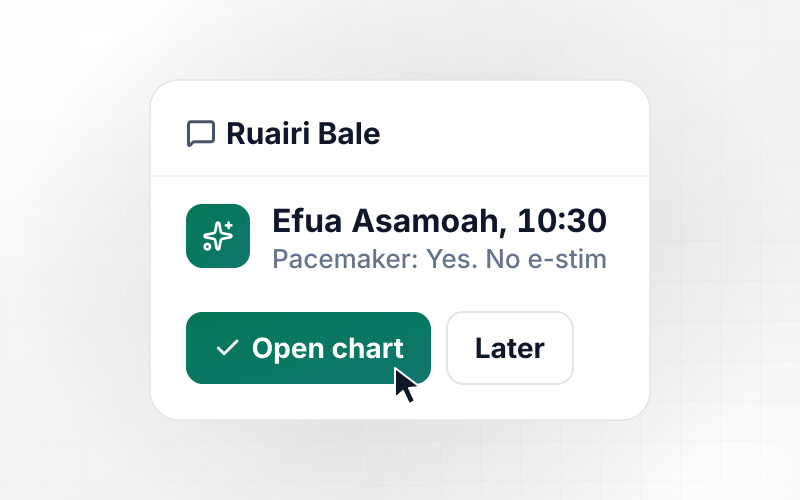
Ask when the patient last ate and last drank on the morning of the case. An answer inside your group's cutoff holds the case and alerts the provider who will give the anesthetic.
Teeth and airway questions up front
Ask about dentures, bridges, loose teeth, and how wide the patient can open their mouth. Each yes puts the patient on the provider's pre-op list with the details they typed.
Past reactions and family history
Ask about the patient's own reactions to anesthesia and any blood relative's, like a fever in surgery. A yes reaches the anesthesiologist before surgery day, in the patient's words.
Source code you can extend
Export the full code to GitHub on paid plans. You can run the anesthesia consent inside your scheduling system or patient portal and keep changing it there without a rebuild.
Anesthesia Consent in Four Settings
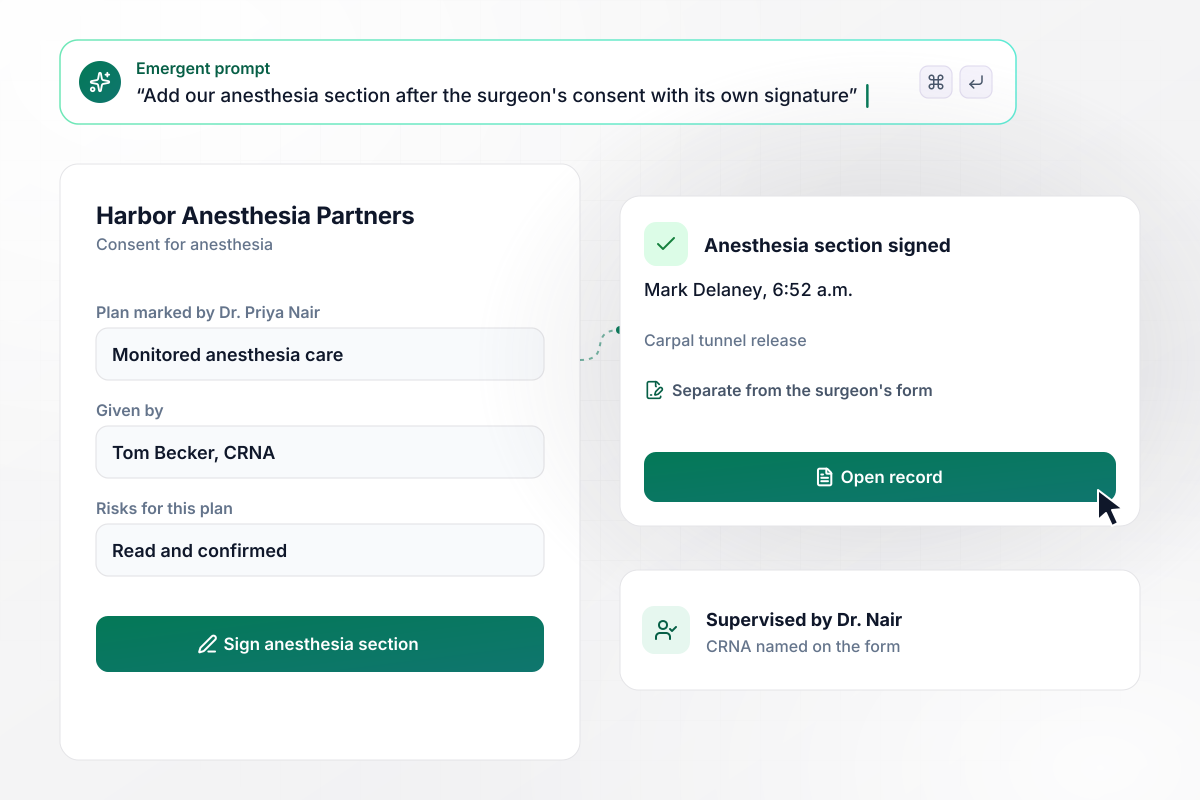
Its own signature, for the anesthesia plan only
Harbor Anesthesia Partners puts its consent right after the surgeon's, in the same link. Dr. Priya Nair marks monitored anesthesia care for Mark Delaney's carpal tunnel release, given by CRNA Tom Becker under her supervision. Mark reads the risks for that plan and signs the anesthesia section at 6:52 a.m.
window.awbMockup = { anesthesiaGroups: "Build an anesthesia consent form for my group, Harbor Anesthesia Partners. It should follow the surgeon's consent in the same link. The anesthesiologist marks the plan: general, regional, sedation or monitored anesthesia care, and names the CRNA giving it. The patient reads the risks for that plan only and signs the anesthesia section separately, with the time saved.", endoscopyCenters: "My endoscopy center needs a morning check-in for sedation patients. Ask when they last ate solid food and last drank. Our rule is no solid food for 8 hours before sedation. If an answer breaks the rule, hold the case on the schedule and alert the CRNA assigned to it before anyone starts an IV.", oralSurgery: "Build the anesthesia questions for my oral surgery practice. Before IV sedation, ask about dentures, bridges, loose teeth, and trouble opening the mouth wide. Anyone who answers yes goes to the top of the surgeon's pre-op list for the week, with the tooth or appliance they described.", hospitalPreOp: "Add a family history question to our pre-op anesthesia form at Maple Hill Hospital: has any blood relative had a problem with anesthesia, like a high fever or stiff muscles? A yes should go straight to the anesthesiologist on the case with the patient's own words, and create a task to call the patient before surgery." };
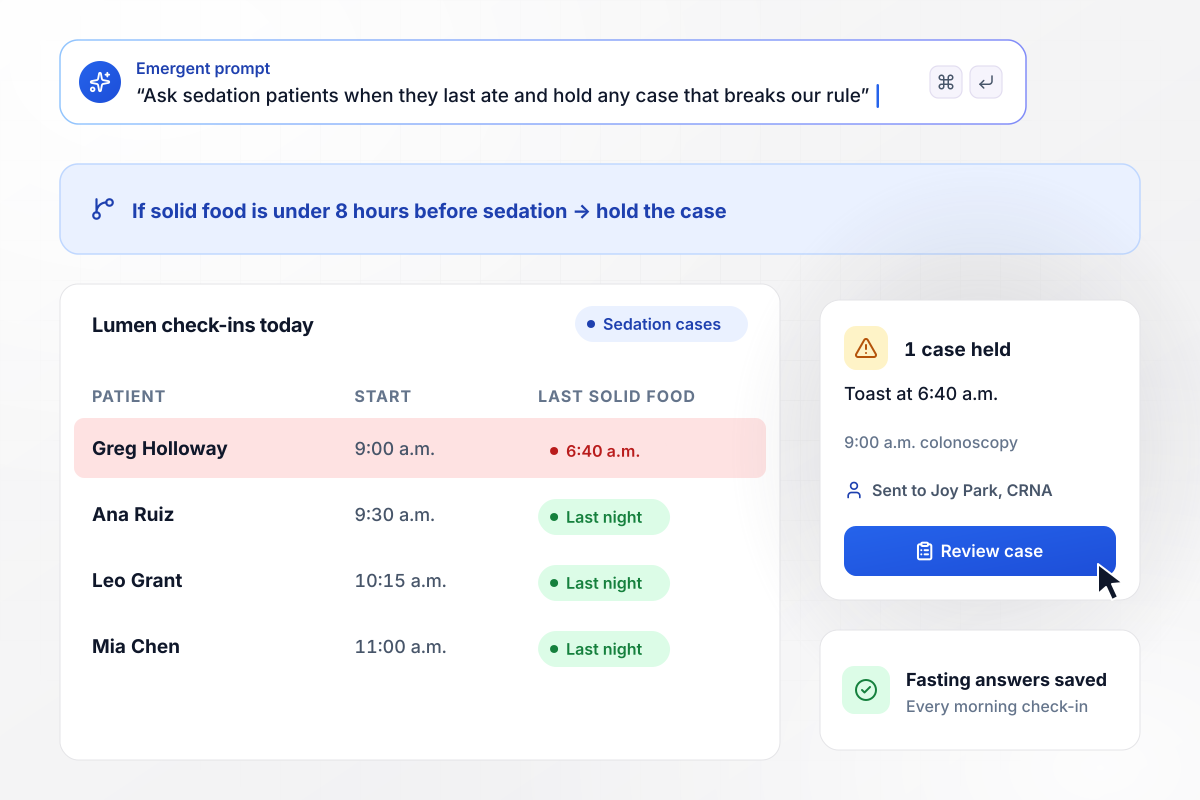
One late breakfast holds a 9:00 case
Lumen Endoscopy Center's rule, set with its anesthesia group, is no solid food for 8 hours before sedation. Each morning check-in asks when the patient last ate. Greg Holloway types toast at 6:40 a.m. for his 9:00 a.m. colonoscopy. His case waits, and CRNA Joy Park sees the answer before anyone starts an IV.
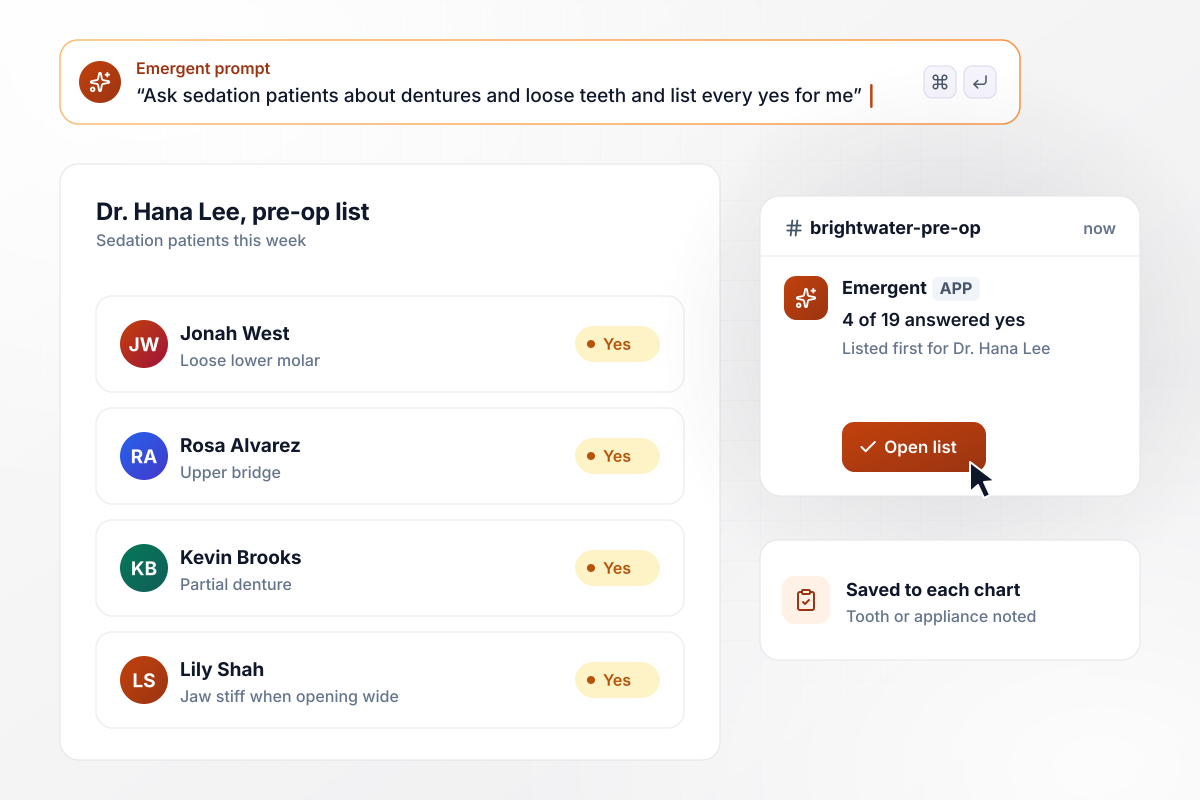
Four patients with loose teeth or bridges, listed first
Brightwater Oral Surgery sedates most of its wisdom tooth patients. Its anesthesia questions cover dentures, bridges, loose teeth, and opening the mouth wide. This week 4 of 19 sedation patients answered yes to one. Their names top Dr. Hana Lee's pre-op list, each with the tooth or appliance they described.
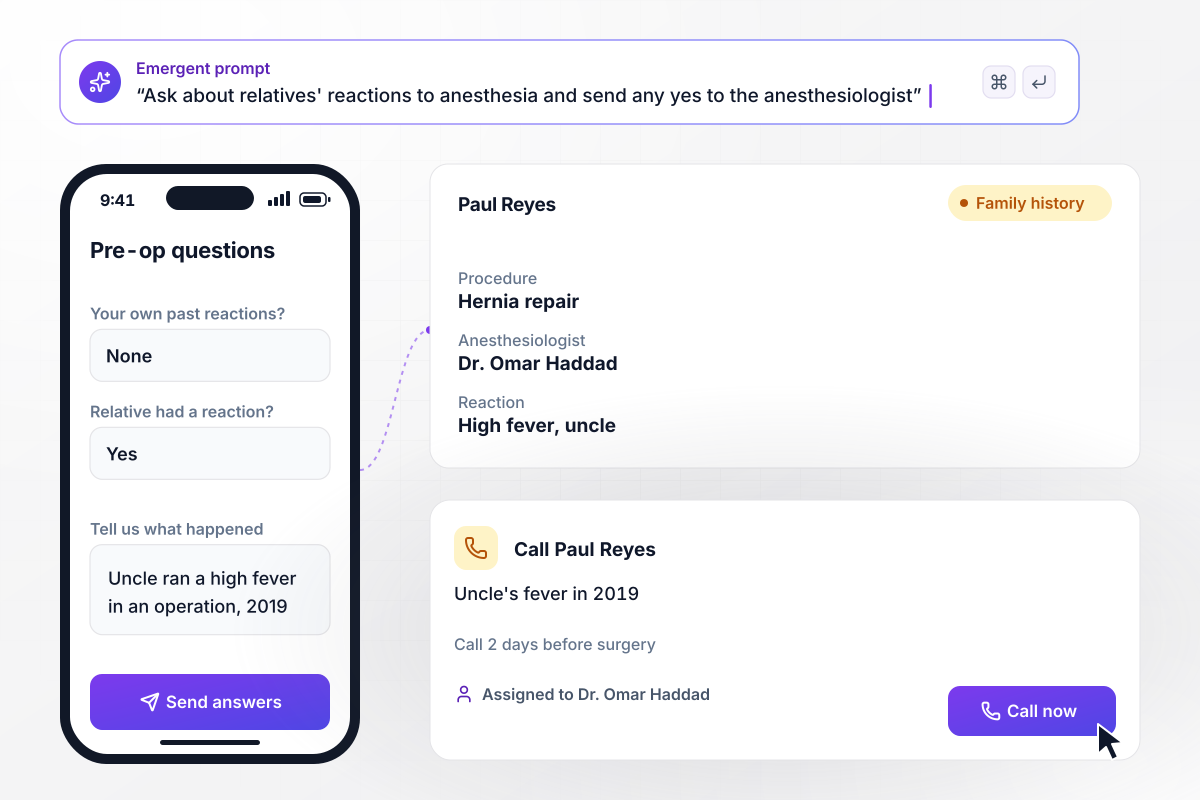
Before the hernia repair, a call about his uncle
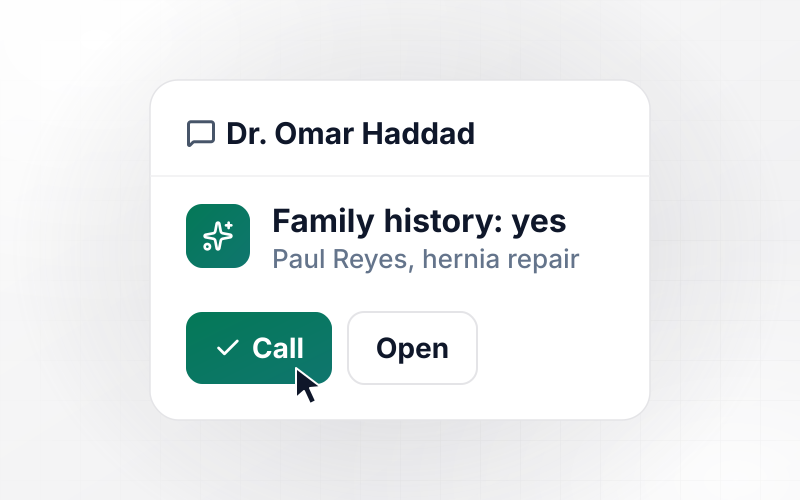
Maple Hill Hospital's pre-op clinic asks if any blood relative has had a problem with anesthesia, like a high fever. Paul Reyes checks yes: his uncle ran a high fever during an operation in 2019. Dr. Omar Haddad, the anesthesiologist, gets the answer and calls Paul 2 days before his hernia repair.






How to Create an Anesthesia Consent Form
These steps take an anesthesia consent form from your written plans and questions to a live form patients sign.
Gather the consent your group uses now, whether it is a page in the surgeon's packet or a separate sheet. Mark every statement that belongs to anesthesia, not to the operation, since those move into a section with its own signature.
Write down each anesthetic your group gives, including monitored anesthesia care and any combination you use. For each plan, write the risks and the alternatives in the words your anesthesiologists use when they talk to patients.
Under the hospital Conditions of Participation, a CRNA giving anesthesia is supervised unless the hospital's state has opted out, and an anesthesiologist's assistant always works under an anesthesiologist. Add one field for the person giving it and one for the supervisor.
Cover fasting times and any dentures or loose teeth. Add past reactions and family history: malignant hyperthermia is inherited and set off by some anesthetic gases and the drug succinylcholine.
Paste your plans and questions into Emergent. It builds the anesthesia section with its own signature, plus a morning check-in for fasting answers. Change anything by asking, for example a version in Spanish or a guardian line for patients under 18.
Connect the form to your scheduling system through its API. Fasting answers inside your cutoff hold the case on the schedule, and a yes on family history alerts the anesthesiologist by email or Slack before the day of surgery.
Run test patients through every plan and every yes answer, and check who receives each alert. Have your anesthesia leadership and a healthcare attorney review the wording before the first patient signs it.
Why Build Anesthesia Consent on Emergent?
A printed form shows a ticked box. This one sends each pre-anesthesia answer to the provider and saves the signed plan in your database.

|
Jotform | Google Forms | Typeform | |
|---|---|---|---|---|
| How you build | Describe it in plain English | Templates, editor, AI generator | Editor, with Gemini drafting on some Workspace plans | Templates, editor, AI assist |
| Where responses live | A database table you own, plus any integration | Jotform account | Google Sheets | Typeform account |
| Code ownership | Full code export to GitHub on paid plans | None | None | None |
| Response limits | No response caps | Monthly submission caps by plan; the form stops at the cap | No limit | Monthly response caps by plan; the form closes at the cap |



Pick the Pricing Plan That Works for You
Choose the plan that fits your building ambitions. From weekend projects to enterprise applications, we've got you covered.




Find the right form
for whatever you're collecting
Frequently Asked Questions
Your Questions, Answered
Don't change this element unless you know what you are doing
More things you can build
with Emergent


on Emergent today


