

Build an Occupational Therapy Intake Form Around Daily Tasks
Build an occupational therapy intake form that records the daily tasks each patient wants back, in a database you own.
Build an occupational therapy intake form for my outpatient clinic that asks new patients which daily tasks are hard right now.
Trusted by Builders Worldwide
Active Builders Worldwide
Apps Successfully Created
Countries Globally Reached



What the Therapist Knows Before the Evaluation
Describe your caseload, and Emergent builds an occupational therapy intake form around the daily tasks patients want to get back.
Daily tasks the patient marks as hard
Give patients a checklist of daily tasks such as getting dressed, cooking, writing, and opening jars. They tick the hard ones, and the therapist starts the evaluation there.
Injured hand and writing hand, asked apart
Ask about the injured hand and the hand the patient writes with as separate questions. When both answers name the same hand, a Dominant hand label sits at the top of the chart.
Pediatric sections that follow the child's age
A parent enters the child's age first. School questions about the grade and the teacher's main concern appear only for children 5 and older, and younger ones skip them.
Goals the patient rates from 1 to 10
Patients name the activities they most want back and rate how well they manage each one from 1 to 10. The same goals return at re-evaluation, and both ratings sit side by side.
A front desk list for missing referrals
Ask for the referring physician on every intake. An intake that arrives with that field blank goes to a front desk list, so staff can call the patient before anything is booked.
The codebase in your GitHub repository
On paid plans, export the code for the intake form and its chart screens to your GitHub repository. A developer can host it on the clinic's own servers and keep building on it.
Where the Answers Go in Four OT Practices
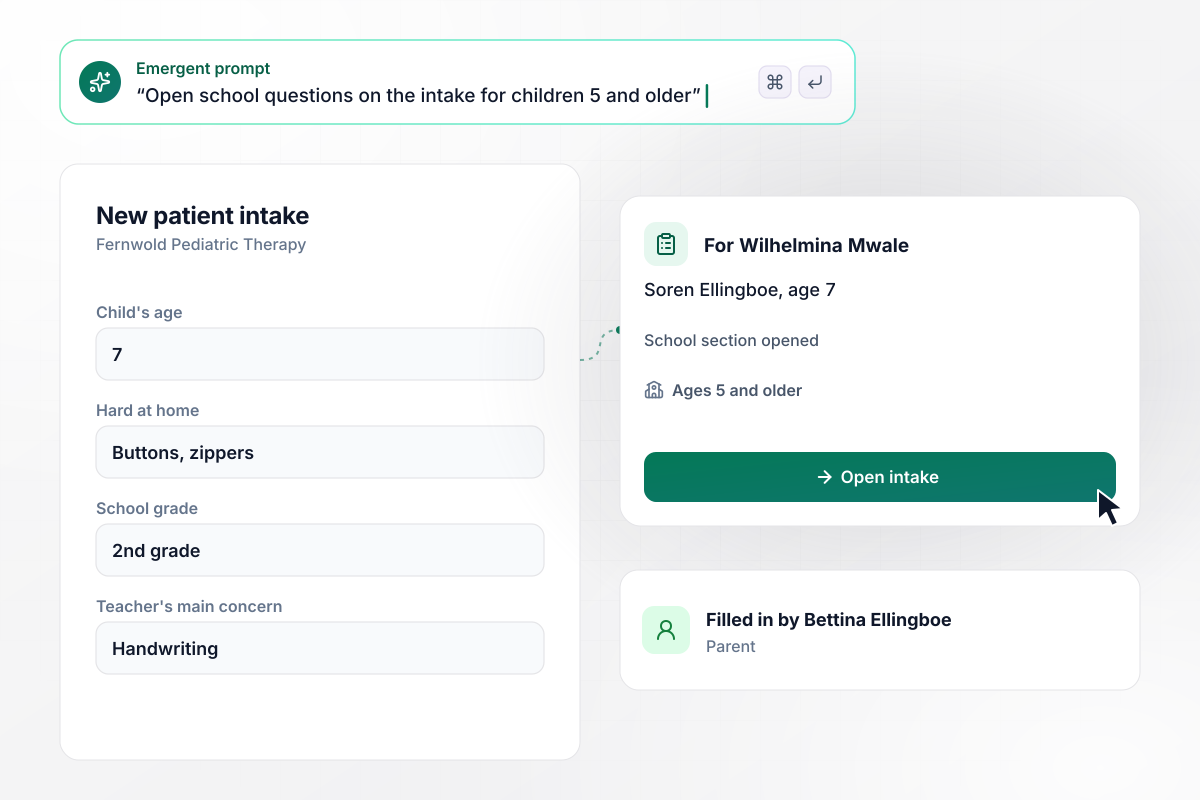
Every child 5 or older gets school questions
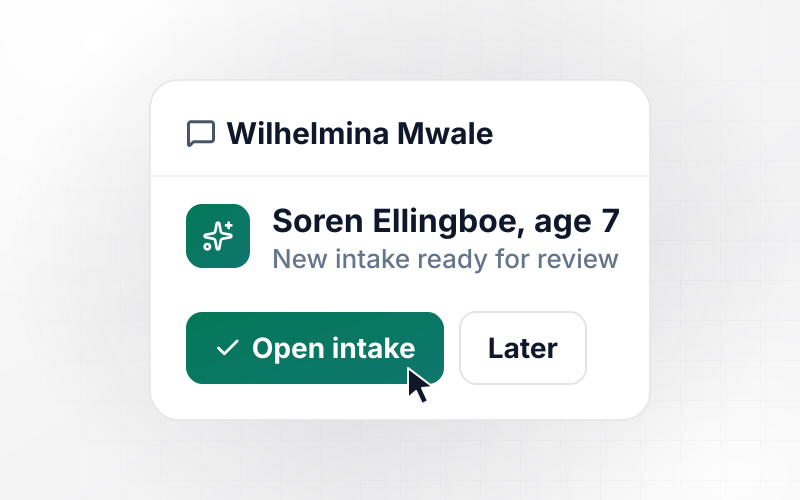
Fernwold Pediatric Therapy asks each parent for the child's age first. Bettina Ellingboe enters 7 for her son Soren, and the school section opens. She ticks buttons and zippers as hard at home, picks 2nd grade, and types handwriting as the teacher's main concern. Wilhelmina Mwale reads it all before his evaluation.
window.awbMockup = { pediatricClinics: "My pediatric therapy clinic needs an intake form parents fill out before the first evaluation. Ask for the child's age first, then which routines are hard at home, such as buttons and zippers. For children 5 and older, open a school section with the grade and the teacher's main concern. Show the therapist every answer before the visit.", handTherapy: "My hand therapy clinic needs two separate intake questions: which hand was injured, and which hand the patient writes with. When both answers name the same hand, add a Dominant hand label at the top of the chart. Show today's new patients in a table with their appointment time and both answers.", drivingRehab: "My driver rehab program books driving evaluations only when the intake names a referring physician. Build an intake form that asks for license status, when the patient last drove, and the referring physician. If the physician field is blank, put the intake on a front desk list so staff can call the patient before booking.", goalRatings: "New patients at my occupational therapy clinic should name the activities they most want back and rate each one from 1 to 10. At the week 8 re-evaluation, ask them to rate the same activities again. Show the therapist both ratings side by side on the patient's chart." };
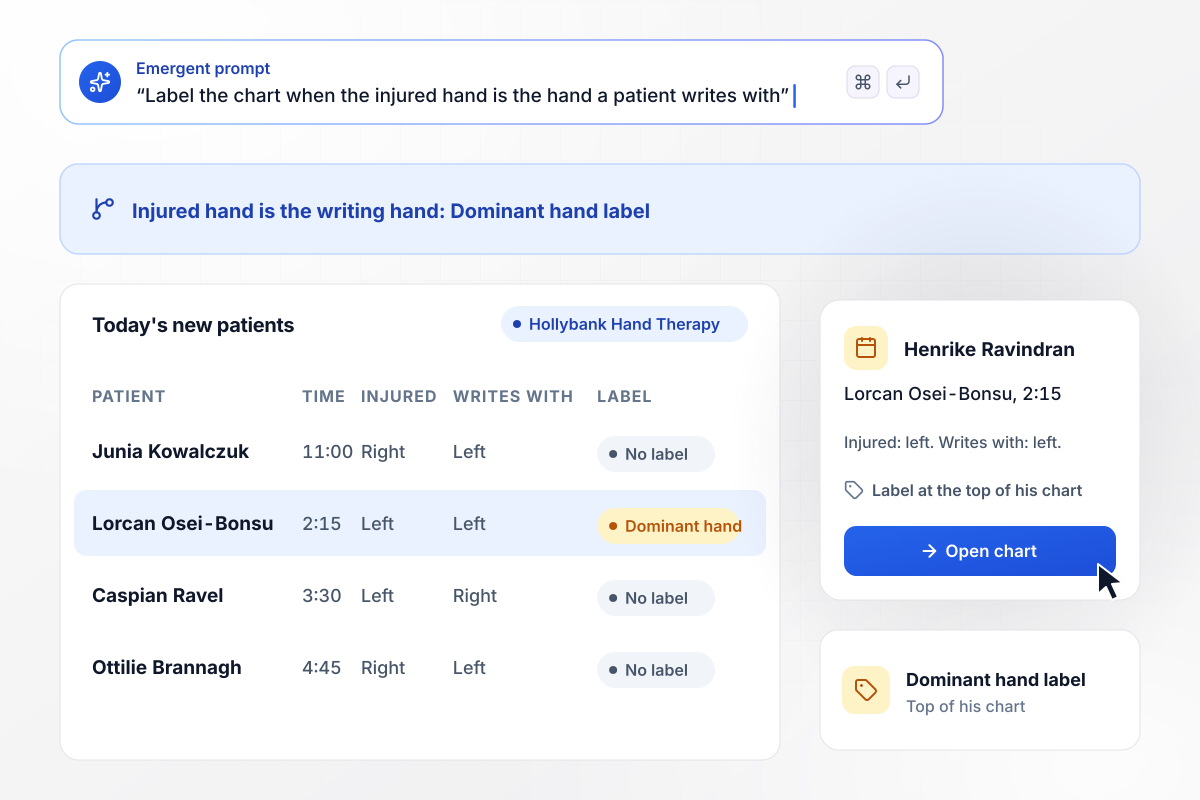
A label when the injured hand is the writing hand
Hollybank Hand Therapy asks every new patient two questions: which hand was injured, and which hand they write with. When the injured hand is the writing hand, the chart gets a Dominant hand label. Lorcan Osei-Bonsu answers left to both, and Henrike Ravindran sees the label before his 2:15 evaluation.
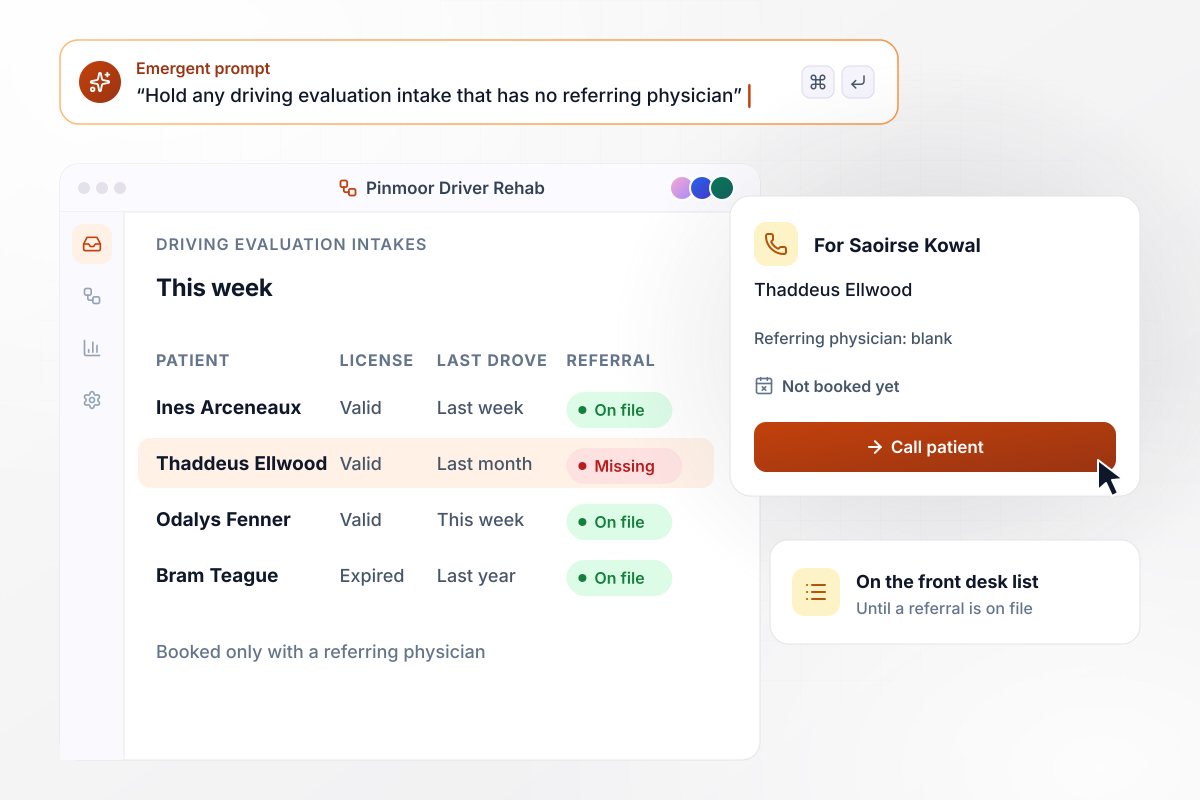
No referral on the intake, no slot on the calendar
Pinmoor Driver Rehab books a driving evaluation only when the intake names a referring physician. The form also asks for license status and when the patient last drove. Thaddeus Ellwood fills in both but leaves the physician blank. His intake goes to Saoirse Kowal's front desk list, and she calls him for the name.
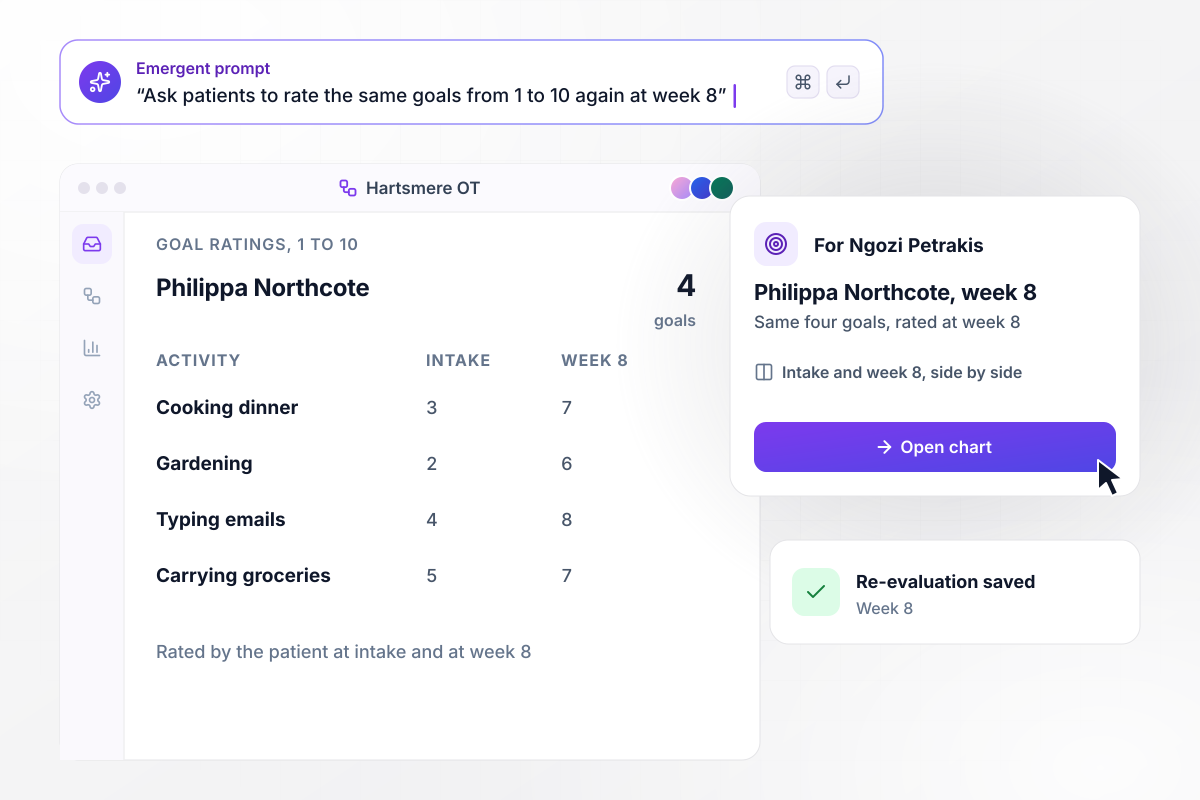
By week 8, all four goals are rated again
Hartsmere Occupational Therapy asks new patients for the activities that matter most, each rated from 1 to 10. Philippa Northcote picks cooking dinner, gardening, typing emails, and carrying groceries, at 3, 2, 4, and 5. At week 8 she rates the same four again: 7, 6, 8, and 7. Ngozi Petrakis sees both columns side by side.






Create an Occupational Therapy Intake Form
<p>Seven steps to create an occupational therapy intake form that shows the therapist what is hard for each patient before the evaluation.</p>
<p>Read back through recent evaluations and write down the tasks patients came in unable to do, such as bathing, buttoning a shirt, chopping vegetables, or getting in and out of a car. That list becomes the checklist on the first screen.</p>
<p>Adults answer for themselves, and a parent answers for a young child. Add a Completed by question at the top. The therapist then knows whose view each answer gives.</p>
<p>A clinic that sees both children and drivers needs different questions for each. Put them in separate sections and show a section only when the earlier answers call for it. Nobody scrolls past questions meant for someone else.</p>
<p>Leave the goal questions open. "Lift my granddaughter" tells the therapist more than a box marked shoulder strength, and the patient recognizes the goal when it comes back at re-evaluation.</p>
<p>Put the sections and the rules for when each one opens into one prompt. Emergent builds the intake form and the database behind it. Ask in plain English when a question needs rewording later.</p>
<p>Have the chart open on the tasks the patient marked as hard, with the goals under them. The therapist can read it in the few minutes before the evaluation instead of paging through a packet.</p>
<p>Fill in the form once as the parent of a 4-year-old and check that the school section stays closed. Then fill it in as an adult with the referring physician left blank, and look for that intake on the front desk list.</p>
Why Build an OT Intake Form With Emergent?
A paper packet hands the therapist a diagnosis. An intake built on the tasks a patient struggles with shows where to start.

|
Jotform | Google Forms | Typeform | |
|---|---|---|---|---|
| How you build | Describe it in plain English | Templates, editor, AI generator | Editor, with Gemini drafting on some Workspace plans | Templates, editor, AI assist |
| Where responses live | A database table you own, plus any integration | Jotform account | Google Sheets | Typeform account |
| Response limits | No response caps | Monthly submission caps by plan; the form stops at the cap | No limit | Monthly response caps by plan; the form closes at the cap |
| Code ownership | Full code export to GitHub on paid plans | None | None | None |




Pick the Pricing Plan That Works for You
Choose the plan that fits your building ambitions. From weekend projects to enterprise applications, we've got you covered.




Find the right form
for whatever you're collecting




Frequently Asked Questions
Your Questions, Answered
Don't change this element unless you know what you are doing
More things you can build
with Emergent






on Emergent today


