

Build a Therapy Intake Form Your Clinicians Can Act On
Create a therapy intake form that totals the PHQ-9, alerts a clinician to urgent answers, and saves responses to your database.
Build a therapy intake form for my counseling practice.
Trusted by Builders Worldwide
Active Builders Worldwide
Apps Successfully Created
Countries Globally Reached



What the Online Form Adds to a Therapy Packet
Six parts of the form that change what a clinician knows before the client sits down.
Screeners scored on submit
Add the PHQ-9 or GAD-7, or any questionnaire your clinicians already score by hand. Each total is added up when the client submits and saved beside the answers it came from.
Separate links for two people
Send each partner, or a teen and a parent, a link of their own. Each person sees only their own questions, and the clinician reads both responses together on one screen.
Consent pages clients sign
Give informed consent and your confidentiality policy a page each after the final question. Clients sign every page with a typed or drawn signature, saved with the date signed.
Matching to a clinician
Compare what the client wants help with, and how they want to meet, against each clinician's specialties, and openings. Clients see who can take them; the rest go to intake.
Alerts on answers that need a person
Alert whoever owns an answer in the app: the clinical director for a safety question, the billing lead for a plan outside your network. The alert never says what was answered.
Code you can take with you
Export the form, its scoring rules, and the database to your GitHub on paid plans. A developer can host it on servers your practice controls or keep editing it outside Emergent.
How Four Counseling Practices Run Intake
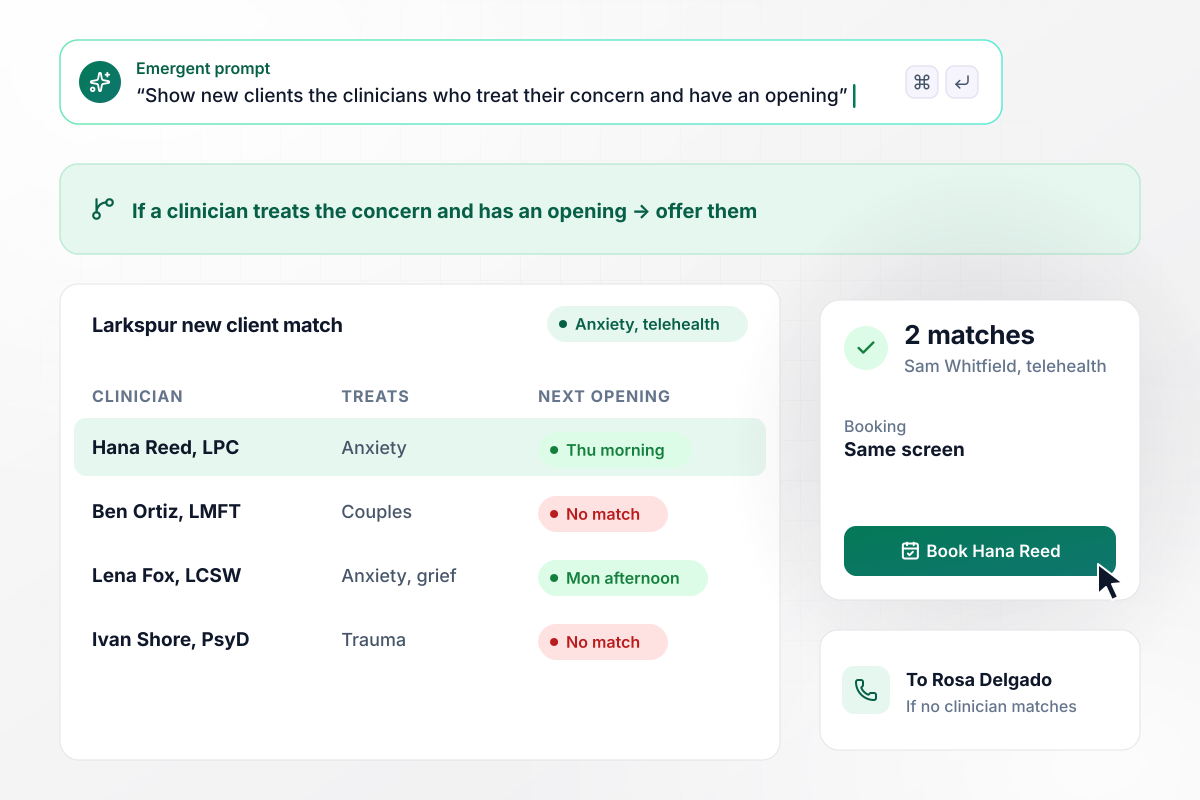
New clients choose from clinicians who can see them
Larkspur Counseling Group asks each new client what brings them in and whether they want telehealth. Submitting shows the clinicians who treat that concern and have an opening, and the client books one on the same screen. Anyone the rules cannot place goes to Rosa Delgado, the intake coordinator, who calls.
window.awbMockup = { groupPractice: "I run a group counseling practice and need a therapy intake form for new clients. Ask what brings them in and whether they want telehealth. When they submit, show the clinicians who treat that concern and have an opening, and let them book one on the same screen. Send anyone with no match to Rosa Delgado, our intake coordinator, for a call back.", couplesTherapy: "My couples practice needs an intake where each partner gets a separate link to the same questions, including a rating of the relationship out of 10. Neither partner should be able to open the other's answers. Show the therapist both responses side by side, and open booking for the first joint session only once both forms are in.", teenCounseling: "Build an adolescent intake split between teen and parent. The teen gets a private link with questions about school and sleep, and only the counselor can see those answers. The parent adds family history and signs the consent for treatment. Do not let anyone book the first session until the parent has signed.", communityClinic: "My community mental health clinic needs an adult intake that includes the PHQ-9 and GAD-7. Score both totals when the client submits and show them on the clinician's intake summary. If a client answers anything other than Not at all on PHQ-9 item 9, alert Dr. Owen Marsh, our clinical director, in the app to call them that day, and keep the answer out of the alert." };
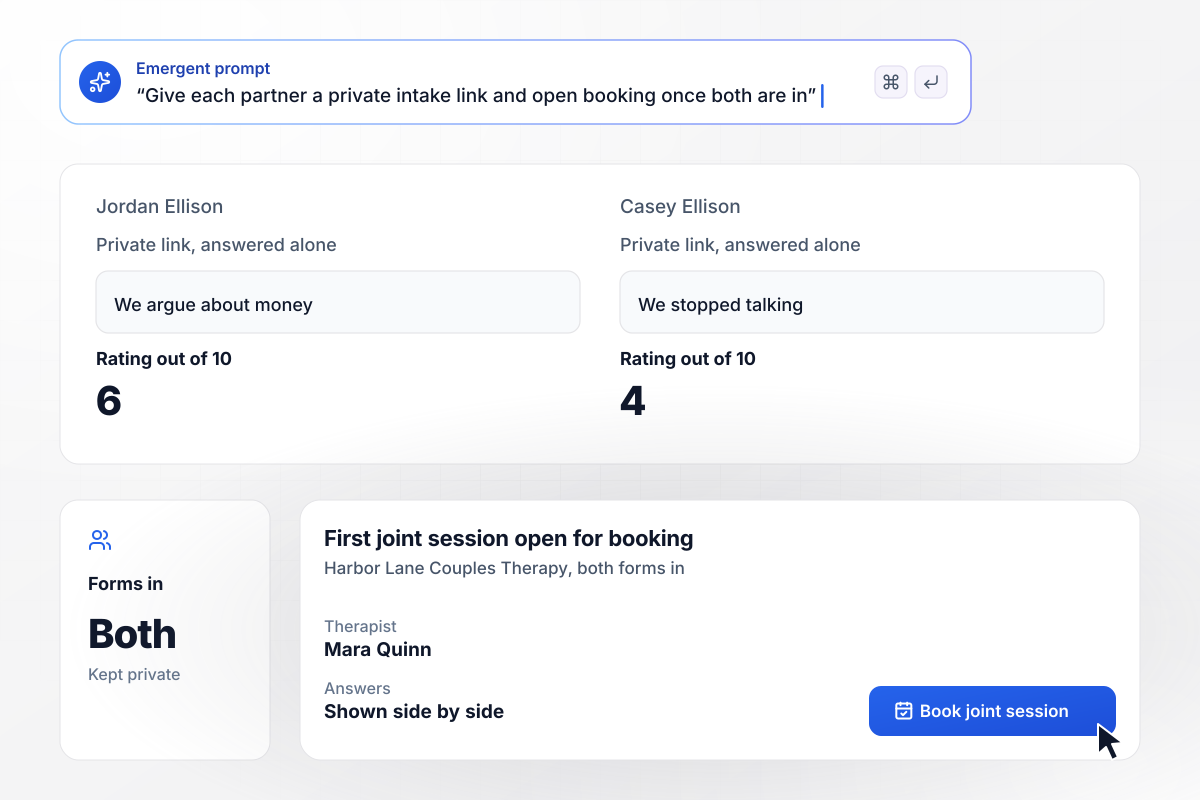
Partners never read each other's answers
Harbor Lane Couples Therapy sends each partner a separate link to one intake. Each answers alone, including a rating of the relationship out of 10, and neither can open the other's response. The therapist reads both side by side. Booking for the first joint session opens once both forms are in.
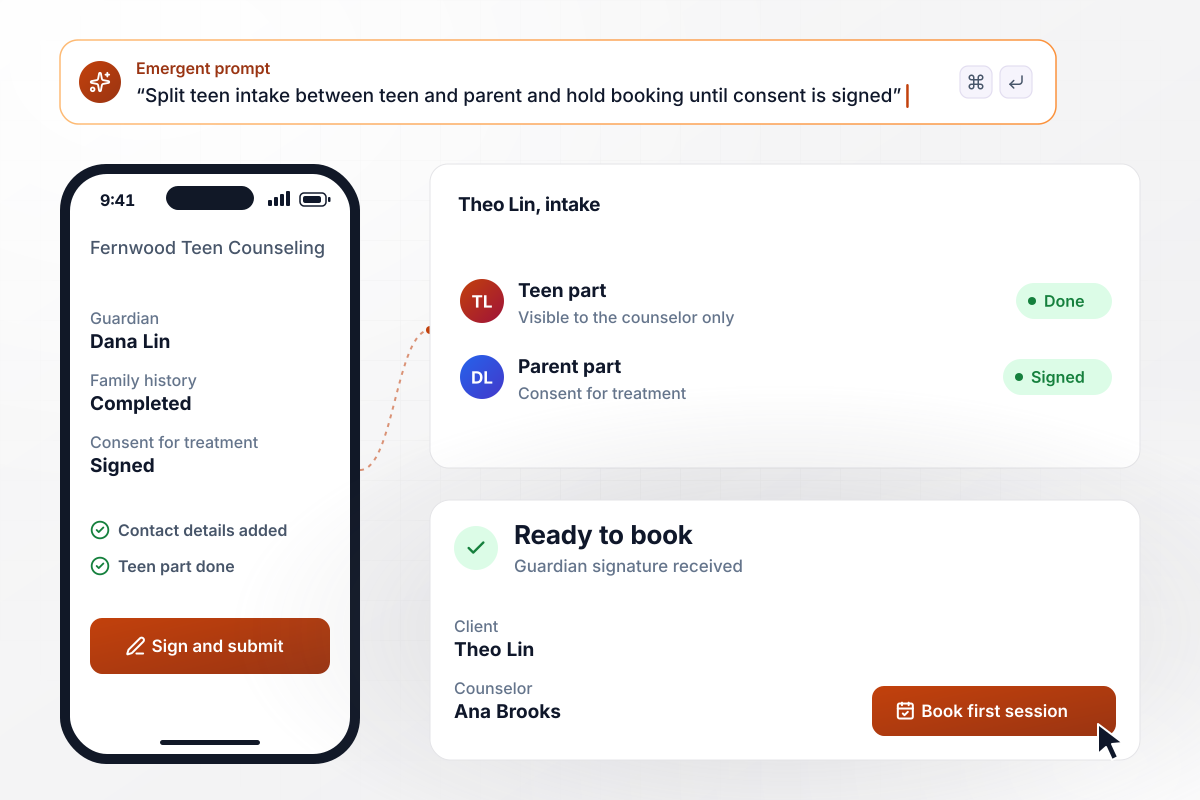
The first session waits for a guardian's signature
Fernwood Teen Counseling splits its adolescent intake between teen and parent. The teen answers school and sleep questions on a private link, and only the counselor sees them. The parent adds family history and signs the consent for treatment. Until that signature arrives, nobody can book the first session.
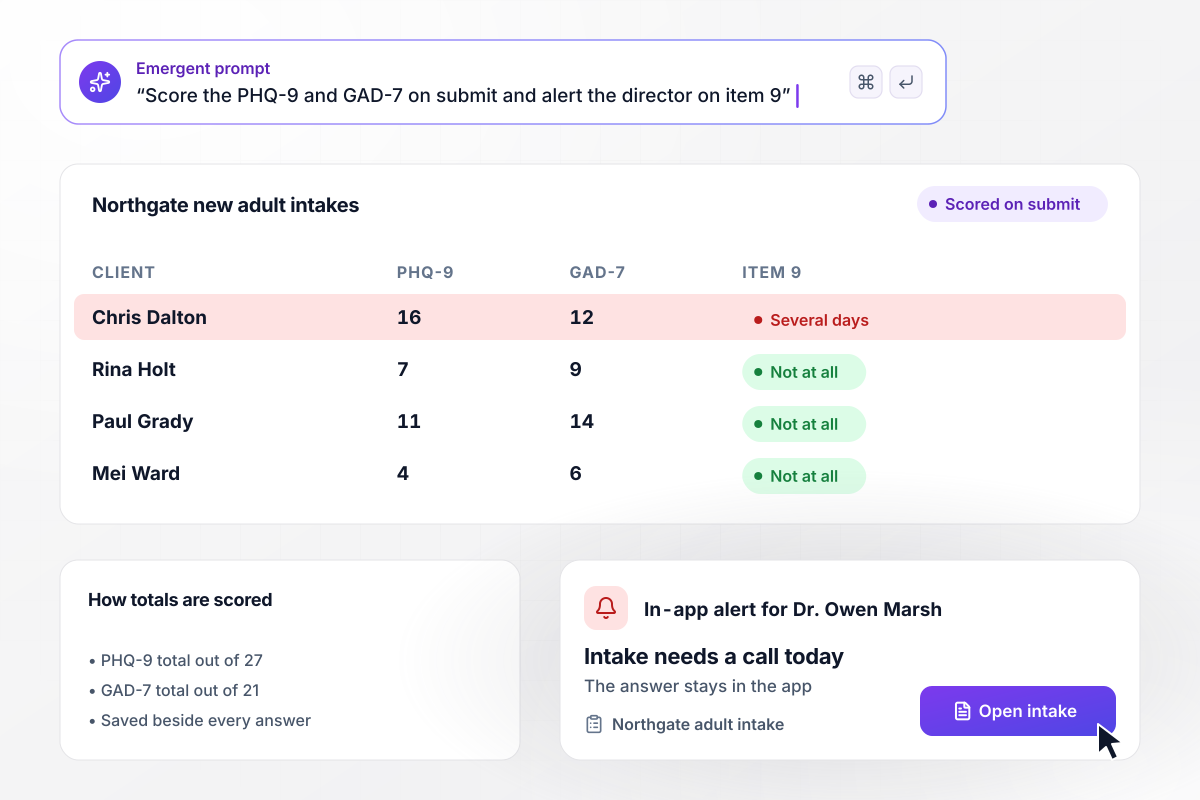
Scored screeners, and one answer that cannot wait
Northgate Community Mental Health puts the PHQ-9 and GAD-7 inside its adult intake, and both totals are scored on submit. Any answer other than "Not at all" on PHQ-9 item 9, the question about thoughts of self-harm, sends Dr. Owen Marsh an in-app alert to call the client that day, without the answer.






How to Create a Therapy Intake Form
Seven steps to plan a therapy intake form around your screeners and consent pages before you build and test it with Emergent.
Write down the questions you ask a new client out loud in the first 20 minutes. Any of them a client can answer alone at home belongs on the form. Keep the ones that need a conversation, like the story behind the presenting concern, for the session.
Start with contact details and an emergency contact, which take a minute. Move on to why the client is seeking therapy and any past treatment. Put heavier history like trauma or substance use near the end, where a client can skip a question and raise it in session.
If your clinicians score the PHQ-9 or the GAD-7 by hand at intake, put them in the form exactly as published, with the same answer choices. Decide where each total should appear and which single answer has to reach a person before the session.
For couples, give each partner a private form. For a client under 18, split the form into a teen part and a parent part. Rules on when a minor can consent to therapy without a parent vary by state. Confirm yours before deciding who signs.
Write the prompt the way you would brief a new intake coordinator: which pages come in what order, which screeners to score, who hears about which answer. Emergent builds the form and its response database from that brief. Edit any of it later with another prompt.
Close with informed consent and the limits of confidentiality, each signed on its own page. The APA Ethics Code asks psychologists to discuss those limits at the outset of the relationship. Have your clinical lead or counsel approve the wording before clients sign.
Submit a test response on a phone for every kind of client you see. Trigger the item 9 alert on purpose. Check that it reaches the right clinician, and that booking stays closed until the consent is signed.
Why Build a Therapy Intake Form With Emergent?
A downloaded packet gets filled in by hand and retyped. Emergent builds a form whose responses arrive scored, in a database you own.

|
Jotform | Google Forms | Typeform | |
|---|---|---|---|---|
| How you build | Describe it in plain English | Templates, editor, AI generator | Editor, with Gemini drafting on some Workspace plans | Templates, editor, AI assist |
| Where responses live | A database table you own, plus any integration | Jotform account | Google Sheets | Typeform account |
| Code ownership | Full code export to GitHub on paid plans | None | None | None |
| Response limits | No response caps | Monthly submission caps by plan; the form stops at the cap | No limit | Monthly response caps by plan; the form closes at the cap |


Pick the Pricing Plan That Works for You
Choose the plan that fits your building ambitions. From weekend projects to enterprise applications, we've got you covered.




Find the right form
for whatever you're collecting
Frequently Asked Questions
Your Questions, Answered
Don't change this element unless you know what you are doing
More things you can build
with Emergent









on Emergent today


