

Build a Website Design Questionnaire That Scopes the Project
Get a website design questionnaire that turns each client's answers into a project scope, saved to a database you own.
Build a website design questionnaire that saves every response to a database I own.
Trusted by Builders Worldwide
Active Builders Worldwide
Apps Successfully Created
Countries Globally Reached



The Questions That Set the Scope
A website design questionnaire asks for what you need to price the site, and each answer feeds a rule you already quote by.
One main job for the site
Ask the client for the one action a visitor should take, such as booking a call or buying a product. That answer decides what the home page leads with and what its button says.
A page list that becomes the sitemap
The client lists each page they want, with a line on what it is for. The app saves the list in order, so a first sitemap is already drafted when you open the response.
Copy and photos, page by page
Next to every page, ask whether its copy is written and whether the photos exist. A page with neither goes on the content list before you price the job, not in week 3.
Budget and launch date as numbers
Ask for a budget figure and a target launch date, not vague bands. The form compares both with the packages and timelines you set and marks every answer outside them.
Sites the client likes, and why
Ask for links to two sites the client admires and one line on what they like about each. A reason like a menu that stays put on a phone tells you more than a bare link.
Every response in one place
Each submission is stored in your own database. When one arrives, the app sends you an email or a Slack message with the client's name, the budget figure, and the target date.
How Four Design Shops Scope a Site
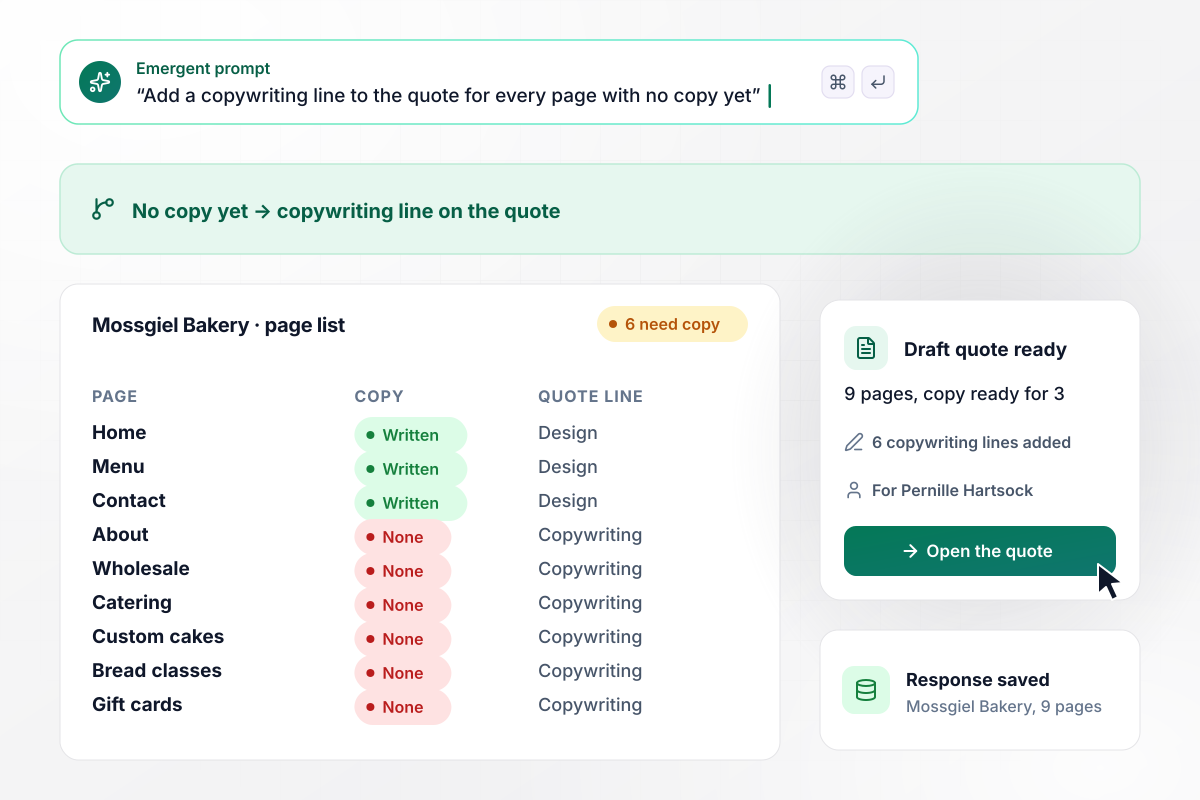
Of 9 pages, 6 have no copy yet
Pernille Hartsock designs sites for bakeries and cafes, and she writes the copy a client does not have. Mossgiel Bakery lists 9 pages and has copy ready for 3. The response comes in with the other 6 marked for copywriting, and each of them is a line on her quote.
window.awbMockup = { freelanceDesigners: "I'm a freelance web designer, and I write copy for clients who don't have it. Build a website design questionnaire that asks for every page the client wants and whether the copy for each page is written. Count the pages with no copy, and add one copywriting line per page to the draft quote.", designStudios: "I run a small web design studio. Custom sites start at $12,000, and my template package is $4,500. Build a questionnaire that asks for the client's budget as a number. If the budget is under $12,000, tag the response for the template package, so my first call starts with that offer.", onlineStores: "I build online stores. Build a website design questionnaire that works on a phone and asks how many products the store will sell. If the answer is more than 200 products, add a 2-week product import phase to the project scope and to the timeline the client sees.", siteRedesigns: "I run a design studio, and every redesign takes 8 weeks. Build a questionnaire that asks for the target launch date. If the date is less than 8 weeks away, email me the client's name, the date they asked for, and the date 8 weeks out, before anyone on my team replies." };
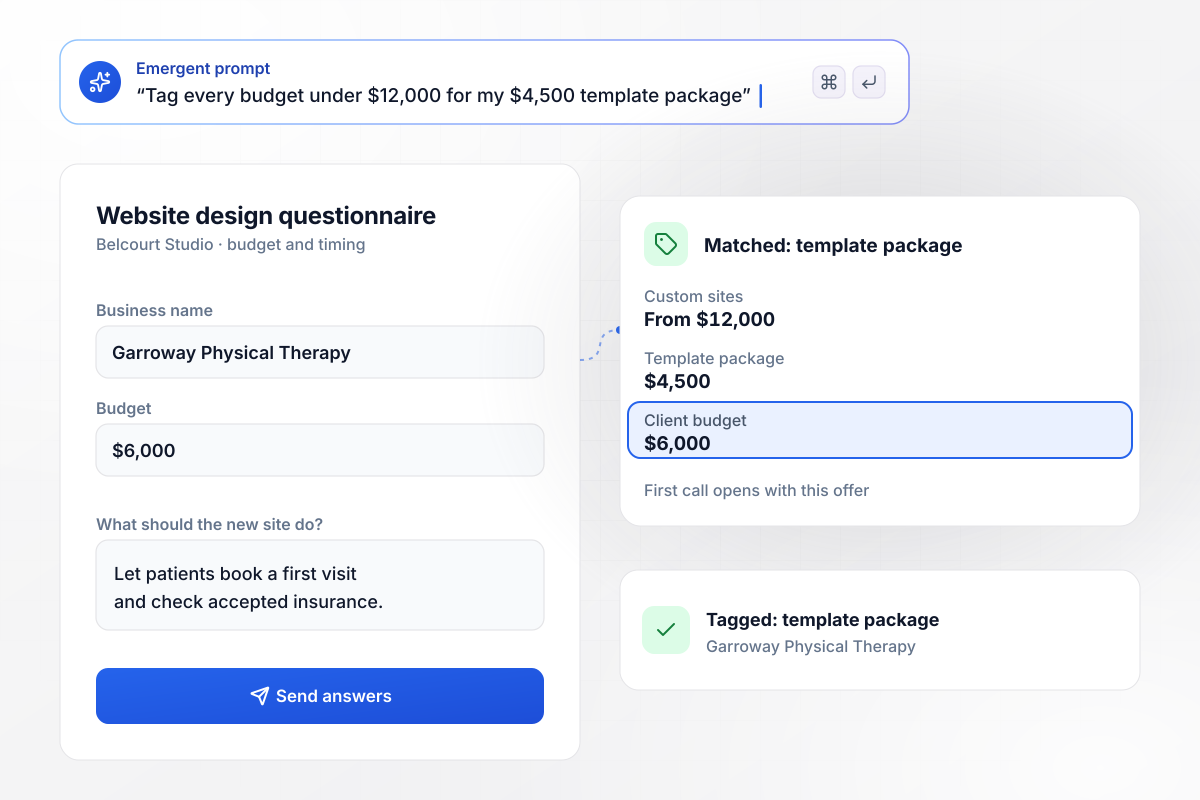
A $6,000 budget and no room for custom work
Belcourt Studio starts custom sites at $12,000 and sells a template package for $4,500. Garroway Physical Therapy enters a budget of $6,000. That figure sits under the custom starting price, and the response arrives tagged for the template package, which is the offer the first call opens with.
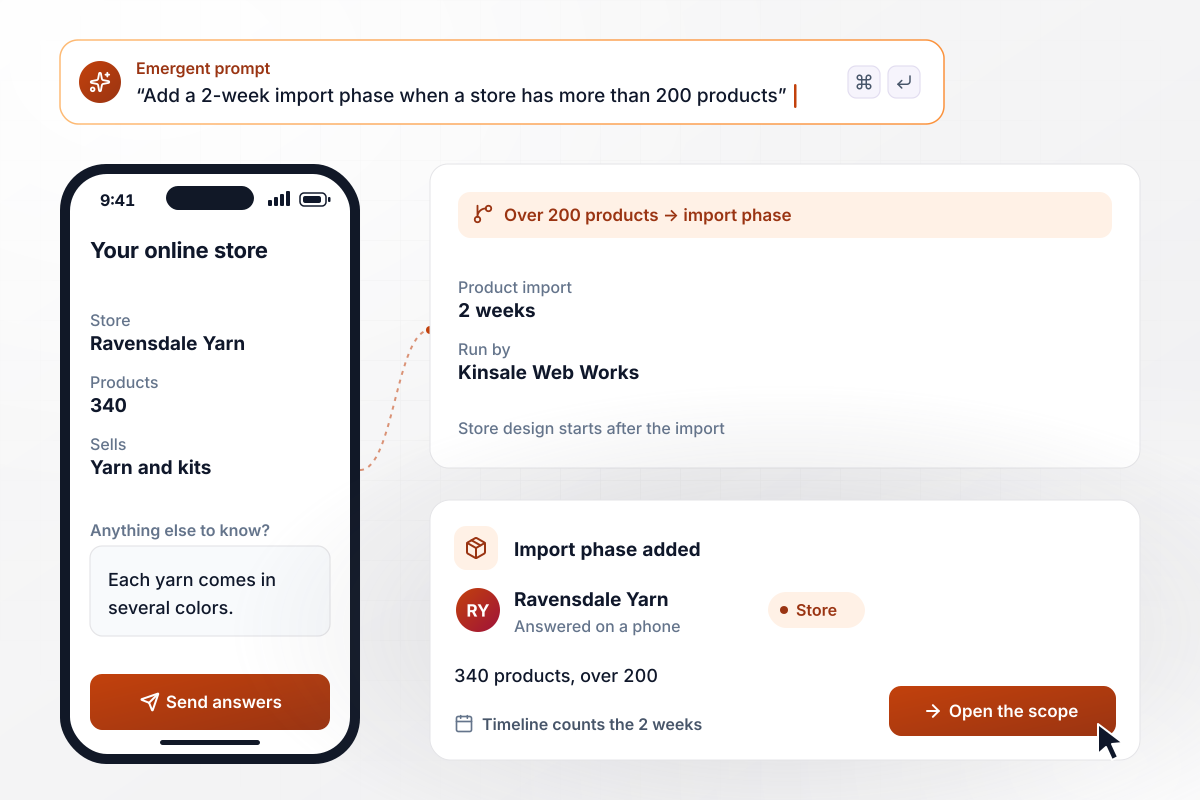
A 2-week import phase for a store with 340 products
Kinsale Web Works builds online stores and plans a 2-week product import phase for any store with more than 200 products. Ravensdale Yarn fills in the questionnaire on a phone and enters 340 products. The scope it gets back includes the import phase, and the timeline already counts those 2 weeks.
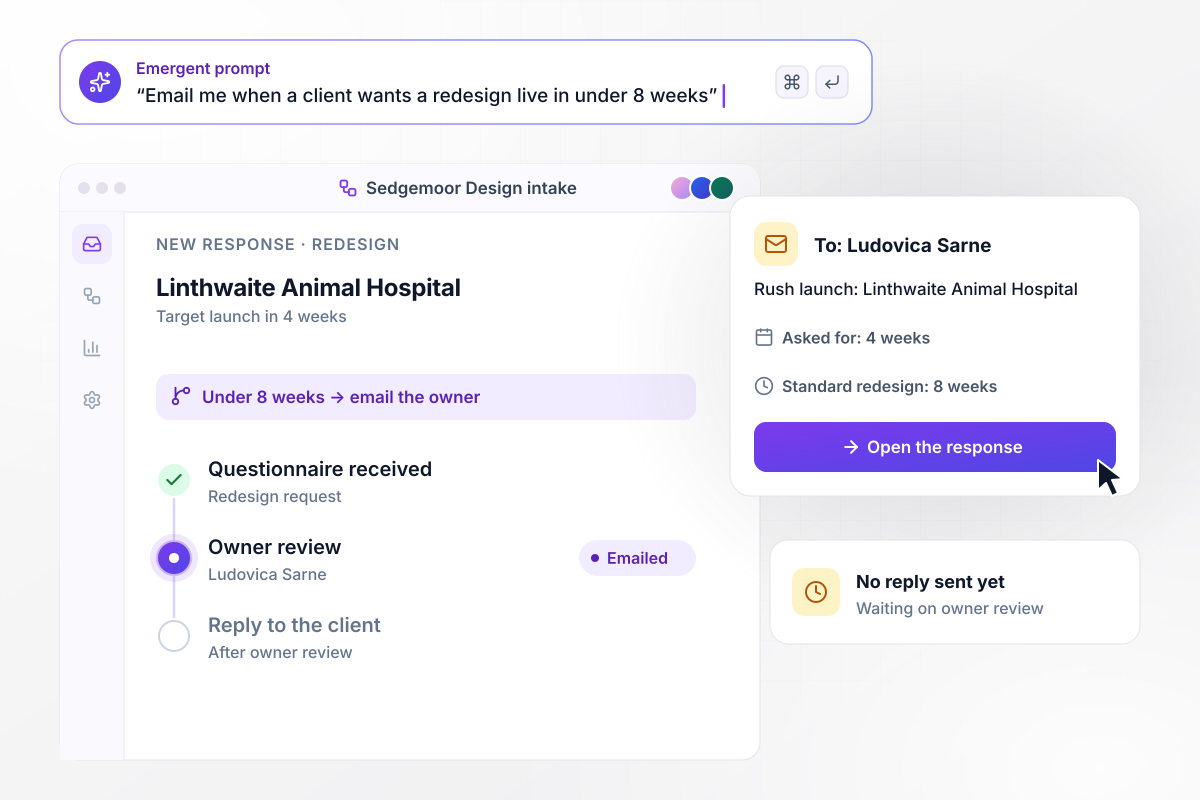
Into Ludovica's inbox: a launch in 4 weeks, not 8
Sedgemoor Design plans 8 weeks for every redesign. Linthwaite Animal Hospital asks for its new site in 4. Any date under 8 weeks out sends an email to the studio's owner, Ludovica Sarne, with the clinic's name and both dates, before anyone on her team replies to the client.






How to Make a Website Design Questionnaire
Seven steps to make a website design questionnaire that turns a client's answers into a scope you can price.
Open your last 3 quotes and note every answer you had to chase by email before you could price the job. Each of those becomes a question. Leave out anything you collected on past projects and never once used to set a price or a date.
Split the questions into 4 or 5 sections, such as the business, the pages, the content, and the budget and dates. Put the quick factual questions first and keep the budget and dates for the last section, after the client has described the site.
Write each package with a starting price and a length in weeks. A rule can only compare a client's budget or launch date with a number you gave it. A package described as priced on request leaves the questionnaire nothing to check against.
Write down the rules you already apply when you read a brief, one sentence each, with the number in it. A line like "a site with online booking adds 1 week" is a rule the app can apply. "Complex sites take longer" is not.
Paste the sections, the packages, and the rules into one prompt. Emergent builds the questionnaire, the database that holds each response, and the rules that tag it. Ask for changes the same way, in plain English, until the questions sound like you.
Fill in the questionnaire twice as clients you remember well: one project that went to plan and one that ran over. Check that the tags and alerts match what you know now about each job, and rewrite any rule that missed.
Publish the questionnaire on a custom domain (built into Emergent, uses credits) and send the link as soon as a lead asks for a quote. Read the response before you talk. The call can then start on the open questions instead of the page count and the budget.
Why Use Emergent for Website Design Intake?
A PDF comes back as answers you retype. Emergent builds the questionnaire from a prompt, and it checks answers against your packages.

|
Jotform | Google Forms | Typeform | |
|---|---|---|---|---|
| How you build | Describe it in plain English | Templates, editor, AI generator | Editor, with Gemini drafting on some Workspace plans | Templates, editor, AI assist |
| Where responses live | A database table you own, plus any integration | Jotform account | Google Sheets | Typeform account |
| Response limits | No response caps | Monthly submission caps by plan; the form stops at the cap | No limit | Monthly response caps by plan; the form closes at the cap |
| Code ownership | Full code export to GitHub on paid plans | None | None | None |

Pick the Pricing Plan That Works for You
Choose the plan that fits your building ambitions. From weekend projects to enterprise applications, we've got you covered.




Find the right form
for whatever you're collecting

Frequently Asked Questions
Your Questions, Answered
Don't change this element unless you know what you are doing
More things you can build
with Emergent







on Emergent today


