

Build Learning and Development Survey Questions by Stage
Build learning and development survey questions for each stage of training, with every answer saved to a database you own.
Build learning and development survey questions for my warehouse supervisors that rate 4 skills before I set next year's training plan.
Trusted by Builders Worldwide
Active Builders Worldwide
Apps Successfully Created
Countries Globally Reached



What Emergent Builds for Each Training Stage
Tell Emergent which program the survey follows and who acts on it. It builds the survey, the dashboard, and the table behind them.
Questions for each stage of a program
Name the program and the stage it has reached. Emergent drafts skill ratings for before it starts, a knowledge check for the day it ends, and a behavior question for 90 days on.
Answers tagged by team and program
Each answer is saved as a row in a database you own, with the team, program, and survey date on it. Put this year's skill ratings beside last year's before the budget meeting.
Learner and manager answers side by side
A learner's answer sits beside their manager's answer to the same question. The dashboard shows where the two agree and lists every pair that does not, sorted by program and team.
One question per screen on a phone
Supervisors on a warehouse floor answer one question per screen on a phone, between shifts. No response cap applies, whether a pilot group of 12 answers or all 1,400 staff do.
Linked to your HR system
Connect the survey to your HR system or any tool with an API. The app pulls each person's department and manager from it, and no one has to type them into the survey by hand.
Your domain, and your code on GitHub
Your own domain hosts the survey: custom domains are included and use credits. On paid plans, Emergent exports the full code to your GitHub repository, ready to extend or self-host.
What Four Training Teams Acted On
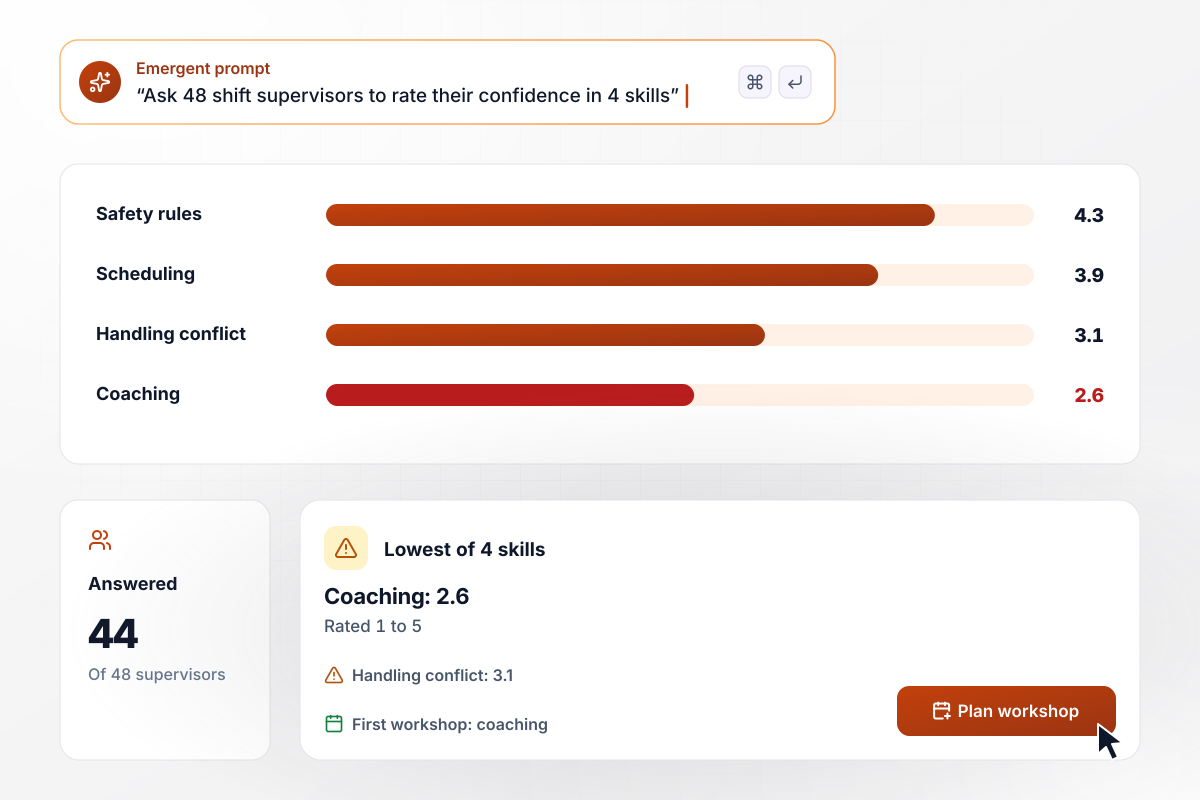
In a 4-skill check, coaching rates 2.6
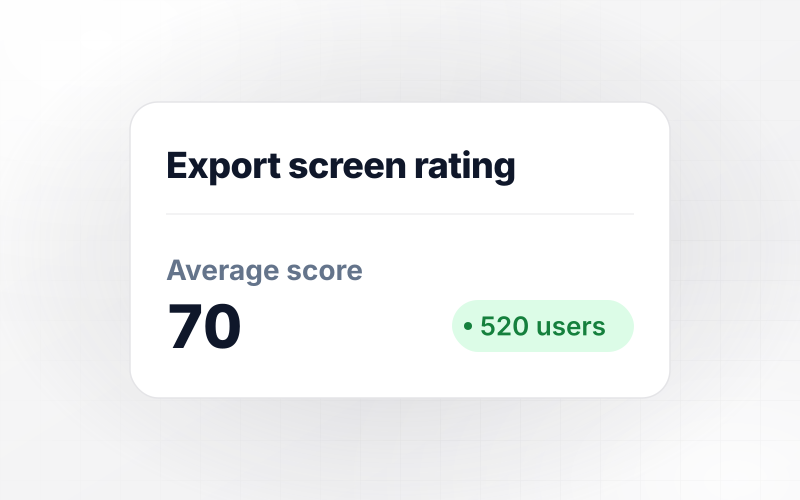
Thornfield Freight sets its training plan each December, after its 48 shift supervisors rate their confidence in 4 skills from 1 to 5. This year 44 answered. Safety rules led at 4.3. Coaching came last at 2.6, behind handling conflict at 3.1. The first workshop of the new year is on coaching.
window.awbMockup = { skillsGapCheck: "My freight company has 48 shift supervisors. Before I set next year's training plan, ask each one to rate their confidence from 1 to 5 in 4 skills: safety rules, scheduling, handling conflict, and coaching. Show the average for each skill on a dashboard, sorted lowest first, and how many supervisors have answered.", knowledgeCheck: "My sales team just finished a 2-day negotiation training. Send the 36 account managers a short survey: one relevance rating from 1 to 5, then a 5-question knowledge check on the course content. Show how many people got each question wrong, and flag the question missed most so the trainer can cover it again.", ninetyDayFollowUp: "My home care agency runs a new-manager program. Ninety days after it ends, ask each graduate and their director the same yes or no question: does this manager hold a weekly one-on-one with every direct report? Pair the two answers for each manager and send me a Slack message listing every pair that disagrees.", careerGoals: "My analytics firm has 120 employees. Each January, ask everyone which skill they want to grow this year and whether they learn best from a course, a colleague, or on their own. Pull each person's department from the HR system through its API. Show a chart of skills chosen and how many prefer each way to learn." };
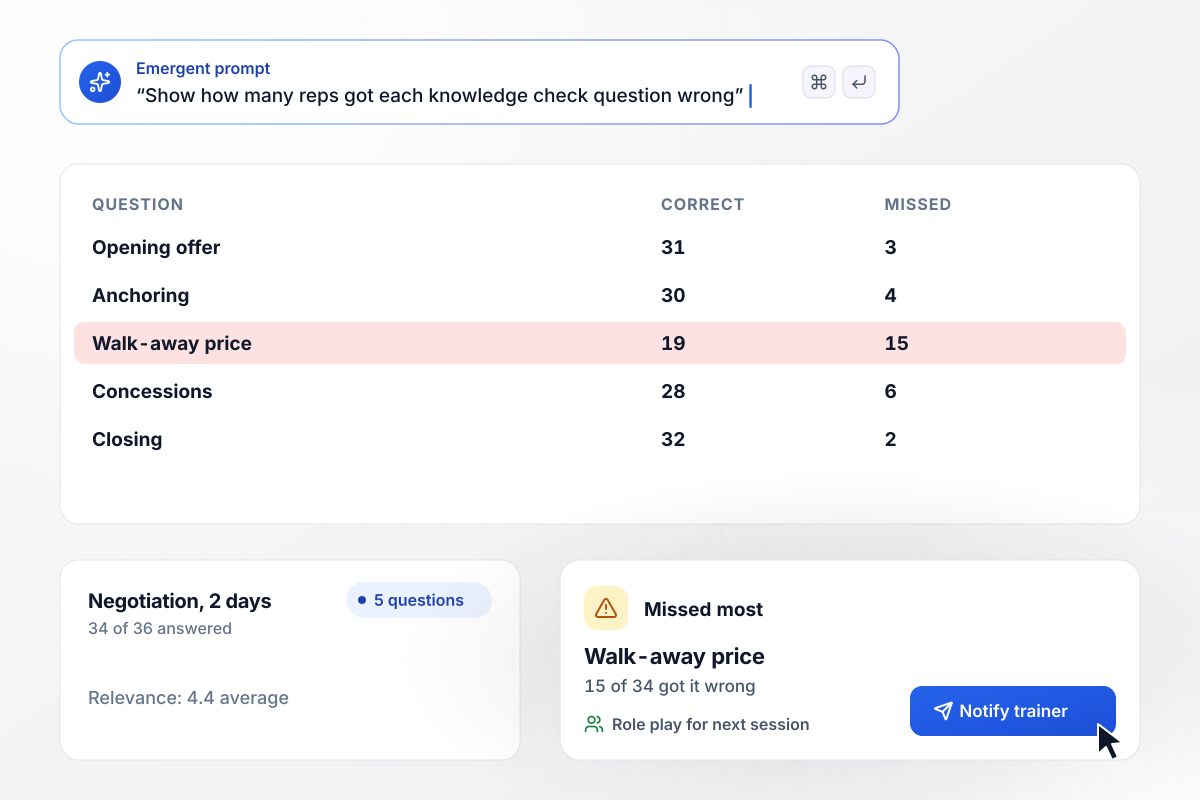
On the knowledge check, 15 reps miss walk-away pricing
Tregarth Software ran 2 days of negotiation training for 36 account managers, then sent a relevance rating and a 5-question knowledge check. Of the 36, 34 answered, and relevance averaged 4.4. On the walk-away price question, 15 of the 34 got it wrong. The trainer built a role play on it.
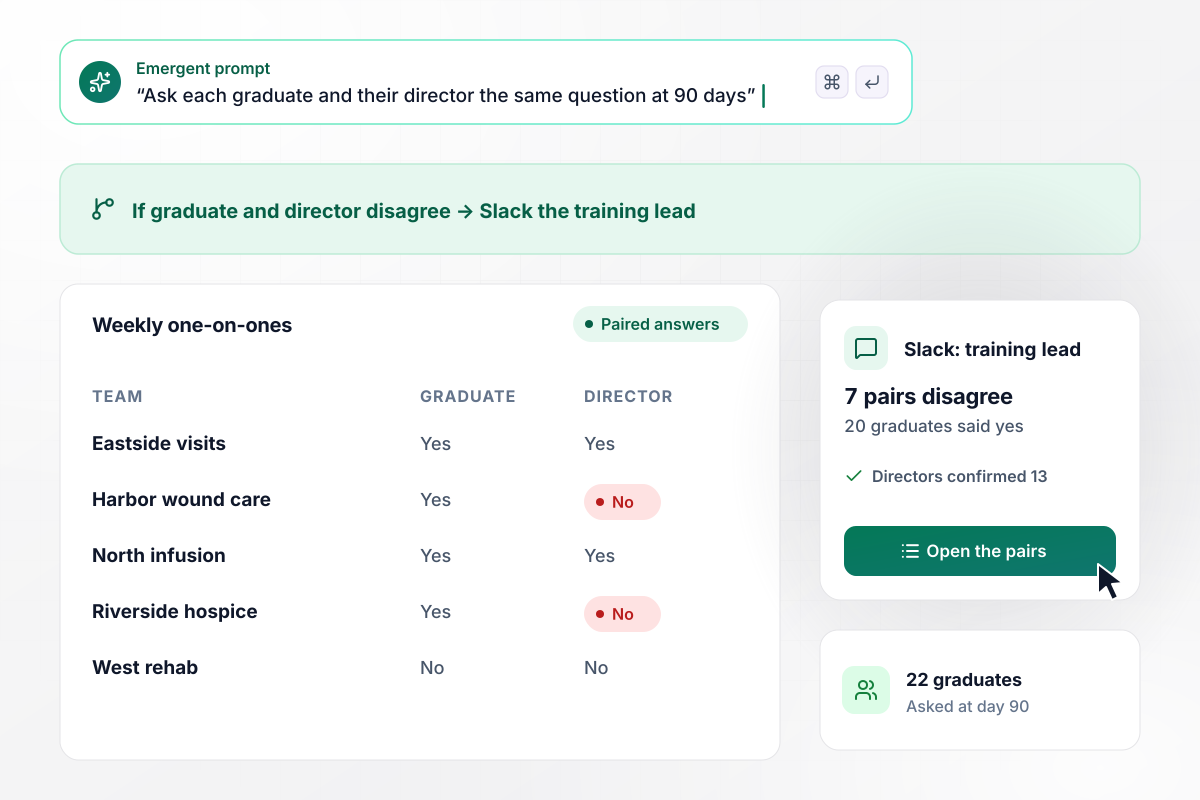
Directors confirm only 13 weekly one-on-ones
Vinterly Home Care trained 22 new nurse managers. At day 90, each graduate and their director answered one question: does this manager hold a weekly one-on-one with every direct report? Twenty graduates said yes. Directors confirmed 13. The training lead got a Slack message naming the 7 pairs that disagreed.
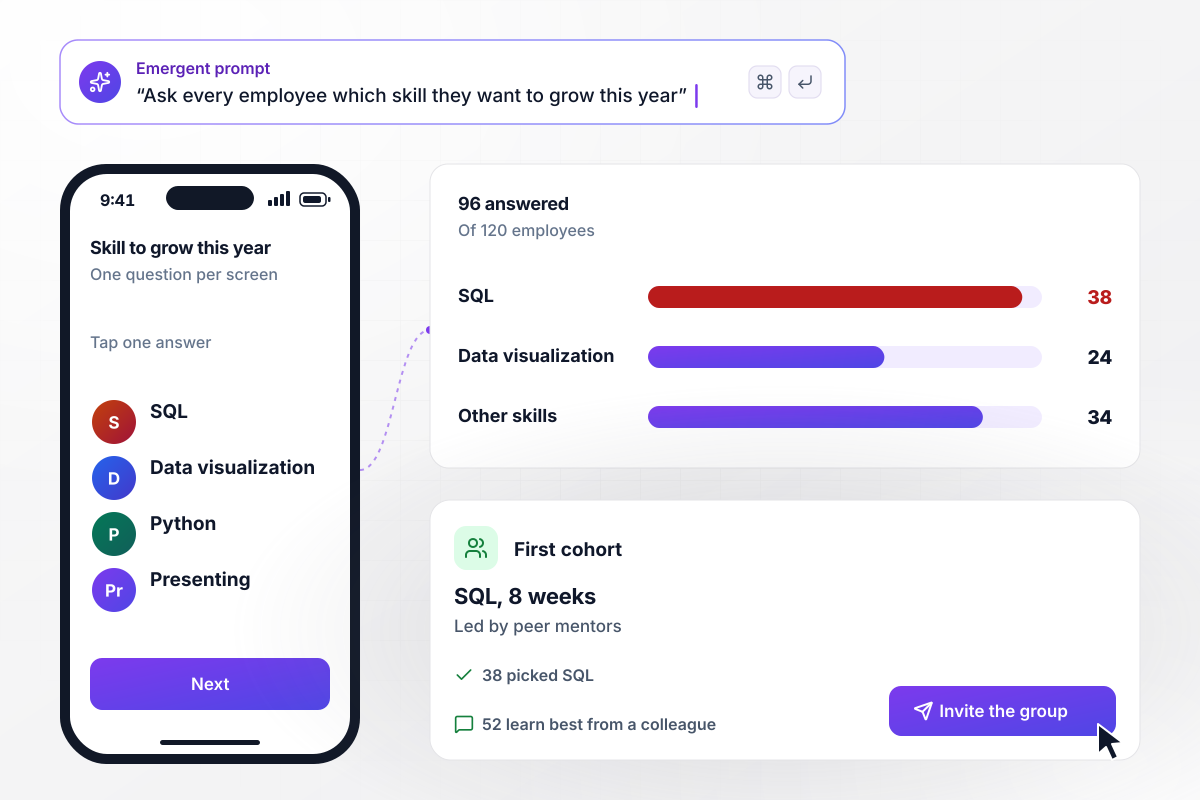
Thirty-eight employees want SQL, and a cohort starts
Osterbrook Analytics asks all 120 employees each January which skill they want to grow and how they learn best. This year 96 answered, and 38 picked SQL. Of the 96, 52 said they learn best from a colleague. The first cohort is an 8-week SQL group led by peer mentors.






How to Write Learning Survey Questions
Seven steps to write learning and development survey questions for the moment you ask them, build the survey, and act on the answers.
Name the decision the answers will feed, such as which skill gets next year's first workshop or whether a program runs again. Put it in the first line of your prompt. Drop any question that would not change that decision.
Ask about skills before a program starts, about what people learned on the day it ends, and about what they do differently 60 to 90 days later. Give each moment its own short survey instead of one long survey at the end.
The Kirkpatrick model breaks evaluation into four levels. Reaction asks whether people found the training engaging, learning whether they acquired the intended knowledge and skills, and behavior whether they perform the new behaviors at work. Write at least one question per level.
Tell Emergent the program, who answers, the questions for each stage, and who reads the results. Emergent turns that description into the survey and a results dashboard. Change any question later by asking for it in one more sentence.
For the follow-up question, write a matching version for each learner's manager, worded about the learner. Asking both sides the same question shows whether a new habit is visible to someone else, not only to the person who took the course.
Send the link to 5 people from the group before launch and have them answer on a phone. Fix any question they read two ways, any rating scale without labels at both ends, and any skill name they never use at work.
When the survey closes, pick the lowest score and decide one change. Tell the group in a short note what the answers showed and what happens next. Send that note before the next survey goes out, not after it.
Why Emergent for Training Surveys?
One app runs the skills check, the knowledge check, and the 90-day follow-up, and each new program adds its answers to the same table.

|
SurveyMonkey | Microsoft Forms | SurveyHero | |
|---|---|---|---|---|
| What you get | Survey, logic, and response database, as code you own | Survey builder with templates, including employee engagement | Surveys, quizzes, and polls with response summaries | Survey builder with templates, including employee satisfaction |
| Pricing model | Credits, no response caps or per-response fees | Per-user team plans with a seat minimum, billed annually | Free with a Microsoft account; included in Microsoft work and school subscriptions | Free plan, then per-account plans with unlimited responses |
| Where responses live | A database table you own, plus any integration | SurveyMonkey account | Microsoft Forms, with export to Excel | SurveyHero account, EU data centers |
| Code ownership | Full code export to GitHub on paid plans | None | None | None |


Pick the Pricing Plan That Works for You
Choose the plan that fits your building ambitions. From weekend projects to enterprise applications, we've got you covered.




Find the right survey, quiz, or poll
for your team
Frequently Asked Questions
Your Questions, Answered
Don't change this element unless you know what you are doing
More things you can build
with Emergent
on Emergent today


