

Build Freight Broker Automation Around Every Load
Build freight broker automation that turns shipper emails into quotes and flags late loads before the shipper calls.
Build freight broker automation for my brokerage's quotes, carriers, check-ins, and carrier invoices.
Trusted by Builders Worldwide
Active Builders Worldwide
Apps Successfully Created
Countries Globally Reached



What Freight Broker Automation Handles
Emergent builds one app from your prompt for the quote desk and the carrier side, with your own margin and coverage rules.
Quote requests read from shipper emails
The app reads each emailed quote request into a draft quote with the lane and equipment, plus the pickup date. It prices the lane from your past loads and holds thin margins.
Carrier packets checked on arrival
The app collects each carrier's W-9, signed agreement, and insurance certificate. AI reads each coverage amount and expiry date, and a person confirms any field it is unsure of.
Driver check-ins from an email link
Drivers open a check-in link sent by email and enter their location and ETA, with no app to install. Each check-in is saved on the load and moves its pin on the load board.
Alerts that go to the rep on the load
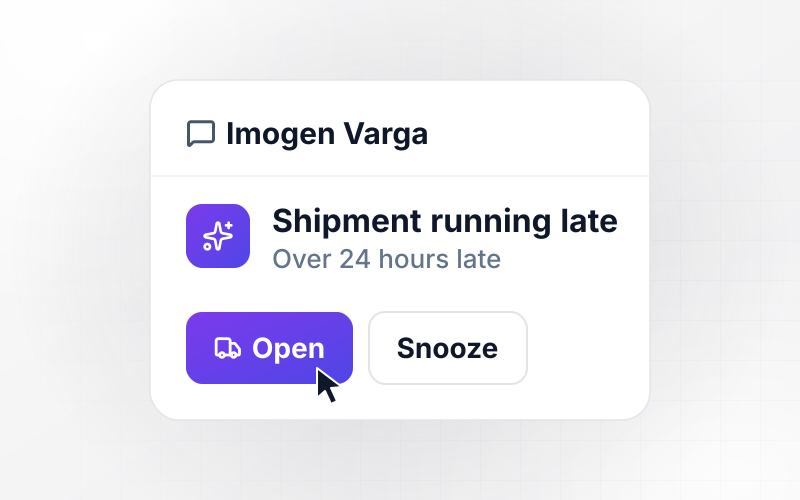
A quote under the margin floor, a carrier short on coverage, or a late ETA reaches the rep who owns that load in Slack or email. Reminders repeat until the rep acts.
Your TMS and accounting kept in sync
Connect your TMS and QuickBooks, or any other tool with an API. Booked loads come in from the TMS and approved carrier bills go out, with each record kept in a database you own.
The brokerage app's code, in your GitHub
Export the full code of the brokerage app to your GitHub repository on paid plans. Your developer can review how rates and carrier data are stored, as with any other codebase.
Freight Broker Workflows to Build
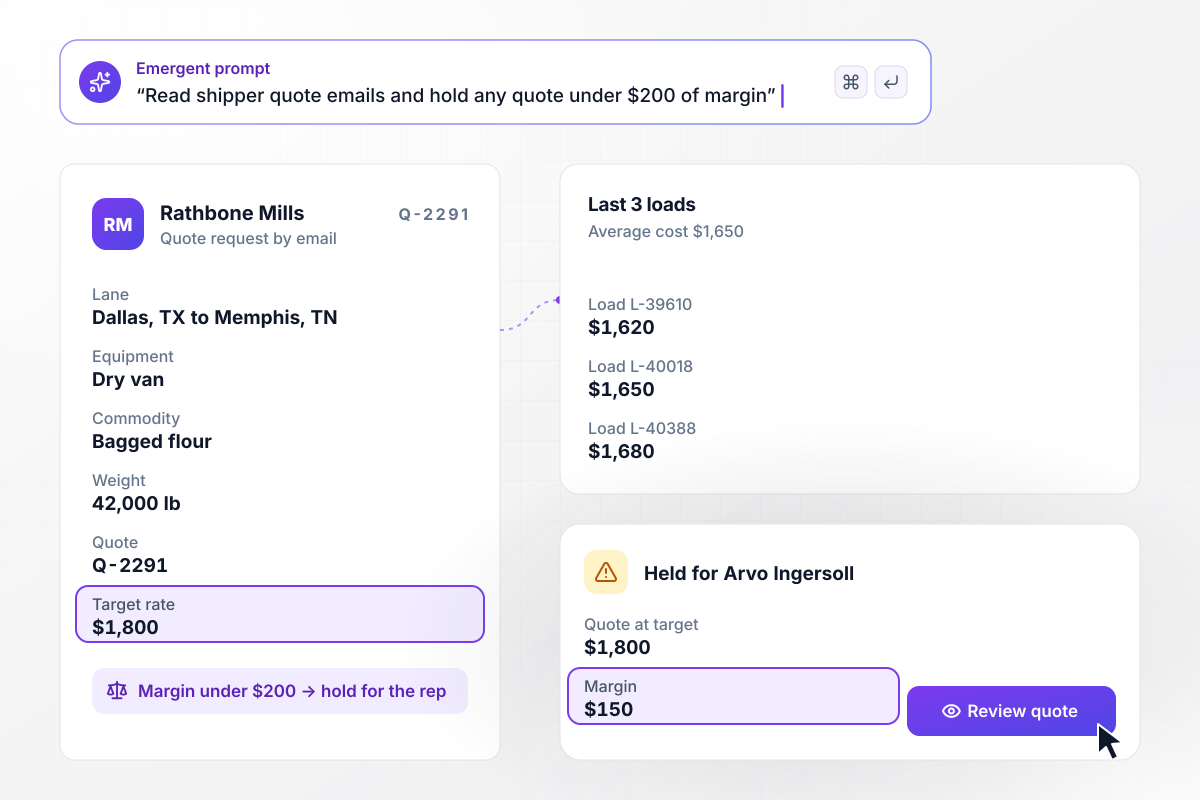
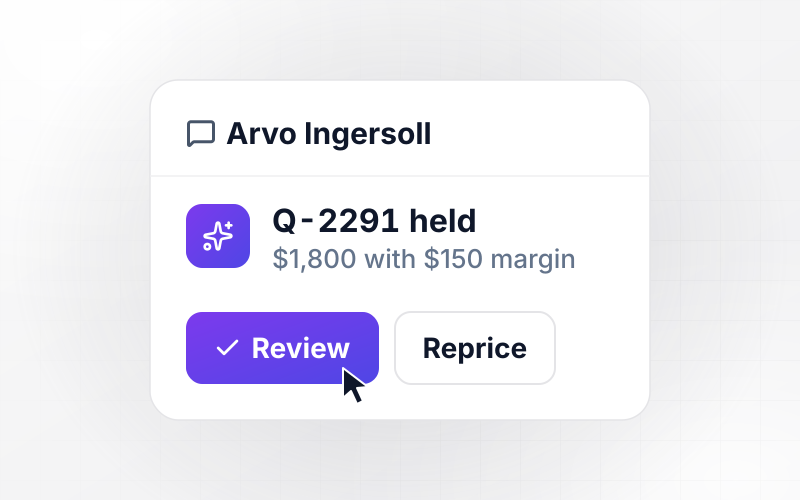
Q-2291 falls below its margin floor at $1,800
Rathbone Mills emails Brindlecote Freight for a dry van from Dallas to Memphis at a target rate of $1,800. The app reads it into quote Q-2291 and prices the lane from the last 3 loads, which cost $1,650 on average. That leaves $150 of margin, and any quote under $200 of margin waits for Arvo Ingersoll, the account rep.
window.awbMockup = { shipperQuoteRequests: "Build quote intake for my freight brokerage. Shippers email quote requests to our quotes inbox. Read each one into a quote with the lane, equipment, commodity, and target rate. Price the lane from our last 3 loads on it and show the average carrier cost. If the margin at the target rate is under $200, hold the quote for the account rep instead of replying.", carrierOnboarding: "Build carrier onboarding for my brokerage. New carriers upload a W-9, our signed carrier agreement, and an insurance certificate. Read the cargo coverage amount from the certificate. If cargo coverage is under $100,000, keep the carrier off our tender list and send the carrier rep a direct message in Slack so they can ask for an updated certificate.", driverCheckIns: "Build driver check-ins for my brokerage's loads. Email each driver a check-in link where they enter their location and ETA, with nothing to install. Save every check-in on the load. Compare the ETA with the receiver's appointment time, and if it is more than 60 minutes past the appointment, send the ops rep who owns the load a direct message to call the receiver.", carrierInvoices: "Build carrier invoice checks for my brokerage. Carriers email an invoice and a signed proof of delivery for each load. Read both, then match every charge on the invoice to the load's rate confirmation. If a charge such as detention is missing from the rate confirmation, hold that line for our billing lead. Send approved carrier bills to QuickBooks." };
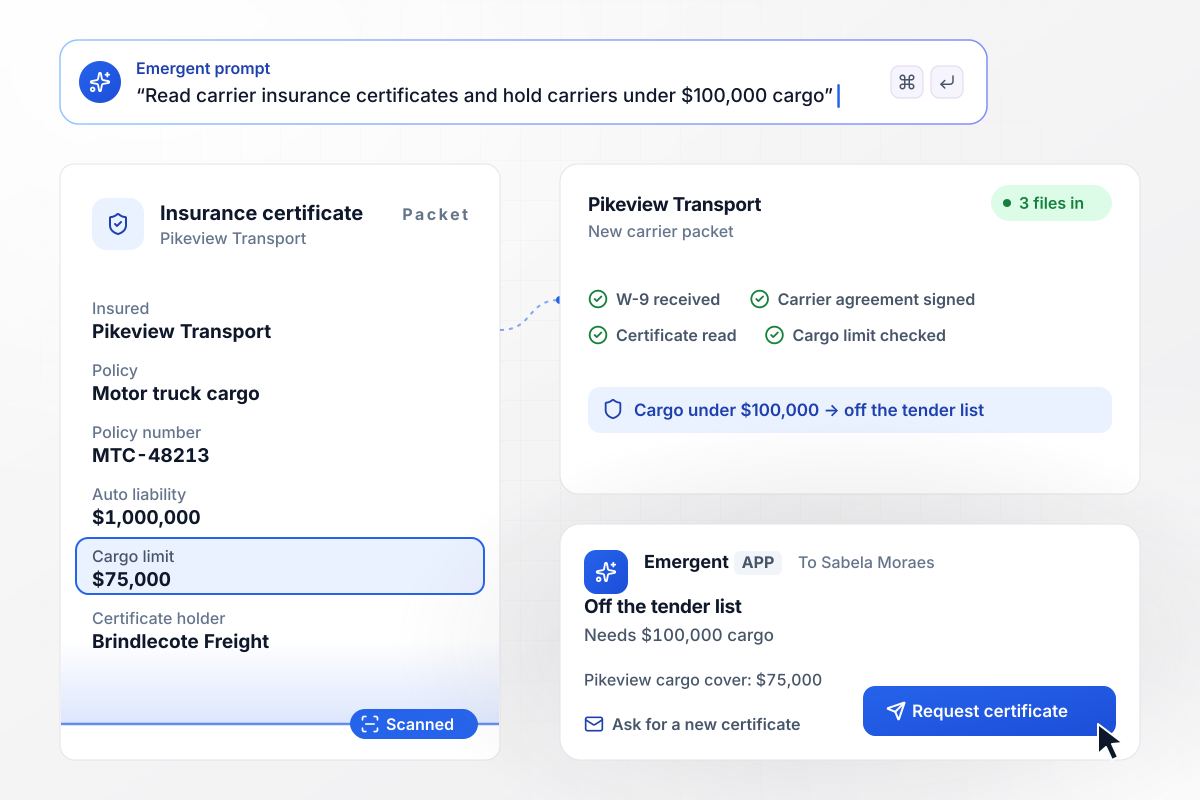
Pikeview waits with $75,000 of cargo cover
Pikeview Transport sends a W-9, the signed carrier agreement, and an insurance certificate. The app reads $75,000 of cargo coverage on the certificate. Any carrier under the $100,000 minimum stays off the tender list, and Sabela Moraes, the carrier rep, gets a direct message to ask for an updated certificate.
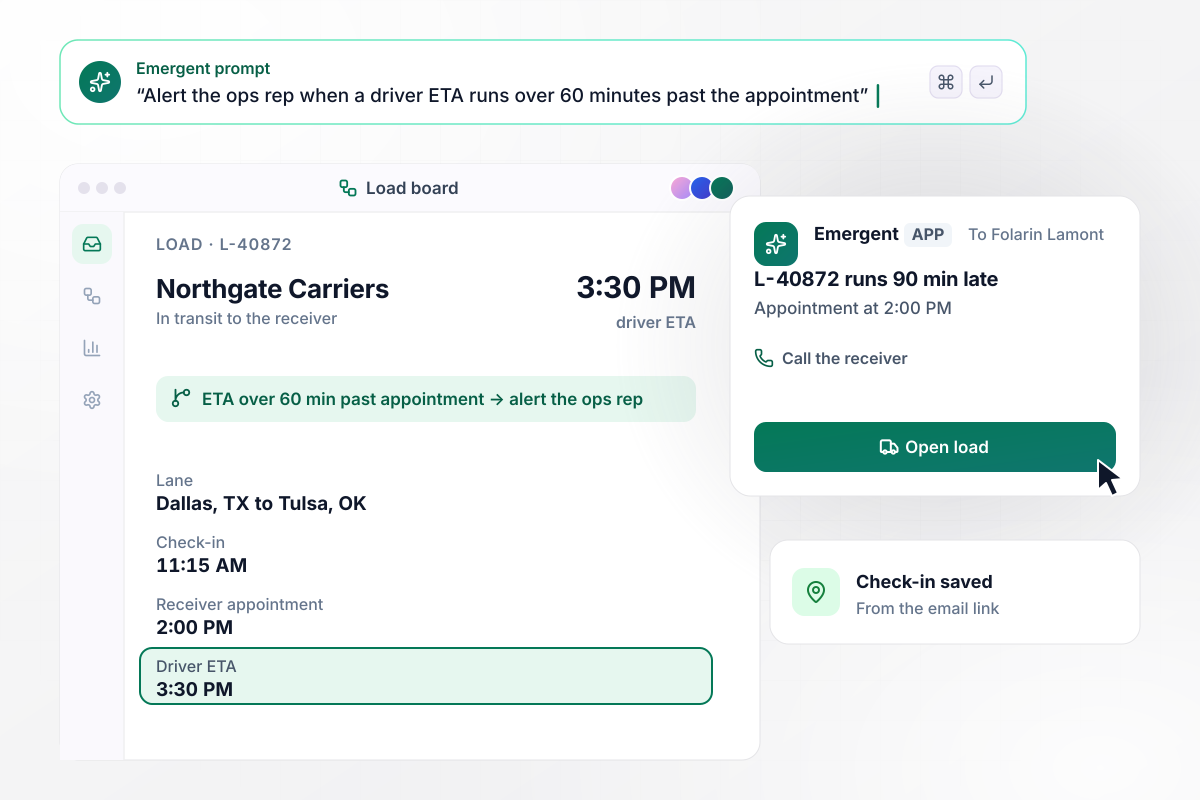
The 2:00 PM appointment on L-40872 slips to 3:30 PM
The Northgate Carriers driver on load L-40872 checks in at 11:15 AM from an emailed link with an ETA of 3:30 PM. The receiver's appointment is at 2:00 PM, so the load will arrive 90 minutes late. Any ETA more than 60 minutes past the appointment sends Folarin Lamont, the ops rep, a direct message to call the receiver.
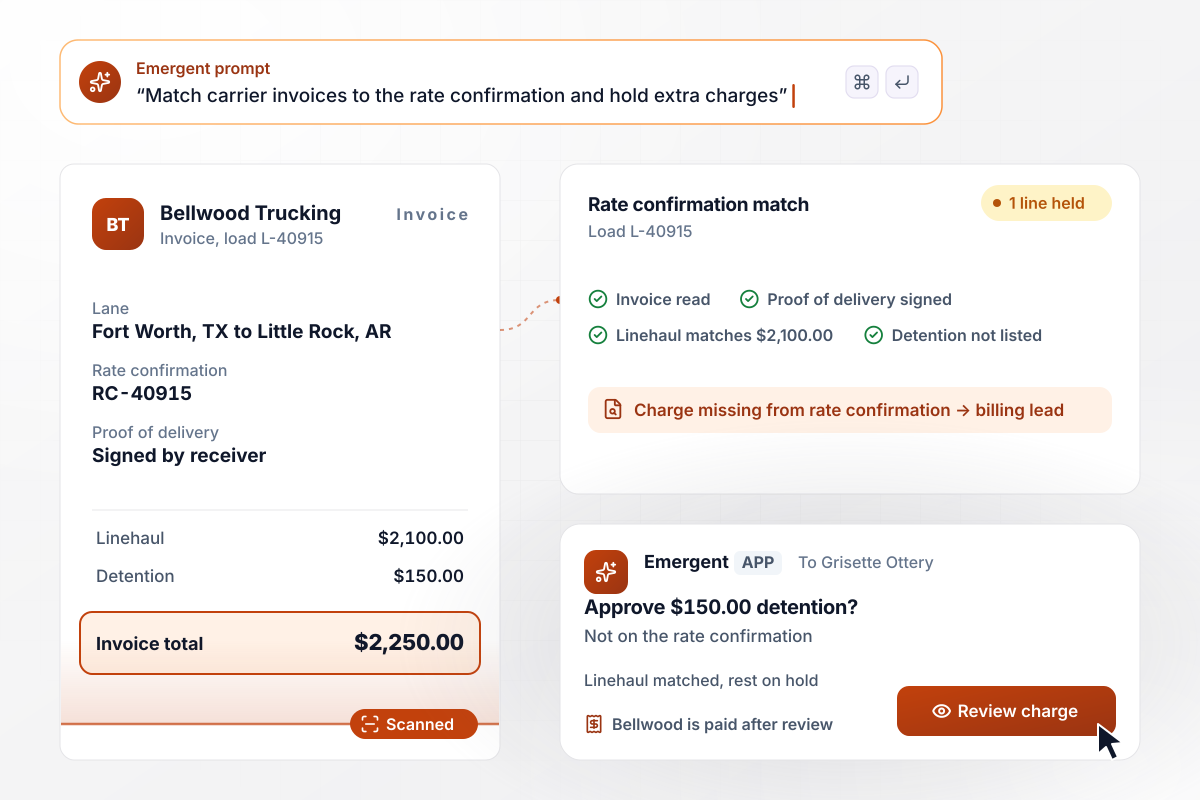
Before Bellwood is paid, billing rules on $150 of detention
Bellwood Trucking invoices $2,250 for load L-40915 with the signed proof of delivery. The app reads both and matches the $2,100 linehaul to the rate confirmation. The other $150 is detention. Any charge missing from the rate confirmation waits for Grisette Ottery, the billing lead, before Bellwood is paid.






How to Build Freight Broker Automation
Seven steps to set up freight broker automation that handles each load's paperwork and exceptions, tested on past loads first.
Export last month's closed loads from your TMS with the lane, shipper, carrier, carrier cost, sell rate, and any accessorials paid. These rows price new quotes and become the test set in step 7. Keep the loads that went wrong.
Write each hold rule as one sentence with a number in it, such as a margin floor in dollars or a minimum cargo limit. A rule with no number leaves the rep guessing what counts as low, and the app has nothing to compare against.
Pick one person for each kind of exception: the account rep for thin quotes, the carrier rep for short coverage, the ops rep for late loads, and the billing lead for extra charges. Each alert goes to that person, never to a shared channel.
Describe your inboxes, the files carriers send, the rules from step 2, and the owners from step 3 in a prompt. Emergent builds the quote intake, the carrier packet checks, the check-in link, the invoice match, and the database behind them.
Connect your TMS and accounting system through their APIs, such as QuickBooks or Xero. Loads booked in the TMS flow into the app, and carrier bills you approve post to accounting. Nobody on the desk types the same load twice.
Decide when drivers get the check-in email, for example at pickup and again 2 hours before the delivery appointment. Then set the late threshold in minutes and whether a late load also sends the shipper an email from the account rep.
Run the loads from step 1 through the app and compare its holds with what your team did at the time. If it holds a quote your rep sent at a fair margin, adjust that rule, then switch on the live inboxes.
Why Automate Freight Brokerage With Emergent?
Emergent builds the brokerage app around your own margin floor and carrier rules, with no task cap and a database you own.

|
Zapier | Make (Integromat) | n8n | |
|---|---|---|---|---|
| How you build | Prompt for the workflow and the app around it | Templates and editor, AI copilot | Visual canvas | Visual canvas, self-hosted or cloud |
| What you get | Workflow + trigger form + database + dashboard, as code you own | Zaps, plus Tables and Interfaces inside Zapier | Scenarios inside Make | Workflows inside n8n |
| Behavior at cap | Keeps running, no task cap | Overage billed at up to 1.25× the base rate | Runs pause | Cloud workflows stop until the reset or an upgrade |
| AI and agent steps | Native, share the same credit pool | Priced by model tier, drawn from the task pool | AI modules cost variable credits | Bring your own model API key, billed by the provider |
| Code ownership | Full code export to GitHub on paid plans | None | None | Yes on Community Edition |



Pick the Pricing Plan That Works for You
Choose the plan that fits your building ambitions. From weekend projects to enterprise applications, we've got you covered.




Find the right workflow automation
for you and your business
Frequently Asked Questions
Your Questions, Answered
Don't change this element unless you know what you are doing
More things you can build
with Emergent
on Emergent today


