

Build a Vendor Survey to Rate Vendors and Hear From Them
Build a vendor survey that scores each vendor or asks vendors about working with you, and saves answers to a database you own.
Build a vendor survey that collects every answer in a database I own.
Trusted by Builders Worldwide
Active Builders Worldwide
Apps Successfully Created
Countries Globally Reached



What a Vendor Survey on Emergent Includes
Emergent builds the vendor survey and the table of answers from one prompt, and another prompt changes either one.
Ratings grouped by what you score
List the areas you score, like on-time delivery and invoice accuracy. Emergent builds 1 to 5 ratings for each area with a comment box under them, and a prompt rewrites any question.
Each answer filed under its vendor
Every response is saved as a row in a database you own, tagged with the vendor and the quarter it covers. Compare a vendor's Q3 scores with Q2 without merging spreadsheets.
Averages checked against your floor
Set a floor, like an average under 3 on any area. On the day the round closes, the app emails the purchasing lead or posts in Slack with that vendor's scores and comments.
Vendor lists pulled from your books
The app can read your vendor list from QuickBooks, Xero, or NetSuite through their APIs. Surveys go to vendors you still buy from, and each score lines up with its account.
One question per screen on a phone
Market vendors and drivers answer one question per screen on a phone. Emergent sets no response caps on surveys: 60 vendors or 600 can answer, and each reply lands in one table.
Your domain, and the code on paid plans
Host the survey on your own domain, which Emergent includes and which uses credits. On paid plans, export the full code to your GitHub repository and keep it in your stack.
What Four Vendor Surveys Changed
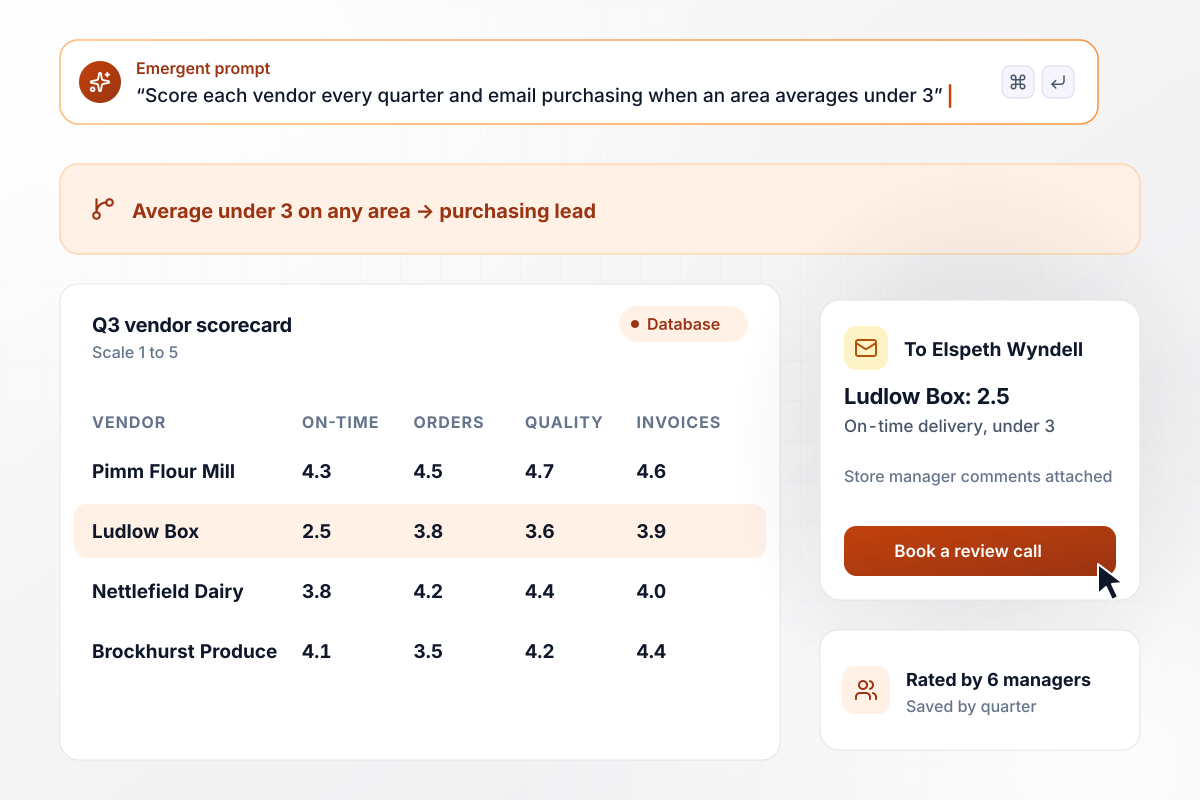
Ludlow Box scores 2.5 on on-time delivery
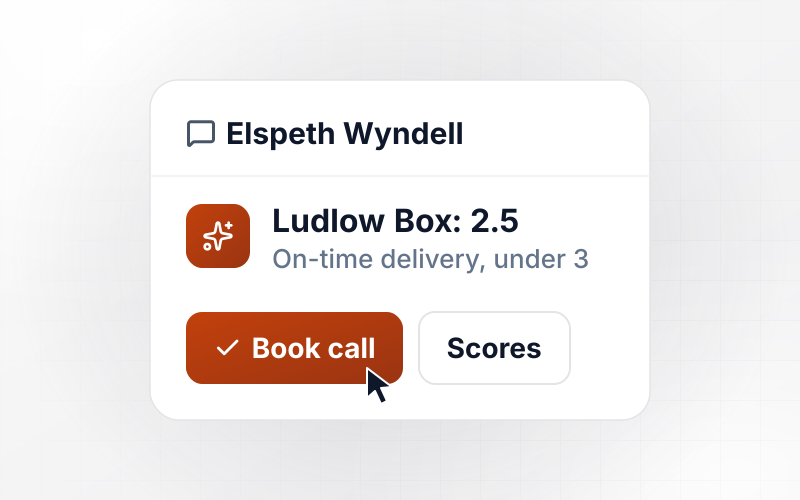
Hartsfield Bakery runs 6 stores, and each quarter every store manager rates the vendors from 1 to 5 on on-time delivery, order accuracy, quality, and invoices. In Q3, Ludlow Box averaged 2.5 on on-time delivery, under the floor of 3. The app emailed the purchasing lead, Elspeth Wyndell, who booked a review call.
window.awbMockup = { bakeryScorecard: "Build a quarterly vendor scorecard for my bakery's 6 store managers. Each manager rates every vendor from 1 to 5 on on-time delivery, order accuracy, quality, and invoice accuracy, with a comment box per area. Average the scores per vendor. Email the purchasing lead whenever an area averages under 3, with the comments attached.", coopVendorFeedback: "Build a yearly vendor feedback survey for my grocery co-op's 52 local vendors. Ask how ordering, payment timing, and shelf placement work for them, with a comment box for each. Do not store vendor names with the answers. Show a chart of the problems named, counted across everyone who answered.", farmersMarketVendors: "Build an end-of-season survey for the 64 vendors at my farmers market, one question per screen so they can answer on a phone at the stall. Ask whether they plan to return next season, how they rate the stall fee and foot traffic, and what we should change, and show the counts for each answer.", hotelVendorOnboarding: "Build an onboarding questionnaire for vendors who want to supply my 3 hotels. Ask 12 questions, including lead time in days, minimum order, and which hotels they deliver to. Save each vendor's answers, and if the lead time is over 14 days, email the answers to the procurement manager before any first order." };
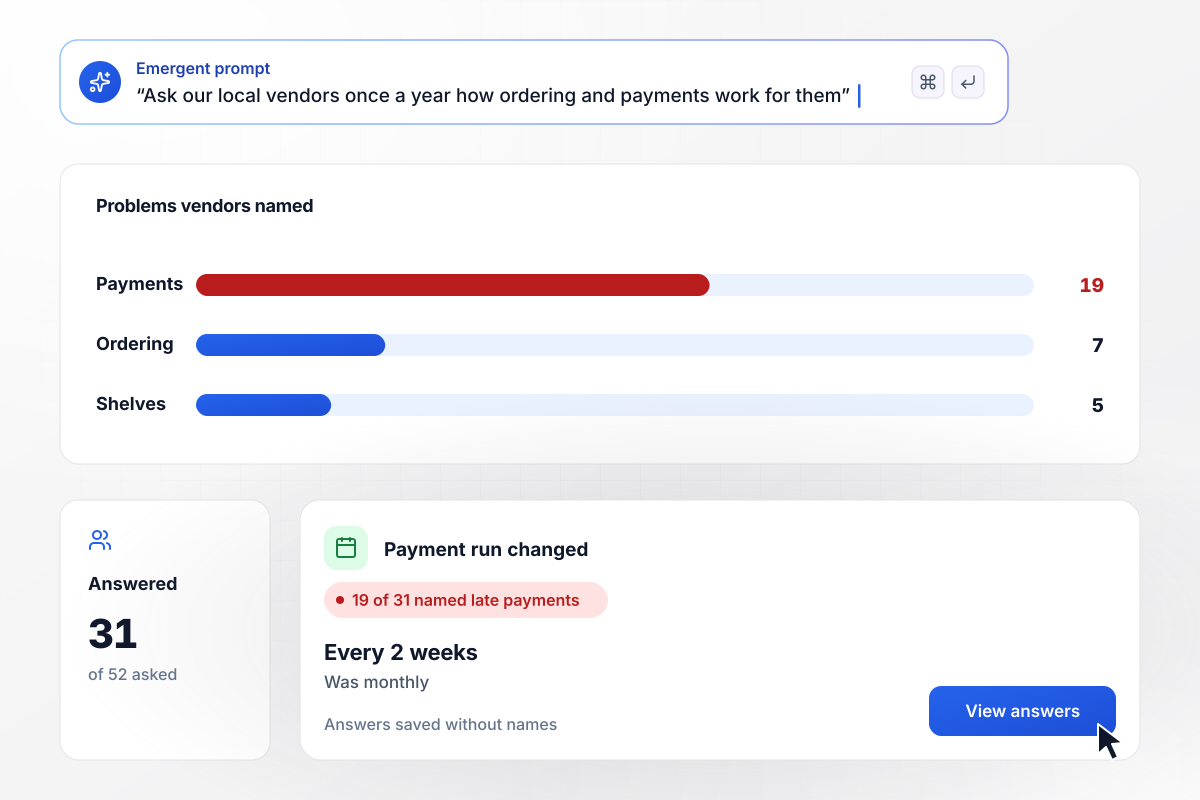
When 19 of 31 vendors name late payments
Once a year, Copperleaf Co-op asks its 52 local vendors how ordering, payment timing, and shelf placement work for them, and saves answers without vendor names. This year 31 answered, and 19 said payments arrived late. The co-op moved its vendor payment run from monthly to every 2 weeks.
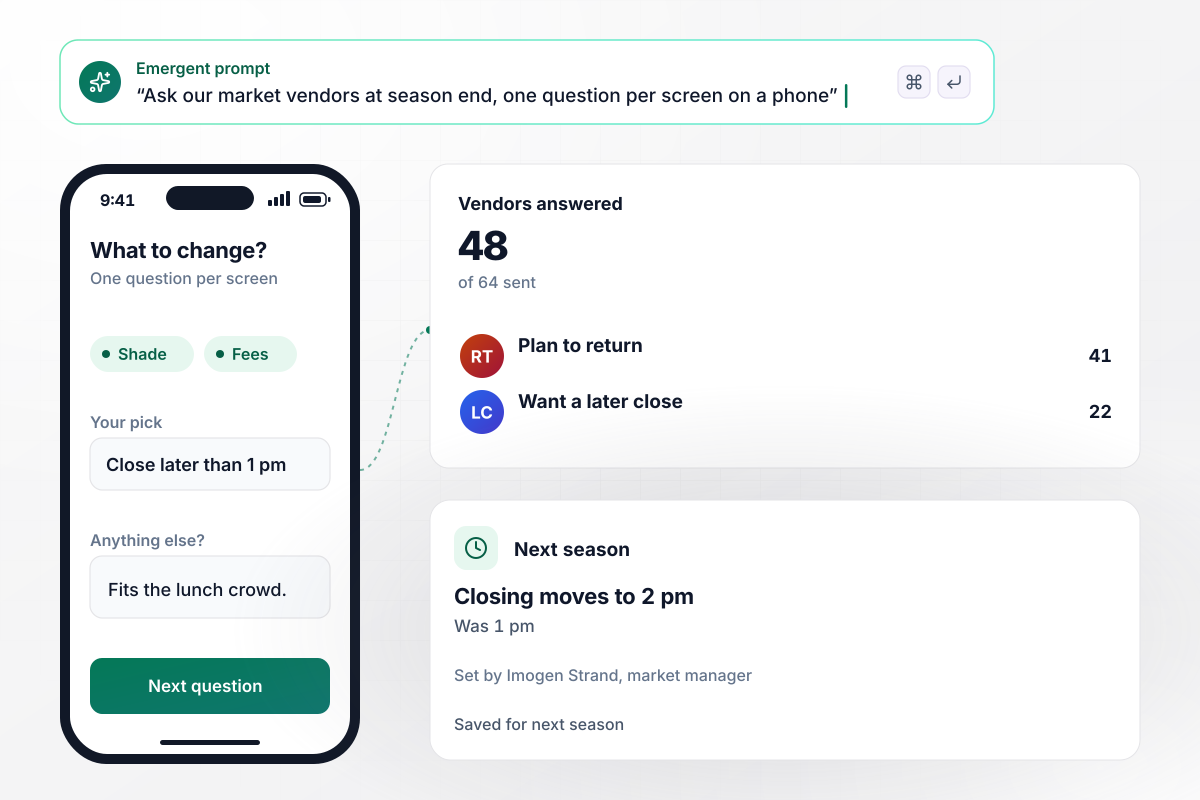
After 22 vendors ask, closing moves to 2 pm
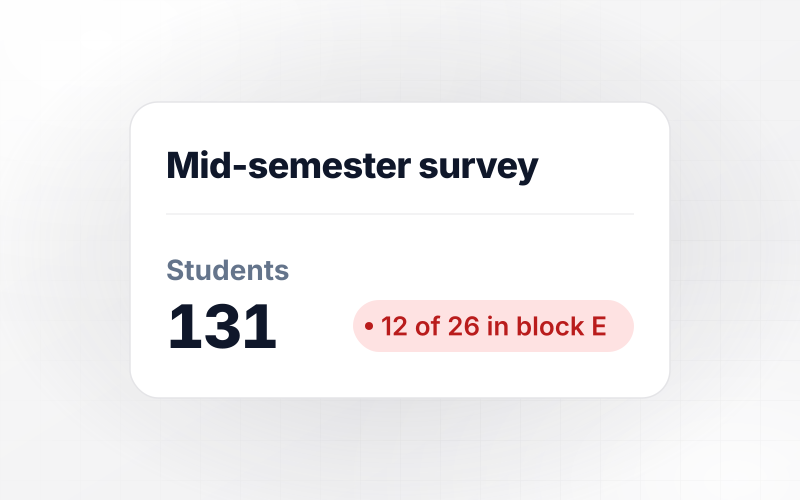
Bexley Wharf Market sends its 64 vendors an end-of-season survey with one question per screen, answered at the stall on a phone. Of the 64, 48 answered, with 41 planning to return. Asked what to change, 22 wanted a later close than 1 pm, and the manager, Imogen Strand, moved next season's closing time to 2 pm.
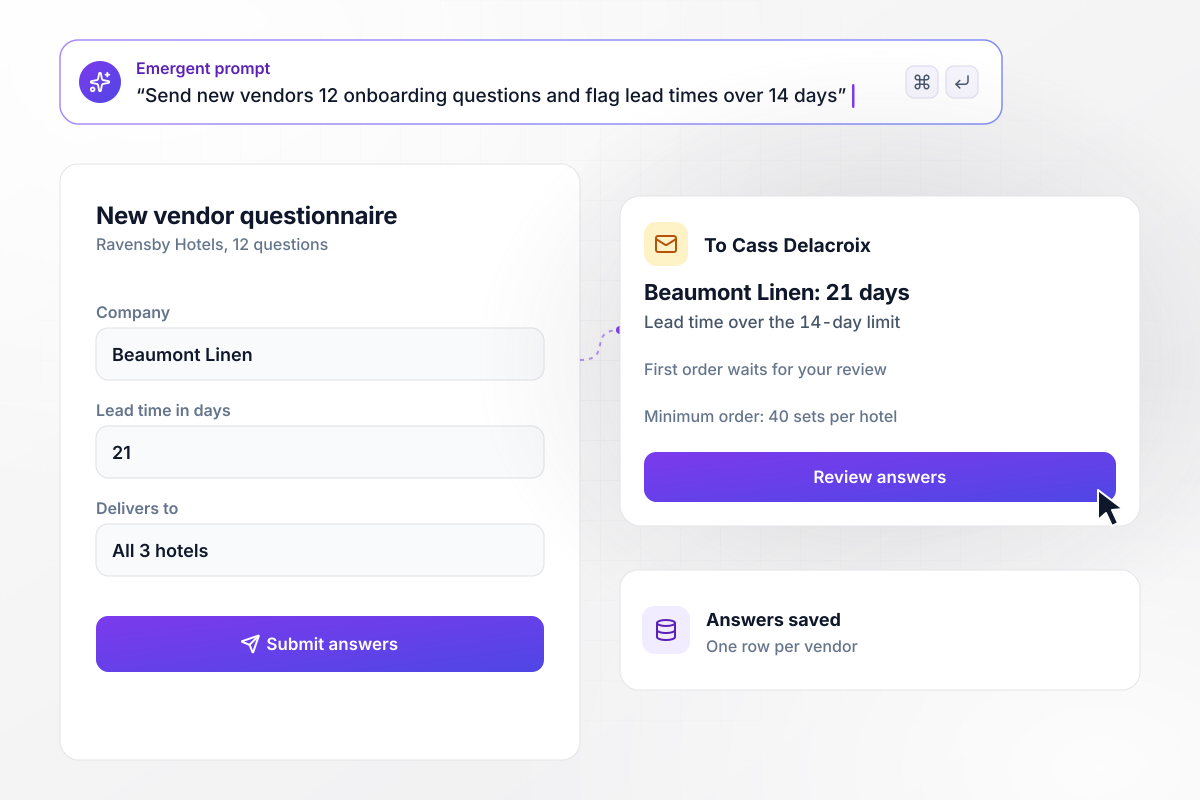
A 21-day lead time waits for procurement
Ravensby Hotels sends each prospective vendor a 12-question onboarding questionnaire: lead time, minimum order, and which of its 3 hotels it delivers to. A lead time over 14 days sends the answers to the procurement manager, Cass Delacroix. Beaumont Linen answered 21 days, and its first order waits for her review.






How to Create a Vendor Survey
Seven steps to create a vendor survey that rates what each vendor controls and ends with one agreed fix per low score.
Decide first whether your team rates the vendor or the vendor rates working with you. A scorecard goes to the people who receive the orders, and a feedback survey goes to each vendor's account contact. Put the direction in your prompt, and Emergent builds the survey around it.
Pick 4 or 5 areas, each with 2 or 3 statements. York University's procurement office reviews areas such as quality of delivery, invoicing accuracy, and adherence to scope of work. Leave out anything your own team causes, like a purchase order sent late.
Split any statement that covers two things, like delivery speed and packaging. Pew Research Center notes that questions asking respondents to evaluate more than one concept are difficult for respondents to answer. Under each area, add one open question on what would raise the score.
Use the same statements and the same 1 to 5 scale every quarter. Pew Research Center advises that when measuring change over time, it is important to use the same question wording. Put any new question at the end, where it changes nothing above it.
Agree on the score that starts a review, like any area averaging below 3, and who hears about it. Name one owner per vendor category, like the purchasing lead for packaging. Put both in the prompt, and the alert is part of the build.
Before the first send, have one store manager and one friendly vendor answer for real. Pew Research Center calls pretesting an essential step in the questionnaire design process. Fix any statement either one misread, and check that each answer lands under the right vendor.
Send each vendor its own scores and the comments that explain them, without the names of the people who wrote them. Agree on one fix per low area with a date, then check whether the score moves in the next round.
Why Build Your Vendor Survey on Emergent?
Each vendor's scores and comments sit in a table you own beside last quarter's, and one prompt adds a question before the next round.

|
SurveyMonkey | Microsoft Forms | SurveyHero | |
|---|---|---|---|---|
| What you get | Survey, logic, and response database, as code you own | Survey builder with templates, including employee engagement | Surveys, quizzes, and polls with response summaries | Survey builder with templates, including employee satisfaction |
| Pricing model | Credits, no response caps or per-response fees | Per-user team plans with a seat minimum, billed annually | Free with a Microsoft account; included in Microsoft work and school subscriptions | Free plan, then per-account plans with unlimited responses |
| Where responses live | A database table you own, plus any integration | SurveyMonkey account | Microsoft Forms, with export to Excel | SurveyHero account, EU data centers |
| Code ownership | Full code export to GitHub on paid plans | None | None | None |


Pick the Pricing Plan That Works for You
Choose the plan that fits your building ambitions. From weekend projects to enterprise applications, we've got you covered.




Find the right survey, quiz, or poll
for your team
Frequently Asked Questions
Your Questions, Answered
Don't change this element unless you know what you are doing
More things you can build
with Emergent

on Emergent today


